
Key Takeaways
- The monitor is a second installation inside the panel, not an accessory outside it.
- A supply taken after the main switch dies with the fault it was bought to report.
- A sealed IP66 box keeps water out and keeps radio in.
- An ATS without volt-free contacts has nothing a gateway can read.
- Turnkey usually stops at the panel terminals, not at the platform.
Remote monitoring solutions fail inside the panel long before they fail in the cloud. The gateway is the easy half. What decides the outcome is the order. The panel needs a rail, a supply, a radio path and a set of contacts.
The monitor needs its own installation inside the panel
A gateway, a switch and a small power supply need a rail, a fuse and a terminal block. That is a second installation inside the first one, and it follows its own rules.
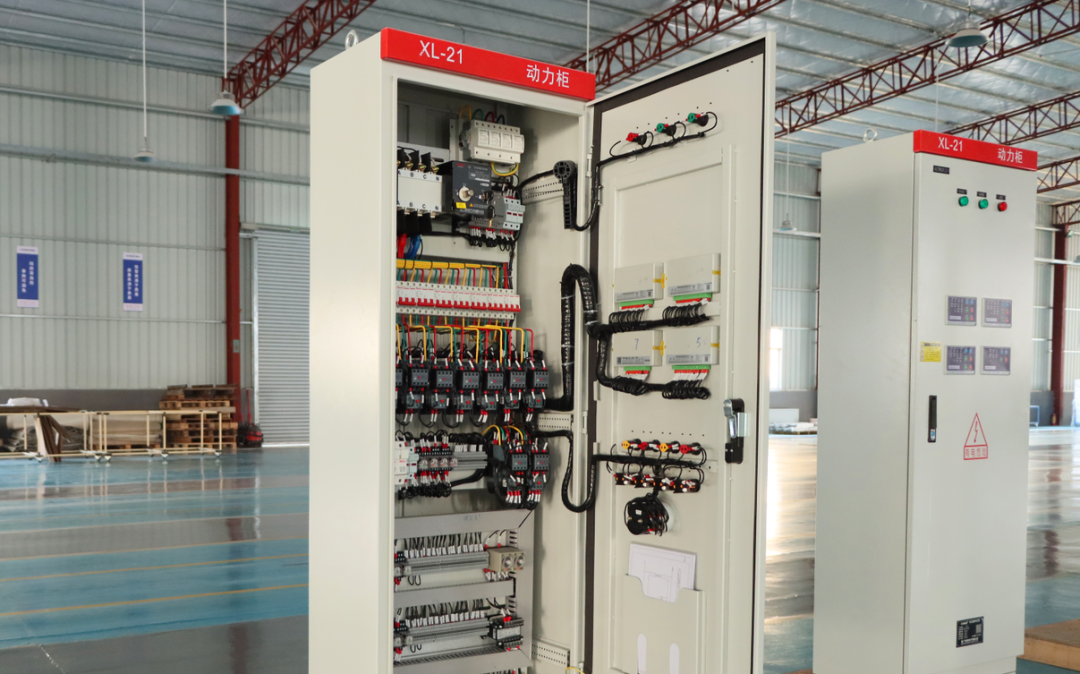
Panels ordered for a monitoring package usually carry it in a spare compartment. The compartment holds a DIN rail, a 24 V supply and a labelled strip where the signals land.
Panels ordered without it end up with the gateway tied to a cable duct. That works until the first service visit, when someone needs the duct.
 Current transformers
The measurement begins at a split core
A clamp-on core around a live cable gives you current without cutting it. Five of them at the incomer cover the board, and each pair of wires lands on its own terminal.
Everything past that terminal is copper and a converter. If the cores and the strip were not planned, the data has nowhere to start.
On a special build the compartment has to be drawn into the custom industrial enclosures before the sheets are cut. Moving a rail afterwards costs a shutdown, not a drawing change.
The assembly standard does not change because a gateway moved in. A unit built to IEC 61439 still has to pass the same temperature rise test with the new load inside.
Give it a supply that outlives the outage it reports
The monitor draws a few watts and wants them without a break. Wire it downstream of the main switch and the first outage takes it offline. The event it could not record is the one it was bought for.
A 24 V supply on the incoming side, behind its own fuse, keeps the gateway awake. Add a small battery unit where the site loses mains several times a month.
Distance decides the layout. A plant with more than one power distribution room needs a gateway per room. The alternative is a long signal run nobody wants to pull.
Demand only grows. The IEA tracks industrial load growth by region, and every added line reopens the same board. Leave one spare way for the monitor now.
Heat inside a sealed enclosure has nowhere to go
A gateway is a small heater with a radio attached. Inside a closed box that heat has one exit, and the exit is the wall.
In shade a sealed panel sits 5 to 10 K above ambient. In direct sun on a Gulf site the same panel can run 15 to 20 K higher. A device rated to 60 °C has very little left.
An IP66 waterproof power enclosure keeps rain out and keeps heat in. That trade is real, and it belongs in the specification rather than in a warranty argument two summers later.

Two numbers decide the box
Condensation is the other half of the same problem. A sealed box that cools overnight pulls moisture onto the coldest metal, which is usually the gateway.
Louvres and a canopy are cheap at order time and expensive later. An outdoor enclosure with both runs cooler than a flat lid does, at almost the same price.
The signal cable is a second way in for lightning
The panel usually carries a surge arrester on the supply. The antenna cable and the network cable come through the same wall with nothing in front of them.
A surge on a 24 V signal line kills the input card, not the transmitter. That is why a monitored panel tends to fail at the gateway and not at the sensor.
Most electrical distribution equipment arrives with supply-side protection and nothing on the data pair. The two are quoted as separate lines because they are separate risks.
Ask for the bonding conductor size while you are there. A signal arrester with a long thin bond to a painted door is decoration.
Radio does not read through a closed steel door
A steel enclosure is a good shield. That becomes a problem the moment the gateway sits inside one and expects to talk.
There are two ways out. A bulkhead antenna through the wall, or a window in the door. Both are drilled features, so both must be settled before the paint shop.
Signal inside a closed panel can drop 20 to 30 dB. On a cellular link that is often the difference between a report every 15 minutes and a dead connection.
Every metre of antenna cable costs 0.2 to 0.5 dB at 900 MHz. A five metre run to a bulkhead connector eats more than the gap between two bars and three.
Survey the site before you write the spec. One bar on a phone at the panel door is the cheapest test in the project. It takes two minutes.
The ATS reports position or it reports nothing
The industrial ATS is the device a remote system most wants to see. Source available, switch position and a fault flag are three bits, and they cost almost nothing at order time.
 Wiring schedule
Position, available, fault
Three volt-free contacts answer the only questions a remote system asks. Which source is live? Where does the switch sit? Has it tripped?
The contacts live inside the mechanism. A transfer switch supplied without them cannot be monitored later, because there is nothing to wire to.
Specify them with the generator power transfer switch itself. A quote that lists the switch and forgets the contacts will be the expensive one, six months on.
The schedule matters just as much. A wiring schedule taped inside the door says which terminal carries which signal. Without it, every later change starts with a multimeter.
Which panel types can report without extra hardware
Not every panel needs the same kit. What you can read on day one depends on what is already inside the box.
| Panel | Reports with no extra hardware | Needs adding first |
|---|---|---|
| industrial switchboard | Incomer current if a core is fitted, plus bus voltage | Cores on each outgoing way, and a rail for the gateway |
| vfd panels | Speed, current, DC bus level and fault code from the drive port | Nothing for those four signals, only the network side |
| industrial ats | Source available, position and fault | Nothing, if the three contacts were ordered |
| switchgear in power plant | Incomer metering and breaker status at board level | Per-way metering, which is quoted by the way |
A metro contract in Doha or Istanbul puts a dozen small boards along one platform level. Nobody stands in front of any of them. A tripped way is noticed by its effect, not by its alarm.
The industrial switchboard is the hardest case. Fitting cores into a board built without them means a shutdown, a new schedule and a longer door.
VFD panels are the easiest case, because the drive already measures itself. The data is sitting on a port that most sites never connect.
Plants that generate their own power see the same split. Switchgear in power plant switchrooms usually arrives with metering on the incomer, and branch data is a separate purchase.
The drawing beats the protocol. Any switchboard systems package worth buying arrives with a schedule that names each signal. That holds months after the protocol argument is settled.
Turnkey stops at the first installation
The word covers a wide range. In one quote it means a tested assembly on a truck. In another it means cables, terminations, commissioning and a week of site work.
A firm offering turn key solutions should be asked where its scope ends. If it ends at the panel terminals, the monitoring layer is yours to buy separately.
Some suppliers of turnkey machining solutions use the same word for cut metal. That is a different trade, and no amount of language turns a machined part into a tested assembly.
A company trading as "turnkey solutions inc" may still subcontract the wiring. Read who signs the routine test record, not what the invoice is headed.
The honest split is short. The panel works builds and tests the assembly. The integrator owns the network, the SIM and the platform your data lands on. Ask each supplier to say that in writing.
Frequently asked questions
Can an existing panel be retrofitted for remote monitoring?
Often yes, at a cost that surprises people. You need a spare rail, a 24 V supply and cores on the cables you want to measure. If a panel has no spare space, the retrofit means a shutdown and a new door. Price that before you price the gateway.
What does a gateway need from the panel?
Four things: a rail, a fused supply, a signal terminal strip and a way for radio to leave. Give it those and any competent integrator can connect it. Leave one out and the commissioning visit turns into a second order.
Does a monitoring package change the IP rating?
Only if the enclosure is modified badly. A bulkhead antenna fitted with a sealing washer keeps the rating. A hole drilled through the door for a cable does not. Every new opening needs a certified gland or a sealed connector.
How much data does a distribution panel actually produce?
Less than most platforms suggest. Current, voltage, power and a handful of status bits per board are enough for maintenance. A report every 15 minutes covers a shift. Sampling at one second adds cost without answering a question anyone asks.
Who owns the SIM card and the data?
Whoever bought it, and that should be you. A SIM in the integrator's name puts your history behind their invoice. Ask for the data in an open format, and ask what happens to it if the contract ends.
Can the monitoring keep running during a power failure?
Only if you planned for it. The gateway needs its own battery or a supply on the generator side of the transfer switch. A monitor fed from the dead bus records the outage as silence. Silence looks the same as a healthy panel that stopped reporting.
Is a quote from turnkey solutions inc comparable to a panel builder quote?
Not until both are split into the same three lines: assembly, network and platform. A single figure hides which of the three is included. Ask for the split, then compare the assembly line against a works that publishes the standard it builds to.
Final thoughts
Remote monitoring solutions are decided in the order, not in the app. Ask for the rail, the supply, the contacts and the antenna before anyone talks about a dashboard. Then ask who runs under ISO 9001.
Send the panel list, not the platform brief
Tell us which boards you want to watch, where they stand and what each one feeds. We will answer with what the assembly can carry and what has to be bought elsewhere.
Contact Giantele