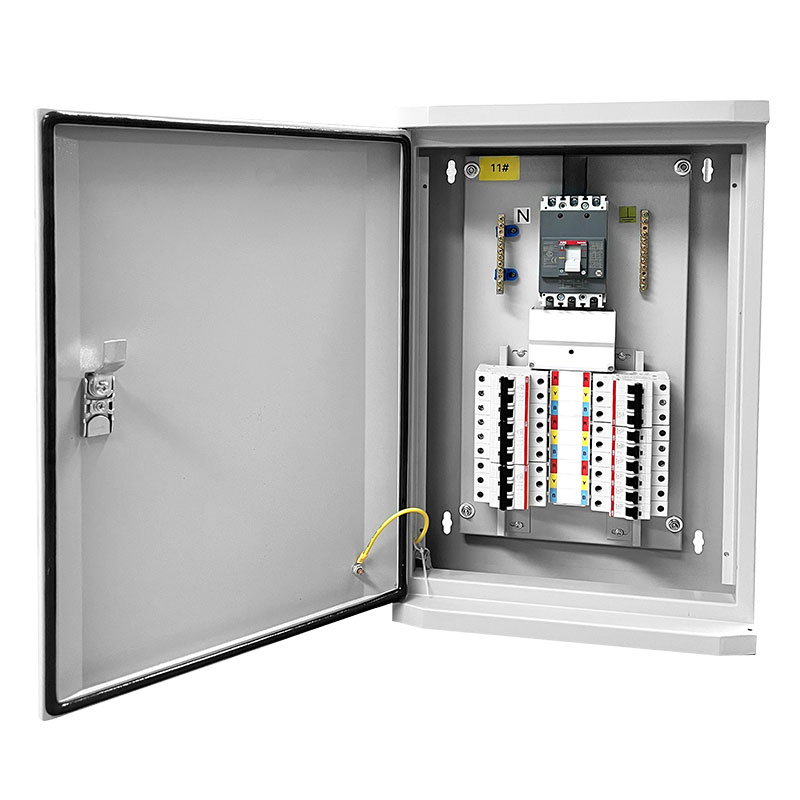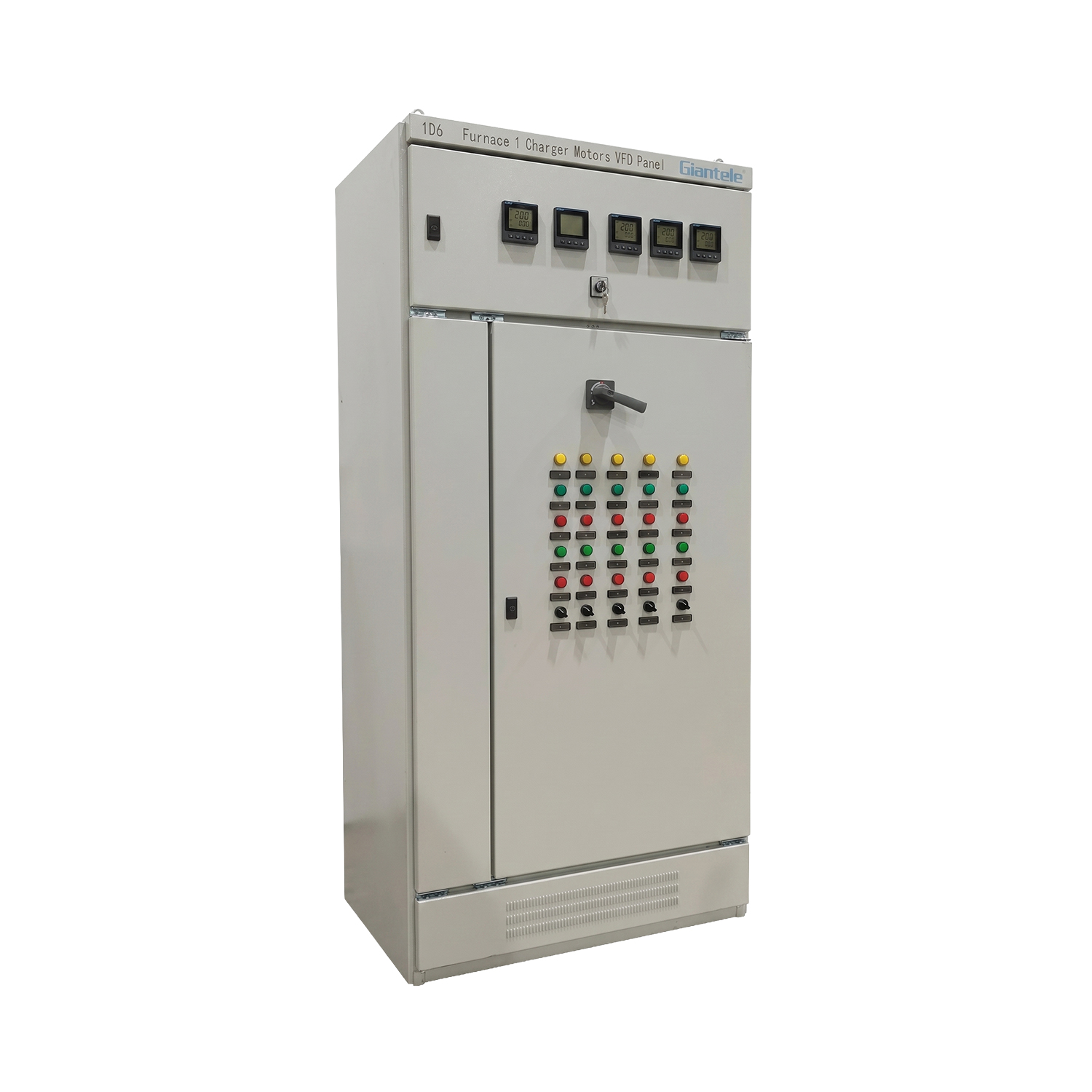
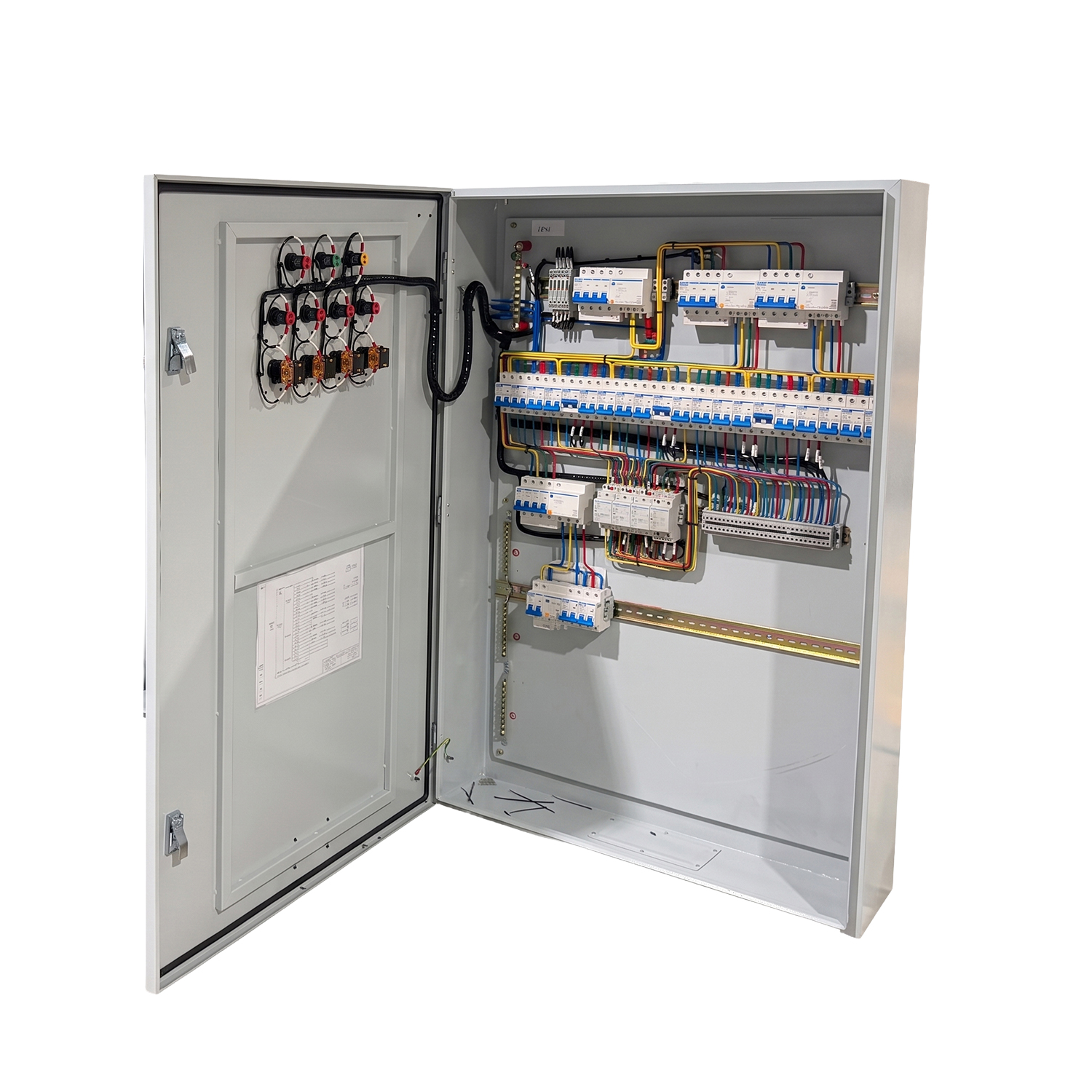
Large projects do not fail on the generators. They fail at the board that splits power into a hundred protected circuits. Pick the wrong power distribution board manufacturers and you inherit thermal hotspots, coordination gaps, and a commissioning schedule that slips a month.
Pick reliable power distribution board manufacturers and the electrical power distribution system runs quiet for twenty years.
This guide is for EPC engineers, utility planners, and data center builders who specify reliable power distribution boards for projects where downtime is measured in millions. It covers power distribution system design, voltage selection, and the maintenance discipline that keeps a large installation reliable.
Key takeaways
- Power distribution voltages drive the board design: 400V three-phase for industrial, 690V for heavy loads, and 10-11kV for utility feeders. The board's busbar, insulation, and fault rating all follow from the voltage class.
- Power distribution for data centers is its own discipline: N+1 redundancy, Form 4 separation, and zero-downtime switching demand boards built to a stricter standard than industrial duty.
- Maintenance and design for utilities and power distribution systems are inseparable: A board you cannot service without shutting down half the plant is a design failure, not a maintenance problem.
- Type-tested assemblies beat assembled-from-parts: An IEC 61439 type-tested board carries verified fault and thermal performance. A shop-built board carries assumptions.
- CE certified, IEC 61439 compliant: Giantele distribution boards carry CE certification with type-test verification for projects across Africa, the Middle East, and Southeast Asia.
Power distribution system design for large installations
A power distribution system does one thing: move power from a single source to many loads safely. Power distribution system design is the discipline of deciding how many feeders, at what rating, through which protection devices, in what physical arrangement. The design choices made at the board level ripple through every downstream circuit.
What a well-designed distribution board gets right
- Selective coordination: The breaker nearest the fault trips first, so a single circuit failure never takes down the whole board.
- Form separation: Busbar, devices, and terminations sit in separate compartments, so one failure cannot cascade across the board.
- Future feeder space: 20% spare capacity is standard for large projects. Expansion should not mean a second board.
- Documented layout: Every feeder labeled, every cable entry planned, so commissioning and later maintenance are fast.
A main distribution board built on these principles is the difference between a power distribution system that scales and one that gets ripped out in a retrofit five years later.
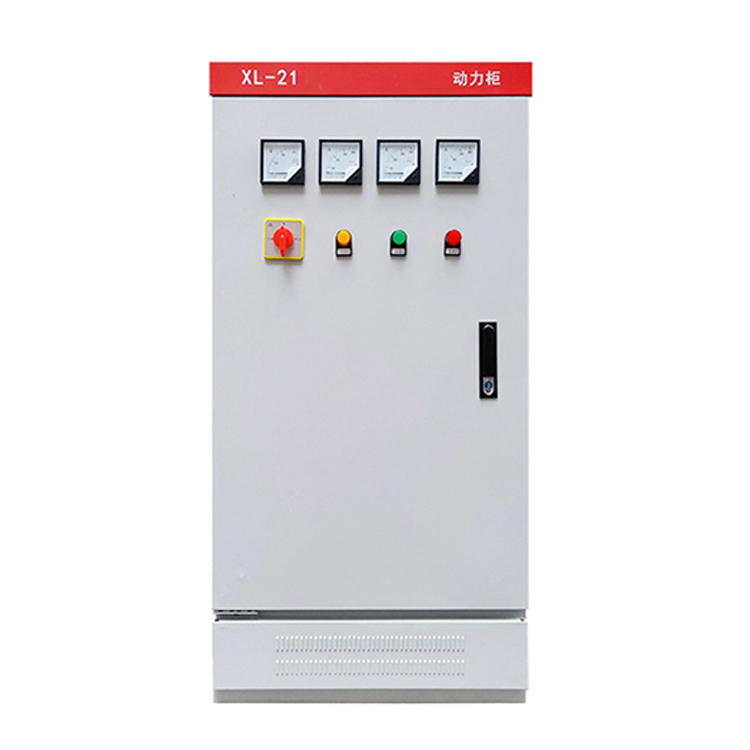
Power distribution design starts with the single-line diagram, not the parts list. You map the source, the transformers, the board, and every feeder down to the last motor or rack. The diagram is the contract between the designer and the manufacturer. A manufacturer who cannot read your single-line diagram, or who quotes without one, is guessing.
Choosing the right power distribution board begins with that document, not with a catalog. For sites with backup generation, an automatic transfer switch sits between the board and the sources, keeping critical feeders live through an outage.
Power distribution voltages and the electrical power distribution system
Electric power distribution operates across a spread of voltage classes, and each class changes the board's internal design. A board rated 400V cannot simply be relabeled for 690V. The insulation, clearances, busbar sizing, and short-circuit withstand all scale with voltage.
| Voltage class | Typical use | Board requirements | Fault level |
|---|---|---|---|
| 230/400V three-phase | Industrial plants, commercial, water treatment | Standard LV board, IP54 common | 25-65kA |
| 690V | Heavy motors, mining, large VFD loads | Upgraded clearances, derated busbar | 50-85kA |
| 10-11kV | Utility feeders, substation distribution | MV metal-clad, vacuum breakers | up to 40kA |
| Data center dual-feed | Server racks, critical IT load | N+1, Form 4b, static or ATS switching | 65-100kA |
The fault level is the number that separates a proper board from a dangerous one. A 400V board with a 25kA short-circuit rating is fine for a small commercial load. Feed it into a large industrial site with a stiff grid and the available fault current can reach 65kA or more.
Under-rate the board and a fault turns the enclosure into shrapnel. IEC 61439 low voltage switchgear type-testing verifies exactly this performance, which is why large projects insist on it.
Power distribution for data centers
Power distribution for data centers is the most demanding board application outside a substation. A hyperscale facility runs thousands of racks, each a critical load. The distribution board must deliver N+1 redundancy, isolate any single fault without dropping IT load, and switch between two independent sources in milliseconds.
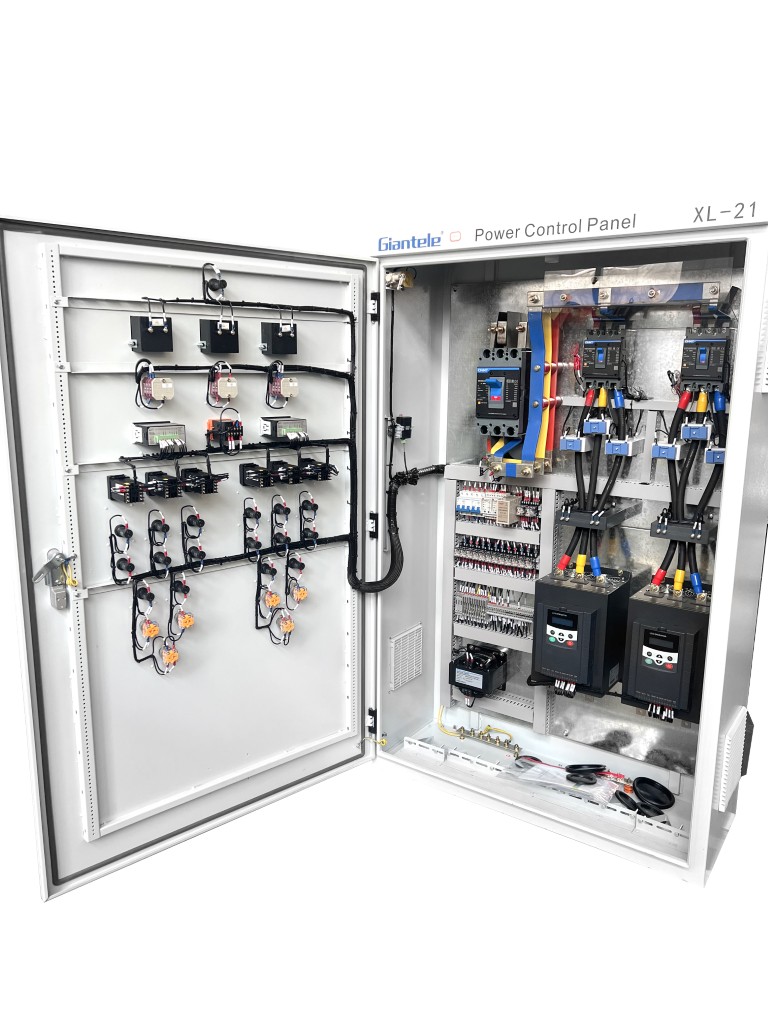
Four requirements data center boards must meet
The IRENA outlook on data center energy demand shows power consumption growing faster than any other single load class. The IEA projects data center electricity demand to keep climbing through the decade.
A board that cannot be expanded, maintained live, and monitored per-feeder becomes the ceiling on a facility's growth. For a data center, the board is not a cost line. It is the reliability floor.
Maintenance and design for utilities and power distribution systems
Maintenance and design for utilities and power distribution systems are the same conversation. A board designed without regard for maintenance gets neglected until it fails. A board designed for live service gets maintained, and the maintenance records prove it. The design decision and the maintenance outcome are one continuous responsibility.
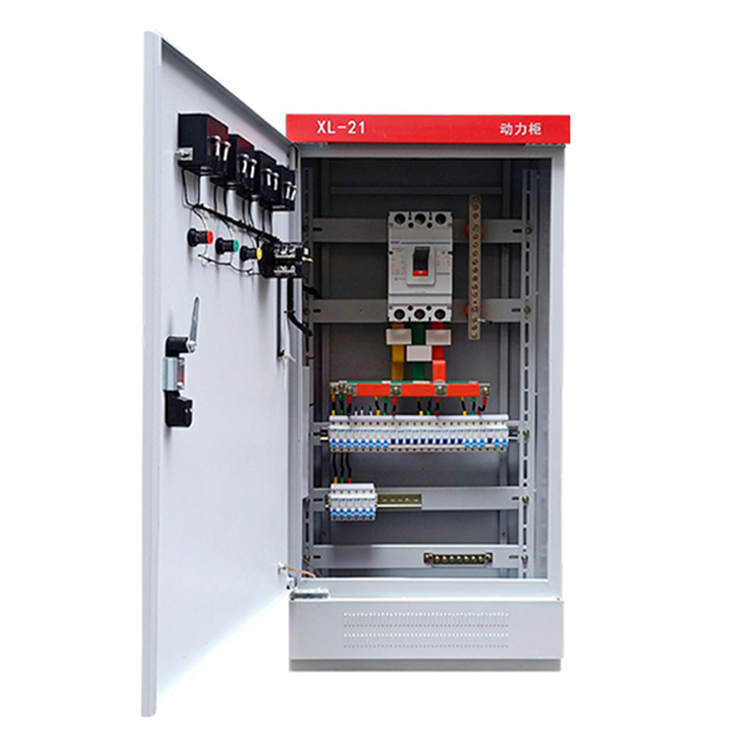
What makes a distribution board maintainable
- Front access: All devices and terminations reachable from the front, so the board can sit against a wall without losing serviceability.
- Draw-out units: Breakers that slide out for inspection without de-energizing the whole board.
- Thermal monitoring points: Designated access for infrared scanning of busbar joints, the cheapest early-warning system for loose connections.
- Labeled everything: Feeders, terminals, and cables marked to match the as-built drawings, so a night-shift fault takes minutes to locate.
Routine tests and factory acceptance are where these design choices prove out. Testing a distribution board before energizing catches the mistakes that show up as downtime later.
For utilities, the board is part of the public grid. The power distribution lines that feed communities run through these boards, and a failed board means a darkened neighborhood. Reliable power distribution board manufacturers who build for serviceability are directly buying down those outage hours.
World Bank reliability data across sub-Saharan Africa shows that distribution equipment failure, not generation shortfall, is the dominant cause of customer outage hours.
Frequently asked questions
What should I look for in a reliable power distribution board manufacturer?
How do power distribution voltages affect board design?
What is different about power distribution for data centers?
Why does a large project need a type-tested distribution board?
How does maintenance and design for utilities and power distribution systems connect?
What spare capacity should I plan for a large distribution board?
Are Giantele power distribution boards CE certified?
Final thoughts
A power distribution board is the one component that touches every load in your project. Spec it by voltage and fault level, design it for live maintenance, and buy it type-tested from a manufacturer who reads your single-line diagram. The reliability you get is the reliability you specified.
Send Giantele your single-line diagram and load profile. Our engineers return a board design with rated busbar, protection coordination, and confirmed delivery within 48 hours.
Get a Distribution Board Design Proposal
Send your single-line diagram and load profile. We return a board design with rated busbar, coordination, and delivery within 48 hours.