A main distribution board is the most important panel in any building's electrical system. It takes power from the transformer and splits it to every downstream panel. Choose wrong and you get nuisance trips, downtime, and angry tenants. Choose right and the MDB runs for decades with minimal attention. This article covers what an MDB does, how it is built, and what to check before you order one.
What a main distribution board actually does
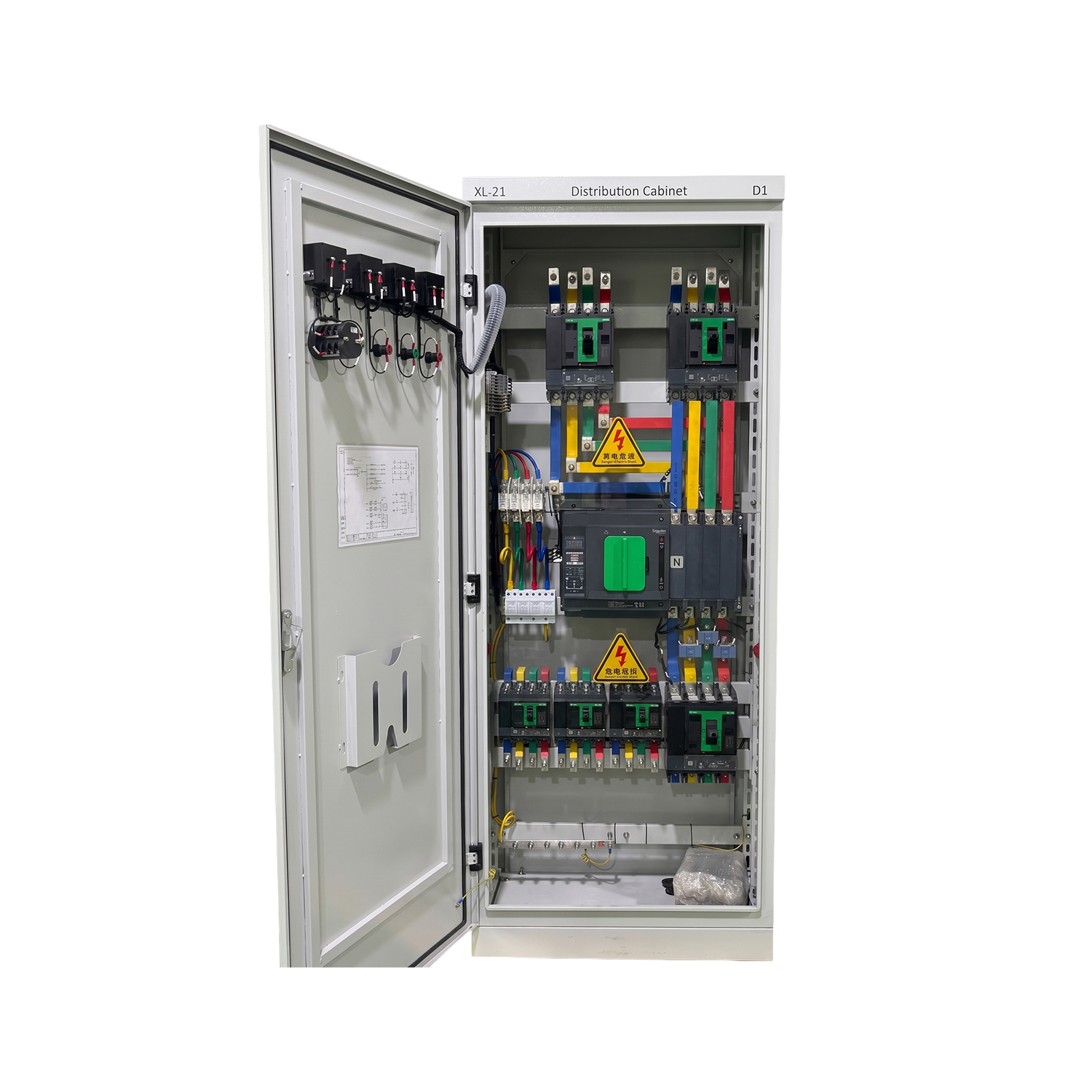
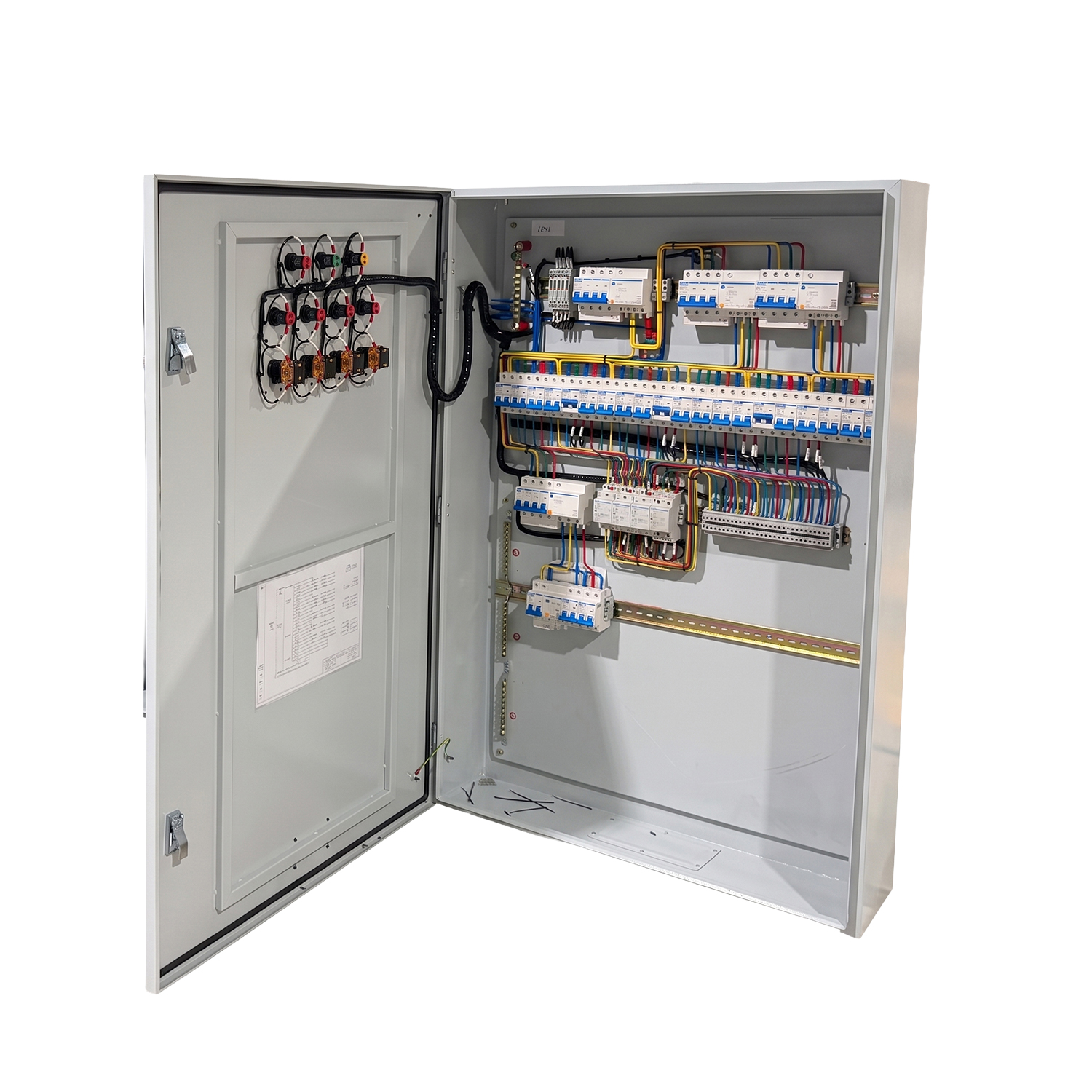
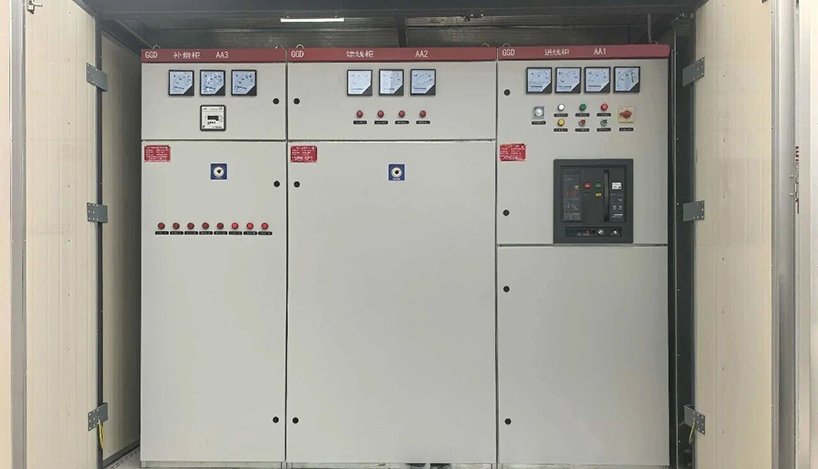
An MDB main distribution board sits between the transformer and your sub-panels. Incoming power lands on the main busbar. From there, individual MCCBs or ACBs feed power to lighting panels, motor control centers, VFD panels, and capacitor banks. Every building over 500 m² has one. If you are reading this inside a commercial building right now, there is an MDB somewhere keeping the lights on.
The main busbar carries the full building load. Silver-plated copper is standard for good reason — it handles 20 years of continuous current without developing hot spots. Insulated supports throughout. Every bar is torqued to spec and documented before leaving the factory.
Low voltage main distribution board: 400A to 4000A range
A low voltage main distribution board handles anything from 400A for a small office to 4000A for a factory or large commercial complex. The busbar cross-section, breaker frame size, and enclosure dimensions all scale with the current rating. A 400A board fits in three cabinets. A 4000A setup needs eight or more.
Don't undersize the busbar. If your building adds a floor or an HVAC upgrade three years from now, you want headroom. Copper does not care about a few extra amps. Retrofitting a bigger main electrical distribution board later means tearing out walls. Size it once, size it right.
Three-compartment design: why it matters for safety
A good MDB splits into three physically separate zones. Busbar chamber at the top. Breaker compartments in the middle. Cable entry at the bottom. Steel barriers between each zone. This means you can work in the cable zone while the busbar stays energized. Maintenance on one feeder does not shut down the whole board.
Some cheaper panels put everything in one box. Do not buy those. If an arc fault happens in a single-compartment panel, it takes out everything. Three-compartment design limits damage to one zone. The cost difference is small. The safety difference is not.
Busbar selection: copper vs aluminum for MDB panels
Always pick silver-plated copper for the main busbar. Copper has lower resistivity and better thermal performance than aluminum. At full load, an aluminum busbar runs hotter. Hot busbars develop hot spots. Hot spots lead to failures. The price difference is maybe 15% on the busbar cost. That is a fraction of the total panel price.
Insulated supports between phases prevent flashover. Every connection point is torqued to the manufacturer's spec and documented. If a supplier cannot show you torque values for the busbar bolts, ask why. Proper torque prevents loose connections. Loose connections cause fires.
Breaker coordination: how ACBs and MCCBs work together
The incoming main breaker handles the full building load. Below it, individual MCCBs protect each outgoing feeder. These breakers must coordinate. If a short circuit hits one feeder, only that feeder's MCCB should trip. The main breaker stays closed. That keeps the rest of the building powered.
This is called selectivity. It requires matching the trip curves of the main and feeder breakers. A competent panel builder calculates this from the breaker manufacturer's data. If your supplier cannot show you a selectivity study, they are guessing. Guessing gets buildings blacked out during a fault on one circuit.
Enclosure ratings: IP54 and what it actually protects against
IP54 means dust-tight and splash-proof. The first digit (5) means limited dust ingress but not enough to interfere with operation. The second digit (4) means water splashed from any direction has no harmful effect. For a basement electrical room, IP54 is the baseline. For outdoor kiosks, go IP65.
Powder-coated steel beats painted sheet metal every time. Powder coating bonds to the steel at a molecular level. Paint chips. In a humid basement, chipped paint means rust within a year. The main distribution cabinet enclosure is the first line of defense. Do not cheap out on it.
Cable entry and termination: bottom-entry design explained
Cables enter the MDB from below, through removable gland plates. This keeps the cable run short and tidy. Each cable terminates at a clearly labeled terminal block inside the bottom chamber. The labeling matches the single-line diagram. No guesswork during commissioning.
Bottom entry also simplifies future additions. If you need to add a feeder five years from now, you pull the new cable up through the gland plate and land it on a spare way. No drilling through the enclosure. No compromising the IP rating. A well-designed main distribution panel has 20-30% spare gland capacity from day one.
Fixed vs. withdrawable: why most buildings pick fixed MDB
Here is the honest comparison. Fixed main distribution board versus withdrawable options.
| Feature | Fixed MDB | Withdrawable MDB |
| Unit cost | 30-40% lower | Premium pricing |
| Installation | 2-3 days | 4-6 days |
| Maintenance skill | Standard electrician | Specialist technician |
| Hot-swap breakers | Not available | Yes, but rarely needed |
| Floor space | 600-800mm per panel | 800-1000mm per panel |
For a building that runs 24/7, the hot-swap feature in a withdrawable MDB sounds nice — but most buildings never use it. You swap breakers during a planned shutdown anyway. Paying 30-40% extra for a feature that gathers dust makes no financial sense.
Main switchboard vs main distribution board: what is the difference?
In practice, a main switchboard and a main switch distribution board do the same job: distribute incoming power to outgoing feeders. The terms are interchangeable in most markets. Some engineers call the panel directly after the transformer a main switchboard, and everything downstream a distribution board. Either way, both are IEC 61439 assemblies with busbars, breakers, and enclosures.
A mains power distribution board handles the main incoming supply. If it feeds other distribution panels rather than end loads, it qualifies as a main board. If it feeds lights and sockets directly, it is closer to a sub-distribution panel. The distinction matters when writing a specification — but for procurement, the panel construction is identical.
Things to check before ordering an MDB
- IEC 61439 type-test report — ask for it before you pay. If they cannot produce it, walk away.
- Busbar material and rating — silver-plated copper, not bare aluminum. Verify the cross-section matches your load calculation.
- Enclosure IP rating — IP54 minimum for indoor use. Powder-coated steel, not painted sheet metal.
- Breaker brands — specify Schneider, ABB, or Siemens in your purchase order. No unbranded alternatives.
- Lead time — standard configs ship in 4 to 6 weeks. Ask for at least a 2-year warranty on workmanship.
- Factory visit — if your budget allows, visit the factory. A clean, organized shop floor says more about quality than any certificate.
Where main distribution panels go
A main distribution panel lives in the main electrical room — usually the basement or ground floor. From there, cables run to floor-level sub-panels. The shorter the cable run from the transformer, the better. Long cable runs waste copper and increase voltage drop. A main distribution cabinet near the transformer is the efficient choice.
Commercial buildings, hospitals, data centers, and industrial plants all need one. In hospitals, two incoming sources with automatic transfer switching are standard. In data centers, redundant feeds with static transfer switches keep things running. Your consultant should spec this. We build it to the spec.
Final thoughts
A main distribution board is not a commodity purchase. The busbar quality, enclosure rating, breaker coordination, and type-test documentation all affect how your building runs for decades. Spend the extra five percent on a properly tested main distribution cabinet from a manufacturer with real export experience. We reply within 48 hours with a quote, compliance documents, and a production schedule.
IEC 61439 type-testing is not optional. IEC 61439-2 defines the test requirements for power switchgear and controlgear assemblies. Your MDB should meet it. The IEC publishes these standards. Breaker manufacturers Schneider Electric and ABB provide components that go into compliant assemblies. Verify component compatibility before placing your order.