
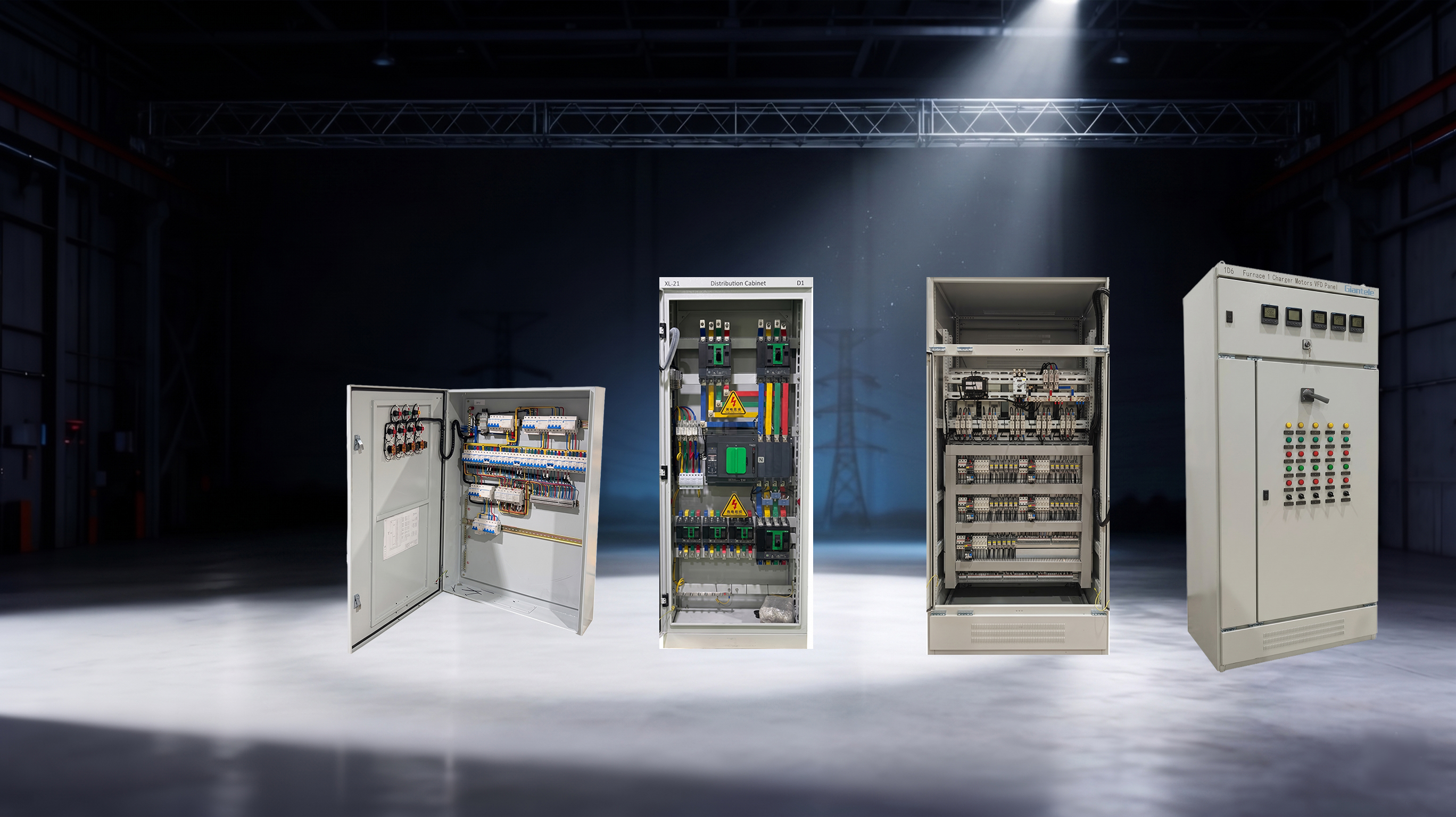
Power Distribution Board Solutions
Custom Main Distribution Boards, Industrial Control Panels & Motor Control Panels —Engineered for Your Project's Power Distribution and Control Requirements
From main distribution boards and sub distribution boards to industrial control panels,
motor control panels, and VFD panels — Giant Electric delivers complete power distribution
and control solutions engineered to your voltage level, load list, and site conditions.
Whether your project requires a single three phase distribution board or a full lineup
of Motor Control Centers, every assembly is built to match your actual application.

HOW DOES A POWER DISTRIBUTION BOARD WORK?
A power distribution board receives incoming power at the main breaker and distributes it through an internal busbar system to outgoing circuits. In a three phase distribution board, power flows across three live conductors — typically 380V, 400V, or 480V — with each phase feeding designated loads to balance demand across your facility.
From the main distribution board, power travels to sub distribution boards located in different zones or on different floors, each protecting its own group of circuits. Downstream control panels — including motor control panels and VFD panels — then manage specific equipment groups with more granular control and protection. This layered structure means a fault in one zone does not shut down your entire facility, keeping operations running with fewer disruptions and easier troubleshooting.
Centralizes motor control, protection, and monitoring for multiple motor feeders in one assembly
Supports DOL, star-delta, soft starter, and VFD starter configurations across industrial process lines
Plug-in or fixed-type draw-out units for quick maintenance without shutting down the entire lineup
Flexible busbar ratings from 630A to 6300A with Form 2, 3, or 4 internal separation
As a core type of industrial control panel, Motor Control Centers (MCCs) bring multiple motor control panel feeders into a single coordinated assembly — giving you centralized command over pumps, fans, compressors, and conveyors without running separate panels for each drive. Each starter unit is individually isolated, so maintenance on one motor circuit does not disrupt the rest of your production line. Whether your facility needs a compact wall-mount motor control panel for a few auxiliary drives or a full-scale MCC spanning dozens of feeders, Giant Electric engineers each assembly to your single-line diagram, motor list, and site conditions. You get a tested, ready-to-install industrial control panel built for the demands of continuous industrial operation.


Automatic transfer between two independent power sources — utility and generator, or dual utility feeds
Open-transition, closed-transition, and delayed-transition switching logic to match your load sensitivity
Integrated controller with adjustable time delays, voltage sensing, and generator start/stop signals
Type-tested assemblies rated for critical and non-critical loads across commercial and industrial sites
An Automatic Transfer Switch (ATS) panel ensures that your facility stays powered when the primary supply fails. When the controller detects a voltage drop or phase loss on the incoming utility feed, it starts the standby generator and transfers the load — typically in under 10 seconds — and then switches back once utility power is restored and stable. For facilities where even a brief outage carries high cost, closed-transition or bypass-isolation configurations eliminate transfer gaps entirely. Giant Electric builds ATS panels rated from 63A to 3200A, either as standalone assemblies or integrated with your main distribution board for a single-point power management solution.
Variable-frequency drive integration for precise motor speed control and significant energy savings
Supports single-drive and multi-drive configurations with bypass and harmonic mitigation options
Enclosed in IP42 to IP65 cabinets for indoor plant rooms or outdoor installation
Pre-wired, factory-tested, and shipped ready for connection — reducing on-site commissioning time
VFD panels are a specialized industrial control panel designed for applications where motor speed must be varied to match process demand. By adjusting frequency and voltage in real time, a VFD panel cuts energy consumption in pumping, HVAC, and conveyor systems by 20% to 50% compared to fixed-speed operation — while also reducing mechanical wear from across-the-line starts. Giant Electric builds each VFD panel around your specific drive brand preference, motor ratings, and control philosophy, whether you need a simple stand-alone unit or a multi-drive lineup integrated with your main distribution board. Every panel undergoes full-load testing before shipment, so you can commission with confidence.


Dedicated lighting distribution and control for commercial floors, warehouses, and outdoor areas
MCB or MCCB outgoing circuits with optional time-clock and photocell control for automated operation
Compact wall-mount or recessed enclosures designed for installation in electrical rooms and service corridors
Pre-labeled circuits and clear door-mounted schedules simplify routine maintenance and fault finding
A lighting panel centralizes power distribution and control for all lighting circuits in a building — from office floor plates and retail spaces to warehouse high-bay fixtures and parking-lot floodlights. Rather than running lighting circuits back to a general-purpose distribution board, a dedicated lighting panel keeps circuits organized by zone, makes scheduling and automation easier to implement, and reduces the impact of lighting faults on other building services. Each panel is built with outgoing breaker counts, control options, and enclosure type matched to your lighting layout. For large commercial projects, multiple lighting panels fed from sub distribution boards keep cable runs short and maintenance straightforward.
IP65/IP66 weatherproof enclosures rated for outdoor and wash-down environments
Pre-assembled with incoming isolator, busbar, outgoing MCBs or MCCBs, and cable gland plates
Compact wall-mount footprint with bottom or rear cable entry to suit site conditions
Available in polycarbonate, stainless steel, or powder-coated steel to match environmental requirements
For outdoor installations, construction-site temporary supplies, and industrial areas where dust and moisture are constant, a waterproof wall-mount power distribution enclosure box provides reliable circuit protection in a compact, sealed package. Each unit comes pre-wired with an incoming main switch, a copper busbar, and a row of outgoing circuit breakers — ready to mount on a wall or column and connect to incoming and outgoing cables. Whether you need a small 4-way box for outdoor lighting circuits or a larger 24-way unit powering equipment in a wash-down zone, each enclosure is built to your circuit count, breaker ratings, and environmental conditions.


Main distribution boards and sub distribution boards rated up to 6300A at 380V–690V AC
Modular design with fixed or withdrawable circuit breaker compartments for flexible feeder layout
Internal separation up to Form 4b, with arc-fault containment where required by project specification
Integrated metering, surge protection, and power monitoring options for complete system visibility
Low-voltage main distribution boards and sub distribution boards form the backbone of any structured power distribution system. The main distribution board (MDB) receives incoming power at the service entrance and routes it through busbars and circuit breakers to downstream sub distribution boards (SDBs) located in different zones, floors, or equipment rooms. This layered architecture keeps fault isolation local — a trip in one zone does not cascade through your entire facility. Giant Electric engineers each board to your load list, fault level, and physical layout, with busbar ratings, breaker selection, and compartmentalization matched to your project specification. From compact wall-mount sub distribution boards for commercial floors to floor-standing main distribution boards for industrial plants, each assembly is built, tested, and shipped ready for connection.
WHERE POWER DISTRIBUTION BOARD SOLUTIONS ARE MOST COMMONLY USED
Power distribution board solutions support safer and more efficient power delivery across a wide range of industrial, commercial, and public facility applications.


FAQs OF OUR POWER DISTRIBUTION BOARD
A power distribution board — including both main distribution boards and sub distribution boards — focuses on receiving and distributing electrical power to multiple outgoing circuits with protection. An MCC (Motor Control Center), as a type of industrial control panel, is specialized for applications with multiple motor feeders that require centralized start/stop control, overload protection, and maintenance access. In practice, many projects combine both — the distribution board handles the power routing backbone, while MCCs and other control panels manage specific equipment groups.
Accordion
Accordion
Accordion


ONE-STOP SERVICE
From requirement confirmation to final delivery, our team supports the full process of power distribution board projects. The service covers system planning, configuration design, manufacturing, testing, and technical support to help ensure safer, more organized, and reliable power distribution across different applications.
Project Requirement Review
Review voltage level, load conditions, circuit requirements, and application scenarios to define the overall distribution needs and project scope.
Distribution Solution Design
Develop a suitable configuration based on system requirements, including main distribution board and sub distribution board sizing, industrial control panel integration planning, three-phase load balancing, and feeder arrangement optimization based on your single-line diagram.
Production and Assembly
Move into manufacturing after technical confirmation, with assembly carried out according to the defined configuration and project specifications.
Testing and Inspection
Carry out inspection and testing before delivery to confirm operational performance, circuit reliability, and assembly quality.
Delivery and Technical Suppor
Provide delivery coordination together with technical communication and remote support during installation and project implementation.
After-sales Service
Support long-term operation through fault handling guidance, maintenance recommendations, and ongoing technical assistance.
GET IN TOUCH WITH US
LEARN MORE ABOUT POWER DISTRIBUTION BOARD
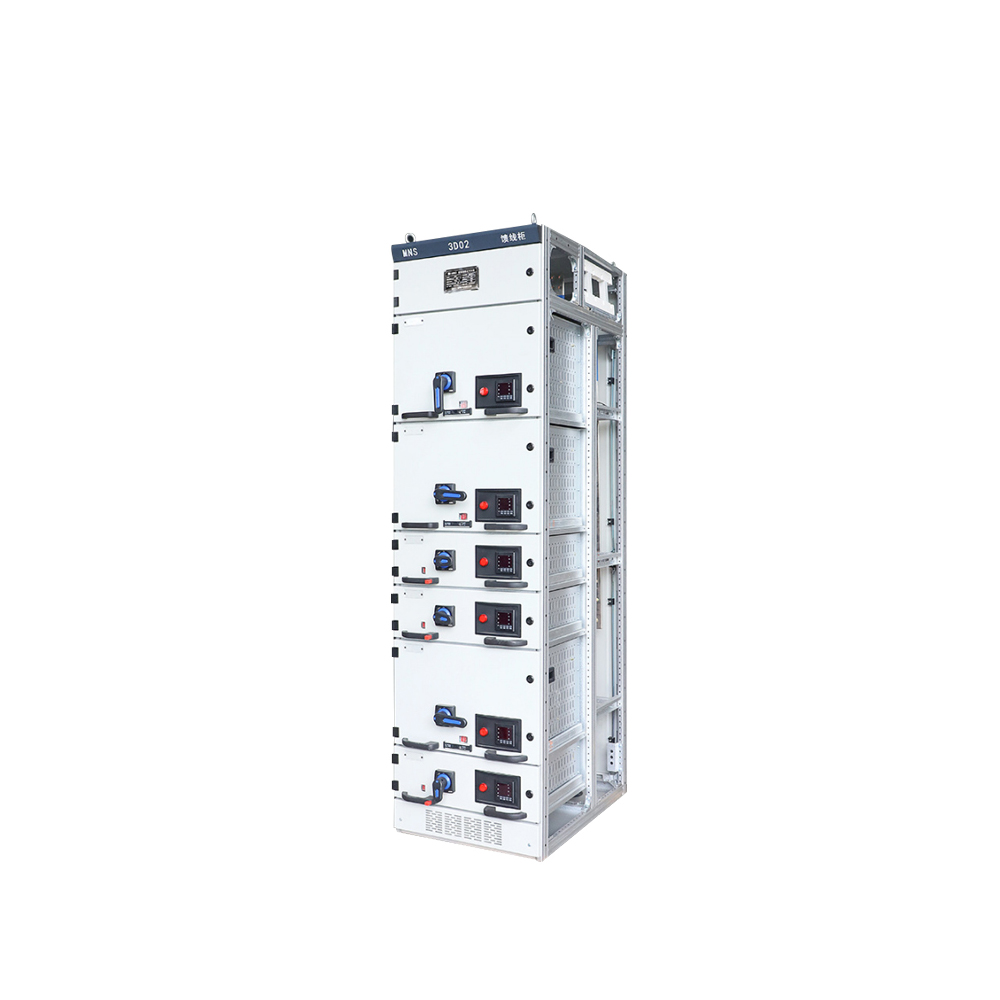
Custom Control Panels: How Does A Motor Control Center Work?
Custom control panels protect every motor in your plant. Learn how an MCC works, its components, and how to find the right electrical panel builder. Get a quote.
Read More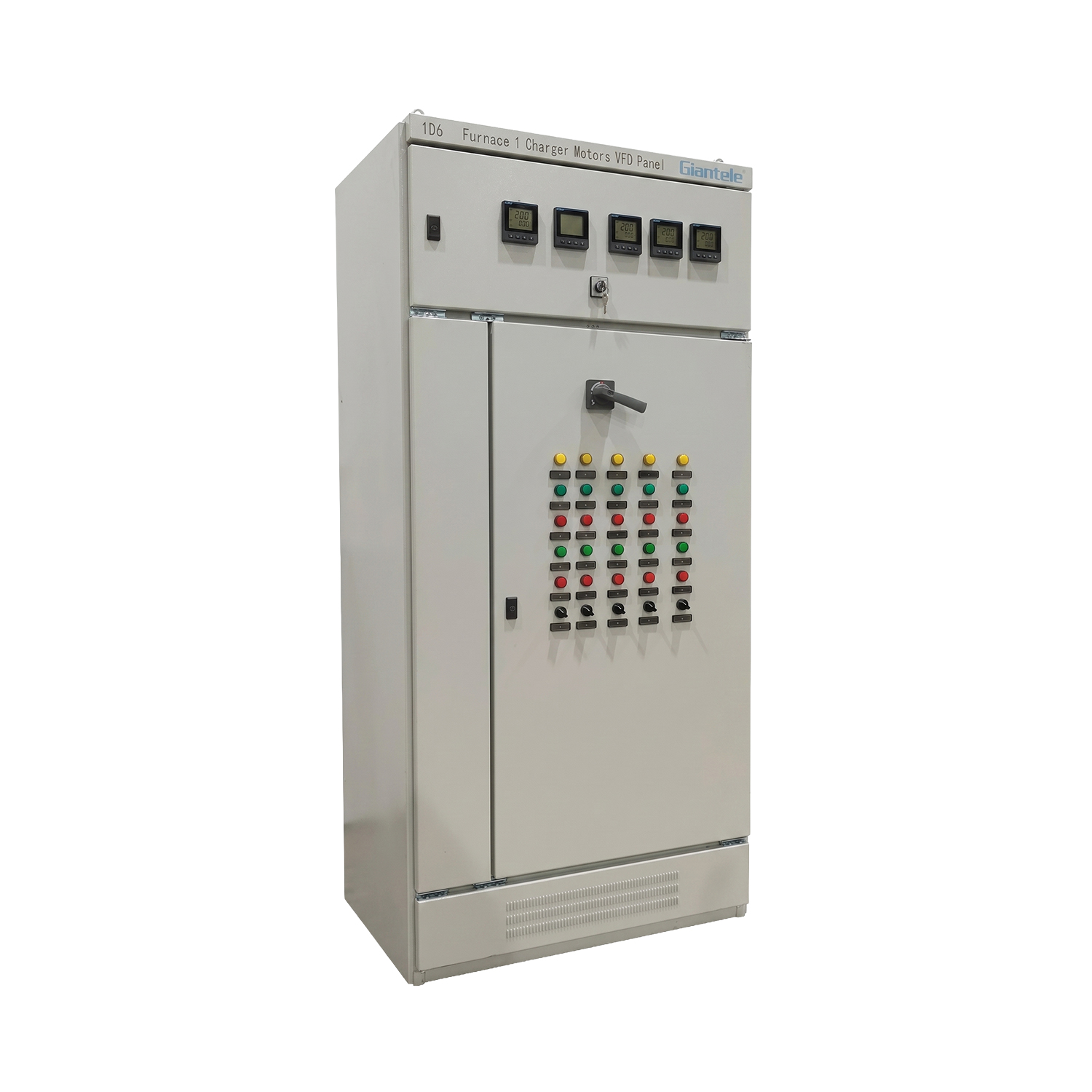
How To Choose The Right Power Distribution Board For Your Project
Selecting the right power distribution board for your project is one of the most consequential decisions in any electrical installation. From light commercial fit-outs to large-scale industrial facilities, the wrong choice creates safety risks, operational disruptions, and costly retrofits. This guide breaks down the complete selection process — covering load calculation, low voltage power distribution board specifications, IEC compliance, environmental protection ratings, and supplier evaluation. Whether you are specifying a distribution cabinet for a manufacturing plant or a switch panel for a commercial building, this structured approach helps you match the right equipment to your project's exact demands, budget, and long-term goals.
Read More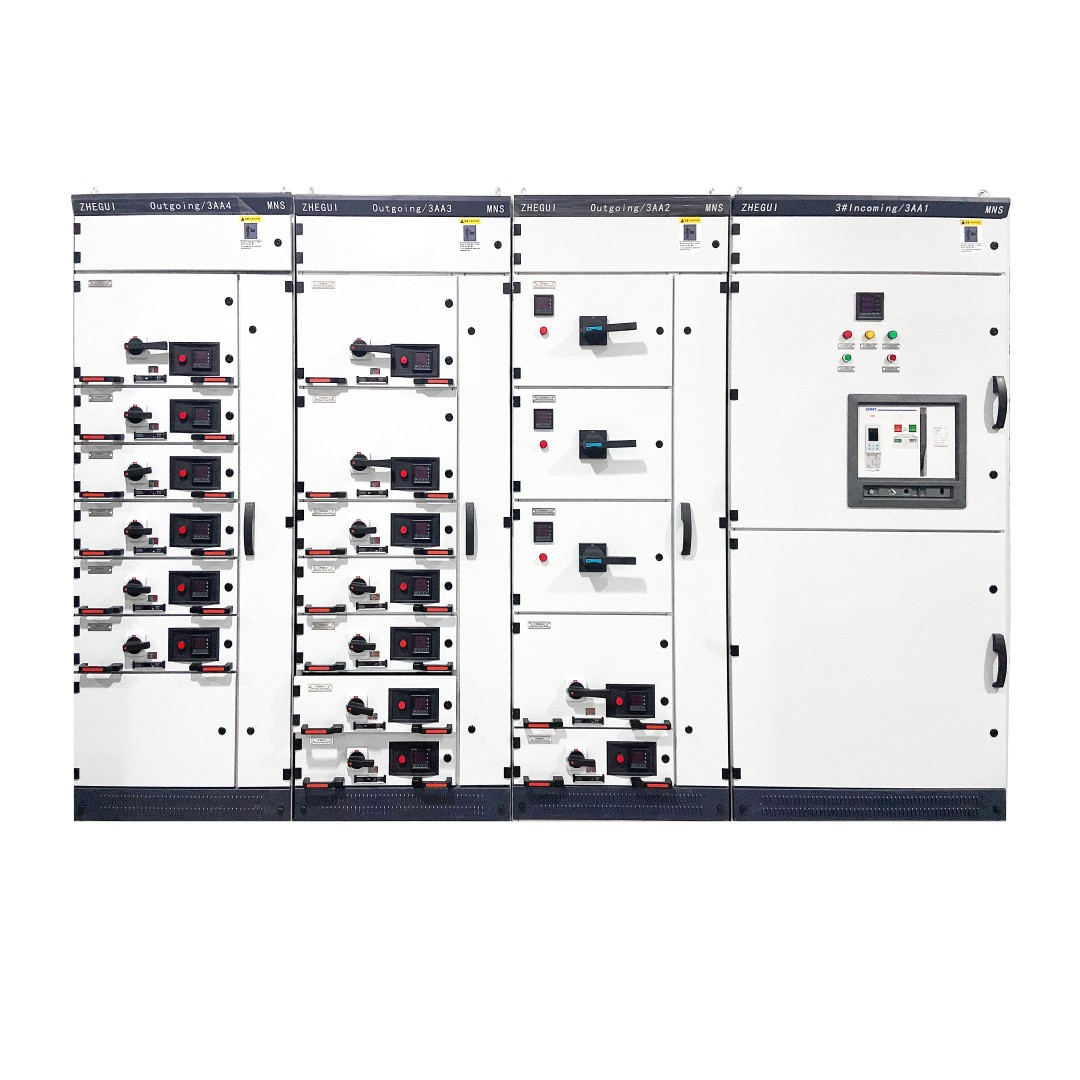
Motor Control Center Panel: The Complete Buyer's Guide for Industrial Projects
A motor control center panel centralizes motor control and protection in one enclosure. Compare MCC panel types, motor control center cost, and find trusted motor control center suppliers, motor control center manufacturers, and MCC panel suppliers for your next industrial project.
Read More
What Is The Difference between MCC, PLC, And VFD Panels?
In today’s industrial automation landscape, electrical control panels are fundamental components that determine the reliability, safety, and efficiency of operations.
Read More