


When people first hear the term ring main unit, they often imagine “a transformer cabinet” or “a switch box.” In real electrical power distribution projects, the ring main unit (often shortened to RMU) is neither of those—and understanding the difference matters, because the RMU is frequently the component that determines how reliably, safely, and flexibly a medium-voltage network can be operated. From our perspective as a manufacturer serving distribution utilities, industrial sites, renewable energy connections, and commercial infrastructure, the RMU is best understood as the control point of the medium-voltage loop: it is the equipment that enables safe switching, sectionalizing, protection coordination, and fault isolation so that power can keep flowing even when one part of the network has a problem.
What is a ring main unit (RMU)?
A ring main unit is a medium-voltage switchgear assembly designed to connect, switch, protect, and isolate sections of a distribution network—especially in a ring (loop) topology, where power can be fed from two directions. In many distribution systems (commonly in the 10–36 kV range, depending on region), a ring network improves reliability: if one cable section fails, operators can isolate the faulty part and restore supply from the other side.
In simple terms, an RMU is the “traffic controller” of medium-voltage power distribution:
It connects incoming and outgoing feeders (cables) in a ring.
It provides switching and isolation so maintenance can be done safely.
It includes protection functions (depending on configuration) to manage faults.
It supports compact installation for urban substations, buildings, and compact package stations.
Where you typically find RMUs
You’ll often see ring main units in:
Urban distribution networks and commercial districts
Industrial parks and factories
Wind/solar collection networks and grid connection points
Data centers and large facilities needing high continuity
Residential developments with pad-mounted or kiosk substations
Why ring networks use RMUs
In a radial distribution design, power flows from one direction. If a fault happens, everything downstream can lose power until the problem is fixed. In a ring network, power can be restored by switching, because the network can be supplied from the other direction once the faulted segment is isolated.
An RMU enables this practical reliability benefit:
Fault occurs on one cable section.
Operators open switches to isolate that section.
The rest of the ring is reconfigured so healthy sections receive supply from another direction.
This is why RMUs are strongly associated with reliability-focused distribution planning.
Main components and typical RMU functions
Different projects require different RMU configurations, but most ring main units combine several functional “blocks” inside one compact enclosure. From a user’s viewpoint, this is the real value of an RMU: you get standardized MV switching, protection, and safe isolation in a package that’s engineered, tested, and repeatable—rather than assembled piece-by-piece on site.
1 Load break switch (LBS) feeder units
LBS feeder units are the backbone of the ring. They are designed to switch under load (within their rated current) and to isolate sections of the network so operators can sectionalize faults or carry out maintenance. In day-to-day operations, these feeder switches are what make ring networks practical: you can reconfigure the supply path without dismantling cable terminations or relying on external switchgear. In many utilities, the LBS feeder is favored for ring feeders because it offers a clear, robust switching function with relatively simple operation.
2 Circuit breaker (CB) or fused switch protection units
This unit typically protects the transformer feeder (and in some designs, an outgoing feeder). Protection philosophy varies by network and fault level. Fused switch units are widely used for transformer protection because fuses provide fast fault clearing and a straightforward coordination approach. Circuit breaker units, usually paired with protection relays, are selected when projects need more advanced protection functions, better selectivity, or easier reset/remote operation after faults. The “right” choice is not about which is more modern—it’s about matching protection behavior to fault levels, operating practices, and the expected frequency of switching events.
3 Earthing switch
The earthing switch is not a secondary accessory—it is a core safety function. Before technicians can touch MV cables or terminations, they need a reliable way to ground and discharge the circuit section. A properly designed earthing switch provides clear status indication, strong making capacity (where required), and safe operation through interlocks. In real maintenance scenarios, this is one of the most used and most safety-critical RMU functions.
4 Cable terminations and bushings
These are the interface points for incoming and outgoing MV cables. Good termination design supports reliable insulation performance, controlled stress distribution, and practical installation in tight spaces. In many projects, the cable interface is also where “site reality” shows up—tight bending radius, variable cable conditions, limited access—so an RMU that’s engineered for practical termination work reduces installation errors and long-term partial discharge risk.
5 Control and indication
Even basic RMUs rely on mechanical indicators (switch position, earthing status), interlocks, and clear labeling to prevent incorrect operation. Many modern installations also include motorization, remote control, fault passage indication, or SCADA-ready interfaces. The core principle is the same: the RMU should communicate its status clearly, and it should prevent unsafe operating sequences by design.
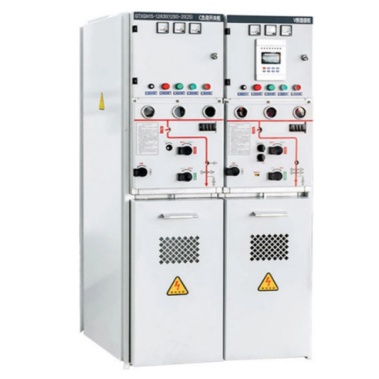
Key RMU design choices that influence performance
From manufacturing and application experience, these are the areas that most strongly affect long-term value:
1 Insulation medium and enclosure concept
Many RMUs are built with sealed or compartmentalized designs to improve safety and reliability. Different insulation approaches exist, and each comes with tradeoffs in compactness, maintenance philosophy, and lifecycle strategy.
Practical takeaway: choose a design that matches your site environment (humidity, dust, salt fog), operations philosophy (inspection cycles, maintenance access), and regulatory expectations.
2 Switching + protection configuration
Not all RMUs protect the same way. Some use load break switches for feeders and fused protection for transformer branches; others adopt circuit breaker-based protection with relays.
Practical takeaway: align protection with your fault levels, selectivity goals, and whether you need advanced protection functions.
3 Interlocking and operator safety
A good RMU design uses mechanical and/or electrical interlocks to prevent unsafe switching sequences (for example, grounding a live cable).
Practical takeaway: safety features are not optional add-ons; they are core to real-world operations.
4 Expandability and maintenance access
Distribution networks evolve. A solution that supports expansion and practical servicing reduces long-term cost.
Practical takeaway: think about future feeders, metering, and potential automation—not just today’s diagram.
Closing thoughts
A ring main unit is one of the most practical tools for improving reliability in electrical power distribution—especially where ring networks, dense urban loads, industrial users, or renewable connections demand flexible switching and fast fault isolation. And when we compare what is the difference between a ring main unit and a transformer, the most important message is this: an RMU is not a substitute for a transformer, and a transformer is not a substitute for an RMU. The transformer changes voltage so power can be used; the RMU manages the medium-voltage network so power can be delivered safely, continuously, and with control. In many projects, the RMU is the part that determines how quickly you can isolate a fault, how safely you can perform maintenance, and how confidently you can expand your network later. If you are designing a secondary substation, upgrading an industrial MV supply, or planning a ring distribution network, it’s worth taking the time to match RMU configuration to your protection philosophy and operating needs. To learn more about ring main unit options, typical configurations, and how they are applied in real distribution projects, you can explore resources from Zhejiang Zhegui Electric Co., Ltd. or contact our team to discuss your single-line diagram, site conditions, and project requirements.
FAQ
1) What is a ring main unit used for in electrical power distribution?
A ring main unit (RMU) is used for medium-voltage switching, isolation, and protection, especially in ring networks where power can be supplied from two directions. It supports fault isolation and faster service restoration.
2) What is the difference between a ring main unit and a transformer?
A ring main unit is MV switchgear that controls and protects feeders; a transformer is a device that converts voltage (for example, MV to LV). They often work together in a substation but do different jobs.
3) Do all ring networks require an RMU?
Not always, but RMUs are commonly chosen because they provide compact, standardized switching and safer operation for ring or loop distribution layouts. They are especially helpful where reliability and maintenance safety are critical.
4) How do I choose the right ring main unit configuration for my project?
Start with MV voltage/current ratings, network topology (ring vs radial), transformer feeder requirements, installation environment, and your protection philosophy (fuse vs circuit breaker/relay). This ensures the RMU matches real operating needs.