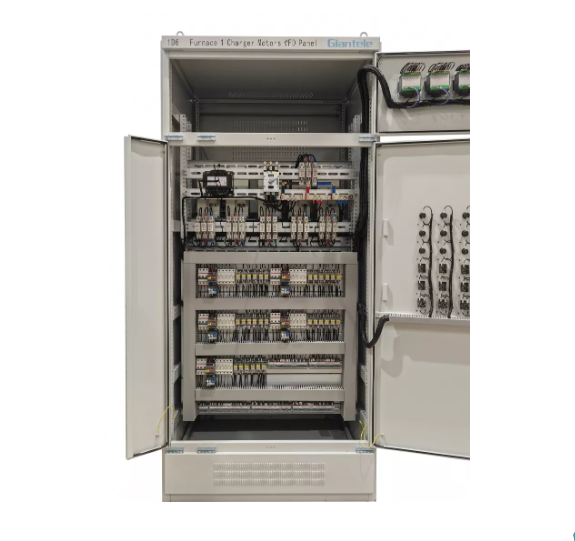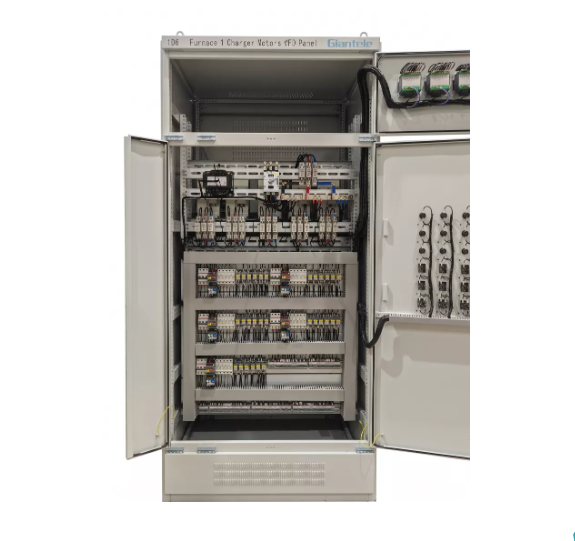

Electrical distribution panels divide incoming power into branch circuits that feed lighting, machinery, and equipment throughout a facility. Adding surge protection to that distribution point protects everything downstream from voltage spikes caused by lightning, utility switching, and equipment operation. Buying a panel with built-in surge protection requires understanding the panel types, the surge protection device ratings, and where to find suppliers who integrate the two correctly. This guide covers the buying process and the evaluation criteria.
Key Takeaways
- Built-in surge protection protects the whole distribution system: A surge protection device installed at the main distribution panel diverts transient overvoltage to ground before it reaches downstream equipment. A device at the main electrical box protects every branch circuit fed from that panel.
- Surge protection devices are rated by capacity and location: Type 1 SPDs install at the service entrance. Type 2 SPDs install at distribution panels. The discharge current rating and the voltage protection level determine how much surge energy the device handles.
- Not every electrical panel supports integrated surge protection: A panel must have the space, the busbar connection point, and the correct earthing arrangement to accommodate a surge protection device. Buying a panel with the SPD pre-installed avoids retrofit complications.
- The supplier matters as much as the panel: A panel with a certified SPD correctly installed and coordinated with the upstream protection is a tested system. A panel with an aftermarket SPD bolted in without coordination provides false confidence.
Types of electrical panels and where surge protection fits

Different types of electrical panels serve different distribution roles
The different types of electrical panels in a facility form a hierarchy. The main electrical box — also called the electrical main box or electric main box — receives power from the utility or transformer and distributes it to sub-panels. An electrical db (distribution board) then feeds individual circuits. Surge protection is most effective at the highest level of the hierarchy, where it protects the largest portion of the system.
A main box electric with built-in surge protection shields every downstream sub-panel. Installing surge protection only at individual sub-panels leaves the main distribution and the sub-panel feeders exposed. The types of electrical panels determine where each SPD should be placed for coordinated, cascaded protection.
Industrial power distribution solutions typically follow a two-stage surge protection approach. A Type 1 SPD at the service entrance handles direct lightning strikes and the largest transients. Type 2 SPDs at the distribution panels handle switching transients and the residual energy from the Type 1 device. This cascaded arrangement provides layered protection that a single device cannot. The low voltage switchgear at the service entrance is the natural location for the Type 1 device.
Surge protection device ratings for distribution panels
| Location | SPD Type | Discharge Current | Protection Role |
|---|---|---|---|
| Service entrance / main panel | Type 1 | 25-50 kA (10/350 µs) | Handles direct lightning current and the largest transient surges at the point of entry. |
| Main distribution panel | Type 2 | 40-100 kA (8/20 µs) | Handles switching surges and residual energy from the Type 1 device at the distribution level. |
| Sub-distribution panel | Type 2 | 20-40 kA (8/20 µs) | Protects branch circuits from locally generated transients within the facility. |
| Critical equipment / final circuit | Type 3 | 10-20 kA (8/20 µs) | Point-of-use protection for sensitive electronic equipment such as PLCs and drives. |
Electrical distribution equipment with integrated surge protection is tested as a coordinated system. The SPD's voltage protection level must be lower than the withstand voltage of the equipment it protects. The SPD's discharge current rating must exceed the expected surge energy at its location. An APFC panel or a motor control center feeding sensitive equipment benefits from a Type 2 SPD at the panel incomer, protecting the capacitors, the drives, and the control electronics together.
Where to buy electrical distribution panels with surge protection
Three sources and what each provides
Electrical distribution panels with built-in surge protection come from three sources. Original equipment manufacturers build the panel with the SPD integrated at the factory, tested as a complete system, and certified. Electrical distributors stock standard panels and add surge protection on request, which is faster but less coordinated. Online electrical suppliers offer the broadest selection but the least technical support for a protection application that requires coordination engineering.
The electrical control panel with factory-integrated surge protection is the safest choice for a main distribution application. The manufacturer verifies the SPD rating, the earthing, the connection point, and the coordination with upstream protection during the factory test. An aftermarket SPD bolted into a standard panel provides a surge protection device, but not necessarily a coordinated surge protection system.

When buying, request the surge protection documentation as part of the panel specification. The power distribution board specification should state the SPD type, the discharge current rating, the voltage protection level, and the coordination with the upstream breaker. The IEC 61439 standard covers assembly verification, while surge protection device performance is governed by the IEC 61643 series. A reputable supplier provides test documentation for both.
Evaluating a distribution panel supplier for surge protection

Four checks before you buy
An ATS control panel switching between utility and generator power also benefits from surge protection, because the switching operation itself generates transients. The ISO 9001 framework requires documented verification of the surge protection installation, and the IEA has documented that industrial facilities with coordinated surge protection experience fewer equipment failures and less downtime than facilities relying on point-of-use protection alone.
Frequently asked questions
What is the difference between Type 1 and Type 2 surge protection?
Where should surge protection be installed in a distribution system?
Can I add surge protection to an existing distribution panel?
How do I know if a surge protection device is correctly sized?
What documentation should a surge-protected panel include?
Why does surge protection matter for industrial equipment?
Final thoughts
Electrical distribution panels with built-in surge protection are a system purchase, not a component purchase. The value is in the coordination — the SPD type, the discharge rating, the voltage protection level, the earthing, and the upstream protection all working together. Buy from a supplier who integrates the surge protection at the factory and provides the test documentation to prove it. A main electrical box with a certified, coordinated, and tested surge protection system protects every circuit downstream, and that protection is worth far more than the premium over a standard panel.
Discuss Your Distribution Panel Requirements
Send us your distribution single-line diagram and surge protection requirements. Our engineering team provides a panel specification with coordinated surge protection and complete test documentation.