
A main electrical switchboard is only as good as the supplier who configures it. Industrial automation adds loads that a catalogue board was never sized for. This guide shows what to fix in the specification, then how to compare the sources that can build it.
Key takeaways
- Customizable means five decisions, not a colour choice: busbar rating, separation, metering, protection and cable entry.
- The source you pick decides how much engineering you get, not only the price.
- Ask for the single-line, the type test reference and the routine test sheet before you compare quotes.
- Withdrawable modules let a technician replace one feeder in minutes instead of hours.
- In humid, dusty plants the enclosure and the ventilation retire the board long before the busbar does.
What customizable configurations change inside the board
A configured board is defined by five choices that a price list never shows. The busbar rating, the form of separation, the metering scheme, the protection devices and the cable entry. Get them written into the inquiry, because each one changes the build and the test.
The field carries many names for the same assembly. You will meet a main electrical switchboard, a low voltage main switchboard, a mains switchboard and a main switch board.
Others write low voltage switchboard, electrical switchboard or industrial switchboard. A few drawings say distribution switchboard, switchboard panel or switchboard assembly. The duty never changes with the label on the drawing.
| Configuration | What it changes | Cost impact |
|---|---|---|
| Busbar rating | Load capacity and short-circuit withstand of the whole board | Highest |
| Form of separation | How close a person works to live metal | Moderate to high |
| Metering and current transformers | Whether you can see energy per outgoing way | Low to moderate |
| Protection devices | Which fault clears first and how fast | Moderate |
| IP rating and ventilation | Whether dust and humidity reach the conductors | Moderate |
| Cable entry and spare ways | How fast the next machine can be connected | Low |
Each row changes the build hours and the test evidence, so the quote has to follow the specification rather than lead it. Sound power distribution design starts from the load list and works backwards to the busbar.
Retrofits show why this matters. In Vietnam, Indonesia and Bangladesh, textile plants add VFDs to spinning and winding lines without stopping production. The board has to accept new feeders in stages, in a room held at high humidity with cotton dust in the air.
A configured board handles that sequence. A stock board forces the plant to buy a second enclosure and a second set of protection devices.
Where to source a main electrical switchboard: four supplier models
Four source models cover most projects, and they differ in engineering depth rather than in quality. A panel builder assembles from bought-in components. A distributor holds stock. An automation integrator shapes the board around a control system. A manufacturer with in-house engineering owns the busbar design and the type test.
- Panel builder: cheapest on a fixed drawing, weakest when the specification is still open.
- Distributor: fastest delivery on standard ratings, least willing to change a catalogue item.
- Automation integrator: strong on logic and I/O, often weaker on assembly type testing.
- Manufacturer with in-house engineering: owns the type test, the busbar calculation and the routine test sheet.

Read the inside of the board, not the brochure
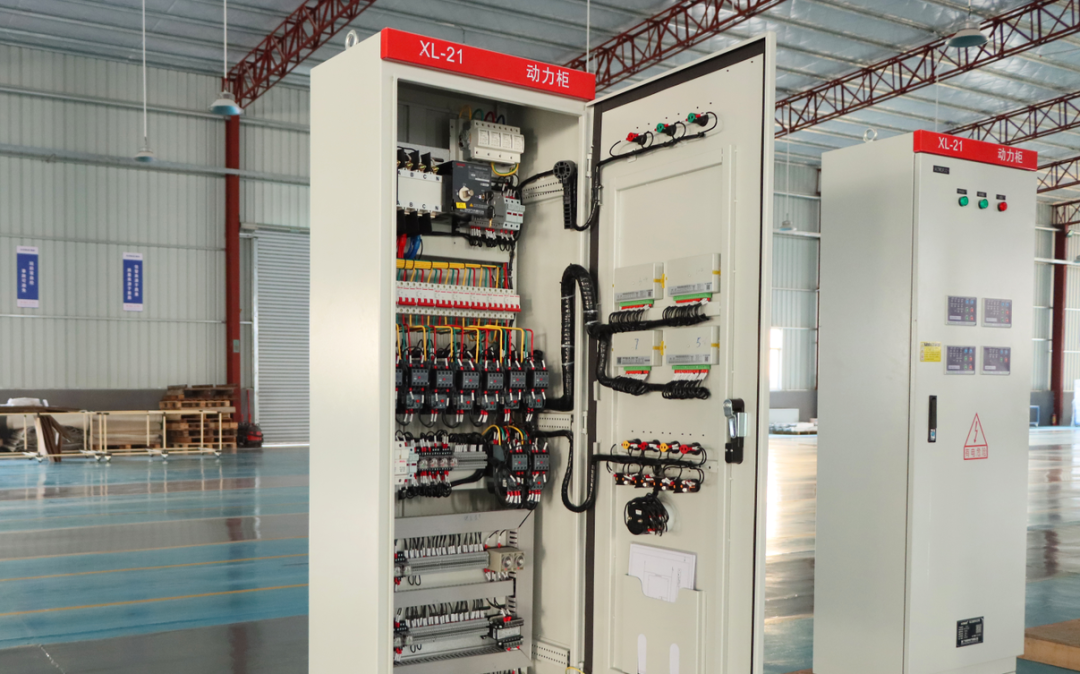
Ask to open a switchboard panel before you order. Look at the busbar supports, the circuit breaker frames and the wiring ducts.
Terminal blocks should carry a label matching the schematic. A tidy interior is a habit, and it shows up later in fault finding.
Configurations that automation loads demand
Automation changes the duty of the board, not its voltage. Servo drives, VFDs and sensor buses add harmonic current, inrush and a steady stream of small loads. A board configured for a fixed-speed plant will run hot and nuisance-trip once those loads arrive.

Three options that decide uptime
Drawers and busbar take the space, so a board built for later growth needs the frame size on day one. Retrofitting drawers into a fixed assembly means replacing cubicles, which is why the spare ways belong in the first order.
Protection is the other half of the configuration. A board feeding an automation line should carry surge arresters at the incoming section, the same discipline behind most electric power distribution upgrades on older sites.
The same logic drives electrical power distribution system planning across a whole line. Where several boards ship together, buying through power distribution cabinet suppliers on a single order also fixes the drawing set for the whole plant.
Pair the board with customizable motor control panels from the same supplier and the protection curves stay coordinated. Two suppliers means two coordination studies, and nobody owns the gap between them.
Evidence to demand from a switchboard panel supplier

Walk one installation before you sign
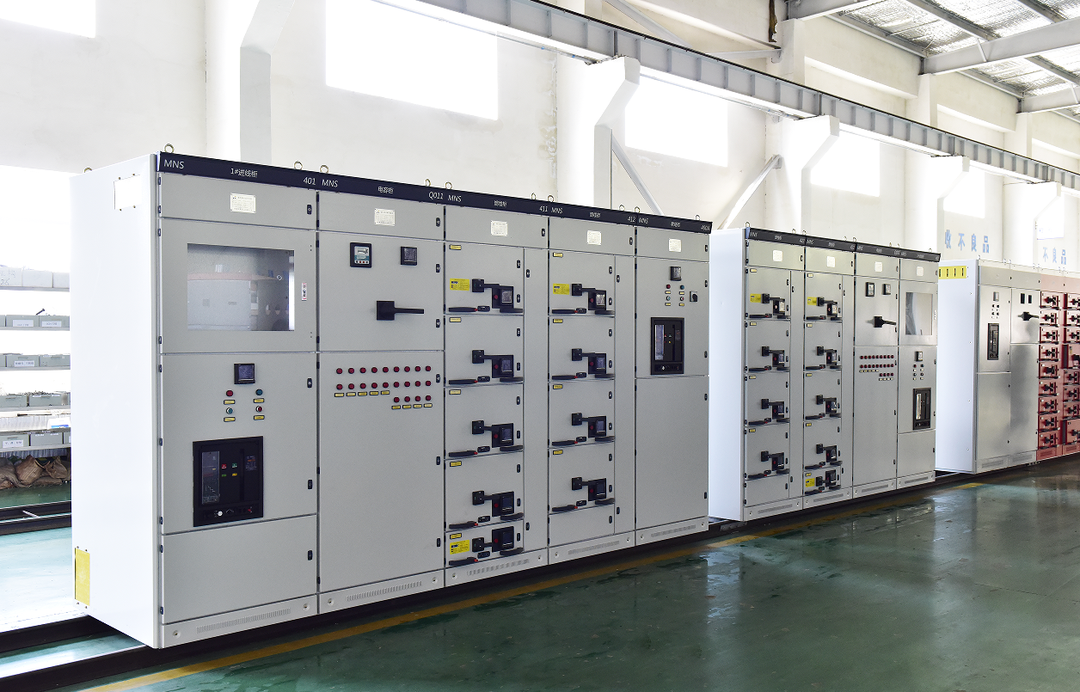
Ask for a reference installation you can visit. Look at the switchgear rows, the indicator lamps and the cable routing after two years of service.
A supplier who cannot arrange a visit is telling you something about the after-sales side.
Evidence, not adjectives, separates suppliers. Ask electrical cabinet suppliers for the single-line drawing, the busbar rating calculation, the form of separation and the routine test sheet for your own unit. A supplier who assembles boards can send the drawing. A supplier who engineers them also sends the calculation.
Assemblies of this type sit under IEC 61439, which sets the clearance, the segregation and the temperature rise a board has to prove. The routine test sheet is where that proof appears for your unit, with the dielectric and functional checks you can witness.
A quality file held under ISO 9001 keeps the drawings, the device certificates and the test records together. That file matters when a fault is investigated two years after handover.
Sourcing also has a cost side. Unplanned downtime is the largest hidden line in a plant budget, and the reliability figures published by the IEA make that cost visible. A configured board that clears faults locally protects production as well as people.
Frequently asked questions
What does customizable configuration mean on a switchboard?
Should I buy from a manufacturer or a distributor?
What busbar rating should I specify for an industrial switchboard?
Does every switchboard assembly need a new type test?
How long should a configured board take to deliver?
What should I check before paying a deposit?
Final thoughts
Configuration is the whole product. Fix the busbar rating, the separation, the metering and the cable entry before you ask for prices, then judge every source on the evidence it publishes. Send Giantele your load list and automation scope for a configured layout with the test scope marked.
Need a switchboard configured around your automation line?
Share your load list, the spare ways you want and the metering points. We return a layout that names the busbar rating, the form of separation and the routine tests.