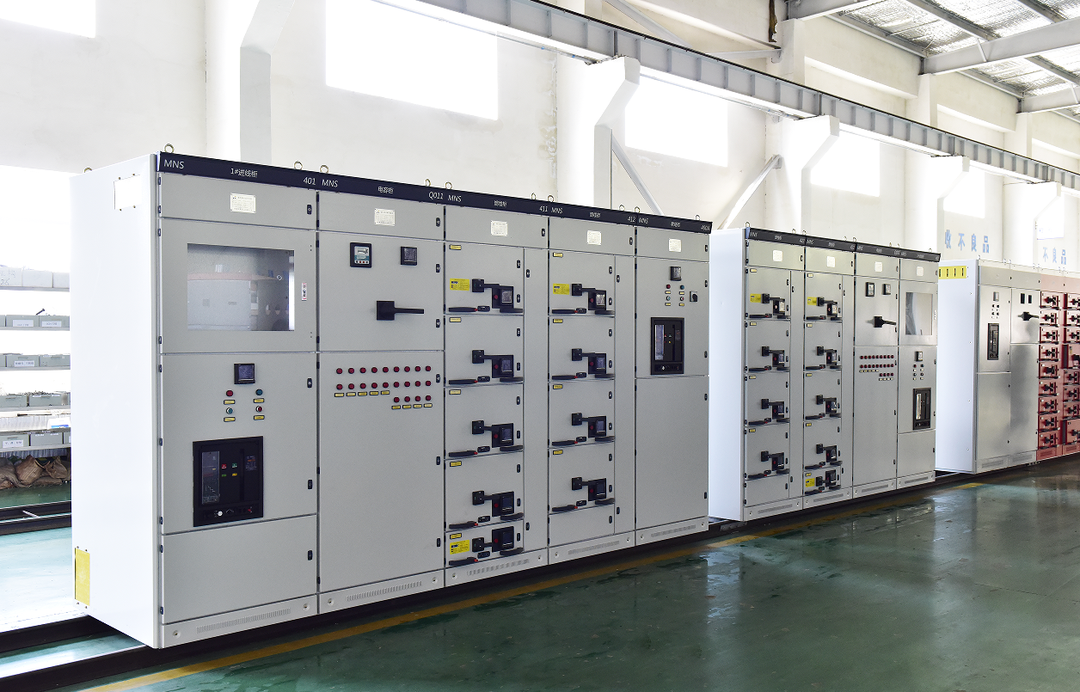
Finding vendors that supply a main distribution board with energy metering takes one search. Finding vendors that get the metering chain right takes a checklist. The meter is one link. Current transformers, accuracy class, and the data protocol decide whether the readings are worth trusting.
Key takeaways
- Metering is a chain: CT, meter, protocol, and platform. One weak link ruins the data.
- Accuracy class must match the job. Billing needs Class 0.5S. Plant trends can live with Class 1.
- The current transformer sets the ceiling, so meter accuracy above the CT class is wasted money.
- Ask every vendor for the metering single-line and the CT schedule before you compare prices.
- A metering-ready board costs 5 to 10 percent more and pays back through visible load data.
What energy metering inside a main distribution board covers
Energy metering inside a main distribution board measures voltage, current, power, and energy at one or more points. A complete package has current transformers on each phase, a meter with the right accuracy class, a communication route out of the enclosure, and a platform that logs the data.
Most power panel manufacturers treat metering as an accessory and price it late. That order is backwards. Metering changes the busbar layout, the door plate, and the wiring space, so settle it before anyone draws the board.
One meter on the incoming section gives you a plant total. Meters on each outgoing group give you the breakdown that earns the money. The second option needs more CTs and more wiring, but it shows where the load really sits.

Door meters show the moment, not the history
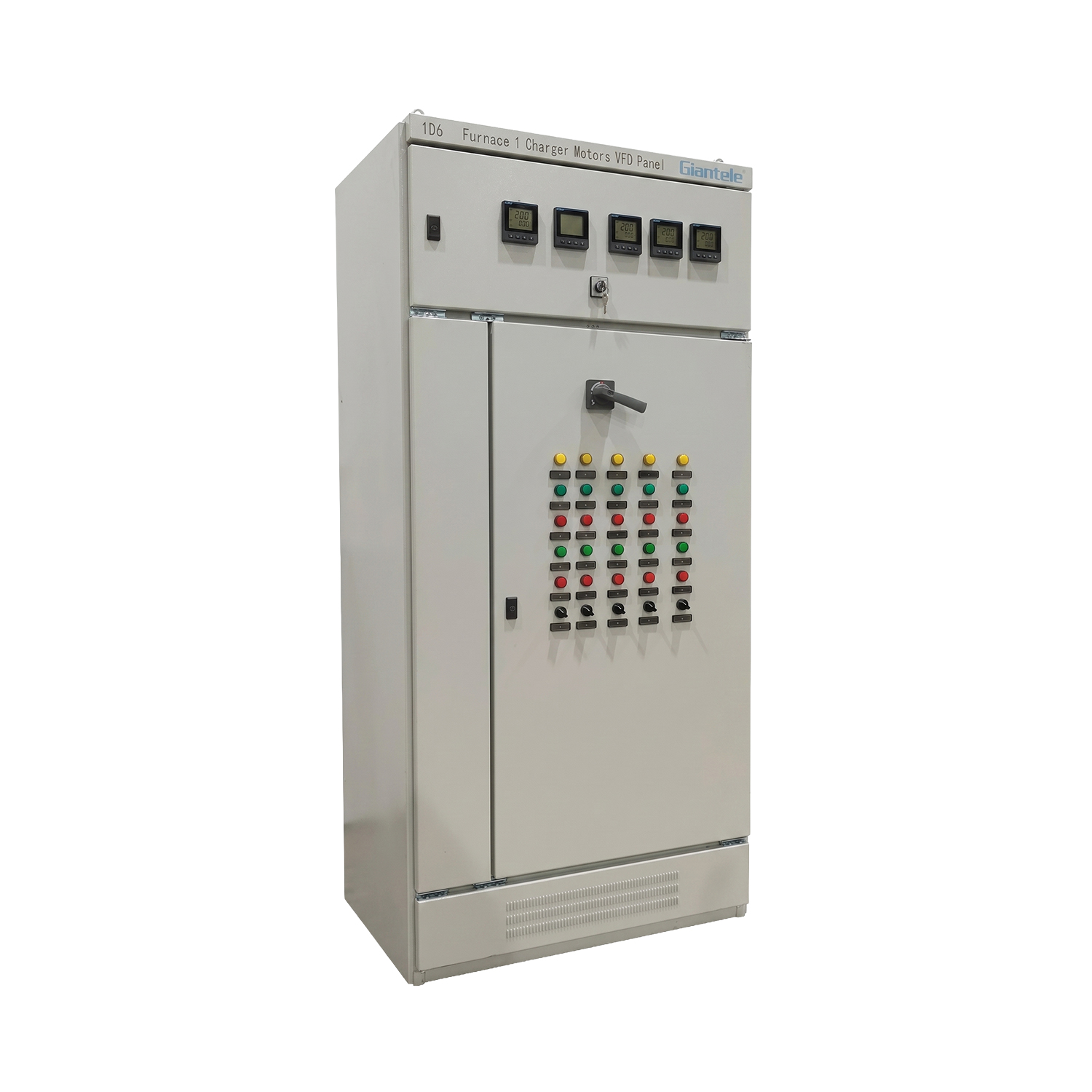
Panel meters on the front door show what is happening now. They store nothing and export nothing.
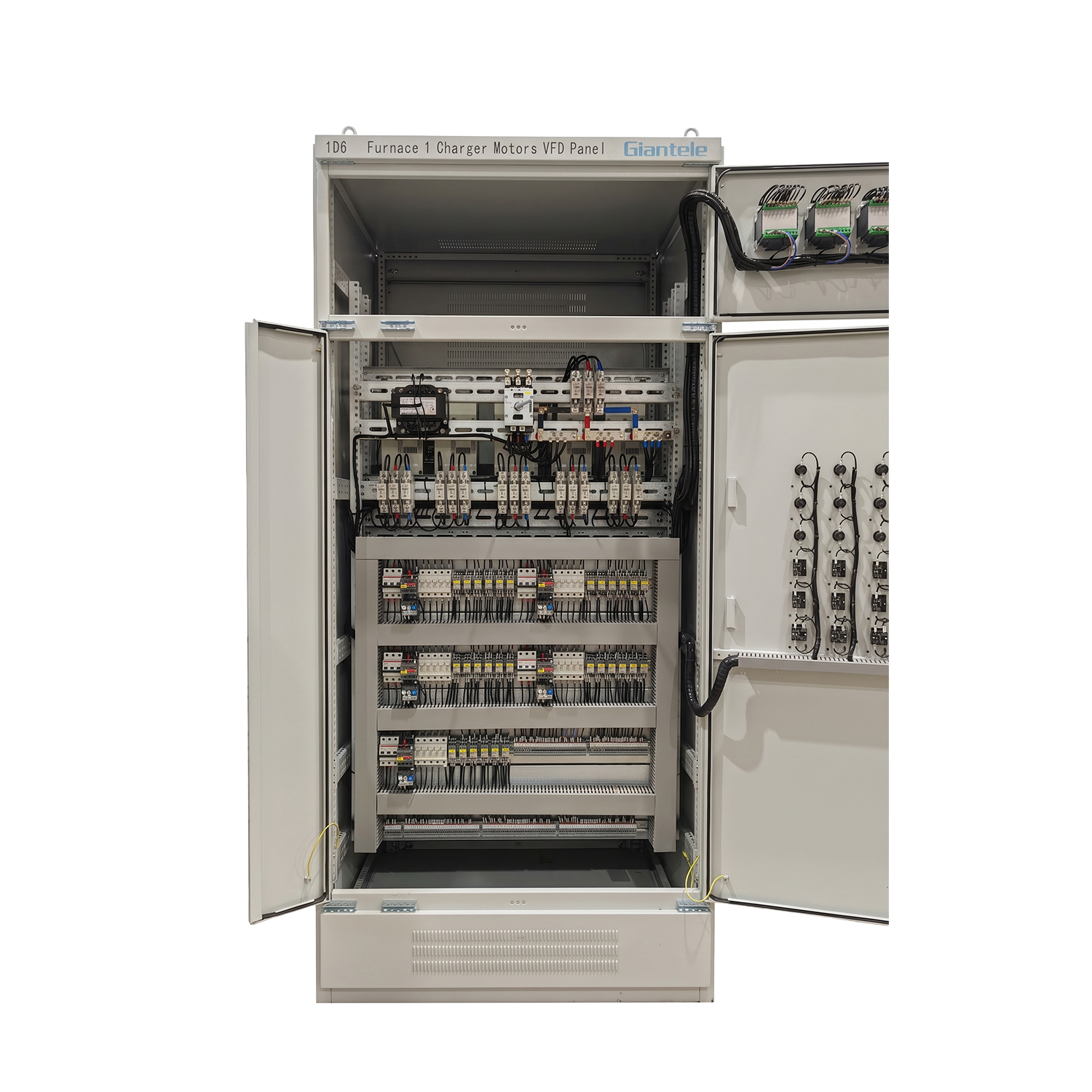
A metering-ready board adds CTs on the bar, a communicating meter, and a cable route for the data link.
Accuracy above the CT class is wasted money, because the transformer sets the ceiling for the whole chain.
Metering accuracy classes and where each one belongs
Accuracy class describes how far a meter reading can drift from the true value. Class 0.5S and 0.2S suit billing and utility interfaces. Class 1 suits departmental cost centres. Class 2 suits plant room trends, where you watch a shape rather than a number.
Do not pay for billing class everywhere. A board with twenty outgoing ways rarely needs twenty revenue-grade meters. Meter the groups you charge for, and monitor the rest at a lower class. Granular data shows where energy goes, the picture the IEA tracks across industry.
| Accuracy class | Error band | Where it belongs |
|---|---|---|
| 0.2S | plus or minus 0.2 percent | Utility interface and tariff metering |
| 0.5S | plus or minus 0.5 percent | Tenant billing and cost allocation |
| 1 | plus or minus 1 percent | Departmental sub-metering and load studies |
| 2 | plus or minus 2 percent | Plant room trend logging |
The class applies to the meter, and the current transformer carries its own class. A Class 0.5S meter behind a Class 1 CT delivers Class 1 results, because the weakest link sets the accuracy of the chain.
Current transformers decide more than the meter
The current transformer sits on the live bar and scales a large current down to a level the meter can read. Its ratio, class, and burden decide the measurement more than the meter itself. Choose the CT first, then pick a meter that matches it.

Five choices that fix the reading
Size the CT from the running current, not from the breaker rating. A 1600A board that normally runs at 600A needs a 800/5 CT, not a 1600/5 unit. Metering on a data centre hall in the UAE follows this rule, because cooling load swings hard between day and night.
How to qualify a vendor before you place the order
Qualify a vendor on the metering drawing, not on the catalogue. Ask for the metering single-line, the CT schedule, the meter datasheet, and a sample data export. A supplier who can produce all four understands metering, and a trader who cannot is only forwarding boxes.
The field carries many labels: power panel manufacturers, electrical switchgear suppliers, switchgear manufacturers, an electrical panel builder, a low voltage distributor, switchgear companies, and switchgear distributors. The label tells you little, because the same assembly can come from any of them.
Compare electrical panel suppliers on the drawing set they hand over. A builder supplies the section arrangement, the CT schedule, and the routine test sheet. A reseller supplies a price and a delivery date.
Check the factory, not just the website. A vendor with a busbar workshop can change a CT ratio, add a metering compartment, or fit a metal clad switchgear design into your layout. A pure trading house can only quote what already sits on a shelf.
Metering also pulls in the wider board family. Where your incomer comes from a medium voltage switchgear supplier, the readings must reconcile across both voltage levels. Where the incoming section comes from a withdrawable switchgear supplier, the metering compartment has to slide out with the unit.
Small boards deserve the same care. A power distributor box feeding one workshop leaves no space for CTs, so metering there means a direct meter or nothing. Where the outgoing ways feed a low voltage motor control center, metering must still reconcile to the ways you charge for.

A vendor who documents metering can defend it later
Ask for the metering single-line, the CT schedule, the meter datasheet, and the routine test record as one set.
Those four documents prove the metering was designed, not added after the board was closed.
Under a documented quality file, a vendor keeps type-test records and as-built drawings together for inspection and for year ten.
Bringing metering data out of the board
Metering data leaves the board through a wired or wireless link. Modbus RTU over RS-485 is the common choice in industrial plants, because it is cheap, robust, and understood by most SCADA integrators. Ethernet and Modbus TCP suit larger sites with an existing network.
Name the protocol before the board is wired. A meter ordered with a pulse output cannot be upgraded to Modbus without a new meter. Decide the route once, and wire it during assembly, when the board is still open.
Plan the cable route and the gateway at the same time. In a badly planned board, metering signals share ducts with power cables and induced noise corrupts the readings. Keep the data cable separate, use shielded twisted pair, and earth the shield at one end only.
The metering package also feeds your power quality work. Boards that carry large drives and reactive power compensation equipment show their losses in the metering data first. Section level metering is often what triggers a power factor study in the first place.
Assembled boards carrying this wiring must satisfy IEC 61439 for clearance, segregation, and temperature rise. Metering adds low-current circuits inside a power enclosure. Those circuits still need physical separation from the busbar.
A documented quality file under ISO 9001 keeps the metering drawings, test sheets, and CT records in one place. That file is what a vendor hands you when you ask for metering proof.
Frequently asked questions
What does energy metering on a main distribution board include?
Which accuracy class do I need for tenant billing?
Can metering be added to an existing main distribution board?
What is the difference between a power meter and a current transformer?
Which communication protocol should I specify for metering?
How much does metering add to a main distribution board?
Do I need metering on every outgoing way?
How do I compare metering quotes from different vendors?
Final thoughts
Metering is a chain, and the weakest link sets the result. Fix the CT ratio, the accuracy class, and the protocol before you ask for prices, then compare vendors on the drawing set. Giantele can return a metering-ready layout drawn from your load list.
Need a metering-ready main distribution board?
Send your single-line, your metering points, and the protocol your site uses. We return a layout with the CT schedule and the meter class marked on the drawing.