


Metal clad switchgear and metal enclosed switchgear are two widely used medium voltage solutions in power distribution systems. Both protect electrical networks, control switching operations, and house protective relays. However, they differ significantly in internal construction, safety level, and application scope. Selecting the wrong type can create safety risks, increase long-term costs, and cause compliance issues. This guide clearly explains what each type is, how they compare, and which one suits your project best. Whether you are procuring for a primary substation or a compact secondary network, understanding the difference between these two types of AC metal enclosed switchgear is essential before you specify.
Metal-Clad Switchgear
Definition
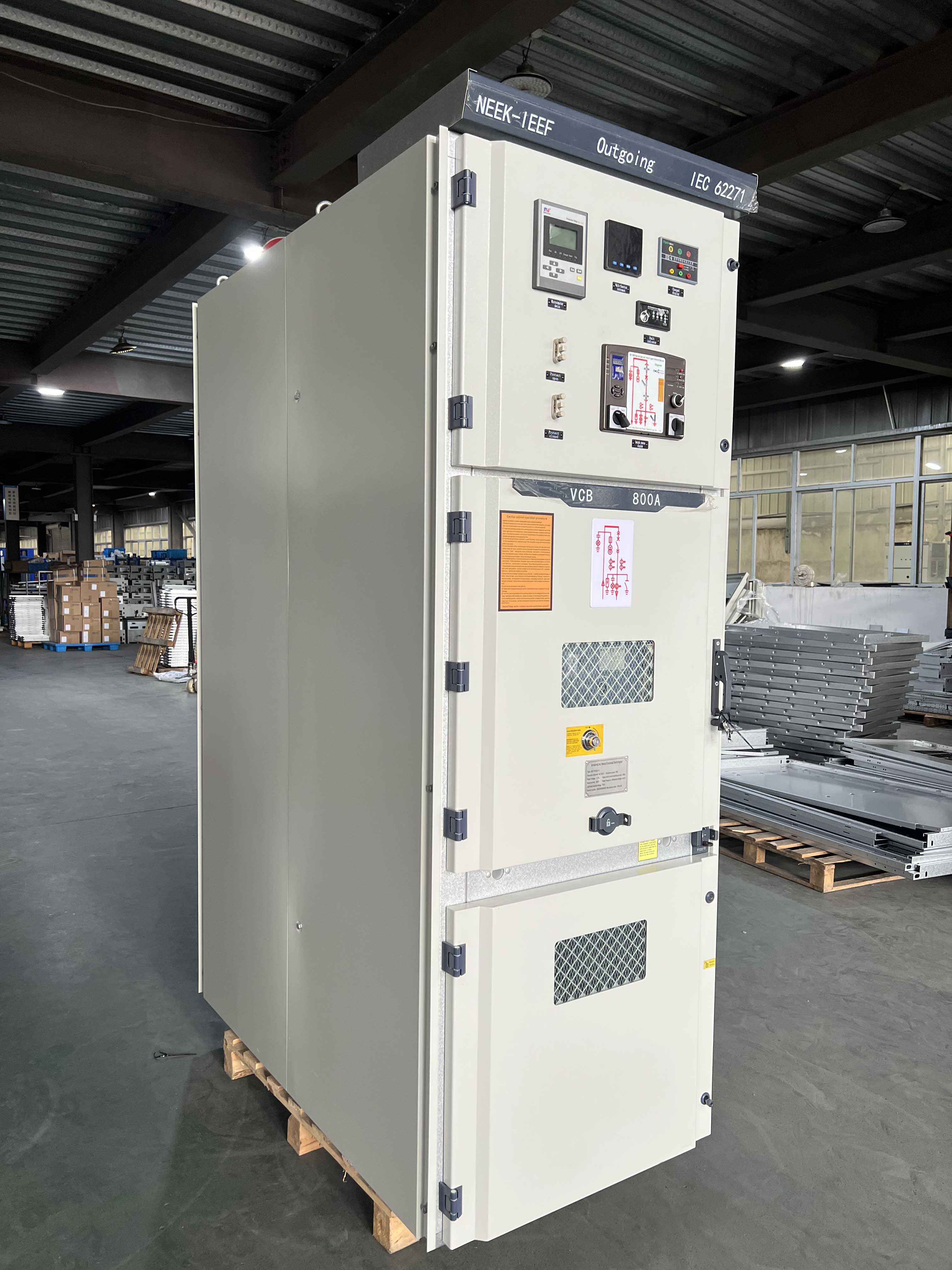
Metal clad switchgear is a high-specification category of medium voltage switchgear defined under IEC 62271-200 . Its defining characteristic is full compartmentalization — every major component is housed in its own grounded metal enclosure, completely separated from the others by metal barriers. The main switching device, busbars, cable terminations, and control instruments each occupy an independent sealed compartment. This armored metal-enclosed switchgear construction ensures that an internal fault in one zone cannot propagate to adjacent zones, offering the highest level of personnel safety and system reliability among all metal-enclosed designs.
Features
Full Metal Compartmentalization:Every internal section — bus, breaker, cable, and relay — is enclosed within its own grounded metal partition. Pressure relief is provided per compartment, preventing fault propagation between zones.
Withdrawable Switching Device: The main circuit breaker is mounted on a drawout carriage with clearly defined positions: connected, test, and disconnected. Maintenance and replacement are possible without de-energizing the entire switchboard.
Five-Prevention Interlock System: Mechanical and electrical interlocks prevent all five types of common misoperation, including closing onto earthed circuits or withdrawing under load.
High Fault Withstand Capacity: Medium voltage metal clad switchgear is engineered for high short-circuit levels, making it suitable for primary substations and high-demand industrial environments.
Front-Access Servicing: All routine maintenance is performed from the front face of the panel. This enables back-to-back installation and minimizes the required substation floor area.
IEC 62271 Compliant: Meets the full requirements of IEC 62271-200 for metal-enclosed medium voltage switchgear, ensuring compatibility with international project specifications and utility standards.
High Ingress Protection: Sealed compartments provide strong protection against dust and moisture, supporting reliable operation in harsh or outdoor-adjacent environments.
Metal-Enclosed Switchgear
Definition
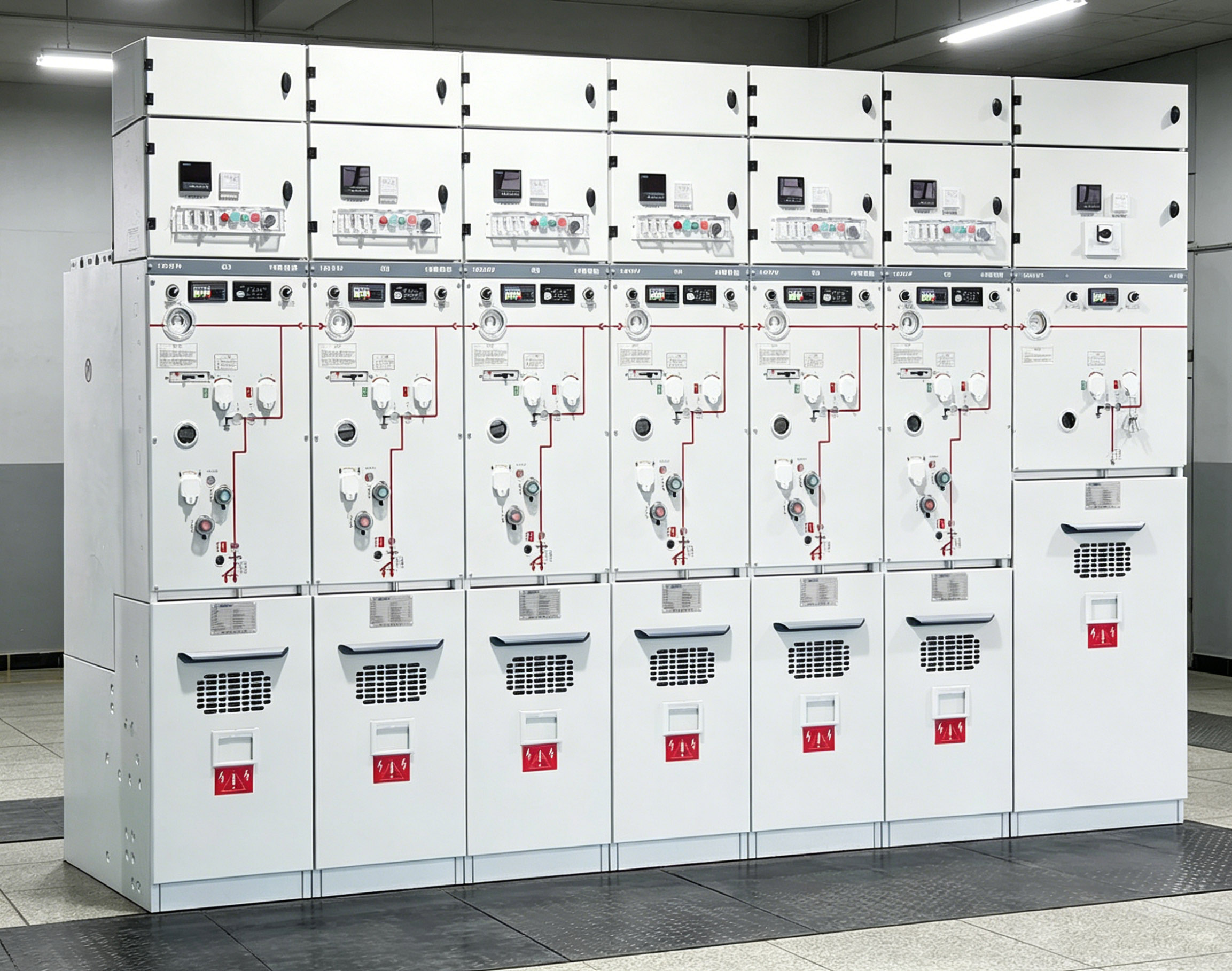
Metal enclosed switchgear is a broader product category also defined by IEC 62271-200 . The term covers any switchgear assembly where all live parts are contained within a grounded metal housing. Unlike metal clad switchgear, full internal separation between compartments is not a mandatory requirement. Components may share common enclosure space. This category includes ring main units, load break switch assemblies, and compact secondary substations. When air is used as the primary insulation medium — rather than SF6 gas — the product is referred to as air insulated metal enclosed switchgear, a format that is growing rapidly due to environmental and maintenance advantages.
Features
Metal Enclosure with Flexible Compartment Design: All live parts are enclosed in a grounded metal housing. Internal arrangement is more flexible than metal clad switchgear, allowing compact configurations suited to a wide range of secondary distribution applications.
Air Insulated, SF6-Free Construction: Air insulated metal enclosed switchgear eliminates SF6 gas entirely. This reduces environmental liability, simplifies end-of-life disposal, and lowers lifetime operating costs.
Compact and Space-Efficient: The modular structure is significantly smaller than metal clad designs, making it well suited for pad-mounted kiosks, urban substations, and sites with constrained space.
Integrated Load Break and Earthing Switch: A combined three-position or multi-function switch handles load breaking, isolation, and earthing within a single compact mechanism, reducing the total component count.
Low Maintenance Design: Without gas pressure systems or complex drawout mechanisms, routine maintenance is minimal. Inspection cycles are longer and field servicing requires less specialist equipment.
IEC 62271 Compliant: AC metal enclosed switchgear in this category meets IEC 62271-200 requirements and is widely accepted by utilities and project developers across international markets.
Ring Main and Loop Feed Capability: The design naturally supports ring main configurations, allowing power to be supplied from two directions. This increases network resilience and reduces outage duration for end users.
Metal Clad vs Metal Enclosed Switchgear: Key Differences
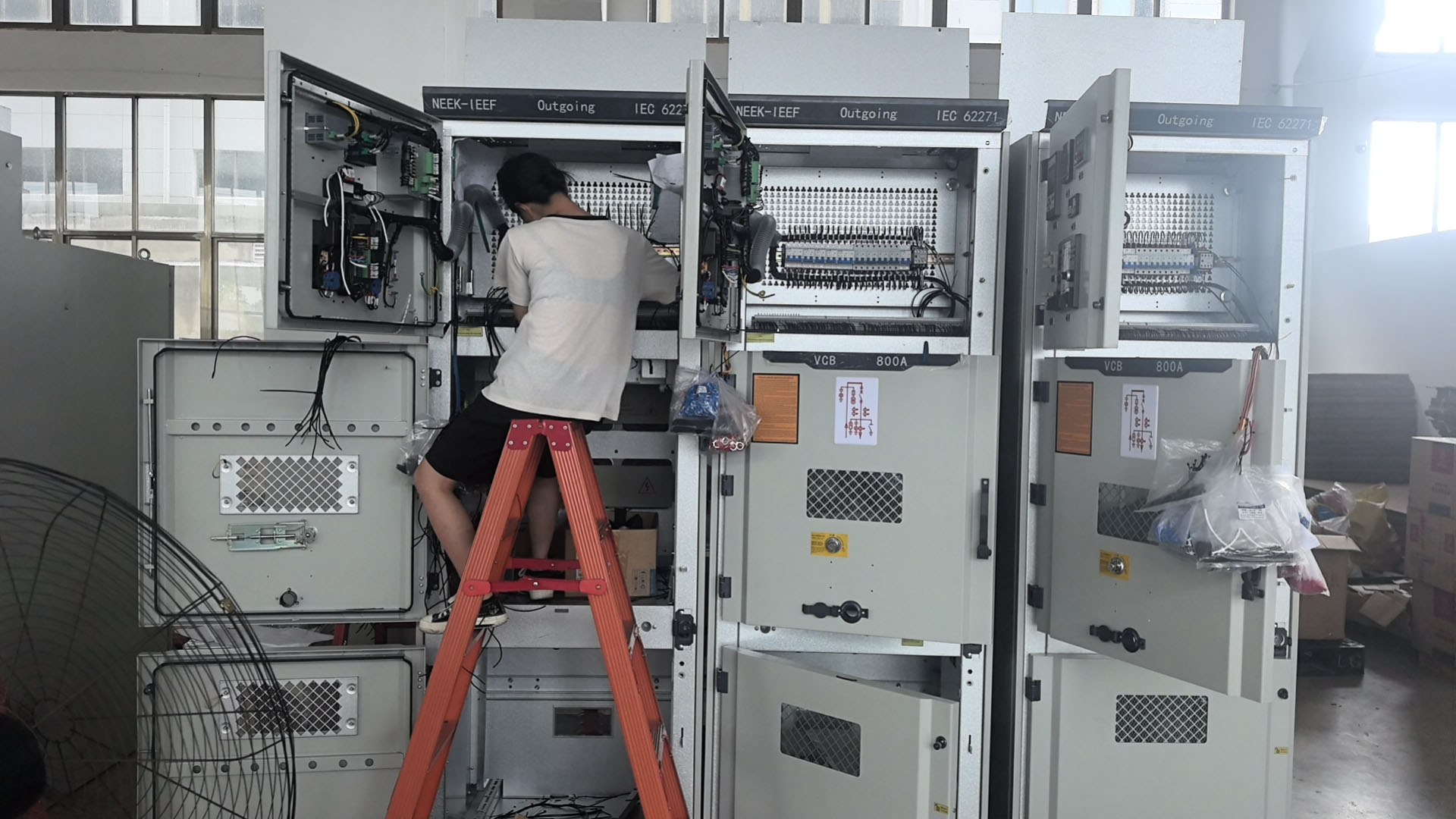
The table below compares both types across the factors that matter most for project specification.
| Feature | Metal Clad Switchgear | Metal Enclosed Switchgear |
IEC Classification | Highest construction class under IEC62271-200 | Broader class under IEC 62271-200 |
| Internal Separation | Full metal barriers between every compartment | Common enclosure; full separation not required |
Switching Device | Withdrawable vacuum circuit breaker | Fixed or withdrawable load break switch |
Fault Level Suitability | High — suited to primary substation fault levels | Moderate — suited to secondary distribution |
Insulation Medium | Air insulated | Air insulated, SF6-free options widely available |
| Maintenance Complexity | Moderate — scheduled breaker inspection required | Low — minimal routine servicing needed |
| Physical Footprint | Larger — requires dedicated indoor switch room | Compact — fits kiosks and outdoor pad installations |
| Safety Level | Maximum — fault containment per compartment | Good — fault containment within overall enclosure |
Best Application | Primary substations, industry, large utilities | Ring main networks, secondary substations, urban distribution |
Typical Buyers | Utilities, EPC contractors, industrial developers | Distribution network operators, municipalities, commercial developers |
Both types are compliant with IEC 62271 . The fundamental difference is the degree of internal compartmentalization and the fault current level each type is designed to handle.
Which One Is Better for Your Project?
There is no universal answer. The right choice depends on your network level, fault current requirements, site conditions, and maintenance capability.
Choose metal clad switchgear when:
Your project is at the primary distribution level, connecting directly to a high-voltage transformer
The network has high fault current levels requiring strong short-circuit withstand and breaking capacity
Independent feeder switching and live-line maintenance are operational requirements
A dedicated indoor switch room is available at the installation site
Long-term reliability and personnel safety are the top priorities
Metal clad switchgear performs best in power plants, heavy industry, mining facilities, and utility primary substations where the cost of a fault or unplanned outage is very high.
Choose metal enclosed switchgear when:
Your project is at the secondary distribution level, feeding loads from an MV/LV transformer
The installation site is outdoor, compact, or has no dedicated switch room
You need a ring main unit or loop-through feeder configuration
Low maintenance and SF6-free operation are project requirements
Budget efficiency and ease of deployment matter
Air insulated metal enclosed switchgear is the practical choice for municipal distribution networks, commercial building substations, rural electrification schemes, and any project where simplicity and compactness are priorities.
When the decision is not clear-cut:
Some projects require both types at different points in the network. A primary substation may use armored metal-enclosed switchgear for incomer and main feeder protection, while downstream secondary substations use compact air insulated metal enclosed switchgear for ring main distribution. Consulting your network single-line diagram and fault level study is the most reliable way to confirm the right specification at each point.
Conclusion
Metal clad switchgear and metal enclosed switchgear both fall under the IEC 62271-200 standard, but they address different levels of the power distribution system. Metal clad switchgear delivers maximum compartmentalization, higher fault ratings, and safe live-network maintenance — making it the right choice for primary substations and high-demand applications. Metal enclosed switchgear offers a compact, low-maintenance, SF6-free solution that suits secondary distribution, ring main networks, and urban or space-constrained environments.
Understanding the difference between these two types of medium voltage switchgear before you specify can prevent costly redesigns and ensure your project meets both technical and compliance requirements. If you are comparing options for an upcoming project, our technical team is ready to review your network diagram and recommend the right solution.
-
 You use metal enclosed switchgear to make electrical systems safe. It helps keep power working well in many places. This equipment controls and protects medium-voltage circuits. You can find it in schools, hospitals, and factories.
 -
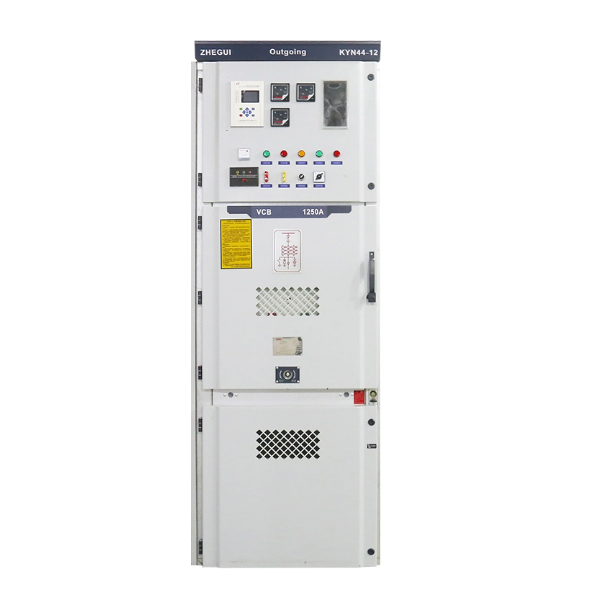 You need strong protection when working with electrical systems. Metal clad switchgear has a special design. It keeps busbars, circuit breakers, and other parts apart. Each part is in its own metal section. This design helps keep people safe.
 -
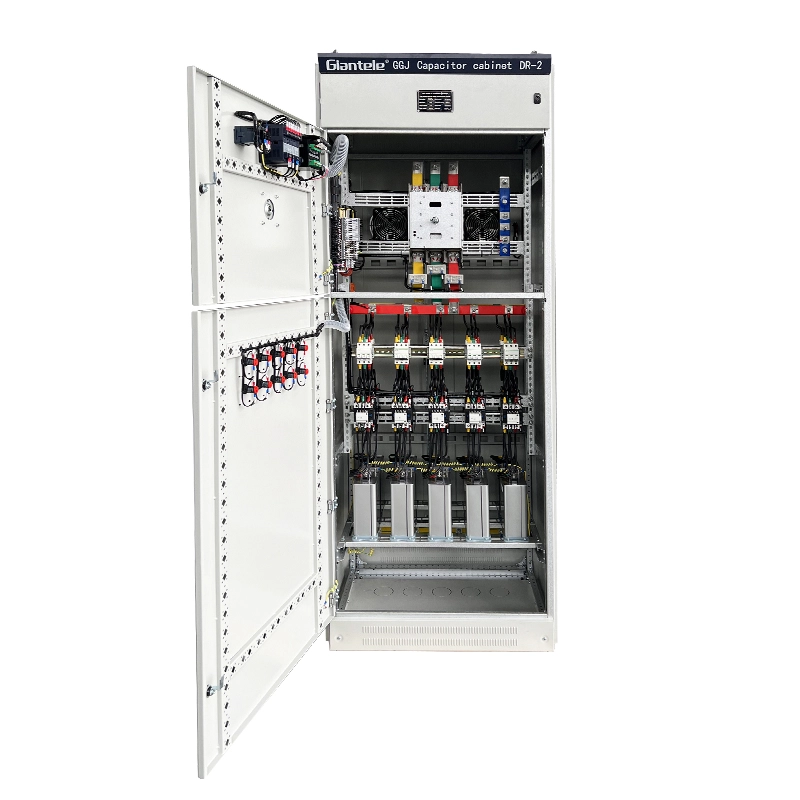 I. Definition: The Reactive Power SolutionA capacitor bank (often called a Reactive Power Compensation Unit) is a crucial device for optimizing power supplies and overall electrical system efficiency. Manufactured to the stringent International Electrotechnical Commission standard IEC 62271, it cons
 -
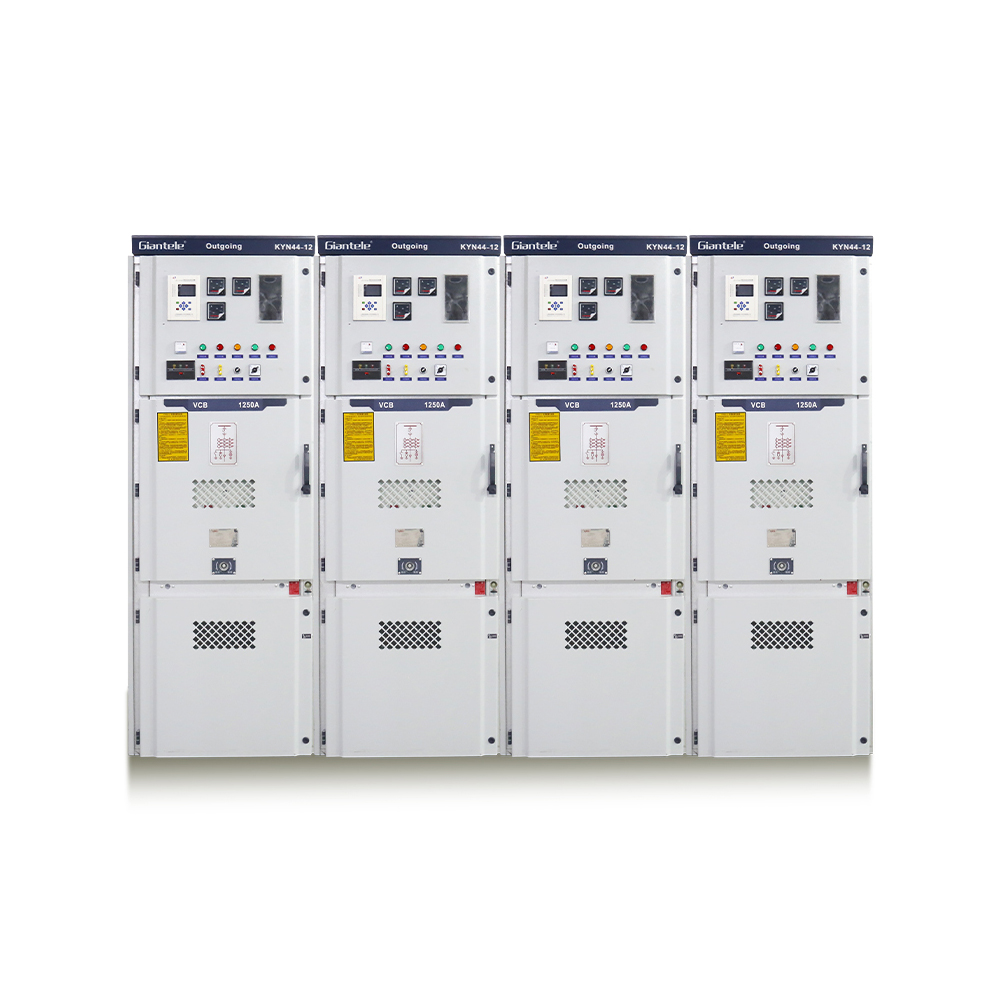 The RMU ensures reliable power distribution, even under high loads and challenging conditions, maintaining smooth electrical network operations.
