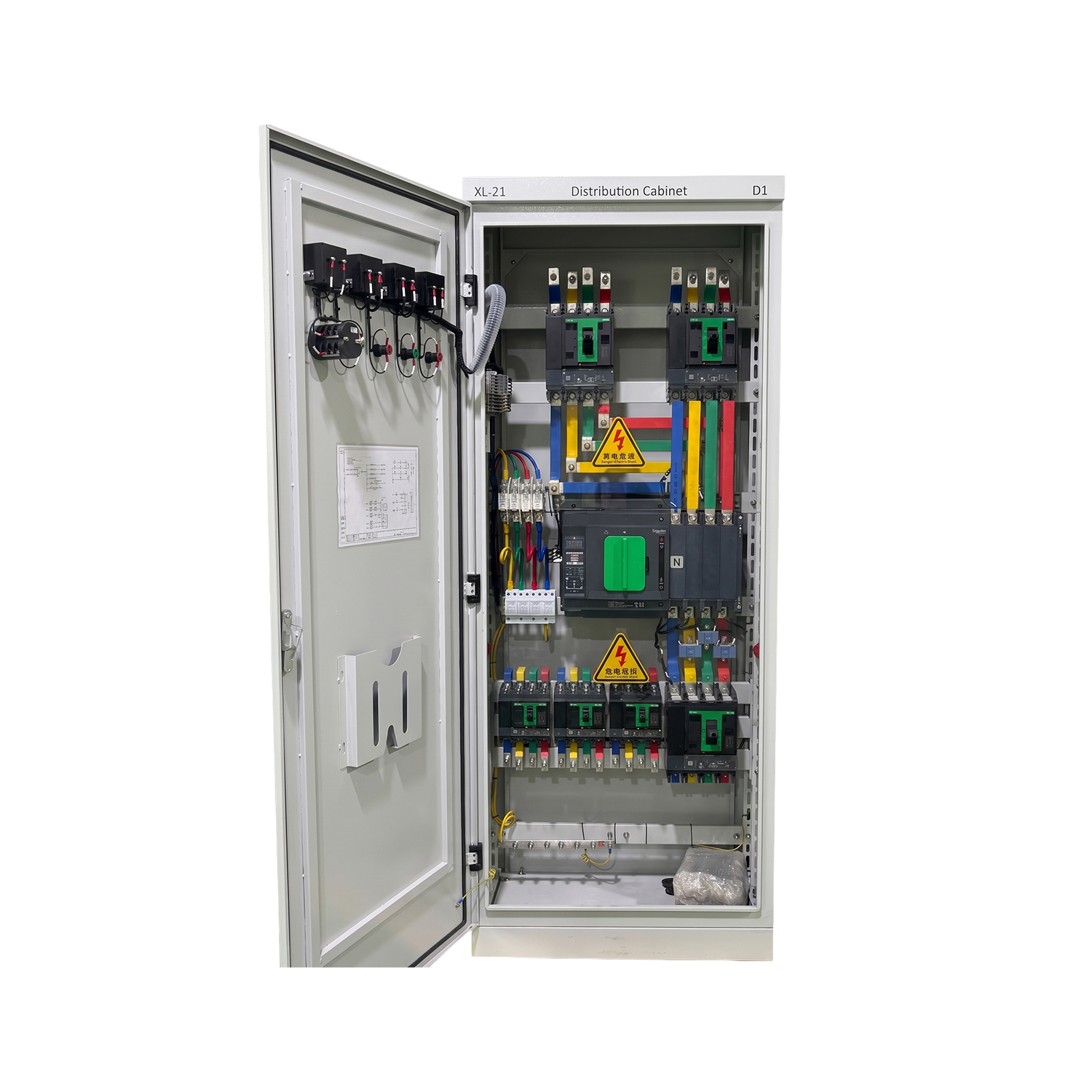
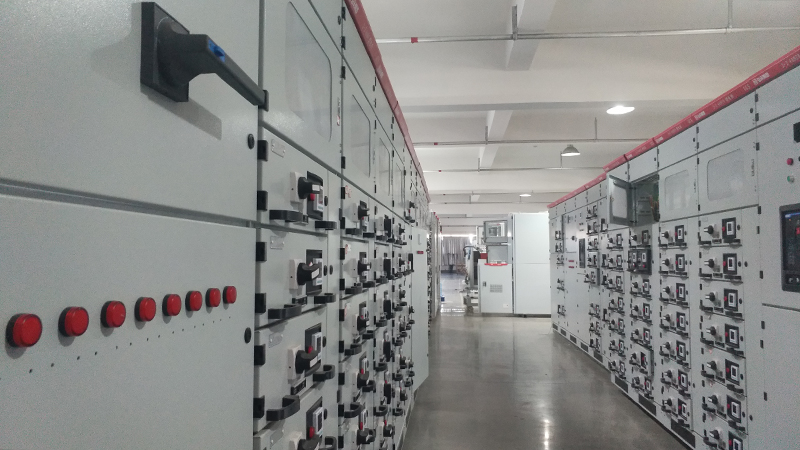
Here is the thing about critical power distribution. When a breaker fails at 2 AM in a hospital or a data center, you have two choices. Shut down the whole building to fix it. Or slide out one drawer and slide in a spare. That is the difference between withdrawable switchgear and fixed panels. Hot-swap capability is not a luxury. It is insurance.
What you are really buying with withdrawable LV switchgear
You are not just buying a metal box with breakers. You are buying three minutes of downtime instead of six hours. You are buying the ability to swap a failed unit while the rest of your facility stays online. That is the core value proposition of low voltage switchgear with drawer-type construction.
MNS panels cost 30 to 50 percent more than fixed lv switchgear equivalents. You know that going in. The question is whether your facility can tolerate a full shutdown for breaker replacement. If the answer is no, the math works. Simple as that. A single avoided shutdown in a data center pays for the entire switchgear lineup.
Drawer units slide on precision rails. Guide pins align the contacts automatically. No brute force. No alignment jigs. Each drawer has three positions — test, isolated, connected — with mechanical interlocks that physically block you from pulling a live drawer. You never guess. You never gamble.
The busbar runs in a fully segregated rear chamber. Drawer compartments are isolated from each other. An internal arc in drawer three does not propagate to drawer four. That is compartmentalisation working exactly as designed.
Modular switchgear grows with your facility
Withdrawable cabinets are inherently modular switchgear. You start with the busbar sized for your five-year load forecast. You populate the drawer slots as needed. When you add a new production line, you slide in a new drawer unit. No panel replacement. No re-termination. No redesign. The busbar was already there waiting for you.
That is a big deal for growing facilities. A factory that starts with ten drawers and expands to twenty over five years never touches the main busbar. No shutdowns for upgrades. No civil works for extra panels. Just slide in the new units and go. The initial premium for modular construction pays itself back over the facility lifecycle.
Standard MNS drawer sizes accommodate ACBs, MCCBs, metering units, and contactor combinations. Mix and match within the same panel. Two 400A drawers. One 1600A drawer. A metering drawer. All in one column. All independently serviceable.
Withdrawable vs fixed switchgear — when each makes sense
Neither design is universally better. They solve different problems. Here is how the trade-offs stack up.
| Dimension | Withdrawable (MNS / GCS) | Fixed (GGD / GCK) |
| Unit cost per panel | 30 to 50 percent premium | Lower upfront cost |
| Breaker replacement | Under 3 minutes, no shutdown | Full panel shutdown required |
| Future expansion | Add drawers to existing panels | Add new panels, re-terminate |
| Maintenance skill level | Standard electrician, some training | Standard electrician |
| Floor space per panel | 800 to 1000 mm | 600 to 800 mm |
The bottom line: if your facility can survive a scheduled shutdown for breaker maintenance, fixed panels save money. If it cannot, withdrawable panels pay for themselves. Data centers, hospitals, semiconductor fabs, continuous-process plants — those are withdrawable territory. Commercial buildings, residential complexes, warehouses — fixed is usually fine.
Motor control center integration with withdrawable panels
A motor control center built on a withdrawable busbar system is a powerful combination. You get hot-swappable motor starters alongside your distribution breakers. Same panel. Same maintenance procedure. Same operator training. Standardisation pays off in industrial environments where consistency reduces human error.
Withdrawable MCC drawers can house direct-on-line starters, star-delta starters, soft starters, and VFD control. A single MNS column fits four to six motor drawers plus a feeder breaker. Operators learn one procedure — slide out, swap, slide in — and it works for every drawer in the room.
How to evaluate a low voltage switchgear manufacturer before you order
- Ask for the IEC 61439-2 type-test certificate. Not a component test — the full assembly test. Short-circuit withstand, temperature rise, dielectric. If they hesitate, walk away.
- Verify export experience. A low voltage switchgear manufacturer that ships to 50-plus countries has handled compliance paperwork for SASO, SNI, GOST, and CE. They know what each market demands.
- Check factory capacity. A 20,000 square metre facility producing 500-plus units a month will meet your schedule. Smaller shops over-promise and under-deliver.
- Request project references. A reputable supplier shares photos of past installations, single-line diagrams, and test reports. Silence is a red flag.
- Confirm after-sales. Spare drawers, on-site commissioning support, remote troubleshooting — these matter more than a two percent price difference.
IEC 61439-2 type testing: what it actually means for your project
Not every switchgear on the market has been type-tested. Some manufacturers skip it. Some test individual components and call it a day. The IEC 61439-2 standard requires the full assembly to pass three verification tests at an accredited laboratory: short-circuit withstand, temperature rise under load, and dielectric strength. All three. Together. On the same panel. That is the only way to prove the design works as a system, not as a collection of parts.
The short-circuit test puts 80kA through the busbar for one second. The temperature rise test runs the panel at full rated current until it stabilises — usually six to eight hours. Connectors, joints, and drawer contacts must stay below specified limits. The dielectric test applies high voltage to verify insulation integrity between compartments.
A genuine type-test certificate lists the laboratory name, test date, panel rating, and pass criteria. If a supplier shows you a certificate that only covers the busbar or the breaker, that is not IEC 61439-2 type testing. That is component certification. Different thing entirely. Ask for the full assembly certificate. Every time.
What busbar quality means in withdrawable switchgear
The busbar is the backbone. Every drawer connects to it. Every amp flows through it. If the busbar fails, the whole panel goes dark. That is why we use pure copper with silver plating. Standard thickness. Rated for the full panel current plus 20 percent headroom. Nobody ever complained about oversizing the busbar. Plenty of people regretted undersizing it.
In a withdrawable panel, the vertical busbar runs the full height of each column. Drawer contacts press against it via spring-loaded fingers. Those contact points are the weakest link in the current path — and the reason cheap busbar materials cause hot spots. A hot spot at 200 amps becomes a fire risk at 2000 amps. Silver plating reduces contact resistance by half compared to bare copper. For a 25-year service life, that matters.
Drawer interchangeability and spare parts strategy
Standard MNS drawers are interchangeable. A 400A feeder drawer from column two fits into any 400A slot in column five. No fiddling. No filing. No "close enough." That interchangeability is not accidental — it comes from precision-manufactured drawer frames, guide rails, and contact assemblies built to the same jigs and fixtures.
Smart buyers order spare drawers with the initial panel. One spare per drawer type. Two if the site is remote. You do not want a mining operation in Angola waiting six weeks for a replacement drawer from China. The incremental cost of a spare drawer is a rounding error compared to a week of lost production. Order the spares. Store them dry. Sleep better.
Drawer coding pins prevent inserting a 400A drawer into a 1600A slot. Physical keying. No software. No operator training required. You literally cannot get it wrong. That is the kind of safety design you want in a panel that runs 24/7 for decades.
Withdrawable switchgear for African infrastructure projects
Africa is our primary market. Uganda, Kenya, Angola — we ship withdrawable switchgear to grid extensions, mining operations, water treatment plants, and industrial parks across the continent. These are not easy environments. Ambient temperatures hit 40 degrees Celsius. Humidity corrodes untreated metal. Road conditions destroy inadequate packaging. And when something goes wrong, the nearest spare parts are thousands of kilometres away.
That is exactly why withdrawable switchgear makes sense in Africa. You keep spare drawers on site. When a breaker trips or a contactor fails, your local electrician swaps the drawer in minutes. No Chinese technician needed. No visa. No flight. No waiting. That is operational independence — and it is worth far more than the premium you pay for withdrawable construction.
Every panel bound for Africa gets tropicalised: anti-condensation heaters, IP43 or IP54 enclosures, powder-coated steel, desiccant packs in the packing crate, and full documentation in English and French. We configure for local grid voltages — 380V, 400V, 415V — and frequency. IEC 61439-2 compliance is non-negotiable because World Bank and AfDB-funded projects require it. So do ERA Uganda and EPRA Kenya. We handle the paperwork. You do not chase it. Our electrical switchgear documentation package includes factory test reports, material certificates, and packing lists — everything your project engineer needs for sign-off, all shipped with the panels.
Quality management systems matter for international procurement. ISO 9001 certification means every panel follows the same documented process — design review, material inspection, assembly verification, factory testing. When your funding agency audits the supplier, the quality records are there. When IEEE standards compliance is required for technical submittals, the data exists. No scrambling. No excuses.
Final thoughts
Withdrawable LV switchgear costs more upfront. But if your facility cannot tolerate downtime, the math is simple. Hot-swap capability, modular expansion, segregated compartments, and drawer interchangeability are not marketing bullet points — they are how you keep the lights on when something fails. Send us your specs and single-line diagram. We will get back to you with a technical proposal, compliance documents, and pricing within 48 hours. Standard MNS configurations ship in 6 to 8 weeks.