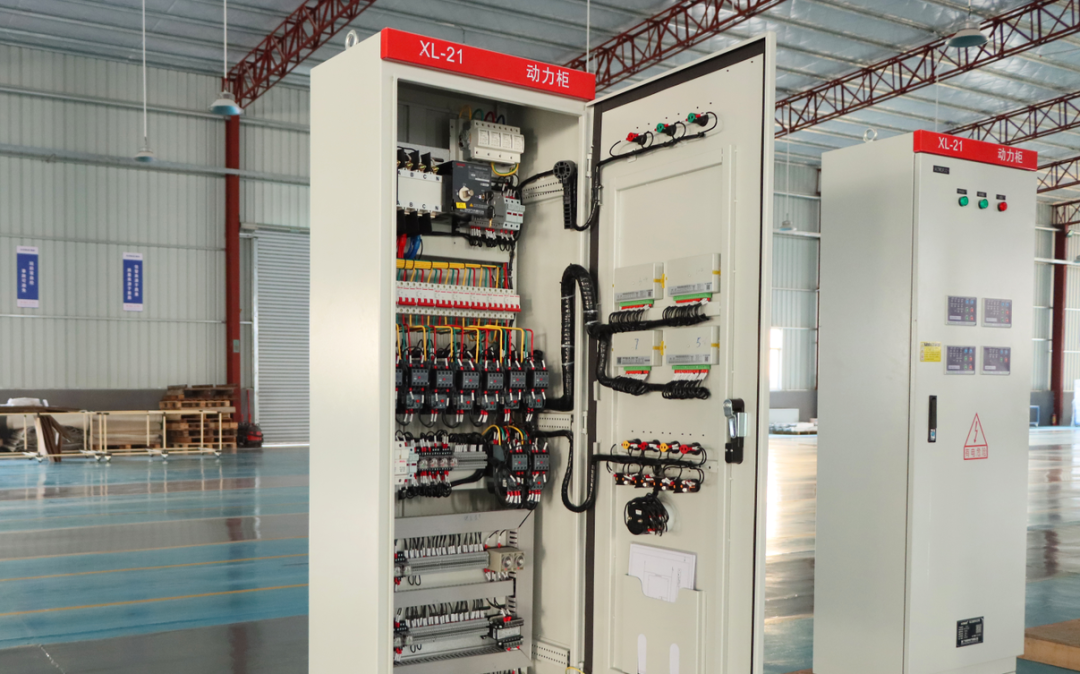
A sub distribution board and the main board above it share one safety chain. Buy the wrong pairing and protection stops coordinating, so one fault takes the whole plant down. This guide shows the safety features worth paying for and the suppliers worth shortlisting.
Key takeaways
- Safety is a chain between the main board and the sub distribution board, not a single feature.
- Form of separation decides how close a person can safely work to live metal.
- A lockable main switch and a working door interlock matter more than a longer features list.
- Discrimination between the two board levels is what keeps a workshop fault local.
- Ask for the form, the IP rating, the Icw and the routine test sheet in writing.
Safety features that matter on a main distribution board
Five features carry most of the safety duty. Internal separation keeps live metal out of reach. A lockable main switch lets a competent person isolate and prove dead.
Door interlocking stops the panel opening on a live bar. Surge protection limits transient damage. Labelling tells the next person what feeds what.
The field carries several labels for the same assembly. You will meet distribution boards, an electrical distribution board and an electric distribution board. Then there is the lv distribution board, the low voltage switch board and the sub distribution board. The safety duty stays identical whatever the drawing calls it.
Most industrial power distribution solutions now treat a surge arrester as standard on the incoming section. A board that leaves it out is trusting the next device downstream to absorb the energy.
Separation and barriers inside the board
Form of separation describes how far the assembly shields a person from live metal. Form 1 gives no separation inside the enclosure. Form 4 puts busbars, functional units and terminals behind separate barriers, so work on one circuit stays clear of the rest.
| Form | What is separated | Where it fits |
|---|---|---|
| Form 1 | Nothing inside the enclosure | Small boards in a locked room |
| Form 2 | Busbars separated from functional units | General distribution with low fault energy |
| Form 3 | Busbars separated from units and from terminals | Plants that change outgoing ways often |
| Form 4 | Busbars, units and terminals all barriered | Continuous process with live maintenance |
Form 4 costs more steel and more build hours, so quote teams default to Form 2 unless you name the form in the inquiry. Fix the form before the drawing is issued, because adding barriers later means rebuilding the cubicle.
Sealing and a defined IP rating matter in dusty or wet rooms. They do not replace separation indoors, but they keep moisture and dust off the barriers you rely on.
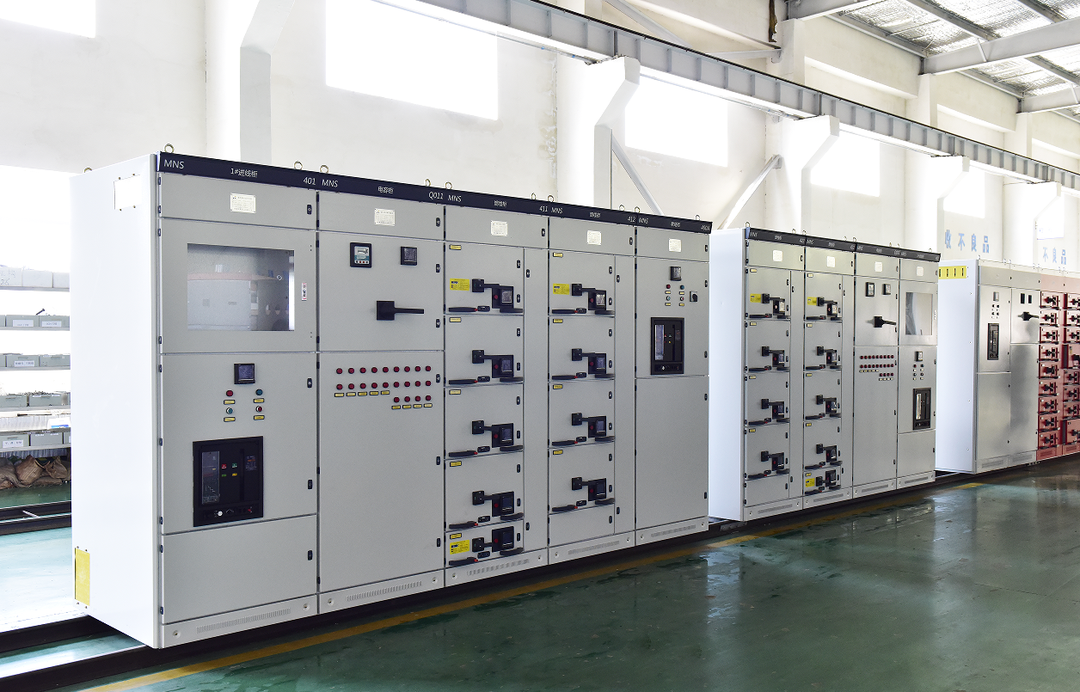
Ask about internal arc containment too, and ask at what current it was proved. Upstream, an industrial switchgear line-up splits the busbar into compartments. An internal fault then stays inside one section.
Isolation and the incoming main switch
The incoming section needs an isolator that breaks full load, shows its position and accepts a padlock. If the door can open while the bar is live, the design has failed. A key interlock sequence is the usual fix, and it costs far less than the accident it prevents.

The door must not open on a live bar
A key interlock ties the switch position to the door lock, so the sequence is fixed.
The switch reaches the isolated position first, and only then does the key come free.
An interlock that a screwdriver can defeat is a label, not a device.
The isolator on a main switch distribution board sits in the incoming section. The distribution board main switch has to break full load, not fault current alone. Check the rating plate, then check the handle is reachable with the door closed.
A standby generator feeding the same busbar needs an interlock. Without one, the mains and the generator transfer panel can close together and back-feed the grid. That is a safety function, not a convenience feature.
How a sub distribution board protects the people downstream
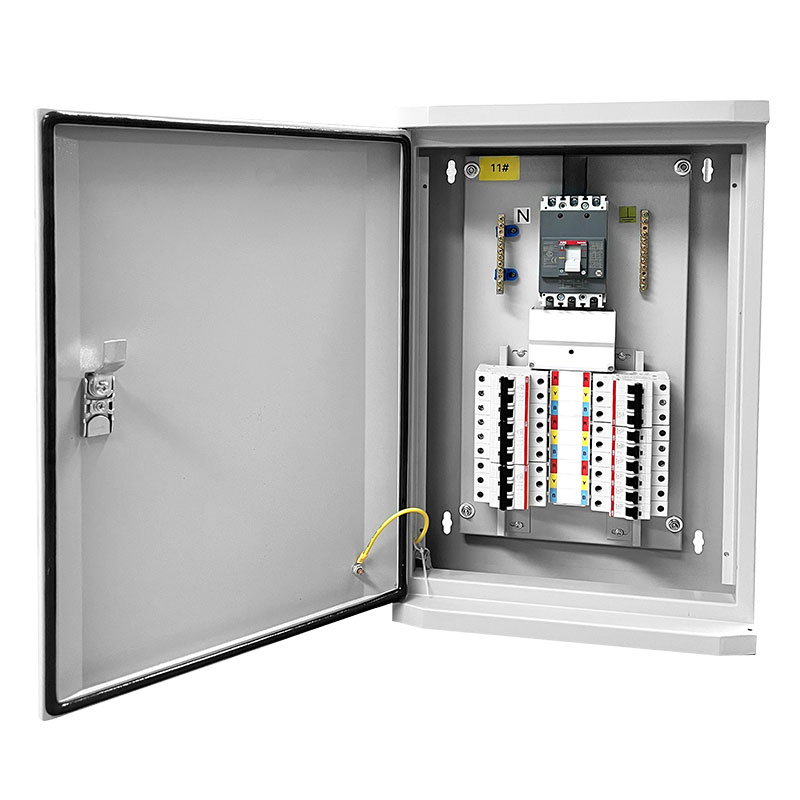
A sub distribution board carries the final protective devices. Most faults are cleared there, not at the main board. When the two levels are coordinated, a fault in one workshop trips the sub board alone. At an airport terminal, that is one gate instead of the whole concourse.
Discrimination is the whole point. A 250 A device upstream of a 63 A device has to wait long enough for the smaller one to clear. On older drawings that same equipment is often labelled distribution board electrical, and the curves still have to match.
Fault level falls as you move down the system. That is why a sub board can be rated lower than the main board above it, and why the rating chain starts at the low voltage main distribution board.
Under-rate the protection and it may fail to clear at all. A fault that should trip in milliseconds then turns into a fire.
For a workshop or a single floor, the sub main distribution board is where that coordination is won or lost. A supplier who publishes the short-circuit withstand and the device curves lets you check the study before you buy.
What to demand from the supplier in writing
Four documents separate a designed board from a catalogue board. Ask for the single-line with device types, the form of separation, the discrimination study and the routine test sheet for your unit. A supplier who cannot send them is assembling, not engineering.

Five checks inside the board

Prove the board with the person who will work on it
A safety board is proved at the panel, not on the drawing.
Walk the isolation sequence with the electrician who will actually use it.
If the sequence is awkward, they will find a way around it.
Assemblies carrying these devices sit under IEC 61439, which sets the clearance, segregation and temperature rise a board has to prove. The routine test sheet is where that proof shows up for your own unit.
A quality file kept under ISO 9001 holds the drawings, device certificates and test records together. That file is what you need when a fault is investigated two years later.
Safety also pays for itself in uptime. Outages carry a real cost, and the reliability of supply data tracked by the IEA makes that cost visible across markets. A board that clears faults locally protects both people and production.
Judge the premium against the whole distribution panel price rather than in absolute terms. Barriers and interlocks usually add a few percent, which is small against one unplanned shutdown.
Frequently asked questions
Where can I buy a main distribution board with advanced safety features?
What is the difference between a main distribution board and a sub distribution board?
Which form of separation should I specify?
Why does a distribution board need a lockable main switch?
How does a key interlock on a distribution board work?
How do I check discrimination between the main board and a sub board?
Does surge protection belong inside the distribution board?
What documents should come with a safety-featured board?
Final thoughts
Safety runs along the chain, from the main switch down to the last sub distribution board. Fix the form of separation, the interlock and the discrimination before you ask for prices. Send Giantele your single-line and fault level for a layout with those three items marked.
Need a distribution board built around safety?
Share your single-line, the fault level at the board and your maintenance practice. We return a layout that names the form of separation, the interlock sequence and the protective devices.