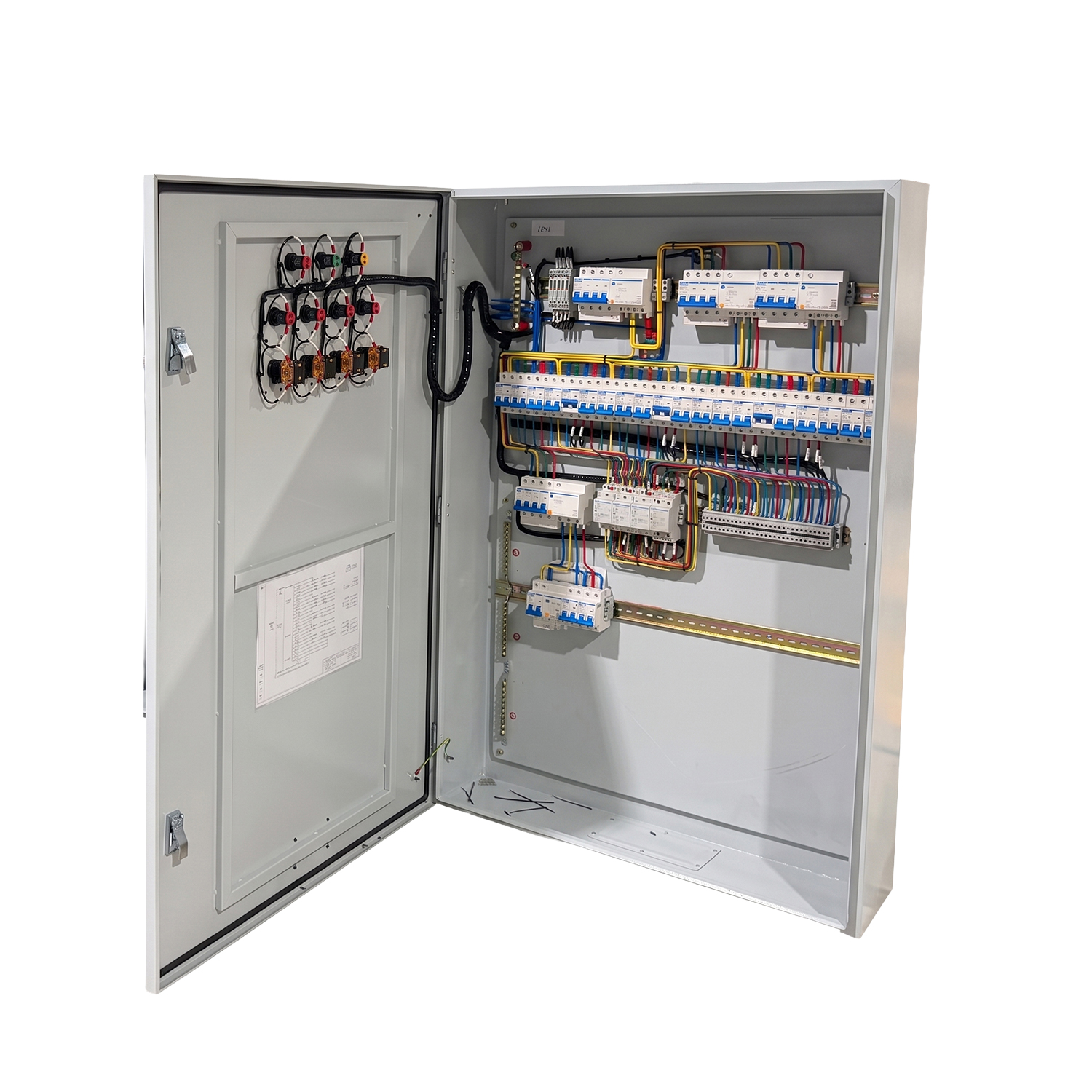
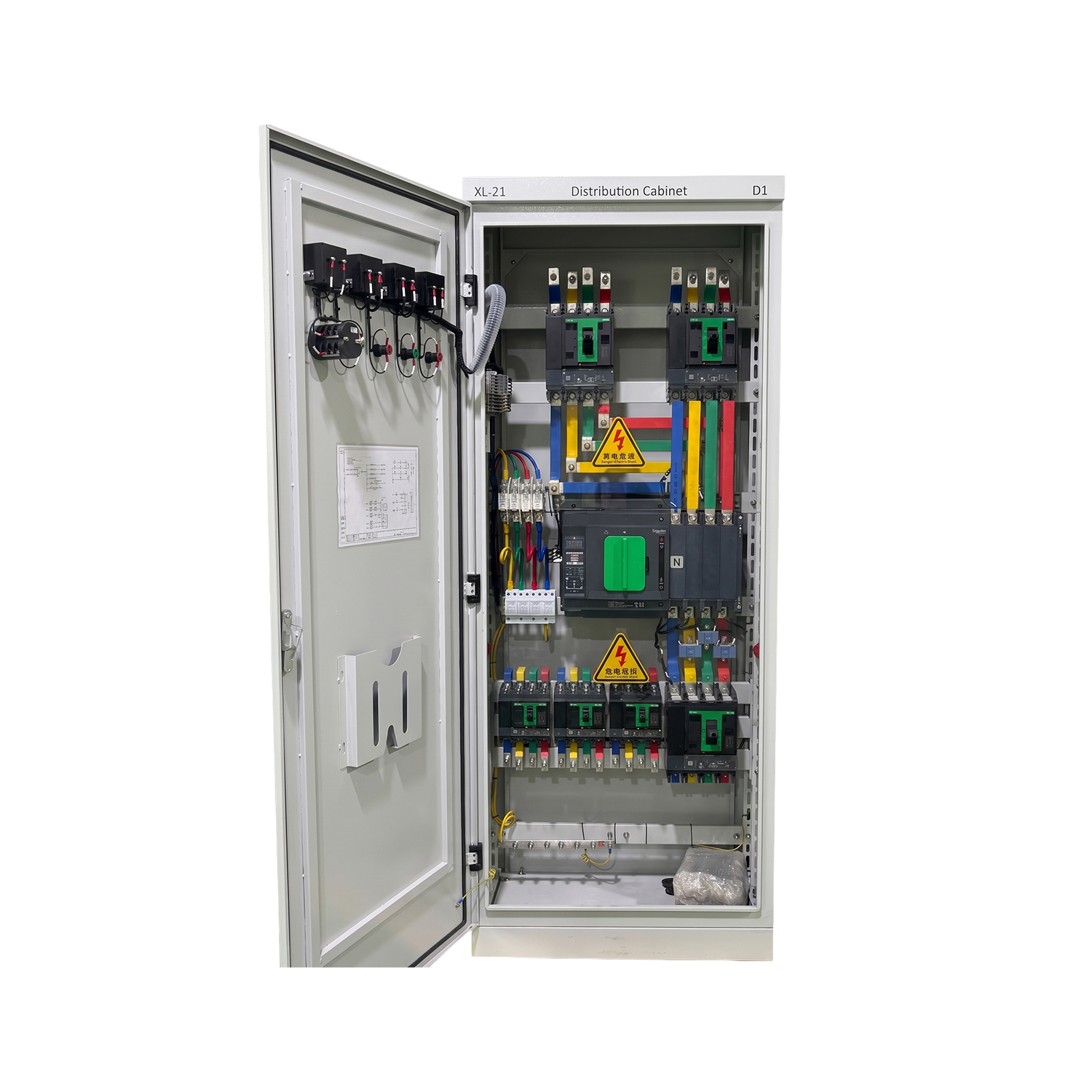
Between the main switchboard and the final lighting circuit sits a layer most people never think about. The sub-main distribution board. It takes one large feeder from the main distribution board and splits it into smaller, protected circuits that feed each floor or zone. Without it, every fault on every floor cascades back to one breaker. With it, a fault stays local.
What a sub-main distribution board does that a main board cannot
The main distribution board handles the whole building. 400A to 4000A. Floor-standing. ACB or large MCCB incoming. It is the single point where utility power enters the building distribution system.
A sub distribution board handles a zone. One floor. One wing. One production hall. 160A to 630A incoming from the MDB. Floor-standing for larger ratings, wall-mounted for smaller ones. It feeds the lighting panels, small power panels, and motor starters in its zone.
The SMDB creates isolation. A fault on floor three trips the floor three SMDB main breaker. Floors one, two, and four stay online. That is what you pay for when you install an SMDB instead of running every circuit back to the main board.
How a power distribution board hierarchy actually works
Think of a building electrical system as a tree. The main distribution board is the trunk. The SMDBs are the main branches. The lighting panels and final distribution boards are the twigs. Power flows down. Faults are contained at each branch point. Nothing cascades unless something is seriously wrong.
A well-coordinated electrical distribution board hierarchy means the breaker closest to the fault trips first. The upstream breakers hold. Selectivity. It is not magic. It is breaker selection and coordination. Done right, the lights stay on everywhere except the faulted circuit.
SMDB vs final distribution board: the comparison
An SMDB is not a lighting panel. It sits higher in the hierarchy and handles more current. Here is how they differ.
| Dimension | Sub-Main Distribution Board | Final Distribution Board |
| Incoming rating | 160A to 630A | 63A to 250A |
| Main protection | MCCB | Main switch or MCB |
| Mounting | Floor-standing or wall-mounted | Wall-mounted or flush |
| Feeds | Lighting panels, small MCCs, floor DBs | Lighting circuits, socket outlets |
| Selectivity | Coordinates with MDB upstream and DB downstream | Coordinates with SMDB upstream |
| Typical location | Electrical riser per 3-5 floors | Per floor or zone |
The SMDB is the middle manager of your electrical system. It reports to the main board and manages the final boards. Skip it, and every circuit runs home to the main board. That works for a small building. It fails badly for a 20-story tower.
What goes inside an lv distribution board at the sub-main level
Copper busbar. Silver-plated. Insulated supports. The main incoming MCCB — Schneider or ABB, 160A to 630A, with adjustable thermal and magnetic trip. Outgoing MCBs for each circuit — one per downstream panel. RCCB for earth leakage protection on circuits that need it. Wiring trunking. Terminal blocks. A circuit schedule on the door.
That is the bill of materials. Nothing exotic. Nothing custom unless the site demands it. The difference between a good board and a bad one is not the parts list — it is how they are assembled, labeled, and tested. A board with Schneider breakers but sloppy wiring is still a liability.
Why a distribution panel at the sub-main level needs selectivity coordination
Selectivity means a downstream fault trips only the nearest breaker. The upstream breakers hold. If the SMDB main MCCB trips on a lighting circuit fault, you just defeated the purpose of having an SMDB. The whole floor goes dark. Selectivity coordination is not automatic — it is designed. Breaker curves are compared. Time delays are set. The coordination study proves that a 10kA fault on a final circuit does not touch the MDB.
We include the selectivity study with every SMDB order where you provide the upstream and downstream breaker details. It is part of the documentation package. Not an extra. Not optional.
Floor-standing or wall-mounted: which SMDB fits your site
Wall-mounted SMDBs go up to about 250A. They bolt to the wall in an electrical riser. Cable entry from top or bottom. Compact footprint. Easy to install. They suit smaller commercial buildings and residential towers where space is tight.
Floor-standing SMDBs start at 400A. They sit on a plinth in the electrical room. More space inside means better cable routing and more room for future circuits. They suit industrial sites, large commercial buildings, and anywhere the ambient temperature is high enough to derate cable capacity. More steel. More copper. More room to work.
How to specify a main distribution panel for a sub-main application
- Incoming rating — 160A, 250A, 400A, or 630A. Match to the MDB feeder breaker.
- Outgoing circuit count — how many downstream panels. Add 20 percent for future.
- Breaker type — MCCB for incoming, MCB for outgoing. RCCB where needed.
- Enclosure — floor-standing or wall-mounted. IP41, IP54, or IP65.
- Selectivity — provide upstream and downstream breaker details for the coordination study.
- Documentation — single-line diagram, circuit schedule, test reports, breaker certs.
A distribution box at the sub-main level is not a commodity item. It is an engineered assembly. Spec it properly and the building electrical system works for 20 years. Spec it poorly and you spend those 20 years chasing nuisance trips.
Picking the right SMDB supplier
Look for IEC 61439 compliance — type-tested, not just claimed. Ask for temperature rise test reports. Busbar derating matters in hot climates. A factory that ships to 50-plus countries has seen your site conditions before. They know what a coastal environment does to steel. They know how to pack a board so it arrives undamaged after six weeks at sea.
Check the components. Schneider or ABB breakers inside mean predictable trip behavior. Generic breakers mean surprises. The busbar should be copper with silver plating — not aluminum. Aluminum saves cost. It also creates hot spots, expands differently from copper terminations, and oxidizes in ways that increase contact resistance over time. Not worth the savings.
A good low voltage distribution panel supplier can produce a standard SMDB in 4 to 6 weeks. If the lead time is 12 weeks, they are either overbooked or disorganized. Neither is good for your project schedule.
Final thoughts
A sub-main distribution board is the layer that keeps faults local. Copper busbar. Schneider or ABB breakers. IEC 61439 type-tested. Standard delivery in 4 to 6 weeks. Send us your single-line diagram and we will return a technical proposal, selectivity study, and pricing within 48 hours.