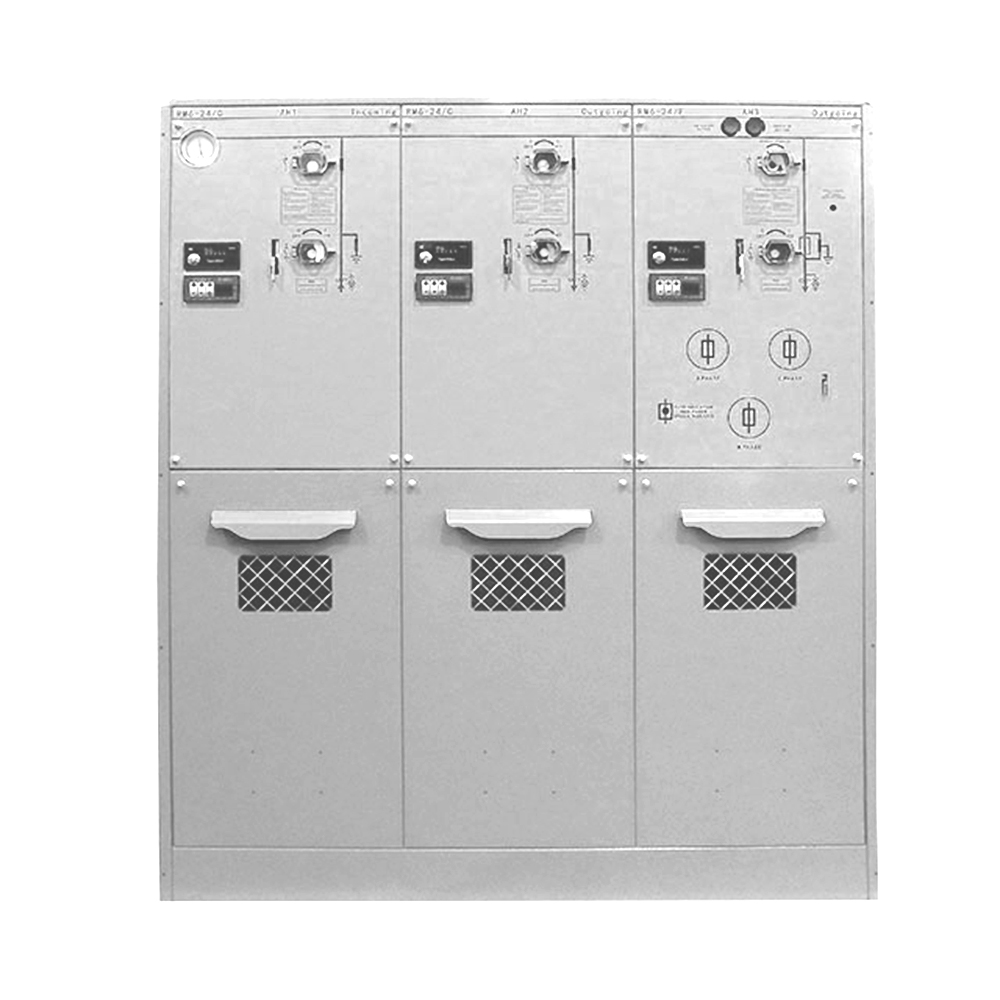
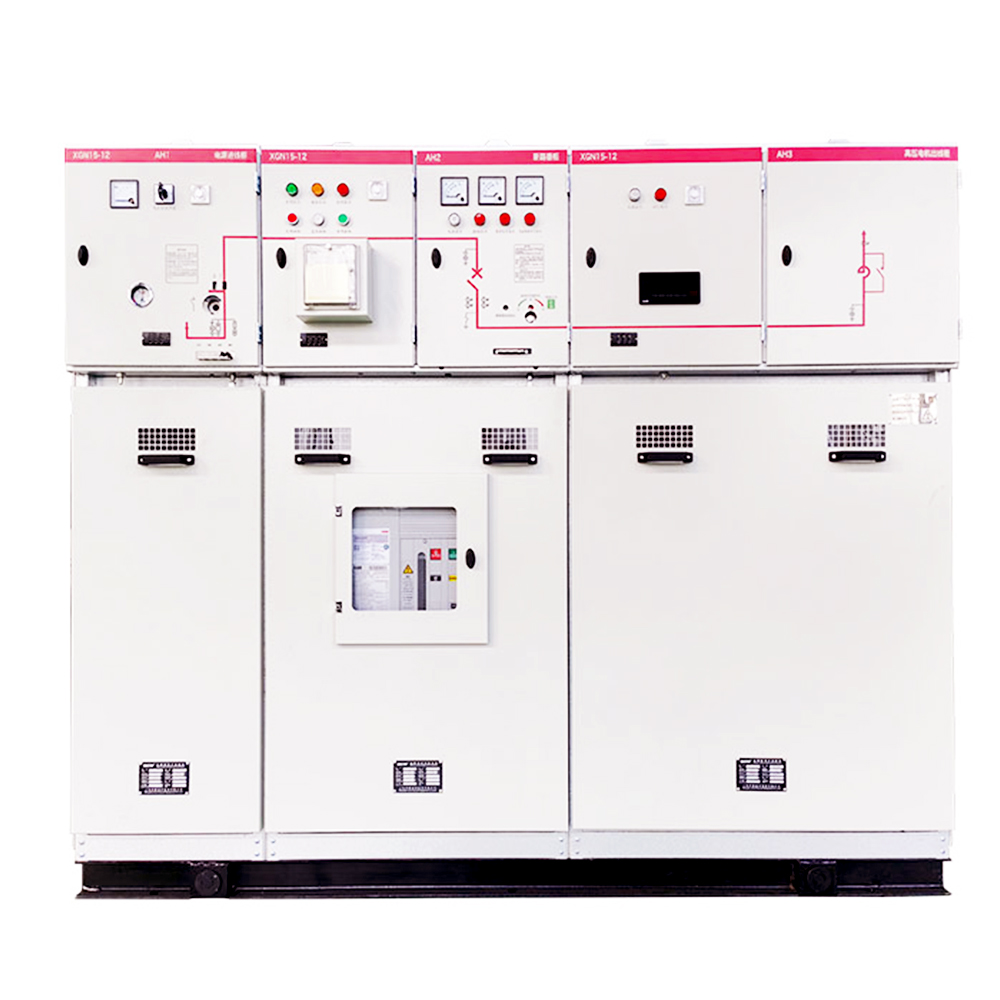
The term gets thrown around loosely. Metal-clad. Metal-enclosed. They sound the same. They are not. The difference is a grounded metal barrier between compartments. That barrier is the reason a busbar fault does not become a catastrophic arc that takes out your entire substation. When you specify medium voltage switchgear, the word "metal-clad" has a specific meaning under IEC 62271. Know it.
Metal clad vs metal enclosed: the distinction that costs lives if you get it wrong
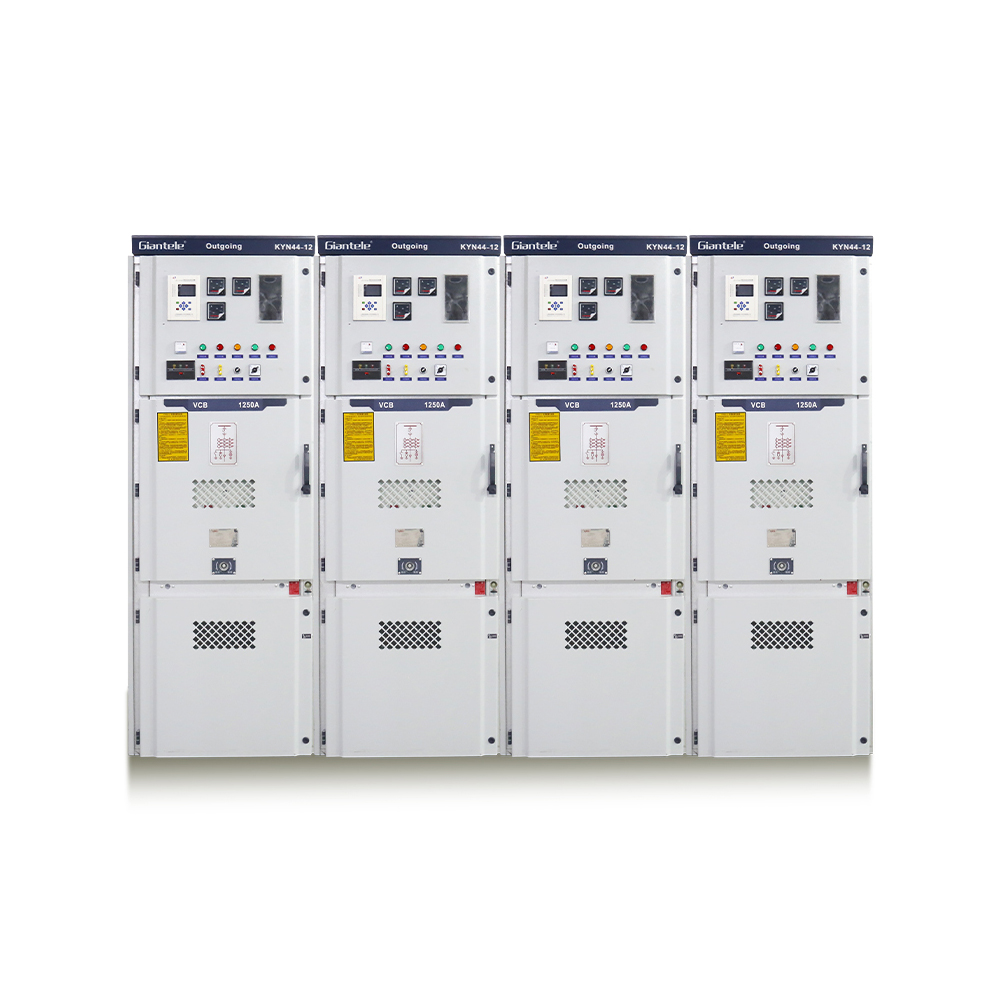
A metal clad switchgear panel has grounded metal partitions between the busbar compartment, the circuit breaker compartment, the cable connection compartment, and the low-voltage control compartment. Four separate zones. Each surrounded by earthed metal. If an arc develops in the busbar zone, the metal barriers contain it. The operator standing in front of the breaker compartment does not get injured.
A metal enclosed switchgear panel also has compartments. But the partitions may be insulating material — not grounded metal. Under internal arc conditions, insulating barriers can fail. The arc migrates. The operator gets hurt. The metal clad vs metal enclosed distinction is not academic. It determines whether an internal arc stays contained or escapes.
Four compartments: how KYN metal-clad switchgear is built
Busbar compartment at the top. Copper busbar with insulated supports. Rated 630A to 3150A. Short-circuit tested per IEC 62271. Separated from the breaker compartment by a grounded metal shutter.
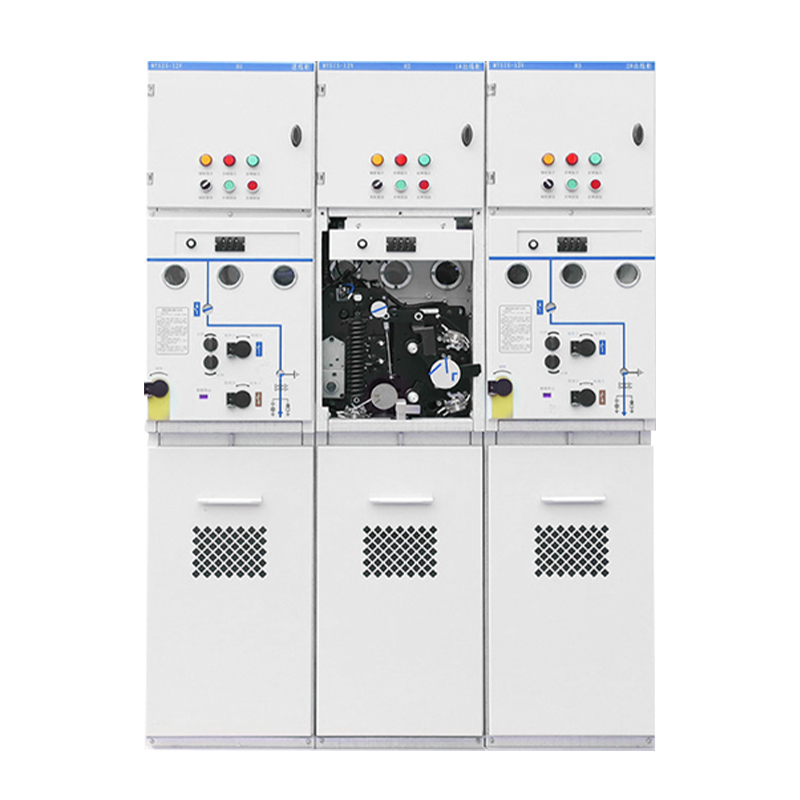
Circuit breaker compartment in the middle. Vacuum circuit breaker on a withdrawable handcart. Three positions: service, test, isolated. Mechanical position indicator visible through the front window. The handcart rolls out on rails. No lifting. No special tools.
Cable compartment at the rear. Bolted terminations with insulated bushings per phase. Separate access door. You can terminate cables without exposing the busbar or breaker compartment.
Low-voltage compartment in a separate front section. Protection relay. Control switches. Terminal blocks for SCADA wiring. Isolated from the high-voltage sections by a grounded metal barrier.
Air insulated vs gas insulated: which mv switchgear fits your site
Air insulated switchgear uses atmospheric air as the insulating medium between live parts and earth. It needs more space — clearance distances at 12kV are 125mm phase-to-phase and phase-to-earth. A KYN28 panel is about 800mm wide. A 10-panel lineup occupies 8 meters.
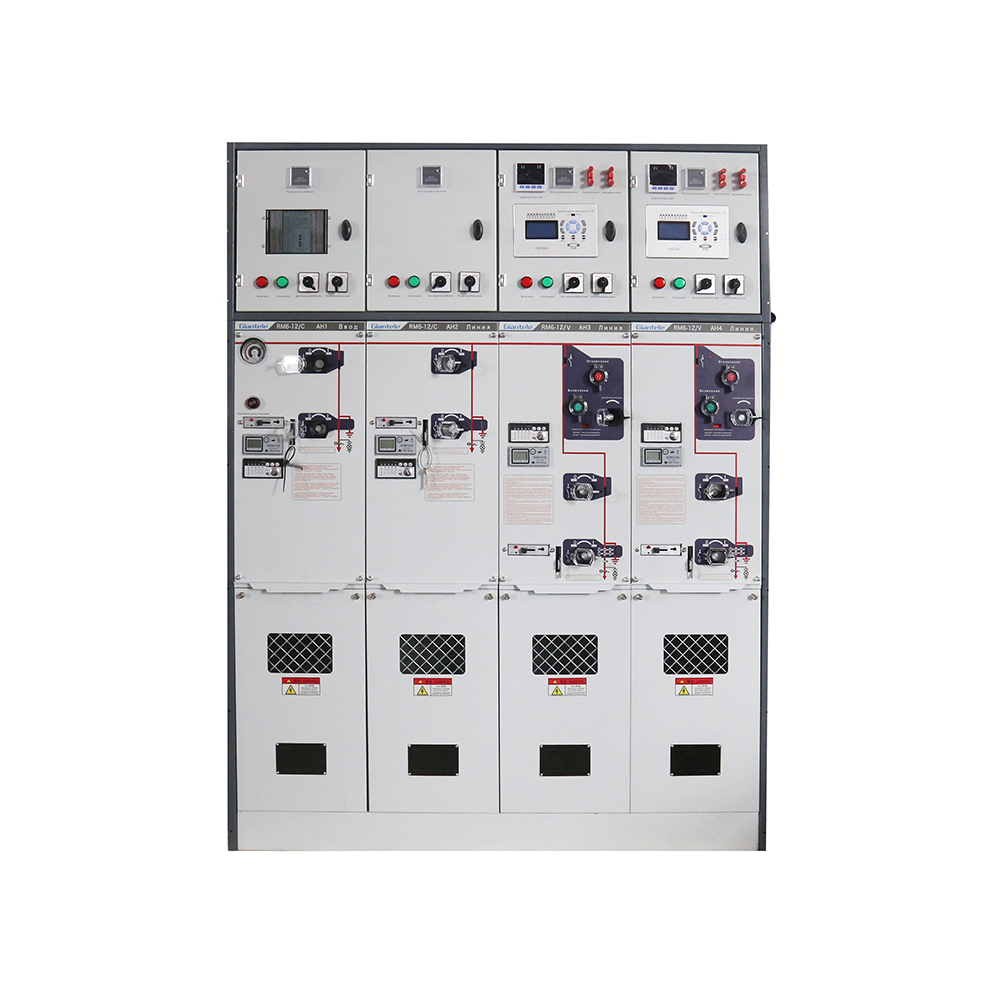
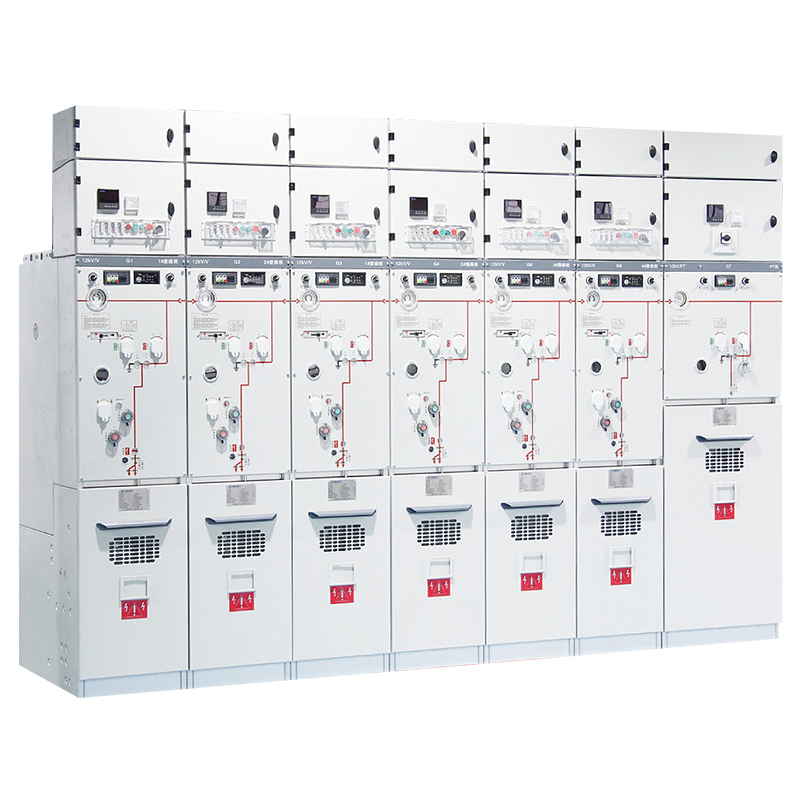
Gas insulated switchgear seals live parts inside SF6-filled stainless steel tanks. Clearances shrink to millimeters. A GIS panel is 400mm to 600mm wide. The same 10-panel lineup fits in 4 to 6 meters. GIS costs more. It saves floor space. You pay for the compactness.
Choose AIS when you have space and need lower cost. Choose GIS when the substation is underground, on a rooftop, or in a dense urban area where every square meter is expensive. Both meet IEC 62271. The choice is about your site, not the standard.
Air insulated switchgear vs gas insulated switchgear: the comparison
| Dimension | Air Insulated (AIS / KYN28) | Gas Insulated (GIS / RMU) |
| Insulation medium | Atmospheric air | SF6 gas in sealed tanks |
| Panel width | ~800 mm per panel | ~400-600 mm per panel |
| Floor space (10 panels) | ~8 meters | ~4-6 meters |
| Maintenance access | Front access sufficient | Front access only |
| Environmental | No SF6 — zero greenhouse gas | SF6 has 23,500x GWP of CO2 |
| Cost | Lower upfront cost | Higher upfront — lower space cost |
The vacuum circuit breaker: why it replaced oil and SF6 in modern metal-clad panels
A vacuum interrupter seals the contacts inside a ceramic bottle with a vacuum of 10⁻⁶ torr or better. When the contacts separate, the arc is extinguished within the first current zero — typically half a cycle. No oil to test. No SF6 to leak. The vacuum bottle is sealed for life. Rated for 10,000 mechanical operations. At one operation per day, that is 27 years.
The spring-operated mechanism charges in under 15 seconds. Close and trip coils operate on DC from the station battery. The handcart has three positions with clear mechanical indicators. You know exactly where the breaker is. No ambiguity. No guessing.
Why industrial switchgear buyers should insist on IEC 62271 type-test certificates
Any factory can claim their panel is "tested." Ask for the certificate from an accredited lab — KEMA, ASTA, CESI, or equivalent. It should show short-circuit making and breaking capacity. Peak withstand current. Short-time withstand current. Temperature rise. Internal arc classification if claimed. If the supplier cannot produce a type-test certificate with their company name on it, the panel is not type-tested. It is type-claimed. There is a difference.
What to check when selecting metal clad switchgear manufacturers
- Type-test certificates — IEC 62271 from an accredited lab. Not a factory self-declaration.
- Internal arc classification — IAC AFLR if internal arc safety is claimed. Check the certificate.
- Protection relay brand — Siemens, ABB, Schneider, SEL. Your choice, not the factory default.
- VCB brand and rating — rated short-circuit breaking current. Mechanical endurance class.
- Factory test capability — do they have a high-voltage test set and primary injection kit?
- Export experience — MV switchgear shipping is complex. 50-plus countries means they know how.
Medium voltage metal enclosed switchgear: when it is good enough and when it is not
For secondary distribution where the fault level is below 16kA and the operator is trained, medium voltage metal enclosed switchgear with insulating barriers is acceptable. It costs less. It is lighter. It installs faster. For primary distribution above 25kA, or where multiple operators work in the substation, specify metal-clad with grounded metal barriers. The cost difference is real. The safety difference is real. Match it to your risk.
Final thoughts
Metal-clad switchgear with vacuum circuit breakers is the standard for medium voltage primary distribution. KYN28-12 for 12kV. KYN61-40.5 for 35kV. IEC 62271 type-tested. CE certified. Standard delivery in 6 to 8 weeks. Send us your single-line diagram and protection scheme. We will return a technical proposal and pricing within 48 hours. Want to visit the factory and see the MV assembly line? Get in touch and we will book it in.