
A sub distribution board is rarely a control panel box you buy once. Plants add halls, supplies grow, and the incoming feed has to follow. Manufacturers who build modular boards size the enclosure and busbar for a second life, not day one. Here is how to spot them.
Key takeaways
- Modular means three things at once: a repeated enclosure footprint, a busbar you can extend, and ways you can populate later.
- Buy spare capacity, not spare devices: 20-30% empty ways and one spare section cost a fraction of a second board.
- Coupling kits beat new boards: ask for the extension drawing before you place the first order.
- The enclosure sets the limits: internal depth decides cable bending radius, and the IP rating decides how the heat leaves.
- Evidence, not brochures: demand an IEC 61439 design verification file and a routine test report for every board.
What makes a sub distribution board modular
A modular board is built from repeated units rather than a one-off enclosure box. Three things must be standard before the first order: the frame footprint, the busbar cross-section, and the way numbering. If any one is unique to that job, the second board will not match the first.
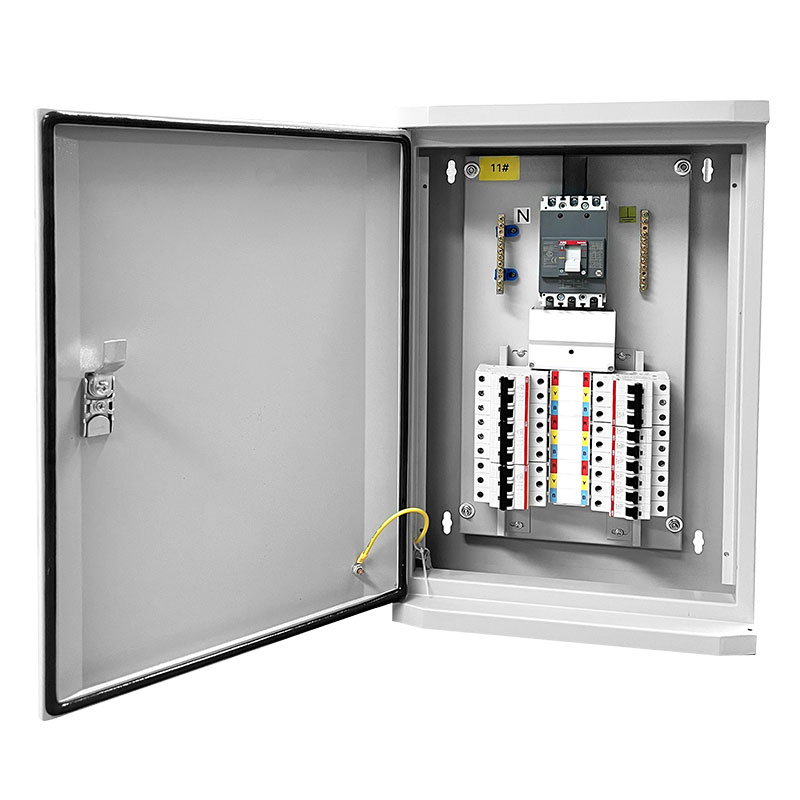
Start with the frame. Suppliers who sell boards as a product range keep the same height, depth and mounting pitch across sizes, so a second section bolts on years later. An industrial electrical cabinet from the same range accepts the same gland plates, door hardware and internal covers.
The busbar decides how far you can grow. The fault level handed down from the incoming main board sets the minimum withstand, and a busbar cannot be uprated in place. A bar rated for the final load costs little more than one rated for today.
Way numbering sounds trivial until an extension arrives. If the first board runs 1 to 12 and the extension restarts at 1, every drawing, label and lockout procedure is wrong from day one. Fix the numbering convention in the purchase order, not on site.
None of this depends on where the supply comes from. The same frame repeats whether the board is fed from a transformer or from a generator distribution box at the far end of a site.
Sizing the electrical panel enclosure before you compare manufacturers
An electrical panel enclosure is sized by three numbers: the bending radius of the largest incoming cable, the depth needed behind the DIN rail, and the swing of the door. Manufacturers who quote from a drawing ask you for all three. Manufacturers who quote from a catalogue page do not.

Where the space actually goes
A wall-mounted board with a 250A incomer and six outgoing ways looks generous on a price sheet. Inside, the incoming cable needs roughly eight times its diameter for the bend, the busbar needs clearance behind the devices, and the wires need a route that misses the door hinge.
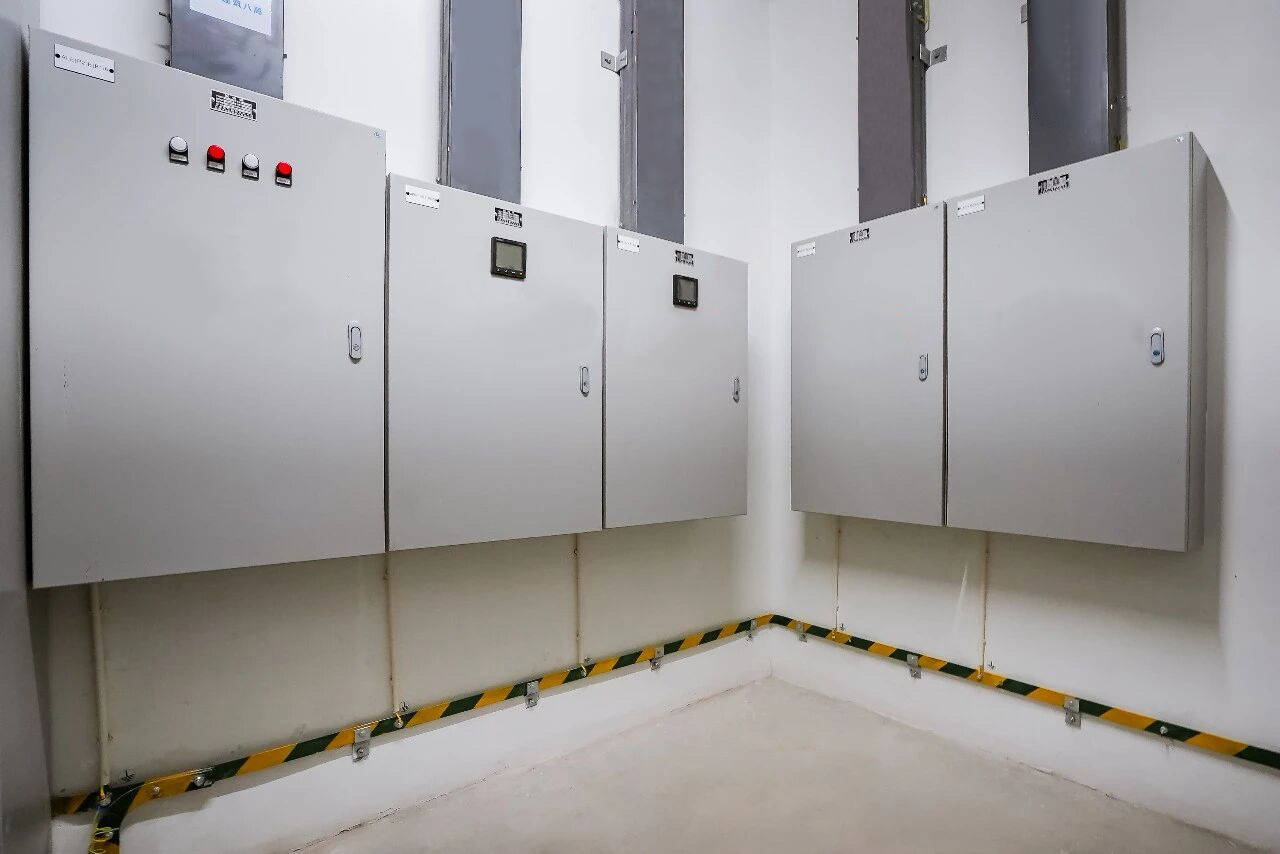
Measure the wall before you choose. Door swing, gland access from below and a 100mm gap for a spanner decide more layouts than the electrical rating does. The same arithmetic applies to floor-standing control panel cabinets, only the clearances are larger.
Board families are usually built this way. Take the sub main board range as an example: one frame repeated across wall-mounted and floor-standing versions, with the same way pitch and the same internal covers throughout.
Spare ways and empty rail space: how much to order
Order 20-30% spare ways on every board, and one complete spare section if the site has any expansion plan at all. Devices are cheap and quick to add. Space, busbar and cable entry are not, and those are the parts you cannot buy later at the same price.
Distribution equipment behaves like floor area in a warehouse. It feels wasteful while it is empty, and it is the only thing that lets you say yes when a new line arrives. A board filled to 100% on day one usually needs a second enclosure within two years.
| Item | Buy with the first board | Cost of adding it later |
|---|---|---|
| Busbar rating | Rate for the final load | Replace the whole board |
| Enclosure section | One spare section | Second section plus coupling kit |
| Outgoing ways | 20-30% left empty | 30-60 minutes per way |
| Cable entry plates | Two undrilled gland plates | Re-drill and re-seal in service |
| Door space | Room for a meter and a relay | Rebuild the door |
Small boards run out first. wall-mount lighting boards usually lose their spare ways to extra lighting and small power circuits long before the main process load grows, and that is the point where a plan for the next section pays off.
Demand for industrial power keeps climbing across the markets Giantele serves, and the International Energy Agency tracks that curve year by year. Boards sized for today are the ones that get replaced early.
Coupling extension sections onto a board that is already live
An extension section is bolted to the existing board, the busbars are joined through a coupling, and the new ways are wired from the extension. The work needs a planned isolation window, not a weekend guess.

What a coupling actually costs you
A single-section extension on a 400A board is usually a four to six hour isolation window. Two hours cover the mechanical coupling and busbar torque, an hour covers the new ways, and the rest goes to insulation resistance and continuity checks.
Torque the busbar joints again after the first 24 hours under load, then scan the joints with a thermal camera a week later. A loose joint shows as a hot spot long before it fails.
The joint is the weak point, not the bar. That lesson holds for fixed-pattern switchgear assemblies as well, where a single under-torqued connection can cook a whole section.
What changes when the room is hot, wet or dusty
A power distribution enclosure earns its rating from three site conditions: ambient temperature, moisture and dust. IP54 with gasketed doors suits most dusty plant rooms in Africa and the Middle East. Washdown areas need IP65 and a different door seal entirely.
Heat is the part buyers underestimate. A sealed box that keeps dust out also keeps heat in. A closed IP65 board with no thermal plan typically runs 15-20K above ambient, and every device inside ages faster. Ventilation, a fan and filter, or a heat exchanger all need reserved space.
In tropical climates condensation does more damage than dust. A 100W anti-condensation heater on a hygrostat costs little and protects the interior for the life of the board. The wall-mount enclosure range covers the sealed versions when you need IP65 without a floor-standing frame.
If the board is a standard industrial electrical cabinet bought off a shelf, check the gasket, the gland plate and the paint system against the room. A rating is only as good as its weakest entry point.
What to verify from a supplier of custom industrial enclosures
Four documents separate a manufacturer of custom industrial enclosures from a sheet metal shop with a catalogue. Ask for all four before you release the order. Design verification against IEC 61439 is the baseline every other claim rests on.

Four items, two of them non-negotiable
Ask for the routine test report against the actual serial number, not a sample from the production line. Suppliers who build type-tested LV assemblies hold both documents as a matter of routine, and they will send them without an argument.
Then look at the process behind them. ISO 9001 certification with a current certificate number tells you the build is controlled from drawing to dispatch. On a product you intend to repeat, that matters more than on a one-off panel.
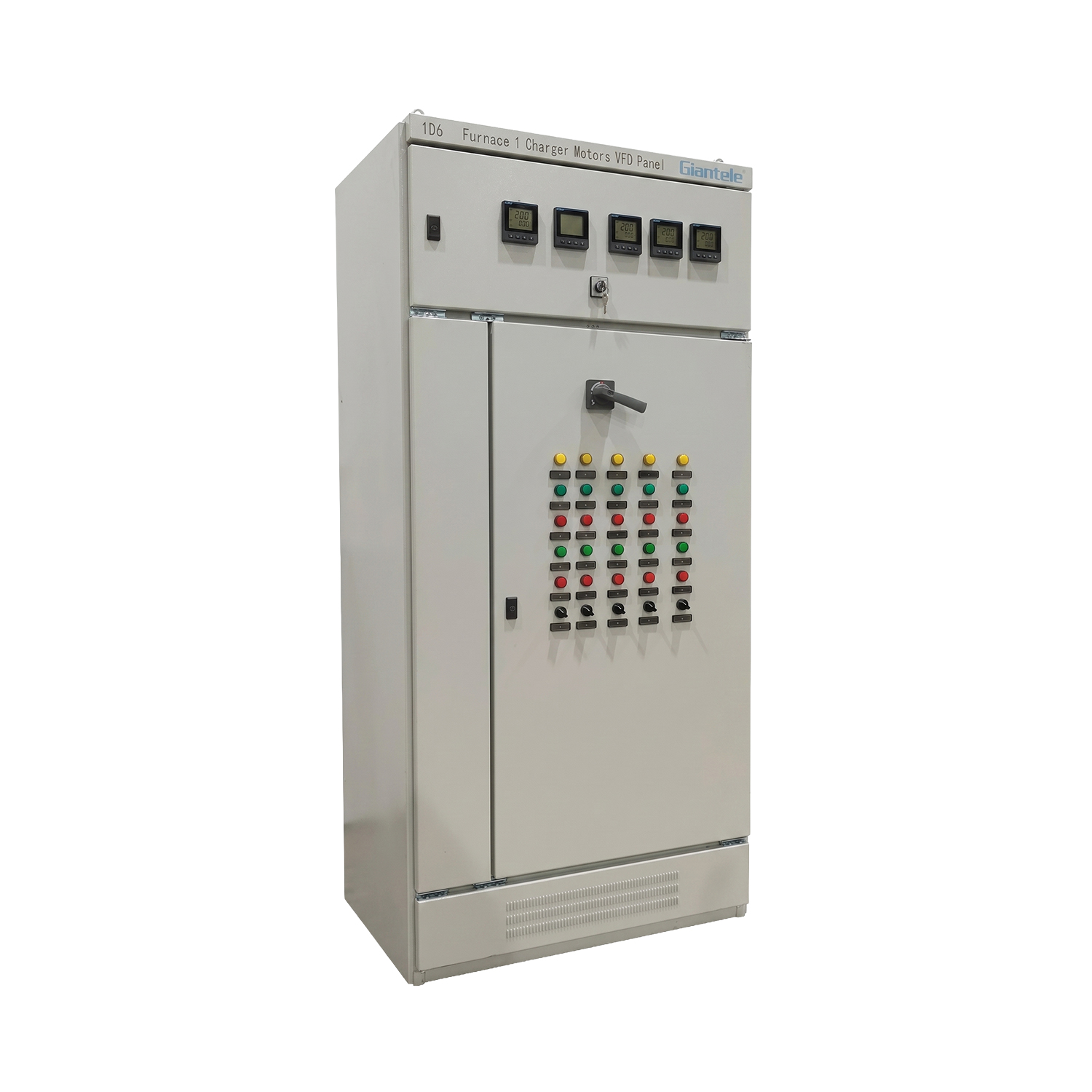
Treat the control panel box as one item in a repeated family, not a bespoke job. The questions are the same whether you buy small wall-mounted units or large floor-standing control panel cabinets. A supplier who answers for one size can usually answer for the range.
Frequently asked questions
What counts as a modular sub distribution board?
Can I extend a board that is already in service?
How many spare ways should I order?
Does a modular board cost more than a custom one?
Can I mix wall-mounted and floor-standing sections on one board?
What IP rating should a sub board have in a dusty plant room?
What documents should arrive with a custom industrial enclosure order?
Final thoughts
Modularity is a purchasing decision, not a construction method. The board you can extend in five years is the one you specified today with spare ways, an extendable busbar and a supplier who answers with drawings. Send Giantele your load schedule and available space for a scalable board layout.
Planning a board that can grow?
Send your load schedule and the wall or floor space you have. Giantele engineers return a dimensioned enclosure layout with the spare ways and the coupling point marked.