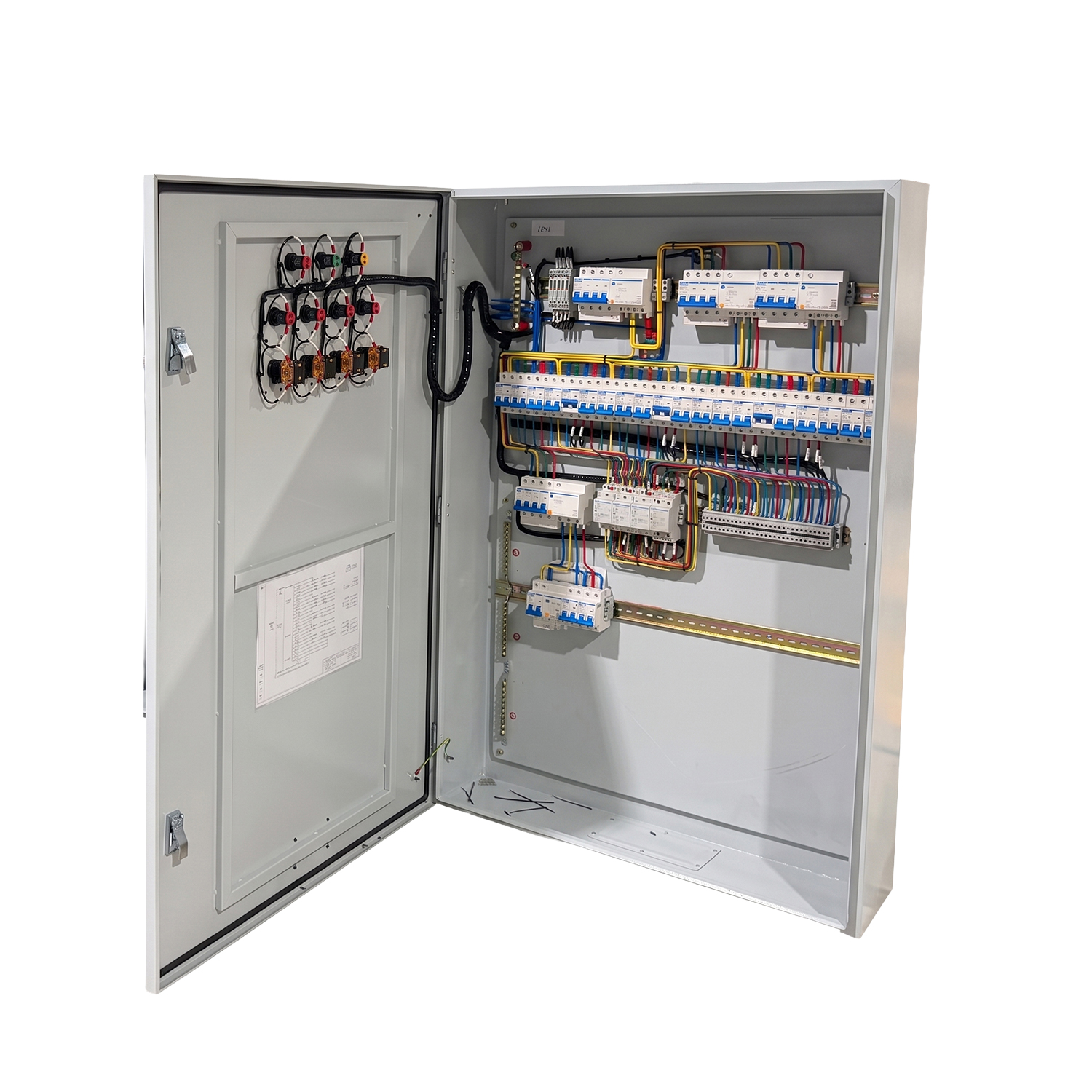
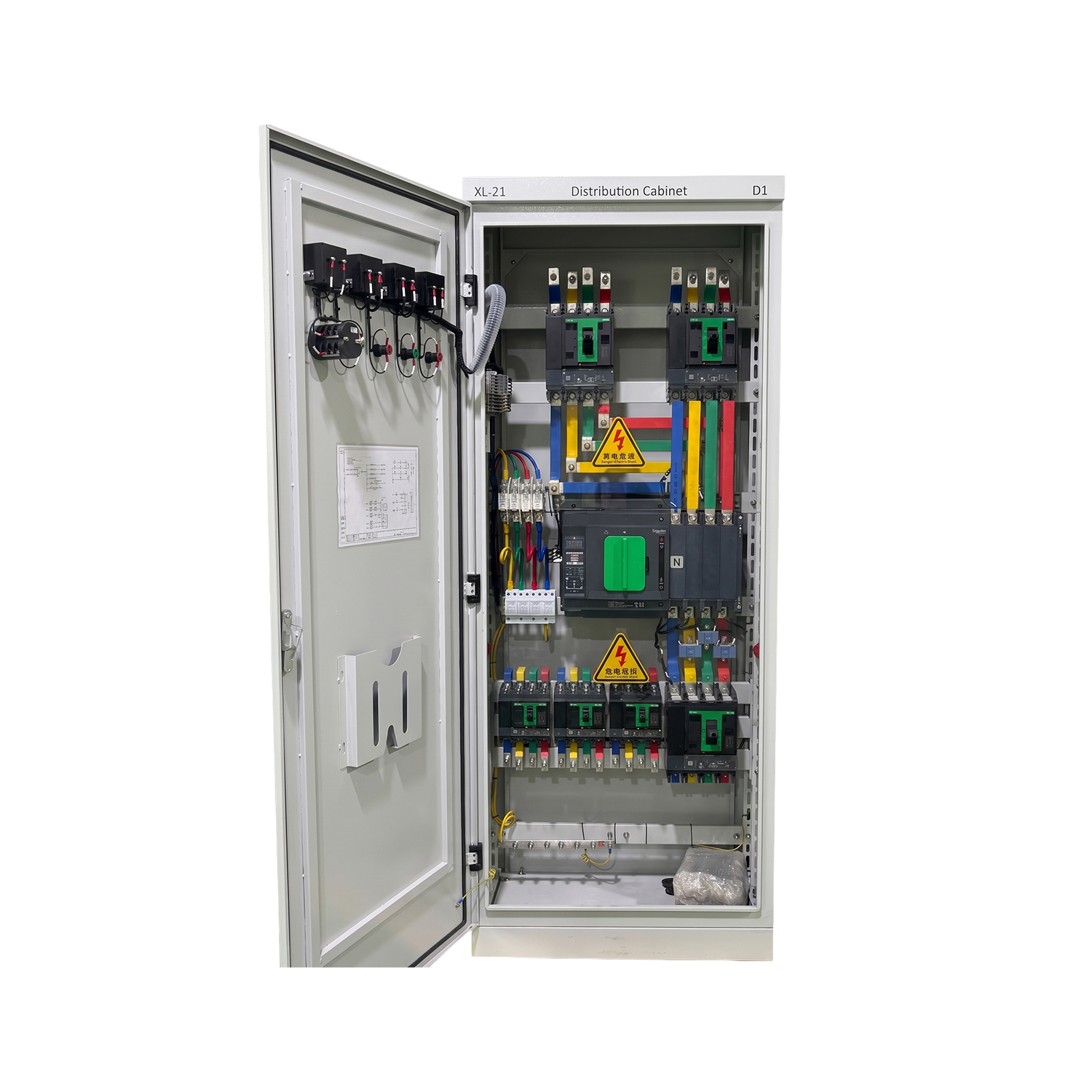
Lighting circuits should not trip together. When one fluorescent fitting faults, only its circuit should disconnect. The rest of the floor stays on. That is what a proper power distribution board does. It splits your lighting load into individual protected circuits. If you are still running everything off one breaker, you are one faulty ballast away from a very dark building.
What a lighting distribution board actually contains
A metal enclosure. A copper busbar connected to the incoming supply. A main switch or circuit breaker. A row of MCBs — one for each lighting circuit. An RCCB for earth leakage protection. Wiring trunking to keep everything tidy. A circuit schedule stuck to the inside of the door.
That is it. No mystery. No complex electronics. Just a well-built enclosure with good breakers and clean wiring. A lighting panel that works for 20 years starts with components you trust and wiring you can trace.
The power distribution box enclosure matters more than most people think. IP41 is fine for a clean electrical riser. IP54 for a basement with some dust. IP65 for outdoor mounting or a factory floor. Match the enclosure to the site — do not just order the cheapest box.
MCB vs RCCB: what each one does for your lighting circuits
An MCB protects the cable. Overload current or a short circuit causes a thermal or magnetic trip. The breaker disconnects the circuit before the cable insulation melts. Simple. Reliable. Every circuit needs one.
An RCCB protects people. It compares current going out on the live conductor with current returning on the neutral. If the difference exceeds 30mA — someone is getting a shock — it trips in under 30ms. Before the current reaches the level that stops a heart. An RCCB is not optional in any modern wiring standard.
A lighting distribution board with both MCB and RCCB protection gives you cable safety and human safety in one enclosure. Do not settle for one without the other.
Electric power distribution: why a distribution panel beats a single big breaker
One big breaker feeding all your lights means one fault blacks out the whole floor. A distribution panel with individual MCBs means a single faulty light trips only its own circuit. The other 90 percent of lights stay on. Maintenance knows exactly which circuit to check. No hunting. No guessing.
This is basic electric power distribution logic. Yet plenty of buildings still run lighting off a single oversized breaker because it was cheaper to install that way. It is never cheaper to operate that way. The first major fault proves it.
Lighting panel vs main distribution board: the comparison
A lighting distribution board is a sub-panel. It takes power from the main switchboard and distributes it to lighting circuits only. A main distribution board handles the whole building. Here is how they differ.
| Dimension | Lighting Distribution Board | Main Distribution Board |
| Typical rating | 63A to 250A | 400A to 4000A |
| Mounting type | Wall-mounted or flush | Floor-standing cabinet |
| Main breaker | Main switch or MCB | ACB or large MCCB |
| Circuit count | 4 to 24 circuits | 12 to 60+ feeders |
| Location | Per floor or zone | Main electrical room |
| Protection focus | MCB + RCCB per circuit | ACB + MCCB + selective coordination |
A lighting panel is not a smaller main board. It serves a different purpose. It isolates lighting faults so the rest of the building stays powered. That is the job. Do it right.
Low voltage switchgear and where lighting panels fit in
The electrical distribution hierarchy starts with the transformer. Then the main low voltage switchgear or switchboard. Then sub-distribution boards — MCCs for motors, ATS panels for generator backup, and lighting panels for lighting circuits. Each layer protects its own zone.
An electrical panel board for lighting is the last link before the lamp. It needs the same quality of breakers as the main board. The same standard of wiring. The same level of testing. A fault at the lighting panel is still a fault in your building. Treat it seriously.
What to check before you order an electrical db
- Circuit count — how many lighting circuits do you need? Add 20 percent for future.
- Breaker brand — Schneider or ABB. Not generic. Ask for calibration certificates.
- RCCB inclusion — 30mA, Type A or Type AC. Required by IEC and local wiring codes.
- Enclosure IP rating — IP41 for indoors, IP65 for outdoors or dusty areas.
- Mounting type — surface or flush. Confirm before the order. Changing later is expensive.
- Cable entry — top, bottom, or both. Pre-punched knockouts save installation time.
Why a power db box with proper labeling saves years of maintenance headaches
A circuit schedule on the door tells maintenance exactly which MCB feeds which lights. Without it, someone has to trace cables through trunking or switch breakers one by one until the right light goes off. That is slow, disruptive, and unprofessional.
Every lighting panel we ship includes a printed circuit schedule. Circuit numbers match the labels on the breakers. The schedule matches the as-built drawings. When an electrician opens the door five years later, they know exactly what they are looking at. No head scratching. No wrong breaker switched off.
Picking the right lighting panel supplier
Look for IEC 61439 compliance. Ask for factory test reports — insulation resistance, continuity, RCCB trip time, MCB calibration. A supplier that cannot produce these is cutting corners you cannot see. Ask about breaker sourcing — Schneider and ABB have traceable supply chains. Generic breakers do not.
Check lead times. A factory with 20,000 square meters and 200 people should deliver standard lighting panels in 3 to 5 weeks. If the quote alone takes 2 weeks, expect delays. Ask for project references. A distribution box supplier with export experience in Africa, Southeast Asia, and the Middle East knows how to handle compliance paperwork without holding up your shipment.
Final thoughts
A lighting distribution board is not the most expensive piece of electrical equipment in your building. But it protects every person who walks under a light you power. Schneider or ABB MCBs. 30mA RCCB protection. IP65 enclosure where the site needs it. Circuit schedule on the door. Factory tested. Standard delivery in 3 to 5 weeks. Send us your circuit schedule and we will get back to you with a technical proposal and pricing within 48 hours.