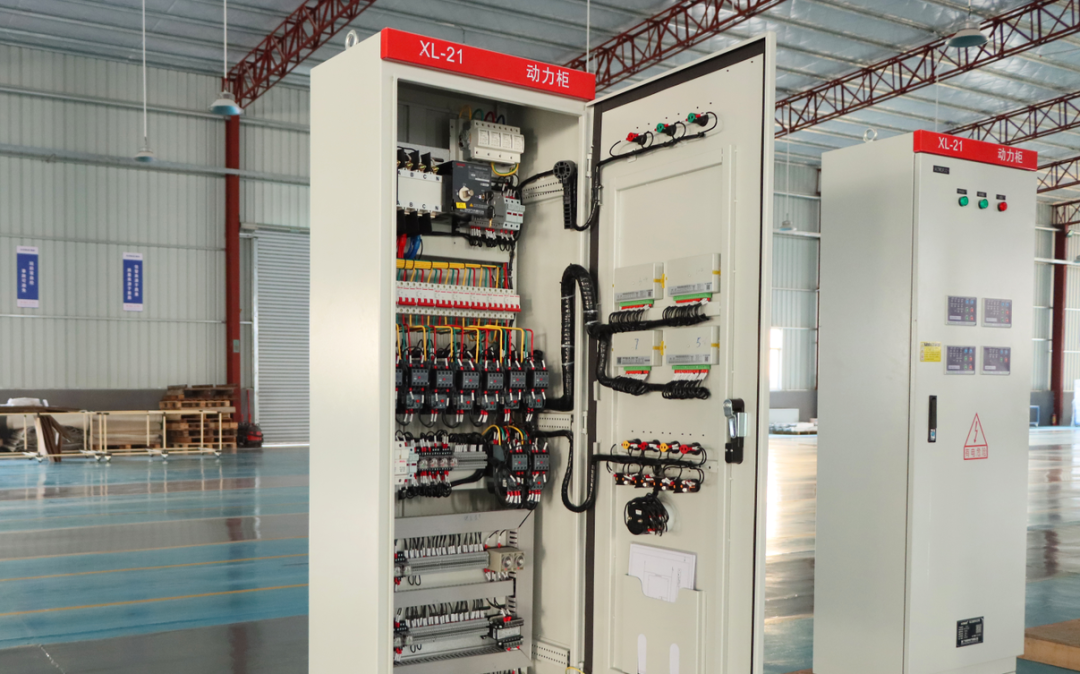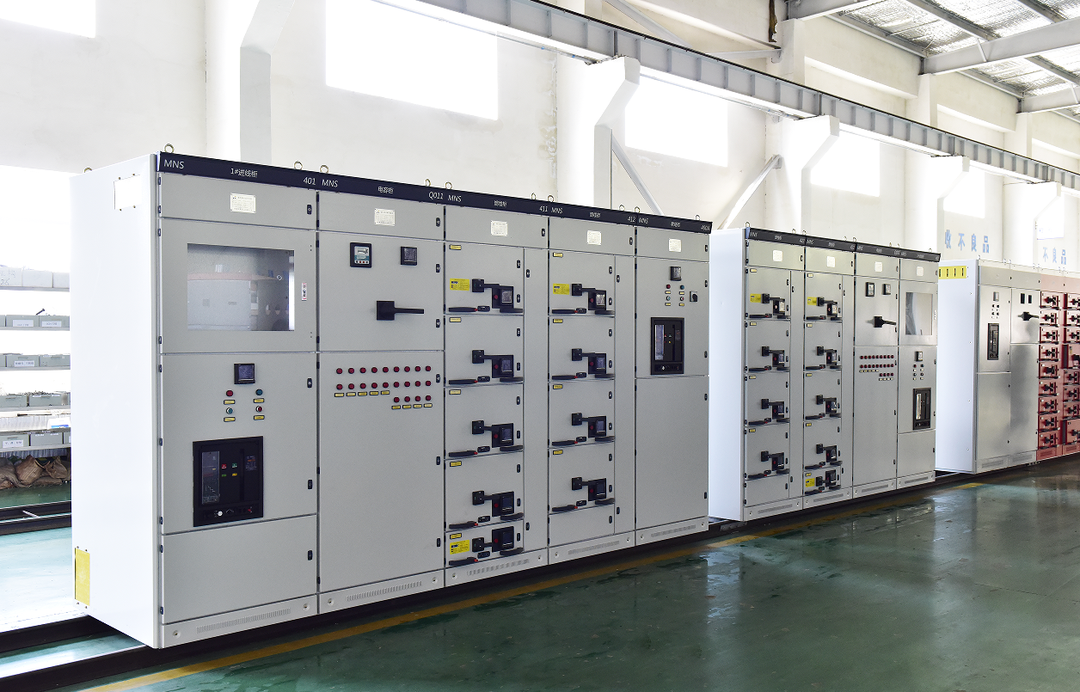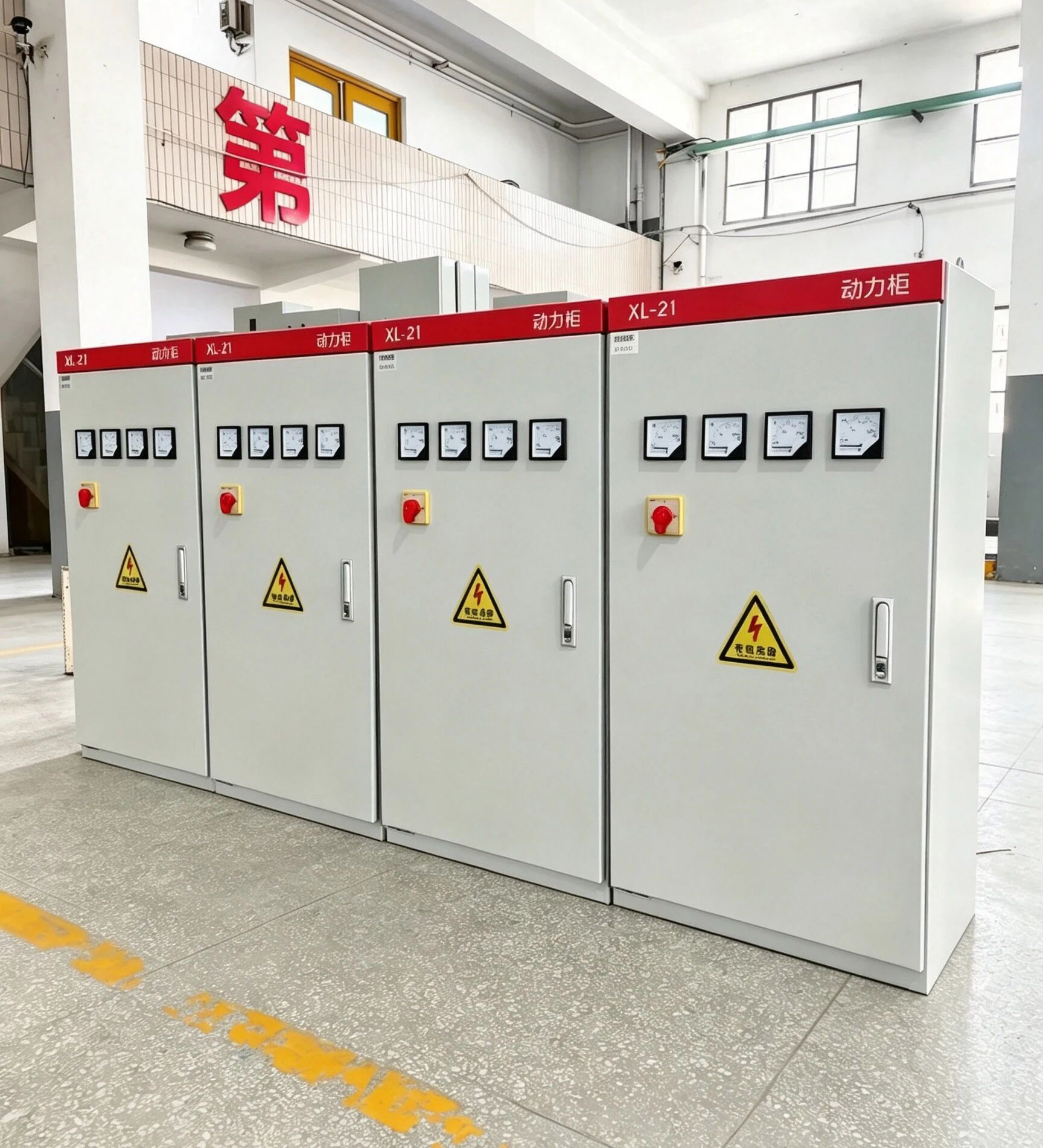

Renewable generation turns a main distribution board into a two-way assembly. Power leaves for the plant and arrives from the solar field on the same bars. Electrical panel companies that build for one direction will hand you an lv panel that cannot take the back-feed.
Key takeaways
- A renewable feeder makes the board a two-way assembly, not a one-way distribution point.
- Inverter fault current adds up. Many small sources can beat one large transformer.
- The busbar, the current transformer position and the protection settings all move with back-feed.
- The compensation and the heat plan belong to the board, not to a separate contract.
- Qualify vendors on the export case, the protection study and the test sheet rather than on price.
What renewable energy integration changes on the board
Renewable integration adds generation to an assembly that was designed to consume. Current now flows both ways, the fault level moves, and protection settings written for one source stop holding. Three duties change: busbar current, fault level and protection direction.
The same assembly carries a dozen names. One tender asks for an lv panel, the next for a bank of lv panels.
Site teams call the small one a panel board box. A workshop drawing calls the same object a circuit breaker panel board, and the builder files it as a main electrical distribution board.
A refinery names its main unit a power distribution center. All of it is electrical distribution equipment, and the wider term electrical power distribution equipment covers the enclosure, the busbar, the breakers and the wiring inside.
Renewable work adds a source to that list. A board built for one-way flow now has to accept current from a solar feeder, a standby generator or a battery. The hardware looks the same. The duty does not.
The rules arrive with the connection agreement. Export limit, power factor band and protection scheme are set by the network operator, and they land on the incoming section of the board. Everything upstream is somebody else's scope.

One board, two directions
The assembly carries load out and generation in on the same bars.
Size it for one direction and the busbar does a job nobody wrote down.
Busbar rating and fault level under back-feed
An inverter is current limited, so one unit contributes far less fault current than a transformer of the same rating. Ten or forty units on shared bars add up fast. The busbar rating, the short-circuit withstand and the breaker selection all need checking against that new total.
The numbers are worth remembering. A grid-following inverter pushes roughly 1.1 to 1.5 times its rated current into a fault. A distribution transformer pushes 5 to 8 times. So a 20 MW plant built from forty 500 kW inverters can feed a fault from every direction at once.
| Item | One-way board | Renewable-integrated board |
|---|---|---|
| Busbar current | Sized from the load list | Sized from the larger of load and export |
| Fault level | Set by the upstream transformer | Transformer plus every inverter on site |
| Power flow | Downstream only | Both directions, changing with cloud cover |
| Protection | Overcurrent, graded downstream | Directional element at the incoming section |
| Metering | Import only | Import and export, two registers |
| Enclosure | Indoor, ventilated | Often outdoor, with a heat plan |
Do not size the busbar from the load list alone. Take the larger of the load and the export, then add only the headroom you expect to use. A distribution panel board built for back-feed carries more copper, and the quote should show where that money went.
Assemblies of this type sit under IEC 61439. It fixes clearance, segregation and temperature rise, and it is the document your busbar calculation has to satisfy.
The routine test sheet is where that proof appears for your own unit. A panelboard that ships without a temperature rise record has not been tested as an assembly.
Bidirectional flow and protection settings
Directional protection is the part most often left out. A board that only knew how to send current downstream cannot tell an export fault from an import fault. Current transformer position and polarity decide whether the relay sees the right direction.
Reverse the polarity of one current transformer at the outgoing feeder and the directional relay reads import as export. The plant then trips on its own generation. That is a wiring mistake, not a device fault, and it usually appears for the first time at commissioning.
Fit the directional element at the incoming section rather than at each inverter. One relay there protects the network. The inverters carry their own internal protection, and duplicating it wastes money and confuses the grading study.
The grading exercise also changes shape. With one source, fault current falls as you move downstream. With generation behind the board, a fault on a healthy feeder can still be fed from the export side. A sub distribution board further down the line then inherits settings that no longer match.

Where the settings live
The incoming breaker and its trip unit carry the protection the network operator asks for.
A board that ships without a directional element cannot be fixed by a firmware update later.
What a renewable-ready board has to carry
Three duties land on the same assembly, and each one is cheaper to settle at the drawing stage. Renewable capacity keeps climbing, and the IEA tracks how quickly. Every new megawatt lands behind a board that was drawn before the export case entered the conversation.

Three things the assembly has to carry
How to qualify electrical panel companies for renewable work
Most vendors promise reliable power distribution solutions for industries. Fewer can show a board that has run with generation behind it. Qualify on evidence rather than on the phrase industrial power distribution solutions, because every catalogue uses it and none of them define it.
Ask three things in writing, and ask before the price arrives rather than after. A panel builder who has done this work will answer in a day. One who has not will send a brochure.
- Which fault level did you calculate, and from which sources? The answer should name the transformer and the inverters, not the transformer alone.
- Who sets the directional relay, and against what network data? If the settings come from the utility, someone has to request them.
- What does the routine test sheet cover on this unit? A sheet that lists only insulation resistance has not tested the assembly.
A quality file held under ISO 9001 keeps device certificates, test records and drawing revisions in one place. That matters when a protection setting is questioned two years after handover.
Two more answers separate a builder from a reseller. Ask for a switchboard assembly reference that runs with generation behind it, and ask for the electrical distribution design assumptions behind the price. A quote without those two is a catalogue number with a number attached.
Frequently asked questions
Can a standard main distribution board take a solar back-feed?
What fault level should I give the panel builder?
Do I need a separate board for the renewable feeder?
Which IP rating suits an outdoor board at a solar plant?
How long does a custom-engineered board take?
Is a separate inverter board worth it on a small rooftop array?
Final thoughts
Renewable integration turns a distribution board into a two-way assembly. Check the export case, fit the directional relay at the incoming section, and size the compensation for the plant running flat out. Send Giantele your connection conditions for a board drawn around them.
Planning a board with generation behind it?
Share the connection conditions, the inverter schedule and the export limit. We return a layout with the busbar calculation, the protection scope and the compensation sized for the export case.