Your motor control panel is 20 years old. Contactors chatter, schematics went missing in the last rewire, and the spare parts catalog stopped existing a decade ago. Repairing it keeps the line running this week. Replacing it keeps the line running for the next twenty years.
Motor control panel retrofit services exist to help you make that call with numbers, not hope. A retrofit replaces worn internals while keeping your existing enclosure and field wiring. A replacement installs a brand-new panel. Both are legitimate.
The mistake is choosing between them on feeling instead of on the panel's actual condition. This article gives you the decision framework, the warning signs that demand a new panel, and the replacement option that fits your exact footprint.
Key takeaways
- Retrofit is not always cheaper: When repair bills, downtime, and rising failure rates pass about 50% of a new panel's cost, replacement is the better financial call.
- Six conditions force a full replacement: Corroded busbar, burnt enclosure, obsolete standards, missing drawings, failed type-test compliance, and repeated arc-flash events. Each one is a hard stop for retrofit.
- Same-footprint replacement removes the pain: A custom panel built to your existing dimensions installs in your current location, on your current cable runs, with zero civil work.
- Pump panels age differently: A duplex pump control panel, grinder pump control panel, and sump pump control panel each show distinct wear patterns that change the retrofit decision.
- CE certified, IEC 61439 compliant: Giantele retrofit and replacement panels carry CE certification with full factory testing and as-built documentation.
What motor control panel retrofit services actually do
Retrofit services replace the internal working parts of an existing panel while preserving the enclosure, busbar structure, and field wiring that are still sound. You keep the panel footprint. You keep the cable terminations. You get new contactors, new overload relays, a new PLC if the old one is beyond support, and fresh wiring between components.
The cost case is simple on paper. A retrofit typically lands between 30% and 60% of a full replacement, because you avoid new enclosure fabrication, new field cabling, and most civil work.
According to World Bank infrastructure guidance, extending the service life of existing electrical assets is often the fastest way to improve reliability in constrained budgets. That is true when the existing structure is sound.
The assessment that decides retrofit or replacement
A serious retrofit service starts with a condition audit, not a quote. The audit answers six questions:
- Busbar condition: Are the busbars pitted, corroded, or showing hot spots from years of loose joints?
- Enclosure integrity: Is the sheet metal rusted through, or just cosmetic? Is the door seal still effective?
- Component age: Are the contactors and relays still manufactured, or long discontinued?
- Documentation: Do as-built drawings exist? Do they match the actual wiring?
- Compliance: Does the panel still meet the edition of IEC 61439 your insurer or regulator requires?
- Failure history: How many unplanned trips, thermal events, or arc-flash incidents in the last three years?
This audit output, not a vendor's enthusiasm, determines which path you take. A industrial control panel that fails this audit on busbar or enclosure is a candidate for replacement, whatever its age. When a panel already shows the common MCC panel problems we catalog on our blog, the retrofit decision stops being optional.
Retrofit or replace: how to decide with numbers
The retrofit-versus-replace decision is a financial one disguised as an engineering one. Put both options into a five-year cost model and the answer usually becomes clear. The model has four inputs: current repair cost, projected repair frequency, downtime cost per event, and the price of a replacement panel that fits your site.
| Cost driver | Retrofit path | Replacement path | Which wins |
|---|---|---|---|
| First-year outlay | 30-60% of new panel | Full panel + installation | Retrofit |
| Repair frequency year 1-3 | Low (new internals) | Very low (new everything) | Replacement |
| Repair frequency year 4-5 | Rising, old structure aging | Low | Replacement |
| Downtime during work | 2-5 days | 3-7 days | Retrofit |
| Residual risk of structure failure | Carried forward | Eliminated | Replacement |
| Five-year total cost | Often 1.2-1.6x first-year outlay | Flat after year one | Replacement wins past 50% threshold |
The rule of thumb that holds across most industrial sites: if your last two years of repairs on this panel total more than half the cost of a new panel, replace it. You are funding the old structure's decline with labor.
A new motor control center resets the failure clock, and the warranty covers the first maintenance cycle that a retrofit cannot. Where to buy matters as much as whether to buy: motor control center suppliers who stock components and test every assembly keep your downtime window short.
When you must buy a brand-new motor control panel
Some conditions make retrofit unsafe, non-compliant, or financially absurd. When any of these six apply, stop planning a retrofit and buy new. This is not a preference. It is the engineering call.
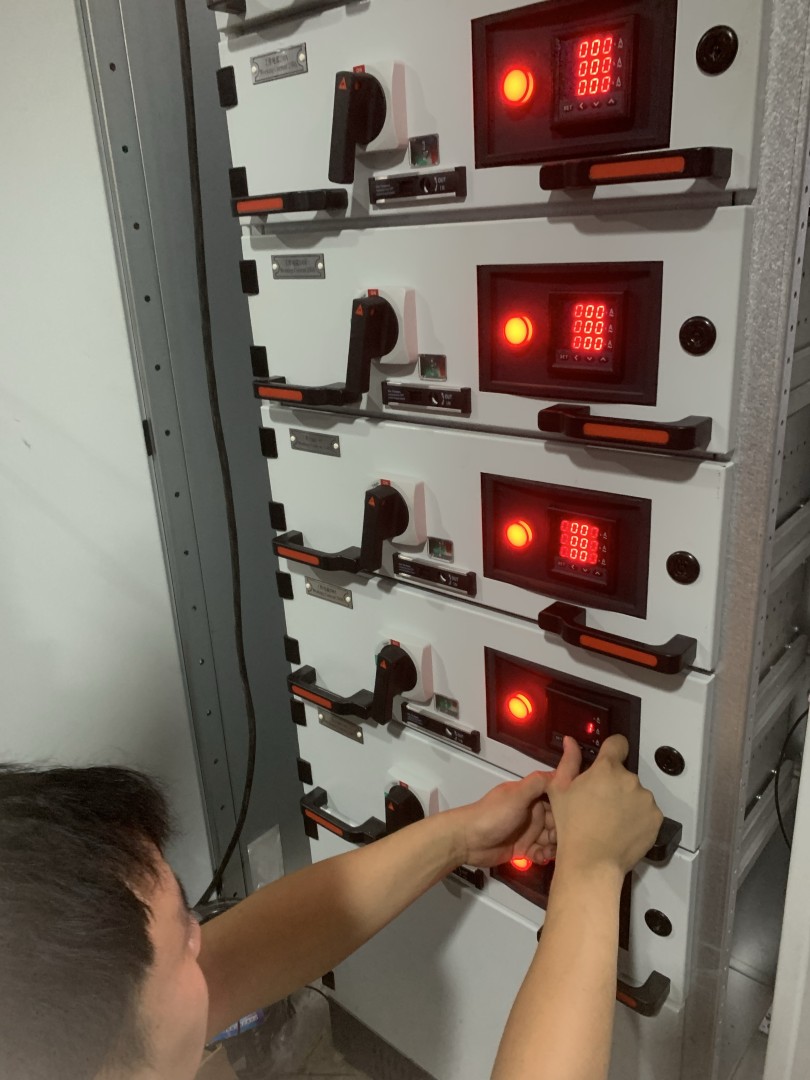
Six conditions that force a full replacement
Control panel layout design: same-footprint replacement panels
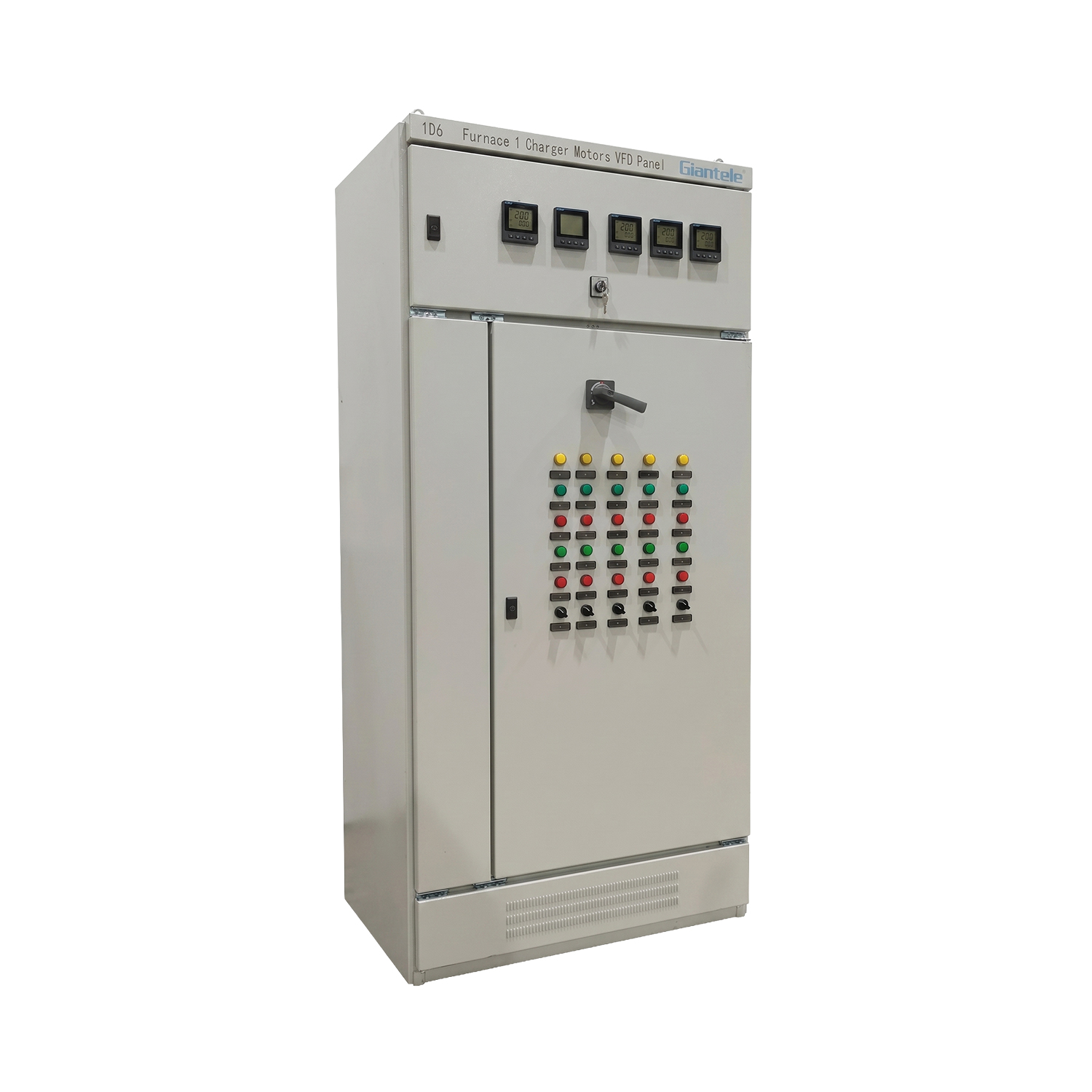
Here is where replacement stops feeling like a project and starts feeling like an upgrade. Giantele builds replacement motor control panels to your existing dimensions.
We take your enclosure height, width, depth, mounting hole pattern, and cable entry positions, then design a new panel that drops into the same space and connects to the same cables.
This control panel layout design approach eliminates the three cost centers that make most replacements expensive: no civil work to resize a panel room, no re-routing of field cables, and no redesign of upstream switchgear connections.
Your electrician removes the old panel, installs the new one on the same footprint, and terminates the same wires at the same positions. The downtime window shrinks from weeks to days.
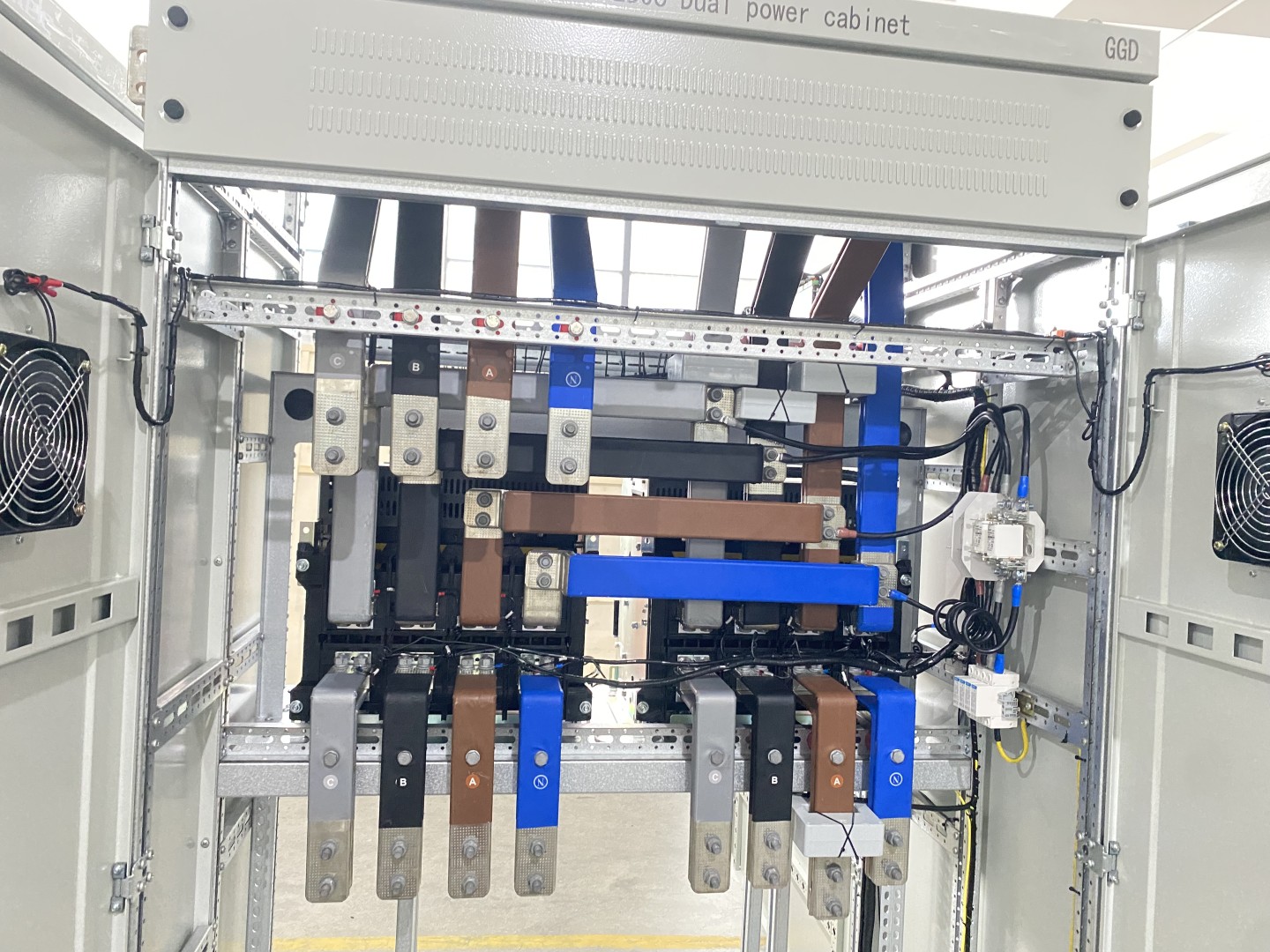
What a scientific layout gets you that a copy does not
Matching the old dimensions does not mean copying the old design. The new panel gets:
- Segregated compartments per current IEC 61439 Form separation, which the 1980s panel never had
- Derated busbar sizing for your actual ambient temperature, not the factory's test condition
- Thermal management calculated for real heat load, with ventilation sized to your climate
- Documented wiring with numbered ferrules and as-built drawings that match reality
You get a modern, compliant, maintainable panel in the exact space you already own. That is the difference between replacing a panel and upgrading it.
When you order a replacement, custom industrial control panels built to your footprint are engineered from your existing dimensions and load data. Send us the enclosure measurements, the motor list, and the single-line diagram of what is there today.
The design review covers terminal positions, cable entry direction, and busbar connection points so the installation is a swap, not a construction project.
Pump control panel retrofit: duplex, grinder, and sump applications
Pump control panels wear differently from general MCCs because they run in wet, humid, and sometimes corrosive environments. Three configurations dominate retrofit and replacement requests.
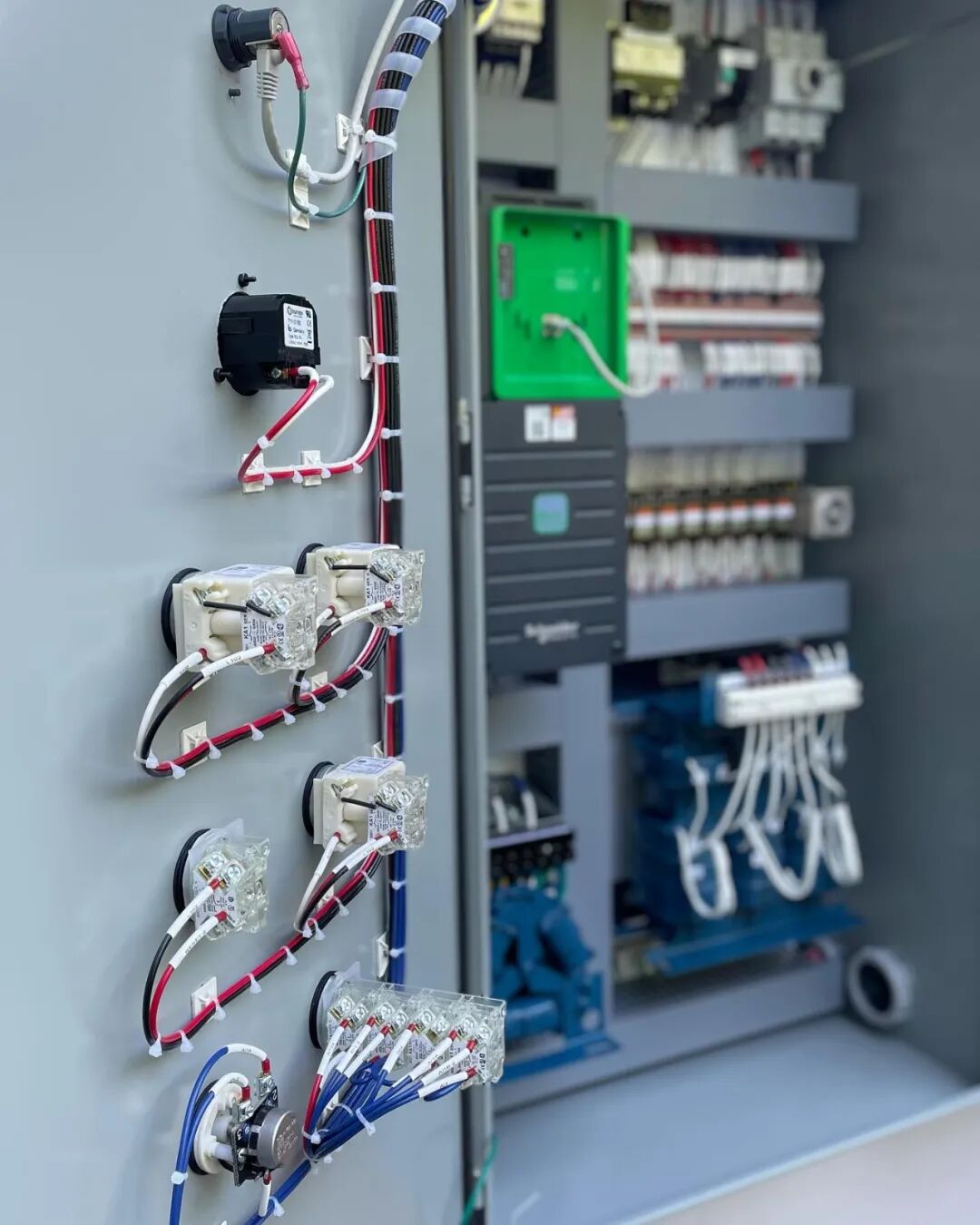
Three pump panel types and their typical failure modes
A pump control panel in a wastewater lift station faces hydrogen sulfide corrosion that a water utility panel never sees. If the enclosure interior shows pitting or discolored plating, treat it as an enclosure-failure condition and plan replacement, not retrofit.
The panel that surrounds a VFD control panel for a variable-speed pump adds its own thermal check: VFDs generate heat, and an undersized old enclosure cooks the drive within two years.
Control panel wiring assembly and PLC control panel design modernization
Control panel wiring assembly quality is the difference between a retrofit you forget about and one you revisit every quarter. Old panels were often wired point-to-point without ferrules, so tracing a fault takes hours.
A modernization rebuild uses numbered ferrules, voltage-segregated wiring, and terminal blocks that match the drawing. The first technician who opens the panel saves a day of tracing.
PLC control panel design in a modernization project should follow the same rule as the enclosure: reuse what works, replace what does not. If the existing PLC still runs your process reliably and its I/O matches your needs, a retrofit can keep it and replace only the power and starter sections.
If the PLC is discontinued, unsupported, or running out of memory, replace it as part of the panel work and port the logic to the new platform during the factory acceptance test, not on site.
An automation control panel modernization adds communication capability that the old panel never had. Modbus RTU or Ethernet I/O lets your SCADA see motor status, alarm history, and energy data that used to require a walk to the panel room.
For plants expanding toward IRENA-style industrial energy monitoring, this data layer is what justifies the upgrade budget.
Frequently asked questions
How do I know if my motor control panel needs retrofit or full replacement?
Can you build a replacement panel to fit my existing enclosure dimensions?
What is the typical cost of retrofitting versus replacing a pump control panel?
What does control panel wiring assembly quality look like in a modernized panel?
How long does a same-footprint replacement panel take to deliver?
Can a retrofit keep my existing PLC?
Are Giantele replacement panels CE certified?
Final thoughts
Legacy equipment does not have to be a liability. Retrofit when the structure is sound and the economics support it. Replace without hesitation when the six replacement conditions apply. And when you replace, demand a panel that fits your footprint, meets current standards, and comes with documentation your technicians can trust.
Contact Giantele with photos of your existing panel, its dimensions, and your motor list. Our engineers return a written retrofit-or-replace recommendation with cost numbers within 48 hours.
Get a Retrofit or Replacement Assessment
Send your panel photos, enclosure dimensions, and motor list. We return a written recommendation with cost comparison within 48 hours.