


Introduction
A VFD panel is the backbone of modern motor control in factories, water treatment plants, and mining operations. It houses variable frequency drives, protection devices, and control components in one robust enclosure — giving engineers precise speed and torque management over AC motors.

But buying the wrong VFD control panel is an expensive mistake. Undersized busbars overheat. Wrong IP ratings fail in humid or dusty sites. Poor component selection causes nuisance trips that shut down entire production lines.
This guide covers everything industrial buyers in Uganda, Kenya, and Angola need to know — from how a VFD panel works to what specifications to verify before placing an order.
What Is a VFD Panel?
A VFD panel is an industrial control panel that integrates one or more variable frequency drives (VFDs) with protection components, control wiring, and a rated steel enclosure. Its purpose is to control the speed and direction of AC induction motors by varying the frequency and voltage of the power supply.
A standard power distribution board routes power to fixed-speed loads. A VFD panel does something different — it precisely modulates motor speed from near-zero to full rated RPM. So you get energy savings, soft starting, and process flexibility that a conventional distribution box cannot offer.
The VFD panel is classified under Low Voltage Switchgear assemblies and must comply with IEC 61439 for complete verified performance.
Key Components Inside a VFD Panel
Understanding what sits inside the enclosure helps you evaluate supplier quality and avoid future maintenance problems.

Core Components
Variable Frequency Drive (VFD/inverter): The main power electronics module that converts incoming AC to DC and then back to variable-frequency AC. Brand selection matters — ABB, Schneider, Siemens, and Danfoss are standard benchmarks.
Main circuit breaker (MCCB): Protects the incoming feeder from short-circuit and overload faults before power reaches the drive.
Input/output contactors: Isolate the drive from the supply or the motor, enabling safe maintenance and bypass switching.
Line reactor or input filter: Reduces harmonic distortion injected into the electrical distribution panel upstream. Critical for IEC 61000-3-12 compliance.
Bypass circuit: Allows the motor to run at fixed speed directly from the supply if the drive faults. Essential for pumps and fans in critical processes.
Control PLC or relay logic: Manages start/stop commands, fault signals, and speed references from SCADA or DCS systems.
Terminal blocks and cable glands: Organise incoming power cables and outgoing motor cables in a structured, safe layout.
HMI or local operator panel: Displays drive status, output frequency, motor current, and fault codes for on-site operators.
Component | Function | Common Brands |
|---|---|---|
VFD/Inverter | Speed control, soft start | ABB, Schneider, Danfoss, Siemens |
MCCB | Short-circuit protection | Schneider, ABB, Chint |
Line reactor | Harmonic reduction | Mdexx, TDK |
Bypass contactor | Redundancy/maintenance isolation | Schneider, ABB |
PLC/relay logic | Control and interlocking | Siemens, Mitsubishi |
VFD Panel Types and Configurations
Not all VFD control panels are the same. The right configuration depends on your process, budget, and site conditions.
Single-Drive VFD Panel
One drive controls one motor. Simple, compact, and cost-effective. Common for pumps, fans, compressors, and conveyor drives in factories and light industrial sites.
Multi-Drive VFD Panel
Multiple drives share one Power Distribution Cabinet. This reduces footprint and simplifies cable management on sites with several variable-speed motors in the same process area — for example, a water treatment station with three pump motors.
VFD Panel with Bypass
Includes a manual or automatic bypass circuit. If the drive faults, the motor switches to direct-on-line operation instantly. Critical for continuous processes such as cooling water pumps, fire-fighting systems, and process feeds where stopping is not acceptable.
Intelligent VFD Distribution Panel
Integrates PLC, remote I/O, and Modbus/Profibus communication. Operators can monitor and adjust motor speed remotely from a SCADA workstation. This is the standard specification for custom industrial control panels on EPC projects funded by the World Bank or AfDB.
Technical Specifications to Verify Before Buying
Specifying a VFD panel incorrectly is the most common mistake buyers make. Use this checklist every time.

Electrical Ratings
Rated voltage: Most industrial sites in Uganda, Kenya, and Angola operate at 400V or 415V, 50 Hz. Confirm this with your utility connection data.
Drive rated current and kW: Match the drive rating to the motor nameplate data with a 10–15% safety margin.
Short-circuit withstand (Icw/Ics): The electrical distribution panel must withstand the prospective short-circuit current at its point of installation. Typical industrial sites require 25–50 kA.
Busbar rating: Busbars must be derated for ambient temperatures above 35°C — a standard requirement across sub-Saharan Africa.
Enclosure and Environment
IP rating: IP54 is the minimum for dusty factory environments. Mining sites and outdoor installations need IP55 or IP65.
Ventilation and cooling: Drives generate heat. Calculate the heat dissipation load and specify forced-air cooling or air-conditioning for the enclosure accordingly.
Cable entry: Bottom entry is standard for most sites. Top entry is needed in raised-floor or cable-tray installations.
Enclosure material: Cold-rolled steel (1.5–2.0 mm) with powder-coat finish. Stainless steel for corrosive or food-grade environments.
Control and Communication
Control voltage: 24V DC or 110V AC control circuits are both common. Confirm compatibility with your PLC or SCADA system.
Communication protocol: Modbus RTU/TCP, Profibus DP, or Ethernet/IP. Specify this at the inquiry stage — retrofitting communication cards later is expensive.
Standards and Compliance for African Projects
Compliance is non-negotiable on projects funded by international institutions or regulated by national energy authorities.
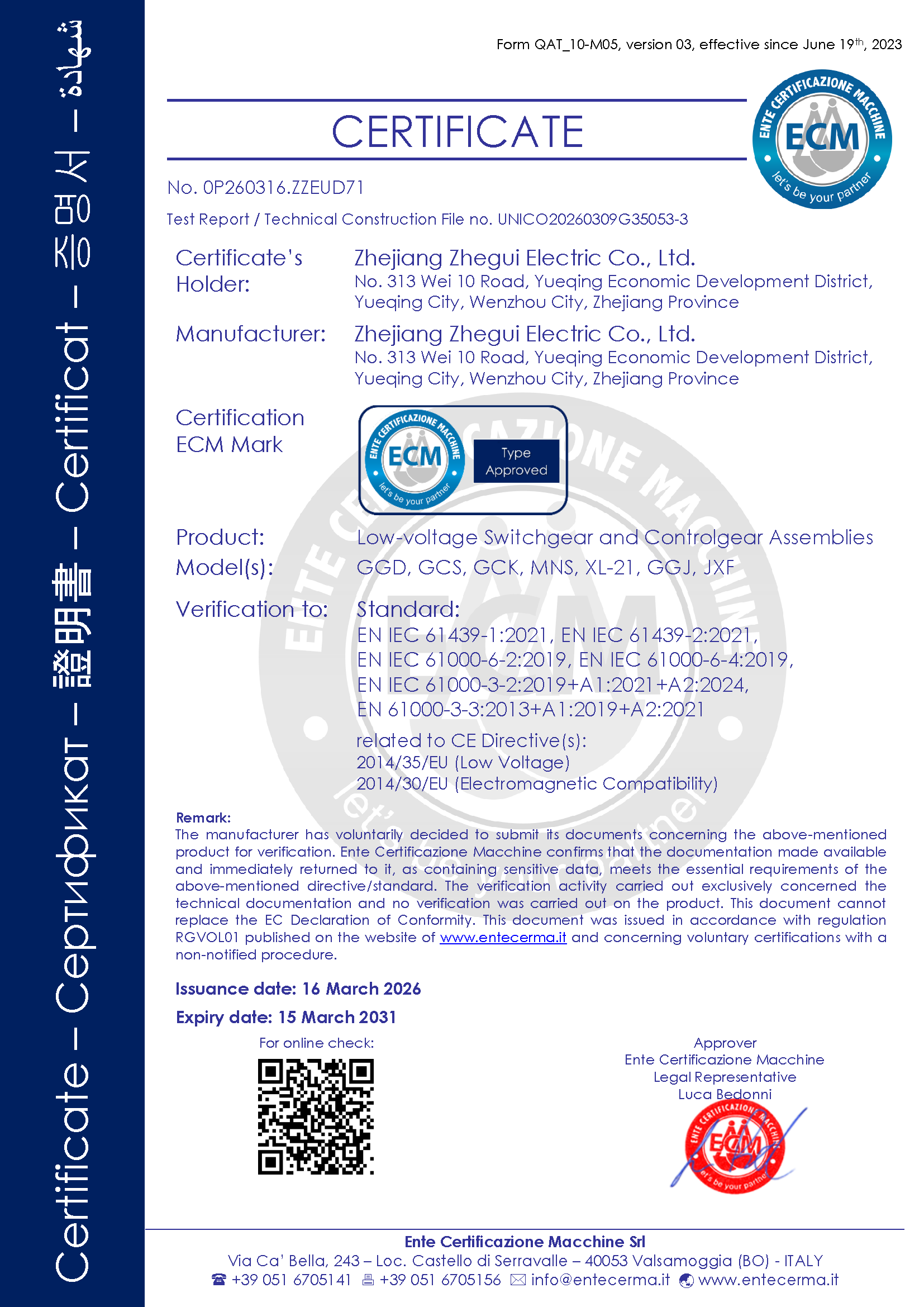
The IEC 61439 series is the primary standard governing low voltage switchgear assemblies, including VFD panels. It sets requirements for design verification, component selection, temperature rise limits, short-circuit withstand, and dielectric properties.
Key references for East and Southern African projects:
ERA Uganda (era.go.ug) — specifies grid connection technical requirements for industrial consumers
EPRA Kenya (epra.go.ke) — energy and petroleum regulatory authority for Kenya
World Bank procurement standards — require IEC 61439 compliance, factory acceptance test (FAT) reports, and third-party inspection from SGS or Bureau Veritas on many infrastructure projects
IEC 61800-3 — specifically covers EMC requirements for adjustable speed electrical power drive systems
Ask your supplier for type test certificates, not just self-declarations. Type testing proves the panel performs as rated under controlled laboratory conditions.
How to Evaluate a VFD Panel Manufacturer
Choosing the right supplier protects your project and your budget. Here is a structured evaluation approach for buyers.
Step 1 — Certifications and Standards
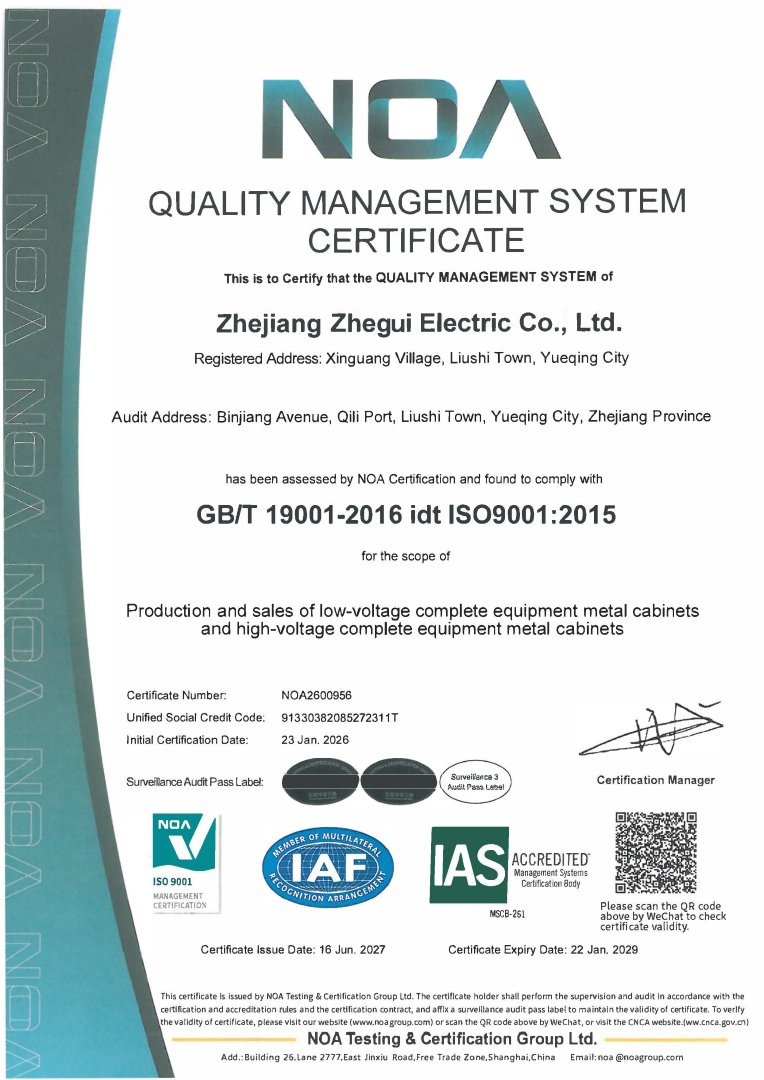
Confirm the manufacturer holds ISO 9001 quality management certification. Ask for IEC 61439 type test certificates from an accredited test laboratory. Check whether the certificates cover the actual panel configuration you are ordering — not just a reference design.
Step 2 — Component Quality
Specify first-tier drive brands (ABB, Schneider, Danfoss, Siemens) in your inquiry. A reliable electrical panel builder sources protection devices and control components from traceable, documented supply chains — not grey-market substitutes.
Step 3 — African Project Experience
Ask for references from projects in similar climates and industries — agro-processing in Uganda, water utilities in Kenya, or mining in Angola. A manufacturer without tropical-climate experience will undersize ventilation and omit critical busbar derating.
Step 4 — Engineering Documentation
A professional supplier provides:
Single-line diagrams (SLD)
General arrangement drawings (GA)
Bill of materials (BOM) with brand/model numbers
Factory acceptance test (FAT) procedures
Operation and maintenance manuals
Step 5 — Lead Time and Logistics
Custom VFD panels typically require 6–10 weeks from drawing approval to shipment. Confirm whether the supplier can provide knock-down (KD) delivery for remote sites and whether they support on-site commissioning assistance.
VFD Panel Applications in Industrial Projects
The VFD panel is one of the most versatile products in the Power Distribution Board family. It appears across nearly every industrial sector.
Water and Wastewater Treatment
Pump speed varies with demand throughout the day. A VFD panel matches pump output to actual flow requirements, cutting energy consumption by 30–50% compared to throttle-valve control. This application is widespread in Kenya's urban water utilities and Uganda's rural water supply schemes.
Mining and Minerals Processing
Conveyor drives, ball mill drives, and slurry pump drives all benefit from variable speed control. VFD panels provide soft-start torque control, reducing mechanical shock on gearboxes and extending equipment life in high-abrasion environments in Angola's mining sector.
HVAC and Building Services
Air handling units, cooling tower fans, and chilled water pumps in commercial buildings and hospitals use VFD panels to trim energy bills and maintain consistent comfort conditions year-round.
Agro-Processing and Manufacturing
Milling machines, packaging lines, and mixing equipment require precise speed control and repeatable acceleration profiles. A properly specified sub distribution board with integrated VFD drives keeps production consistent and reduces scrap rates.
EPC and Infrastructure Projects
Many EPC contractors in East Africa now specify motor control center panels and VFD panels from the same manufacturer. This simplifies documentation, ensures consistent busbar sizing, and gives the project engineer a single point of accountability for the complete low voltage distribution system.
VFD Panel vs. Direct-On-Line Starter: Which Do You Need?
This is one of the most common questions buyers ask. The answer depends on your process requirements and energy budget.
Feature | VFD Panel | DOL Starter |
|---|---|---|
Motor speed control | Full variable speed (0–100%) | Fixed speed only |
Soft starting | Yes — smooth ramp-up | Limited (star-delta can help) |
Energy savings | 20–50% on variable loads | None |
Harmonic injection | Requires mitigation | Negligible |
First cost | Higher | Lower |
Payback period | Typically 1–3 years on pumps/fans | N/A |
Best for | Pumps, fans, compressors, conveyors | Fixed-speed loads, simple applications |
If your motor drives a pump or fan with variable demand, a VFD panel almost always delivers a positive return on investment within two years. If the motor runs at a fixed load continuously, a conventional starter is simpler and cheaper.
Frequently Asked Questions (FAQ)
Q1: What is the difference between a VFD panel and a Distribution Panel? A Distribution Panel routes fixed-voltage power to multiple branch circuits. A VFD panel is a specialised enclosure that converts fixed-frequency supply into variable-frequency output to control motor speed. A distribution box does not provide speed control.
Q2: Can a VFD panel handle multiple motors? Yes. A multi-drive VFD panel houses individual drives for each motor, sharing a common incoming breaker and busbar. Each drive operates independently with its own protection and control circuit.
Q3: What IP rating do I need for an outdoor VFD panel in Africa? IP55 as a minimum for sheltered outdoor locations. Exposed installations in mining or coastal environments should specify IP65, plus internal heaters and a thermostat to prevent condensation at night.
Q4: Do VFD panels cause harmonic problems on my network? Yes, drives generate harmonic currents that can distort the supply voltage. Specify input line reactors or active front-end drives in your panel to comply with IEC 61000-3-12 harmonic limits and protect sensitive equipment on the same bus.
Q5: How long does it take to manufacture a custom VFD panel? A standard single-drive VFD panel can be ready in 4–6 weeks. Complex multi-drive intelligent panels with PLC and SCADA integration typically require 8–12 weeks from approved drawings to shipment.
Conclusion
A VFD panel is not just an enclosure with a drive inside it — it is a precision-engineered system that determines how reliably your motors run, how much energy your plant consumes, and how quickly your maintenance team can respond to faults.
Getting the specification right at the inquiry stage saves months of site problems and thousands of dollars in rework. Focus on drive brand, IP rating, busbar derating for African ambient temperatures, and IEC 61439 compliance from the start.
Giantele (Zhejiang Zhegui Electric Co., Ltd.) manufactures custom VFD panels and complete low voltage power distribution systems for industrial projects across Uganda, Kenya, and Angola. Our team provides engineering drawings, FAT procedures, and on-site commissioning support.