Key takeaways
- A button order tests the supply channel, not the product.
- Colour code and contact block tell you more than the lens does.
- A distributor that also stocks boards saves a second purchase order.
- Stock depth beats a catalogue page, so ask for a live count.
- Certificates travel with the component, never with the cabinet.
Industrial grade push buttons are a small line on a panel schedule. They still decide how fast an operator finds a fault. Buying them is a supply channel question, not a product question.
This guide is about choosing that channel. It covers the range behind the catalogue and the contact block behind the lens. It also covers stock depth, which decides whether a shutdown stays on schedule.
A button order is a test of the supply channel
You need thirty buttons and twenty indicator lights for one machine. No factory sells that quantity, so you go to a distributor. That distributor decides what arrives in a week and what takes six weeks.
Most buyers compare the price per piece first. The better question is whether the same distributor carries the industrial manufacturing electrical range behind the panel. One invoice beats five, and one delivery date beats five promises.
On a site where the supply fails often, the panel door is the first thing an operator touches. The IEA tracks how many people still live without reliable power. Restarting by hand means pressing a sequence of buttons in the right order.
That sequence is the reason a cheap button is not a bargain. The button that sticks costs more than the button that costs double. A distributor who understands the sequence will not sell you the wrong one.
What a distributor's range says about industrial power distribution solutions
A catalogue page shows what a distributor sells. The range behind it shows what the distributor is. A firm with thirty panel brands and no busbar stock is a reseller, not a supplier.
Ask which industrial power distribution solutions the firm supplies as one order. If the answer includes boards, starters and enclosures, the button line is probably deep too. If the answer is buttons only, you will buy the rest somewhere else.
Look at how wholesale motor control panel distributors describe their own stock. The wording usually separates a firm that holds cabinets from a firm that forwards emails.
Range also sets your substitution options. When one lamp type runs out, a wide range offers a second source in the same order. A narrow range offers an apology and a new delivery date.
Colour codes tell you the voltage before the datasheet does
 Pilot lamps
Six lamps, three meanings
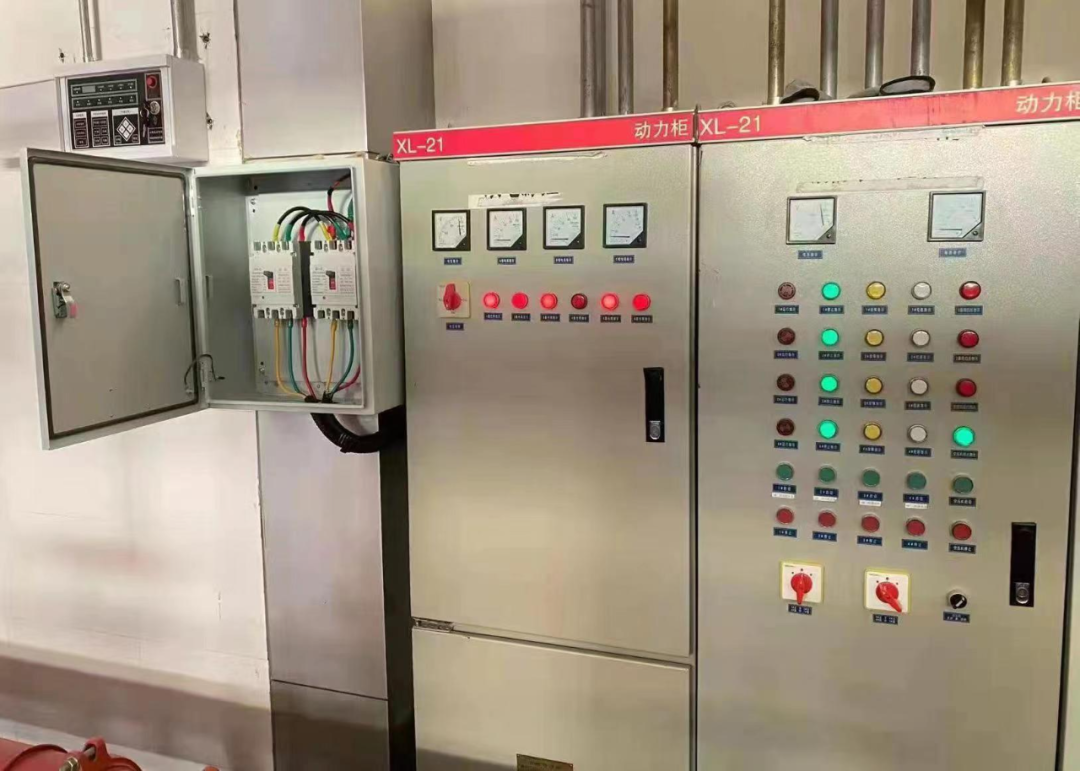
Red means running or live. Green means stopped or safe. Amber means a warning or a standby state.
The same colour can carry a different meaning on a different site. Read the door schedule before you trust it.
A panel builder chooses colour by convention, not by law. Two sites in the same country can disagree. What matters is the legend beside the lamp, and whether it survives a wet cloth.
Voltage class matters more than colour. A 24 V lamp on a 230 V circuit flashes once and dies. Ask for the lamp voltage and the current draw on the same line of the quote.
Write both numbers into the order. The distributor who asks for the control voltage before quoting has probably seen the failure.
| Colour | Common meaning | What to confirm |
|---|---|---|
| Red | Running, live or fault | Lamp voltage and lens type |
| Green | Stopped or safe | Lamp voltage and legend |
| Amber | Warning or standby | Whether it flashes or holds |
| White or clear | Status or test | Circuit that drives it |
| Blue | Site defined function | The written site standard |
The distributor who stocks an industrial switchboard sells more than buttons
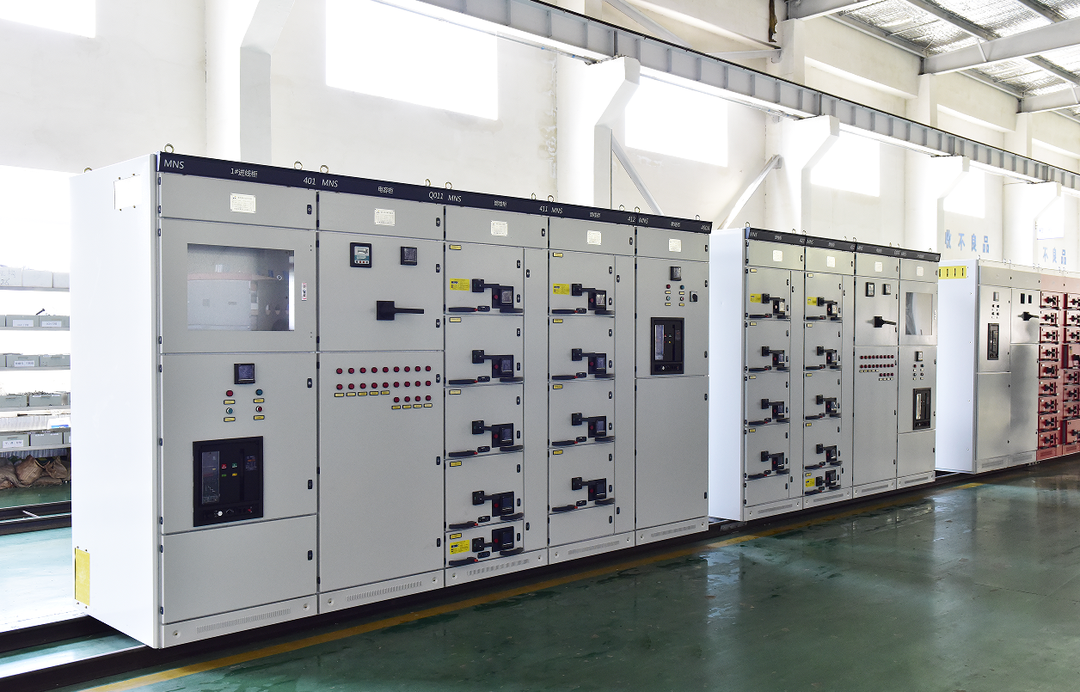
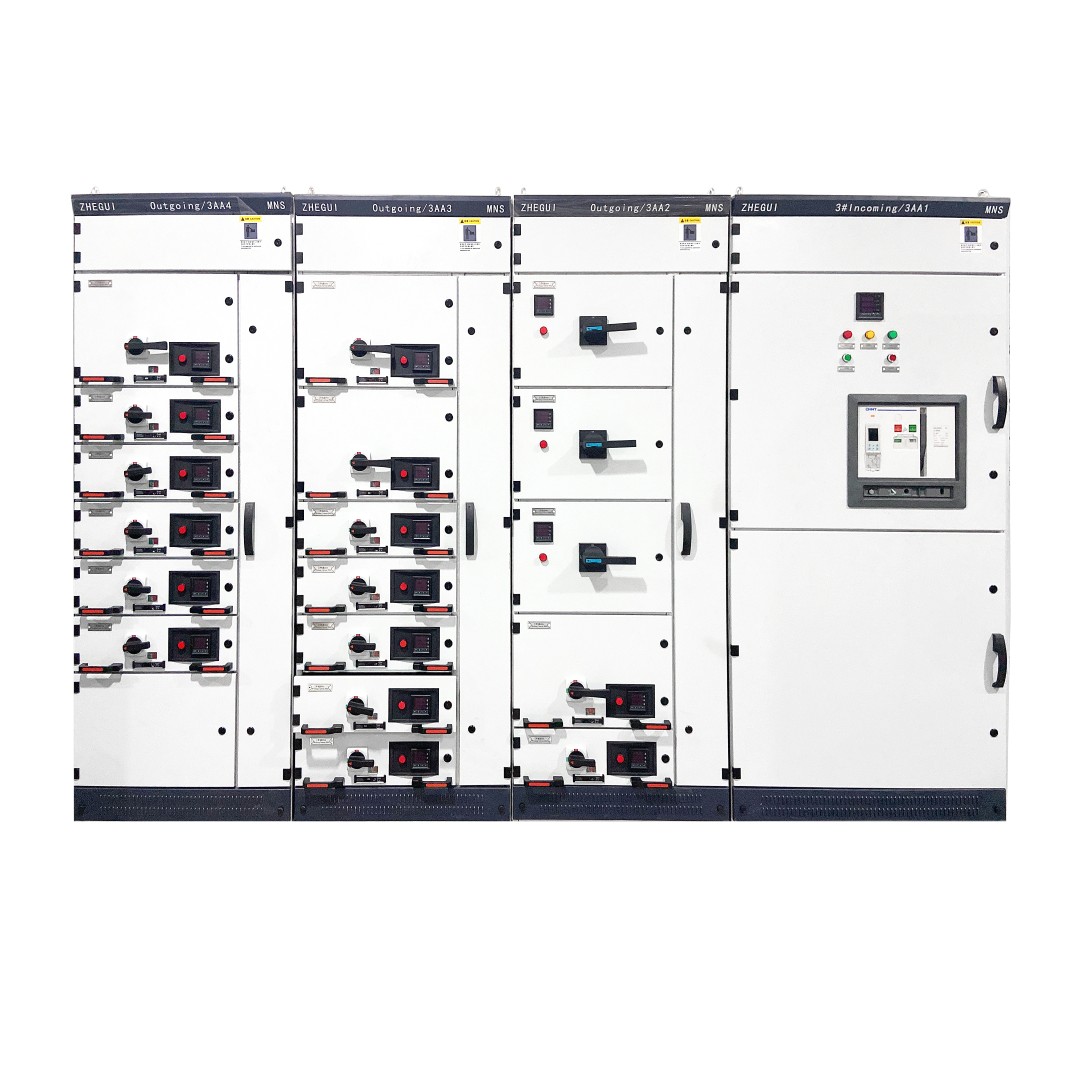
Firms that call themselves switchgear distributors usually started with one product line. Those that hold an industrial switchboard on the floor also hold the parts that go into it. Button stock follows cabinet stock.
Ask how the firm handles an electrical switchboard order with a short delivery date. The answer tells you what happens when a button line runs out mid-project.
IEC 61439 checks the assembly as one unit, so a part sold into it belongs to a tested system. A distributor with no assembly knowledge sells a part number. One with assembly knowledge asks what the block has to switch.
That difference shows up at the door. The same industrial switchgear can carry a different legend on every panel, and the legend is part of the order.
A spare button is cheaper than a spare panel
Every plant keeps a box of spare buttons and lamps. Very few keep a spare panel. That ratio is rational, because a lamp costs a few dollars and a panel costs a month.
The same logic holds at the top of the range. An electrical transfer box has its own consumables: coils, contacts and a controller battery. Ask the distributor which of those it stocks.
A spare industrial ats sits idle for years and then pays for itself in one night. The distributor who can supply that unit and its buttons is worth one phone call, not five.
Write the spare list at the same time as the order. A spare list written six months later is a search for a discontinued lens.
The contact block decides the service life, not the lens

Three parts, one that wears
Cheap industrial grade push buttons fail at the block, not at the lens. The plastic survives a decade while the contacts pit within a year. Ask for the rated current and the utilisation category.
On a motor circuit the block switches an industrial motor control center coil, not a lamp. That duty is harder, and the block is specified for it.
A green lamp with a soft cap tells you the operator presses it often. Look at the wear on the bezel before you judge the site. Two blocks on one button double the wiring. If the drawing shows one, do not accept a quote built for two.
Drilled doors and legend plates set the lead time
 Legend plates
Thirty holes, one drawing
Thirty holes on one door take one jig and half a shift.
Thirty holes on the wrong layout take a new door and a new week.
Holes are where a button order turns into a project. The distributor sells the part. Somebody has to cut the door, and that somebody sets the date.
Ask whether the firm also supplies custom enclosures with the cut-outs already made. A door drilled at the factory arrives with a legend plate and a drawing.
Most custom industrial enclosures are built to a project drawing, so the cut-out list must come first. A distributor who asks for that list before quoting is the one to keep. Send the legend text with that list, because nobody else knows the machine.
A door with thirty identical buttons needs thirty different labels. The text is not something the distributor should invent.
How to check stock depth without a factory visit
A stock count is a number with a date. Ask for both. A list that says two hundred pieces is worthless if the count was taken in March.
Ask for the part numbers of the industrial electrical switchgear families the firm holds. Then ask which of them share a contact block. Shared blocks mean faster substitution when one line runs out.
A distributor that sells distribution equipment usually publishes a stock feed. Ask to see it live, not as a PDF.
One supplier for a whole site, not one per panel
Every extra supplier adds a packing list, a delivery date and an argument. On a large industrial power system installation those add up to weeks. Fewer channels mean fewer dates to reconcile.
This is the practical case for a control panel supplier with a wide range. It is not about loyalty. It is about one delivery note covering buttons, a board and a spare controller.
Set a single acceptance rule with that supplier. One test sheet, one packing standard and one person who answers the phone at eight in the morning.
Then hold the rule across projects. A channel that works on one site works on the next one, which is the point of keeping it.
Write the function, not the product name
Start from the duty, not the label. A start button and a reset button look the same in a photo. The legend and the contact block are what separate them.
Send the door layout with the enquiry. A drawing with thirty holes and thirty legends gets a firm answer in one round. A photo of an old door gets a question back.
Good distributors answer in the same format every time: part, block, voltage, quantity, date. If the reply is a price list with no blocks, keep looking. An ISO 9001 certificate does not correct a thin answer.
Keep that format for the life of the plant. A repeat order that arrives as five columns needs no meeting, and no meeting is the goal.
Frequently asked questions
Are push buttons and indicator lights the same thing?
How do I know which voltage to order?
What is a contact block?
Can one distributor supply the whole panel?
How deep should my stock be?
Do I need certificates for buttons?
Why do distributors ask for the door drawing?
Final thoughts
Choose the channel before you choose the part. A distributor with range, stock and a drawing desk will answer in one round. The button is the cheapest item on the order and the hardest to replace in a hurry.
Send the door layout
Send the legend list, the control voltage and the quantity per type. We will come back with a matched set and the cut-out drawing behind it.
Contact Giantele