
Key takeaways
- A turnkey price covers a boundary, not a longer list of work.
- The package usually stops at two cable terminals and a pair of signal wires.
- Cable, trench and plinth decide more of the total than the changeover does.
- Three ratings sit on one frame, and only one of them appears in the title.
- A load test and a document pack are the handover, not extras.
A request for a quote on an industrial ATS solution reads like a shopping list. The answer that comes back is a boundary instead. Everything inside the line is priced.
This guide shows where that line falls. It covers two terminals, the neutral, the start signal, the civil work and the test that closes the job.
Turnkey is a boundary, not a longer list of work
The industrial electrical equipment industry sells a turnkey solution as if the word explained itself. It does not. A turnkey order names the point where one contract stops and another starts. The number covers what sits inside that point.
An order rarely arrives alone. It comes with the rest of the industrial manufacturing electrical scope, and that scope sets the sequence. Two suppliers can quote the same sheet and differ by a third. The gap is usually a cable run, a trench or a shutdown window.
Most of these requests come from sites where the grid cannot be trusted. The IEA tracks how many people still live without a reliable supply.
The package stops at two terminals and a signal pair
 Control terminals
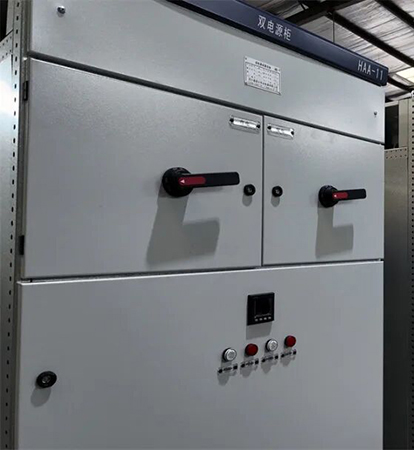
Two lugs carry the whole rating
The incoming lug takes the generator cable. The outgoing lug feeds the board.
Everything between them is the package. Everything outside is a decision.
The incoming terminal is where the generator cable lands. The outgoing terminal is where the board cable leaves. Both are bolted joints, and both are priced apart in most offers.
An electrical transfer switch for generator is often quoted as one line. It is really three: two joints and a signal pair. An industrial transfer switch is only as good as those two joints. A loose lug shows up on a thermal image within a month.
The third connection is a pair of control wires. One starts the set. One reports that it started.
Ask the seller to mark those three points on the general arrangement. A drawing without them is a brochure with dimensions.
Four pole changeover puts the neutral outside the package
Three poles switch the phases. A fourth pole switches the neutral, and that changes both the price and the earthing design. On a four pole unit the neutral is broken with the phases. On a three pole unit it stays solid through the changeover.
The choice belongs to the earthing system, not to the sales sheet. The same ATS panel cannot serve two earthing systems without a bar change.
The standard for low voltage assemblies covers the whole arrangement. Neutrals, earth bars and partitions are verified together. Watch the neutral bar. A shared bar between two sources is a fault path, not a saving.
The start signal crosses the boundary in both directions
The controller sends a start command. The generator answers with a running signal. Both wires leave the panel.
Ask what type of start the set uses. A two-wire start needs a maintained contact. A three-wire start needs a pulse and a stop contact. Get that wrong and the set cranks until the battery dies. It is the most common interface fault in this trade.

Three settings decide the whole sequence
Alarms travel the same way. A common alarm is one dry contact, and it is the cheapest line on the quote.
Set the ATS changeover time before the panel is built. A theatre and a warehouse need different delays. Most controllers allow all three delays to be adjusted on site. Write the numbers into the handover file while someone still remembers them.
Cable, trench and plinth sit on the buyer side by default
 Switchroom floor
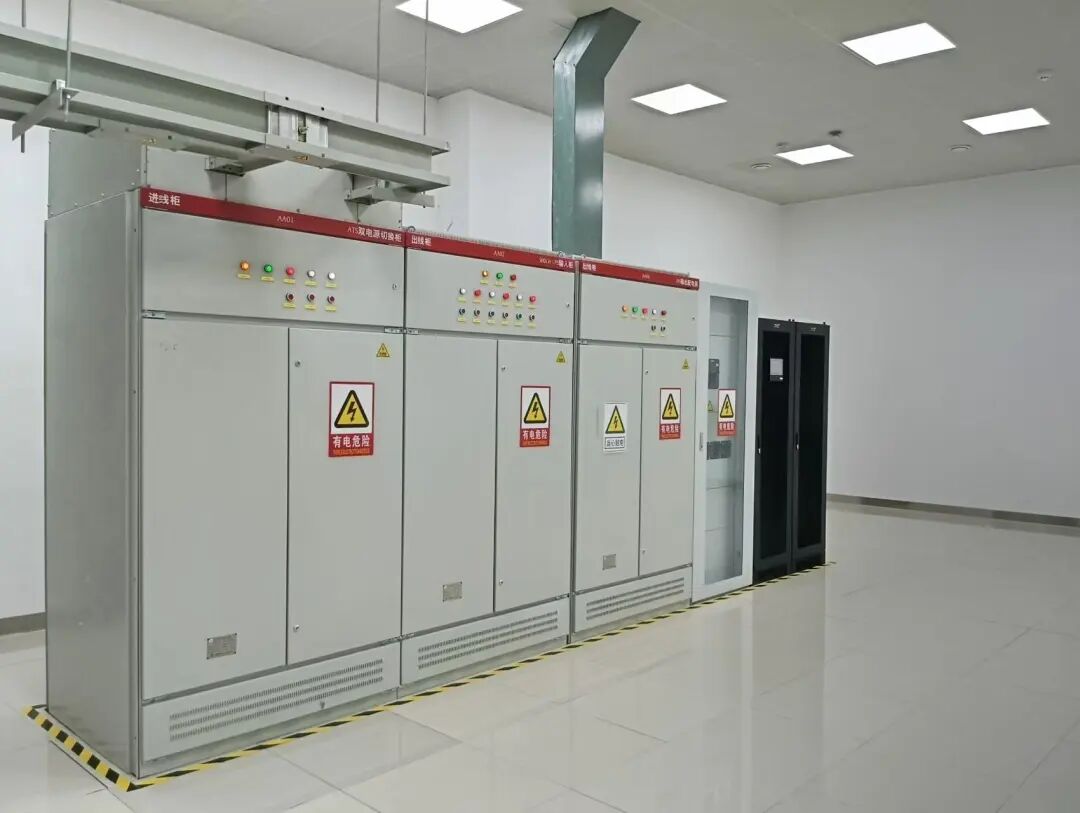
The room is not in the crate
Floor, trench, tray and louvre arrive before the panel does. None of them ship with it.
A plinth poured late moves the whole schedule, not only the delivery date.
Civil work is where a turnkey offer quietly narrows. Read the exclusion list before you compare two totals. A cable trench costs more than the switch in most retrofits. It also takes longer to build than the panel.
Wall penetrations, fire sealing and ventilation belong to the building. Ask who signs for them.
| Line | Often the buyer | Often the package |
|---|---|---|
| Incoming cable and lugs | Cable supply and pulling | Lug and torque record |
| Outgoing cable to board | Cable and route | Terminal and gland plate |
| Trench, plinth, tray | All of it | Setting-out drawing |
| Start and alarm wires | Route between rooms | Terminals and logic |
| Neutral and earth bars | Earth electrode | Bars inside the panel |
| Load test witness | Attendance | Test sheet and meters |
Every row is a place where two offers can look alike and behave differently. Price the row, not the total.
industrial ATS: one frame carries three rating plates
The frame size says what fits inside. The thermal current says what it carries all day. The short circuit rating says what it survives.
Only one of the three appears in the listing title. That is the one a buyer remembers. A 630 A frame with thin bars is a 500 A panel with a large label. Ask for the busbar drawing beside the rating.
Two switch gears with the same outline can carry different bars and a very different price. The outline is the cheapest part of the build. The industrial switchgear market also sells a fault level the site may not have. Check the prospective current at your intake.
Ask for the short circuit withstand of the assembly, not of the breaker alone. The assembly rating is what protects the person at the door. IEC 61439 covers that assembly as one unit. A folder of device certificates proves nothing at the panel level.
An industrial ATS is chosen on those numbers, not on the enclosure. The enclosure only decides how long it lasts outdoors.
What switch gear manufacturers include without being asked
Every serious builder ships a standard set. Drawings, a test sheet, a manual and a set of labels travel with the panel.
A supplier working under ISO 9001 can put a serial number on that sheet. Ask for the number, not for a photo of the plate. Ask for the as-built drawing, not the approved one. The two differ after the first site change, and only one matches the panel.
The switch gear manufacturers who send that file without a reminder are a small group. Keep their names. A spare parts list is the fourth document. Ask for the controller reference and the coil voltage before the manual goes missing.
Labels matter more than they sound. A door with ten identical handles needs ten labels that survive a wet cloth.
The load test is the handover, not an extra
A functional test simulates a mains failure. The controller sees no voltage, waits, starts the set and transfers the load. Then it reverses. Mains returns, the set cools down and the load goes back. That full cycle is the test.
Add a phase loss and a phase sequence check. The controller should refuse a bad supply instead of closing onto it. Ask for the sequence on paper before the test. A numbered list makes fat and site acceptance easier to witness.
Witness the test or accept a video. A recorded transfer cycle with a timer in frame beats a signature.
A request form that closes the exclusions in one page
One page gets a real number. Rating, poles, earthing, cable size, site conditions and the delivery port. Add the two items most buyers leave out. The shutdown window, and the name of the person who signs the drawing.
Say what the load is, not what the product is called. A hospital wing and a warehouse can share a rating and still need different delays. Name the electrical switch gear it will feed. That board has a fault level and a spare way count of its own.
Then list what you are not buying. A written exclusion list is the fastest way to compare two offers on the same basis. Ask for the drawing before the price. A total without a general arrangement cannot be checked by anyone.
Frequently asked questions
What does a turnkey ATS quote usually include?
Who supplies the cable between the generator and the panel?
Do I need a four pole changeover?
How long does a transfer take?
Can the panel start my existing generator?
What should I send with the request?
Is a factory test enough, or do I need a site test?
Final thoughts
Ask for the boundary before the number. A turnkey offer is only comparable when both sides own the same lines. The exclusion list is the only proof of that. Two terminals, a signal pair and a load test cover most of the risk.
Send the generator data sheet
Send the load list, the generator rating and the cable size. We will come back with a priced scope, the boundary drawing and the test sequence behind it.
Contact Giantele