Key takeaways
- The changeover itself is 20 to 35 percent of an installed cost. Cable and site work carry the rest.
- Two cable runs, one in and one out, usually cost more than the changeover.
- The fourth pole is an earthing decision, not an upgrade.
- Outdoor siting adds a plinth, a hood and a heater before it adds a switch.
- The shutdown window is the line most quotes leave out.
Most quotes for a transfer switch for backup generator arrive as a single number. Ask for it split into equipment, cable, civil work, shutdown and commissioning, and the number changes shape.
This guide follows the money through an automatic transfer switch installation, from the generator terminals to the test sheet. Each section covers one line you can price before you sign.
The switch is the cheapest line in the install
A 630 A changeover frame with a controller is a known price. The work around it is not.
On most jobs the switch, controller and enclosure land between 20 and 35 percent of the installed cost. Copper, concrete, hours and downtime carry the rest.
That ratio explains most cost overruns. A cheap panel with a bad siting plan costs more than a good panel with a tight one. Price the assembly, not the box.
Two cable runs set most of the price
Copper decides the floor. One run leaves the generator, and a second returns to the building supply.
Both are sized on full load current, then adjusted for length and for the way they are installed. A 100 m run in tray is not the same price as 30 m in conduit.
Add the terminations, the gland plates and the fire stop where the cable crosses a wall. Those items are cheap alone and expensive in a list.
The return run usually lands on the existing board. Check the spare ways first. A board with no spare way forces a new electrical main distribution panel, and that is a second purchase.
Three poles or four decides the neutral cost
A changeover can switch three poles or four. The fourth pole carries the neutral, and the earthing design decides whether you need it.
If the generator is earthed separately from the supply neutral, the neutral must break with the phases. Use a four pole device and wire the fourth pole.
If the site keeps one earth for both sources, a three pole device with a solid neutral is normal. Confirm that in writing with the designer.
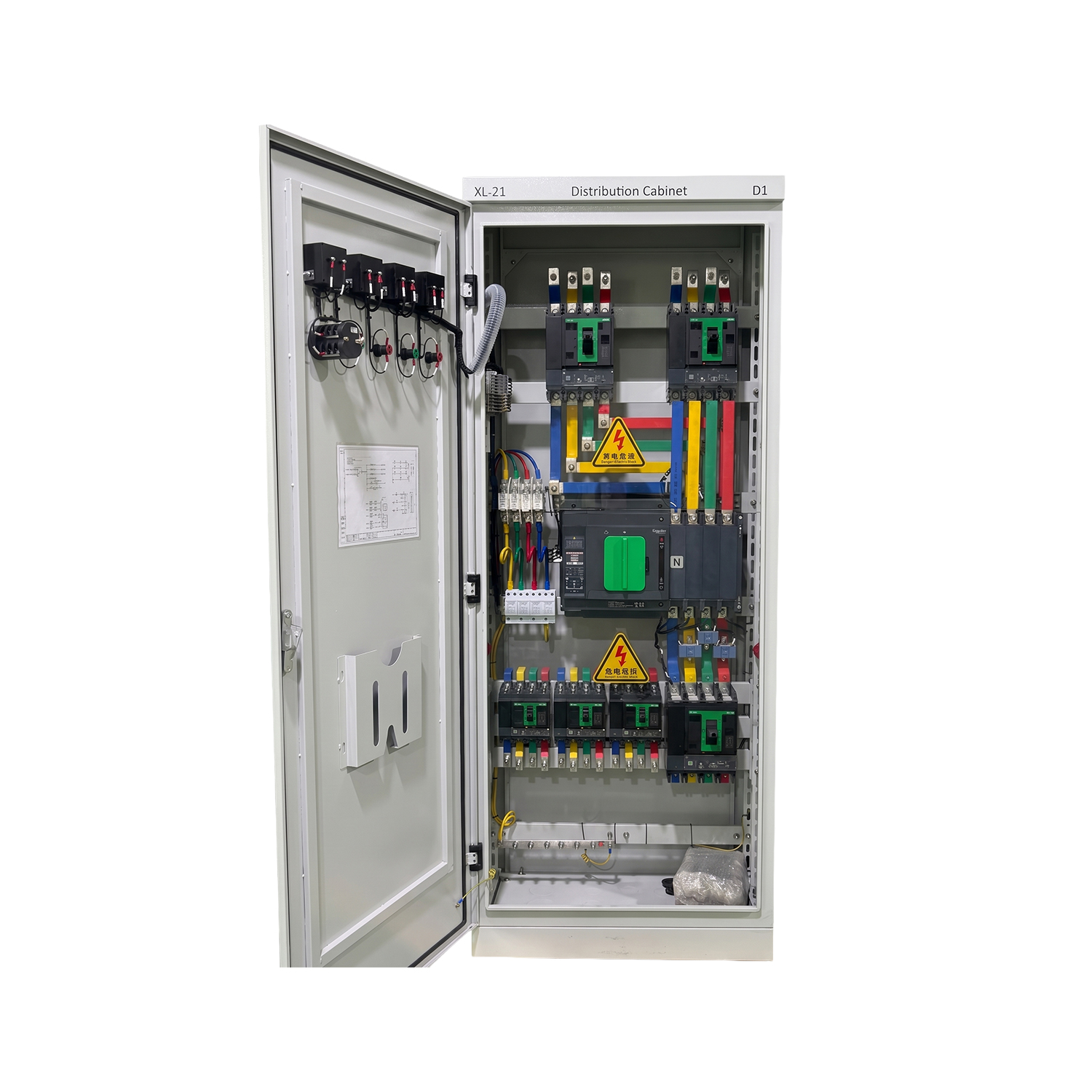
The price step between the two is real. Expect 15 to 25 percent more on the frame, plus a fourth cable and a fourth terminal.
Ask the builder which one the drawing specifies. An electrical panel transfer switch built for a solid neutral cannot be reworked on site.
| Item | Three pole | Four pole |
|---|---|---|
| Neutral | Solid through, never switched | Breaks with the phases |
| Fits when | One earth shared by both sources | Generator earthed on its own |
| Frame price | Baseline | 15 to 25 percent higher |
| Cable | Three conductors plus earth | Four conductors plus earth |
| Common mistake | Neutral earthed twice | Fourth pole left unlinked |
An outdoor transfer switch for generator needs a plinth, a hood and a heater nobody budgets for
Outdoors, the switch is not the cost. The base, the hood and the heater are.
An outdoor transfer switch for generator needs a concrete plinth, a rain hood and an anti-condensation heater. Each is small. Together they are a week of site work.
Check the IP rating against the site, not the catalogue. Driving rain and dust at a quarry are not the same duty as a coastal yard.
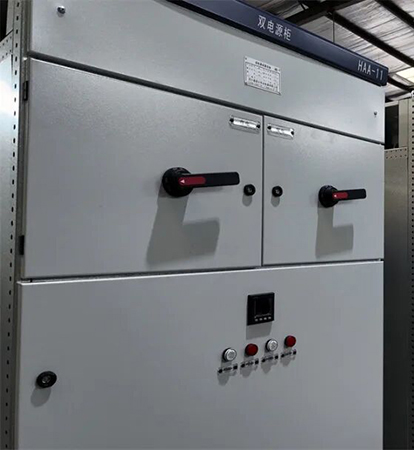
Leave 800 mm in front of the door for a person and a tester. A box set against a wall gets signed off once and serviced never.
 Door face
The door face shows how it was installed
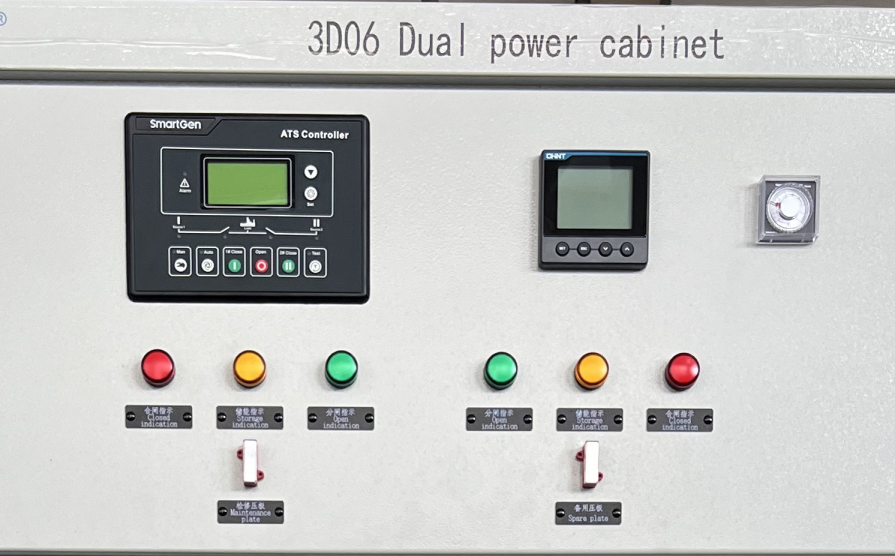
A controller on the door means somebody stood there with the drawing and the settings sheet.
A selector behind a locked door means every test needs a key and a second visit.
What the existing switch gears add to the job
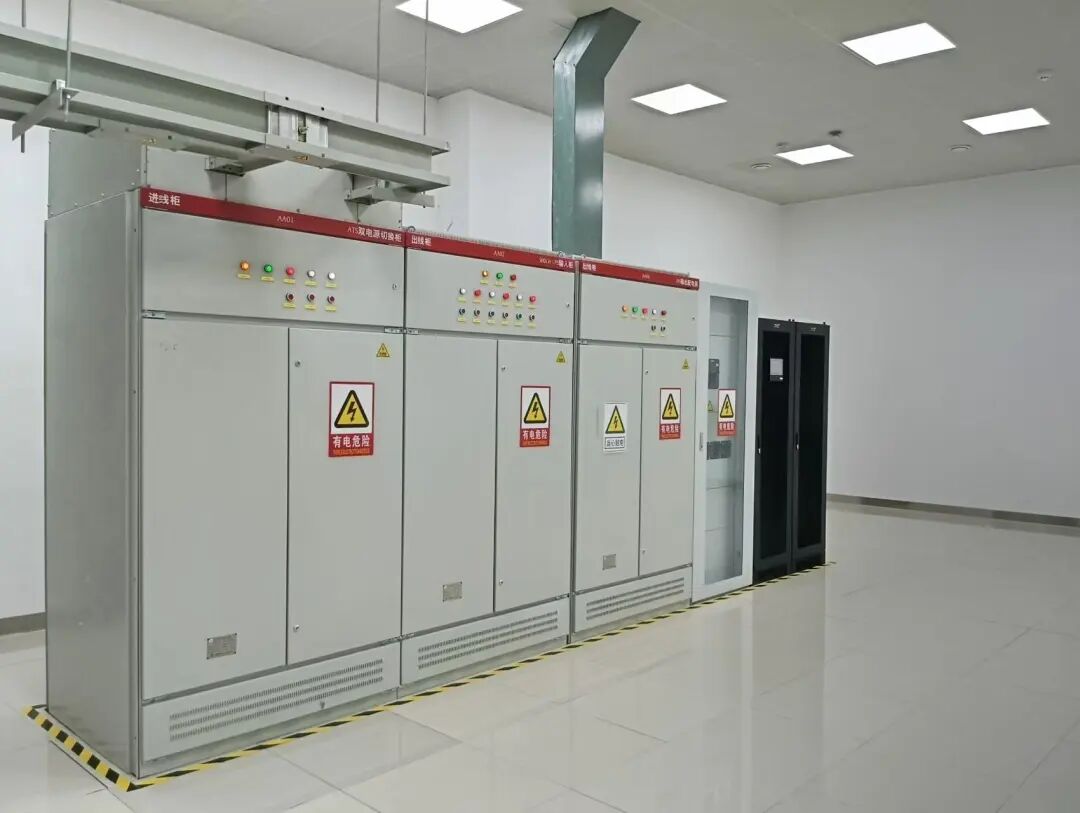
A new changeover has to land somewhere. It lands on the switch gears already on the wall. They were sized before your generator existed.
Check three things on the existing low voltage switch gear: spare ways, busbar rating and fault level.
The electrical switch gear may be rated for 25 kA. A larger generator can push the fault level past that. The board is then part of the project.
Adding a column is cheaper than replacing a row. The added section still has to satisfy IEC 61439 as an assembly. Ask for the busbar joint detail before you accept either.
Where the board cannot take another way, an outdoor switchgear retrofit beside the building often beats a rebuild on price.
 Interlock relays
The interlock is a row of relays
The two sources never close together because a relay chain holds them apart.
That chain is wired on site, inside a panel that is often already full.
The relay chain is the cheapest part of the control work. The expensive part is the cable between the two sources.
A shutdown window is a cost line of its own
The changeover cannot be tested while the plant runs on the old supply. That window has a price, and it never appears on the panel quote.
A district hospital in West Africa cannot lose its theatre feed for a day. The work moves to a weekend. A hired set sits on the lawn and two electricians work overtime.
Budget one to three days for a single changeover, and expect the temporary supply to cost more than the labour.
Automatic transfer cuts that window. An automatic transfer switch for generator changes over in seconds, with nobody at the door.
Grid reliability is why the set exists at all. The IEA tracks how many people still live without a reliable grid connection.
Commissioning is where the hours hide
Commissioning is not a switch on. It is a sequence of tests with a signature against each one.
Mechanical changeover takes about 1 to 3 seconds. With a generator start added, the load sees 10 to 15 seconds without supply.
Plan two people for one to two days on a single unit. Add a day for every linked board and every remote alarm.
The controller should log each transfer. A plant that can read its own industrial switchboard data finds a stuck mechanism before it becomes an outage.
Where a manual changeover still earns its place
Not every site needs an automatic unit. A 220 volt manual transfer switch still does a job where somebody is always on shift.
Control supplies, small pumps and maintenance sockets are the usual candidates. The operator throws the handle, and the price falls by most of a controller.
Every maintenance sheet names it differently. One says gen switch, another gen transfer switch, another electrical transfer box. Read the rating, not the label.
The market sells several types of transfer switches for generators. The manual one is the only type that needs a person at the door.

Four loads that suit a handle
Reading an installation quote line by line
A quote you can compare has six lines. Equipment, cable and containment, civil work, shutdown, commissioning and spares.
If two bids differ by 30 percent, one of those lines is missing. Ask which one before you argue about price.
Ask for the cable schedule and the switch rating in one document. A quote that names the frame but not the poles is not a price.
Compare the equipment line against other bids on switchgear cost before you compare the totals.
A supplier working under ISO 9001 can show the test record for your own unit. The record for the type alone proves very little.
Frequently asked questions
What does installing an automatic transfer switch cost?
Is a four pole transfer switch better than a three pole one?
How long does the installation take?
Can the changeover sit outdoors?
Does the generator need its own controller?
What is the difference between a gen switch and an ATS?
Which documents should come with the installation?
Can I add a changeover to an existing board?
Final thoughts
The switch is a known price. Cable, the base, the shutdown and the testing are where an installation quote is won or lost. Ask for those four lines separately and the comparison becomes simple.
Send the generator rating, the cable route and one photo of the board. We will price the whole assembly, not just the box.
Send the cable route first
Give us the generator rating, the distance to the board and one photo of the existing switch room. We will return a priced scope with the six lines separated.
Contact Giantele