


If you run a factory, manage a mine, or handle electrical procurement for commercial buildings in Africa, you deal with distribution boxes daily. Get the wrong one and you face downtime, equipment damage, or safety violations. This guide helps you pick the right unit the first time.
What is a distribution box?
A distribution box is an electrical enclosure that receives incoming power from a main supply and splits it into multiple branch circuits, each protected by its own circuit breaker or fuse. This is the core job: take one big feed and safely divide it into smaller, protected outputs.
You will also hear it called a distribution board, distribution panel, electrical distribution panel, or DB box. These terms mean the same thing in most industrial contexts. The box itself is just a metal or plastic enclosure. What matters is what goes inside it: busbars, breakers, protection devices, and sometimes metering. A distribution box sits between your main low voltage switchgear and the equipment that actually does the work, like motors, lighting circuits, or process machinery.
In factories and mines across Uganda, Kenya, and Angola, the distribution box is often the most stressed piece of electrical gear on site. Dust, heat, humidity, and voltage fluctuations all take their toll. Your choice of enclosure material, IP rating, and internal components directly affects how long the installation survives.
Distribution box types and where they fit in your operation
There is no single "distribution box" that works everywhere. The type you need depends on where it goes, what it powers, and what the environment looks like. Below are the main types you will see in industrial and commercial projects.
Main distribution board
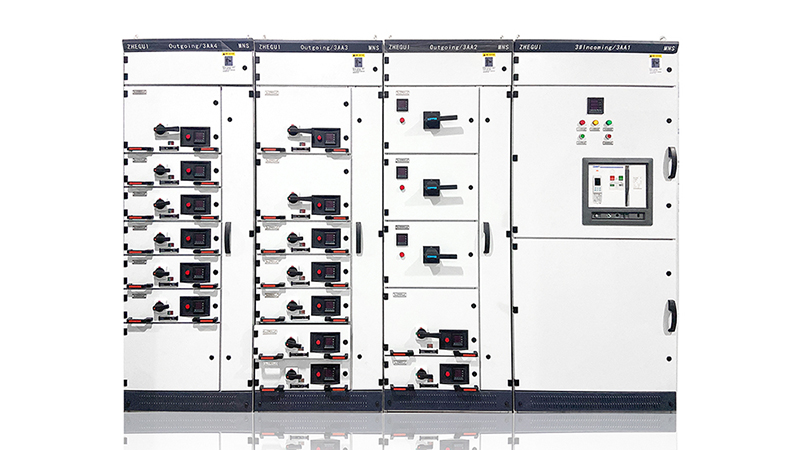
This is the first distribution point after the transformer or main incomer. A main distribution board receives power at 400V or 690V and distributes it to sub-distribution boards or large loads like chillers, compressors, and pump stations.
For most African industrial sites, the main distribution board needs a rated current between 630A and 3200A. It typically sits in an electrical room or dedicated substation. You want a floor-standing metal enclosure here, with IP42 at minimum. If your site has an automatic transfer switch or backup generator, this is where the ATS ties in. Learn more in our automatic transfer switch buyer's guide.
Sub-distribution board
A sub-distribution board splits power from the main board to specific zones, floors, or production lines. These are smaller, typically 100A to 630A. Wall-mounted units work well in most cases.
One sub-distribution board per production zone is a good rule of thumb. It simplifies fault isolation. When a motor trips its breaker, you only lose one line, not the whole plant.
Motor control center (MCC)
An MCC is a specialized distribution box designed to centralize motor starter circuits in one enclosure. Instead of scattering individual motor starters around your plant, you put them all in one cabinet with a common busbar.
If your operation runs more than 10 motors, an MCC almost always makes sense. It cuts wiring cost, simplifies maintenance, and gives you one place to isolate power during a shutdown. Our MCC panel buyer's guide covers selection in detail.
VFD panel
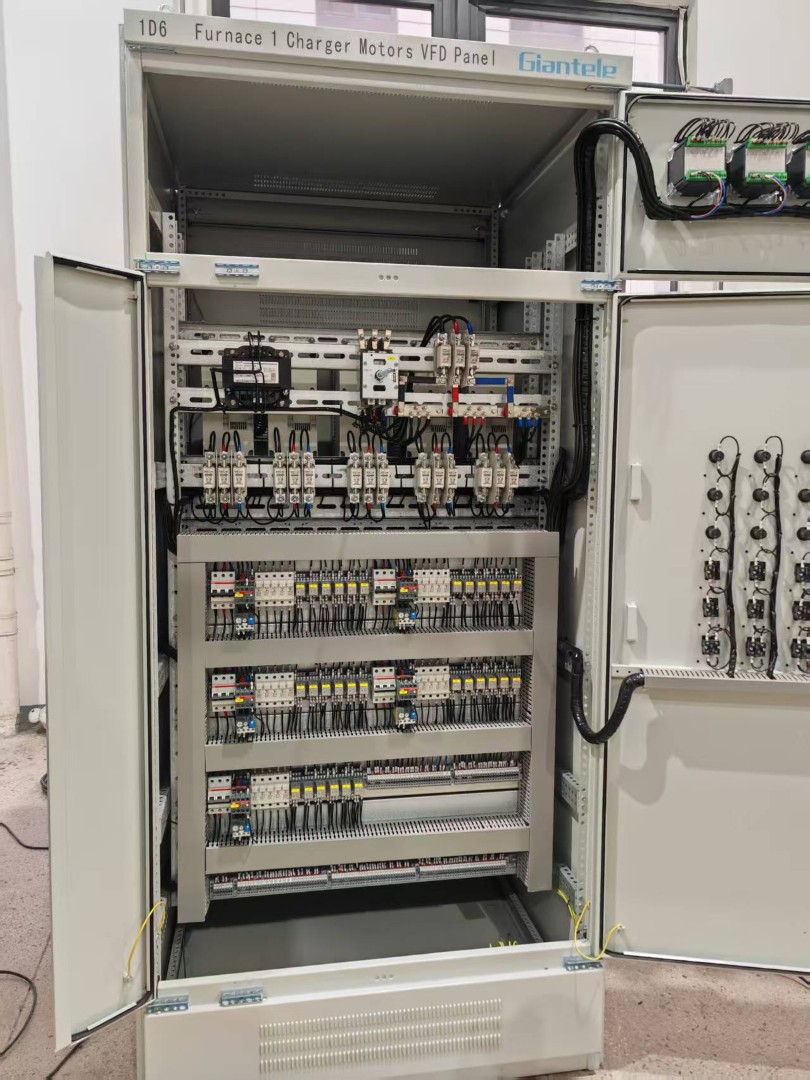
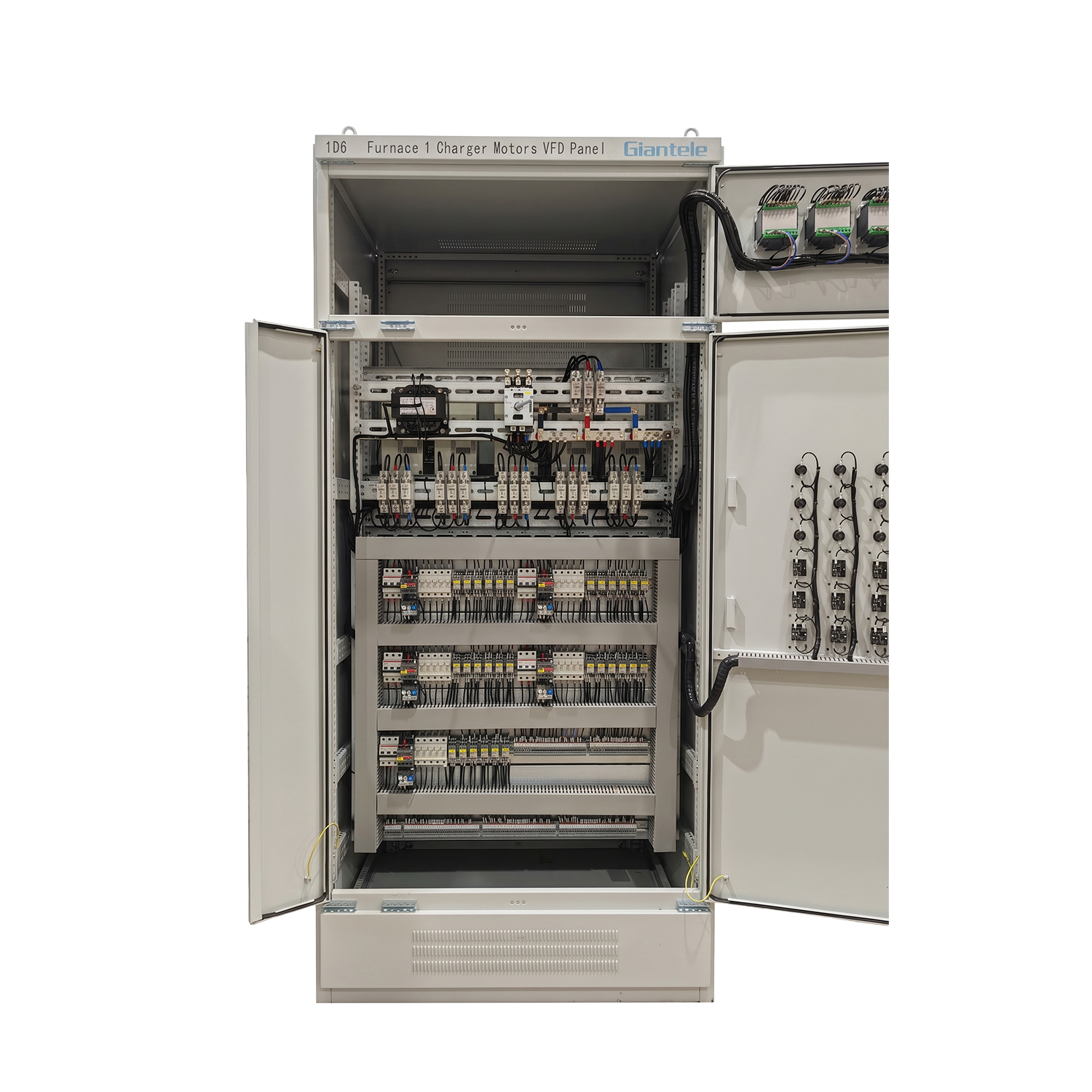
A VFD (variable frequency drive) panel combines distribution with motor speed control. It houses a VFD, circuit protection, and sometimes bypass contactors in one enclosure. VFD panels are common in pumping stations, HVAC systems, and conveyor lines where you need to vary motor speed.
ATS panel
An automatic transfer switch (ATS) panel switches your load between utility power and a backup generator automatically. In Uganda and Kenya, where utility outages can happen several times a week during dry seasons, an ATS panel is often the most cost-effective reliability upgrade you can make.
Lighting distribution panel
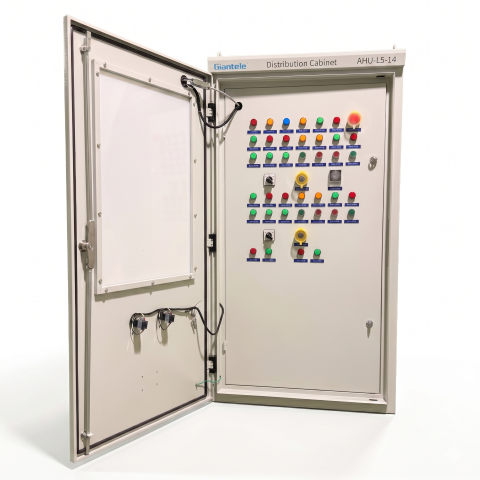
Lighting panels distribute and protect lighting circuits across large buildings. They are common in warehouses, commercial centers, and office blocks. These are typically smaller, in the 63A to 250A range.
Type comparison at a glance
Type | Typical current range | Mounting | Typical IP rating | Best for |
|---|---|---|---|---|
Main distribution board | 630A to 3200A | Floor-standing | IP42 to IP54 | Site incomer, large loads |
Sub-distribution board | 100A to 630A | Wall-mounted | IP42 to IP54 | Zone or floor distribution |
Motor control center | 400A to 3200A | Floor-standing | IP42 to IP54 | Multi-motor installations |
VFD panel | 32A to 630A | Floor or wall | IP42 to IP65 | Pump and fan speed control |
ATS panel | 63A to 3200A | Floor-standing | IP42 to IP65 | Generator backup switching |
Lighting panel | 63A to 250A | Wall-mounted | IP30 to IP42 | Lighting circuits |
Components that matter inside a distribution box
You do not need to be an electrical engineer to spot a well-built distribution box. But you should know which components drive reliability, and which ones cut corners.
Busbars
The busbar is the backbone. It carries current from the incomer to each outgoing circuit. Busbars are typically copper or aluminum, with copper being the better conductor. For African sites where ambient temperatures regularly exceed 35 degrees Celsius, derate the busbar rating by 10 to 15 percent. A busbar rated for 1000A at 25 degrees may only handle 850A at 40 degrees. Ask your supplier for the temperature derating curve, not just the nameplate rating.
Circuit breakers
Circuit breakers protect each outgoing circuit from overload and short circuit. The brand matters. ABB, Schneider Electric, and Siemens breakers have predictable trip curves and proven reliability. No-name breakers may trip late, or worse, not trip at all. In a mining environment where dust ingress can jam breaker mechanisms, the extra cost of a known brand pays for itself within the first avoided shutdown.
Residual current devices (RCD/RCCB)
An RCD detects leakage current to earth and trips the circuit before someone gets electrocuted. In wet or humid environments, like food processing plants or outdoor pump stations, RCD protection on outlet circuits is non-negotiable. The standard trip threshold for personnel protection is 30mA.
Surge protective devices (SPD)
Voltage surges from lightning or utility switching can destroy electronics inside your distribution box. An SPD shunts surge energy to ground before it reaches your breakers and meters. If your site experiences frequent thunderstorms, which is common in Uganda's Lake Victoria region and Kenya's highlands, install Type 1 or Type 1+2 SPDs at the main distribution board.
Enclosure
The enclosure is not just a box. It determines whether your equipment survives the first rainy season. For indoor factory environments, IP42 (protected against dripping water and small objects) is usually enough. For outdoor installations or dusty mining sites, you need IP54 or better. The enclosure material also matters: powder-coated steel resists corrosion better than plain steel in humid coastal areas like Mombasa or Luanda.
How to select the right distribution box for your site
Selection comes down to six questions. Answer them in order and the right specification falls into place.
What is your total load?
Add up the connected load in kVA or kW for all equipment the box will supply. Include a 20 to 30 percent margin for future expansion. A distribution box sized exactly to today's load is a distribution box you will replace in three years.
How many circuits do you need?
Count every motor, lighting group, and outlet circuit. Then add two to four spare ways. Spare ways cost almost nothing during manufacture but are expensive to add later.
What is the fault level at the installation point?
This is the maximum short-circuit current the box could see during a fault, measured in kA. Your electrical engineer calculates this from the upstream transformer rating and cable impedance. For most 400V industrial sites, 25kA to 50kA is typical. The distribution box busbar and breakers must be rated to withstand and interrupt this fault current.
What IP rating does the environment demand?
Dusty cement plant or flour mill? IP54 minimum. Outdoor mining substation? IP65. Clean, air-conditioned electrical room? IP42 is fine. Wrong IP rating is the most common cause of premature distribution box failure we see in African projects.
Does the box need to comply with IEC 61439?
IEC 61439 is the international standard for low-voltage switchgear and controlgear assemblies. The latest edition, IEC 61439-3:2024, defines requirements for distribution boards. Many World Bank and African Development Bank funded projects now require IEC 61439 compliance. If your project has external funding or a strict technical specification, confirm this requirement early.
What are your maintenance access expectations?
Floor-standing boxes with front access panels are easier to work on than wall-mounted boxes in tight corners. If your maintenance team has to squeeze into a narrow electrical closet to reset a breaker, you bought the wrong configuration.
Distribution box vs distribution board vs switchboard: why the terms matter
You will hear these three terms used interchangeably, and that causes confusion when you are writing a specification or requesting a quotation. Here is the practical distinction.
A distribution box (or distribution board) splits incoming power into branch circuits and is typically rated up to 630A, wall-mounted, and used for local circuit distribution. This is what you find at the end of a production line, on a building floor, or feeding a group of small motors.
A distribution switchboard (or simply switchboard) handles higher currents, typically 800A to 6300A, is floor-standing, and is the main distribution hub for an entire facility. It often includes the main incomer breaker, busbar trunking connections, and sometimes metering. In many projects, the switchboard feeds several distribution boxes downstream.
A low voltage distribution panel is a broader term that can cover both. When someone says "distribution panel," ask whether they mean the main incoming panel or a sub-distribution panel. The difference in price, size, and lead time is significant.
In practice, for most African factories and mines, you will buy one switchboard (or main distribution board) and several distribution boxes. The switchboard handles the big picture. The distribution boxes handle local circuits.
Understanding this hierarchy also helps with power factor correction planning. Reactive power compensation is usually applied at the main switchboard level. But if you have large motors far from the main board, local capacitor banks at sub-distribution boards can reduce cable losses.
Installation and protection for hot, dusty, and humid environments
African industrial environments punish electrical equipment. Here is what actually works.
Temperature derating
Most IEC-standard equipment is rated at 35 degrees Celsius ambient. In Uganda's Jinja industrial area or Kenya's Athi River EPZ, ambient temperatures can hit 40 degrees or higher inside a non-air-conditioned electrical room. You have two choices: air-condition the electrical room, or derate the equipment. Derating means buying a 1250A-rated distribution box when your calculated load is 1000A. It costs more upfront but avoids nuisance tripping on hot afternoons.
Dust protection
Cement plants, grain mills, and mines produce fine dust that settles on busbars and creeps into breaker mechanisms, causing tracking across insulation and eventually a phase-to-phase fault. For these environments, IP54 or IP65 enclosures with gasketed doors are non-negotiable. Specify conformal coating on PCBs if your box includes electronic metering.
Corrosion resistance
Coastal installations in Mombasa or Luanda face salt-laden air that corrodes standard steel enclosures within two to three years. Stainless steel 304 or 316 enclosures cost more but last more than a decade. Alternatively, specify marine-grade powder coating with a minimum 80-micron thickness.
Earthing and lightning protection
In areas with high lightning activity, a single earth rod is not enough. Run a copper earth ring around the building and connect it to the distribution box earth bar. The SPD inside the box is only effective if the earth path has low impedance. A poorly earthed SPD is worse than no SPD, because it gives a false sense of security.
Knock-down delivery
If your site is remote, like a mine in western Uganda or northern Angola, ask for knock-down delivery. The distribution box ships partially disassembled with assembly drawings, reducing shipping volume by 30 to 50 percent. Your local electrician assembles it on site following the drawings.
Common sourcing mistakes and how to avoid them
After working with buyers across Uganda, Kenya, and Angola, here are the mistakes we see repeatedly.
Mistake 1: Buying based on price alone. The cheapest distribution box usually has the thinnest enclosure, unbranded breakers, and no test certificates. In a mining or factory environment, one failure costs more than the price difference between a quality box and a cheap one. Budget for reliability.
Mistake 2: Ignoring IP rating. We have seen IP30 distribution boxes installed outdoors under a simple roof overhang in Kenya's Rift Valley. After one rainy season, the breakers were rusted and the busbars showed corrosion. Match the IP rating to the environment, not to your budget.
Mistake 3: Skipping the factory acceptance test (FAT). A factory acceptance test catches wiring errors, missing components, and incorrect breaker settings before the box leaves the factory. It costs a few hundred dollars and saves thousands in site rework. For custom control panels and distribution boxes, always ask whether the manufacturer performs a FAT and provides a test report.
Mistake 4: Not planning for harmonics. If your factory has many VFDs, UPS systems, or LED lighting, harmonic currents can overheat neutral conductors and cause breaker nuisance tripping. A standard distribution box is not designed for high harmonic loads. You may need a K-rated transformer upstream or an active harmonic filter on the main bus.
Mistake 5: Forgetting spare parts. When you order a distribution box, also order one spare breaker of each rating and a spare door handle with lock. These small items are hard to find locally in Uganda or Angola, and a missing breaker means a circuit stays off.
Beyond the distribution box: system-level thinking
A distribution box does not work in isolation. Two system-level factors affect your specification.
Power factor correction
Inductive loads like motors and pumps draw reactive power. Utilities in Kenya and Uganda charge penalties for power factors below 0.90. Installing a capacitor bank or SVG panel at the main switchboard improves power factor and reduces your electricity bill. Distribution boxes downstream see lower current, which means less heating and longer equipment life.
Generator integration
If your site runs on generator power during outages, distribution boxes need to handle two things. Generator voltage and frequency fluctuate more than utility power, so set breaker tolerances slightly wider. When utility power returns and the ATS switches back, distribution boxes see a momentary voltage dip. Critical loads must ride through a 100 to 200 millisecond transfer gap. If they cannot, you need an ATS panel with closed-transition switching.

FAQ
What is the difference between a distribution box and a distribution board?
They are the same thing. "Distribution box" is common in field terminology. "Distribution board" or "DB" is the formal term used in IEC standards. Both refer to an enclosure that distributes incoming power to multiple outgoing circuits with protection devices.
How many circuits should a distribution box have?
Count your current circuits plus 20 to 30 percent spare for expansion. A typical factory sub-distribution box has 12 to 24 ways. For motor loads, an MCC panel is the better choice since it integrates starters and controls.
What IP rating do I need for outdoor installation in Africa?
IP65 for fully exposed outdoor installations. IP54 for covered outdoor areas like a loading bay roof. In coastal areas with salt spray, combine IP65 with a 316 stainless steel or marine-grade powder-coated enclosure.
Can I install a distribution box myself?
Distribution boxes above 100A should be installed by a qualified electrician familiar with local regulations. In Kenya, installations must comply with EPRA requirements. In Uganda, ERA grid code applies. Improper installation voids the manufacturer warranty and creates a serious safety hazard.
How long does a distribution box last?
A well-built distribution box in an appropriate enclosure, properly maintained, lasts 15 to 20 years. The breakers may need replacement after 10 to 15 years depending on switching frequency and fault exposure. Busbars, if kept clean and dry, can last more than 25 years.
What is the lead time for a custom distribution box?
For a standard configuration, 4 to 6 weeks from order confirmation. For a fully custom unit with specific breaker brands, metering, and communication modules, 8 to 12 weeks. Factor this into your project schedule. Rush orders are possible but cost more and limit your component options.
Do I need IEC 61439 certification for my distribution box?
If your project is funded by the World Bank, African Development Bank, or a multinational engineering consultant, yes. Even for privately funded projects, IEC 61439-certified equipment gives you documented proof that the assembly has been designed and tested to international standards. This matters for insurance and future project approvals.
Choose the right distribution box for your next project
A distribution box is not a complicated piece of equipment, but buying the wrong one creates problems that last for years. Match the type, IP rating, and internal components to your actual site conditions, not just the lowest quote on the table.
Contact our engineering team with your single-line diagram or load list. We will propose a distribution box configuration matched to your site conditions, budget, and project timeline within 48 hours.
-
 You can see different electrical distribution boards in homes, offices, and factories. Picking the right power distribution board helps you make things more reliable, scalable, and safe. You get steady power, room to grow, and safety from electrical problems.
 -
 A VFD panel controls motor speed and protects your drives in industrial projects. Compare types, specs, and costs — then contact Giantele for a custom VFD control panel quote today.
 -
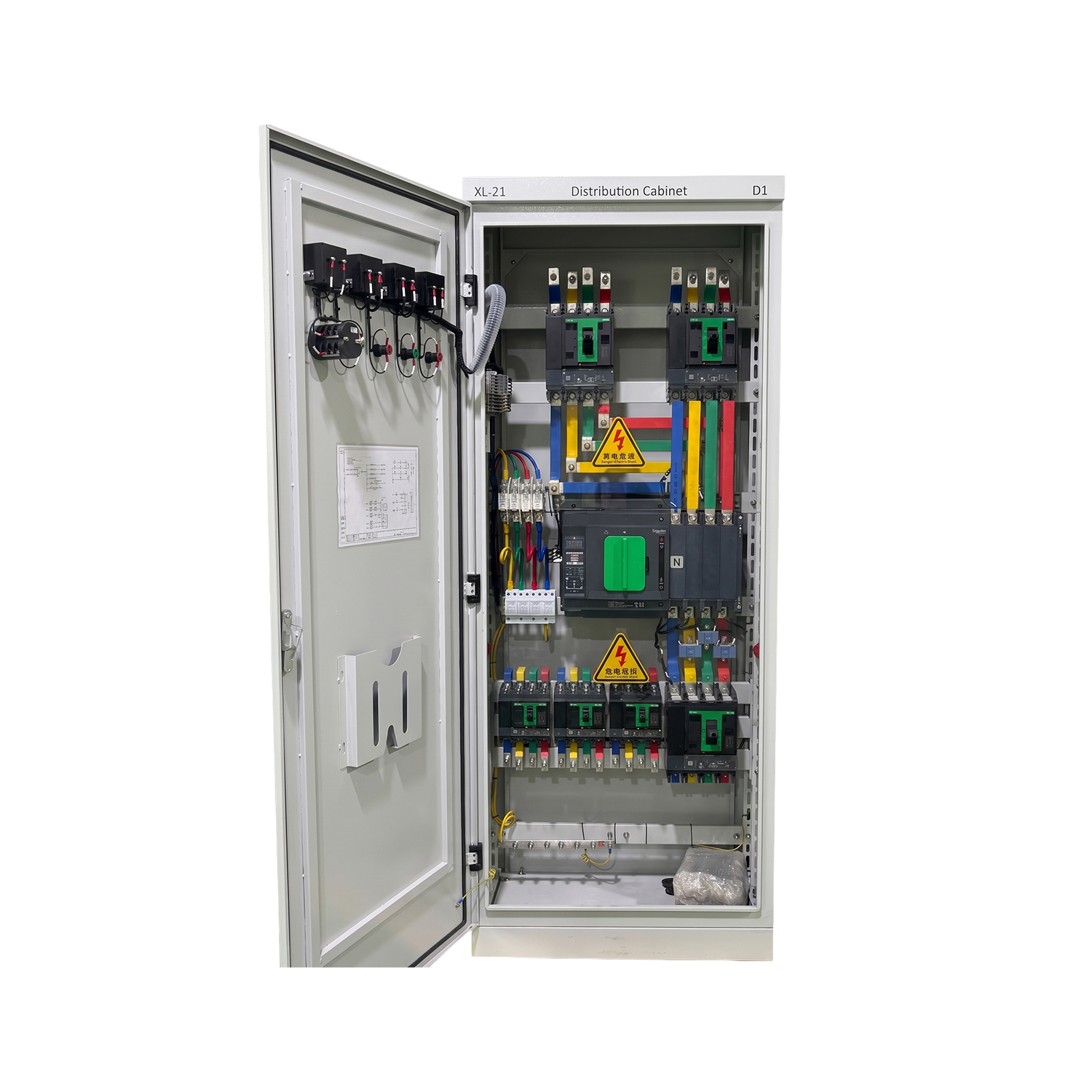 Automatic transfer switch for generator systems: learn how an ATS works, what to check before installation, and why ATS panels fail in industrial environments.
 -
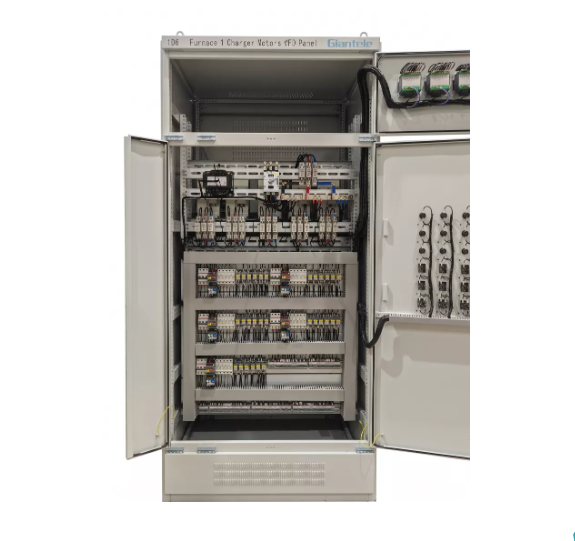 Distribution panel systems play an important role in modern electrical distribution networks. A distribution panel, also called a power distribution board or electrical panel, helps distribute electrical power safely and efficiently.
