Most control panel manufacturers will quote you a new lineup. Fewer will measure what the one you own is costing.
An audit turns a motor control system into numbers that panel builders can price. The list is short: hours run, load factor, power factor, harmonic content.
Key Takeaways
- Measure before you buy. A quote without a baseline is a guess with a price on it.
- Four numbers decide the case. Energy per drive, hours at part load, power factor, harmonic content.
- The motor is rarely the fault. How it is controlled wastes far more than the motor itself.
- Fans and pumps pay back first. Part-load speed control saves 20 to 35 per cent on those loads.
- Re-measure or it did not happen. The saving is proved at the same points, not in a model.
What an efficiency audit of a motor control system measures
An audit is a measurement exercise, not a walk-round survey. The output is a short set of numbers, and the rest of the report is commentary.
Four numbers carry the case. Energy drawn by each drive. Hours spent at part load. Power factor at the board. Harmonic distortion on the busbar.
A plant-wide kilowatt-hour figure is close to useless. It hides the two pumps that are the whole problem behind thirty loads that are fine.
So the meters go in two places. At the incomer, and at every section of the motor control centre. Current transformers and a logging meter cover both.
Power factor is the cheapest number to move and the easiest to misread. Check whether correction already runs at the board before you believe a low figure.
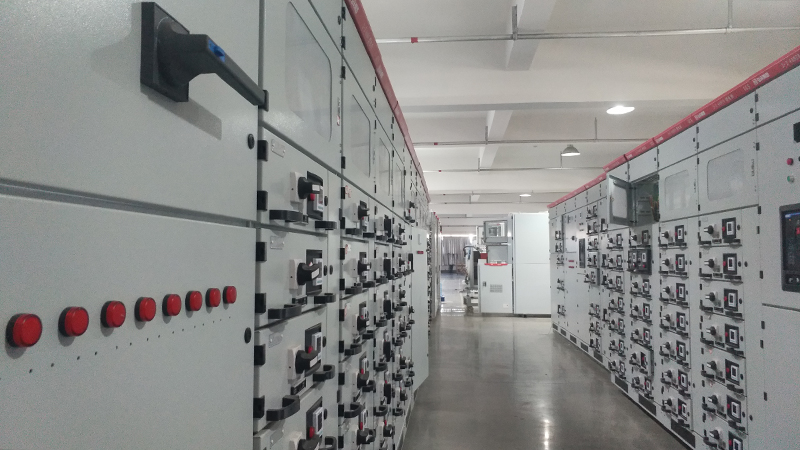
 Log each section
One lineup, many duty cycles
Every section carries a different mix of running hours and part-load time. That is why one meter at the incomer is not an audit.
Two weeks of half-hourly data beats one careful afternoon reading.
Why the baseline has to exist before anyone quotes panels
Without a baseline there is no payback figure. Without a payback figure there is no way to grade two bids against each other.
Any control panel builder asked to quote will quote what you describe. Describe a symptom and you get a general answer back.
That is how a motor control center manufacturer ends up pricing a lineup nobody measured. The bid looks precise and rests on nothing.
Two weeks of logging is the usual minimum. A month is better where production changes with the season or the harvest.
The baseline belongs to you. Never let one supplier hold the only copy of the data you will be judged on.
Ask for raw intervals rather than a summary chart. Half-hourly values let a second engineer check the first one's arithmetic.
Where the losses actually sit in a motor control lineup
Motor losses grow with age, but slowly. Control losses are usually larger, and they are the ones a panel change can remove.
Report each load against its duty, not against its rating. A motor running at forty per cent load all day is oversized.
Capacitors in an existing correction bank are a second loss. A low voltage power capacitor loses capacitance quietly, year on year, and the controller compensates less than it reports.
| Loss source | What the audit sees | Typical size | What removes it |
|---|---|---|---|
| Throttled fans and pumps | Motor at full speed against a closed valve or damper | Largest single block | Variable speed drive on the motor |
| Loads left running idle | Hours logged with no product on the line | 5 to 15 per cent | Sequence control in the MCC |
| Power factor below 0.95 | Reactive current drawn at the incomer | Feeder and transformer losses | Capacitor bank or active correction |
| Harmonic distortion from drives | Flattened current waveform on the busbar | Extra heating in cables and motors | Detuned reactors or an active filter |
| Motors sized for starting | Running current well under nameplate | Depends on the plant | Right-sized motor and soft starter |
| Aged correction capacitors | Capacitance drift over years of service | Small, but it grows | Replace the capacitor elements |
| Standing losses in the panel | Coils, supplies and meters live around the clock | Fixed, and easy to quantify | Supplies that sleep when the line stops |
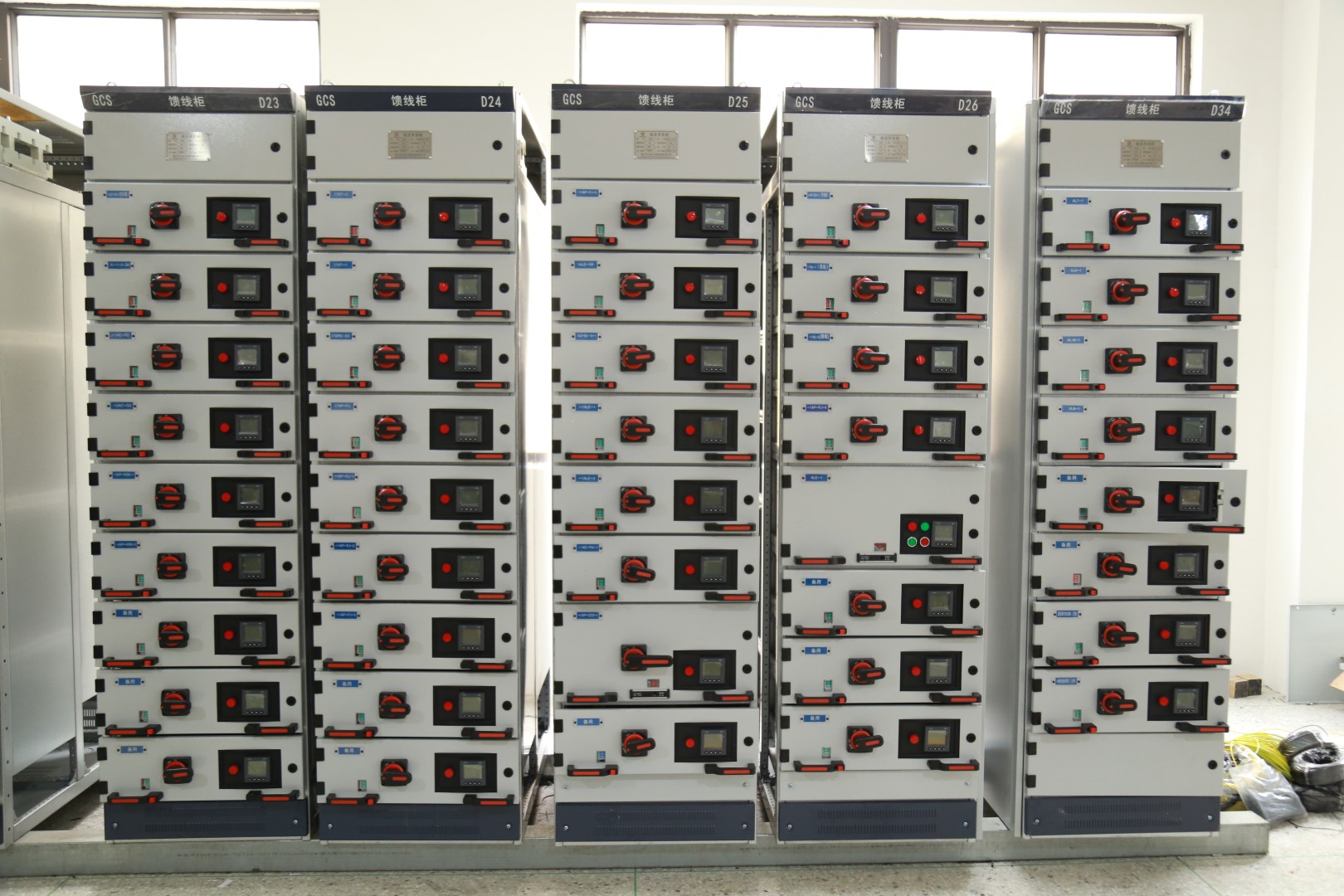
 Count it here
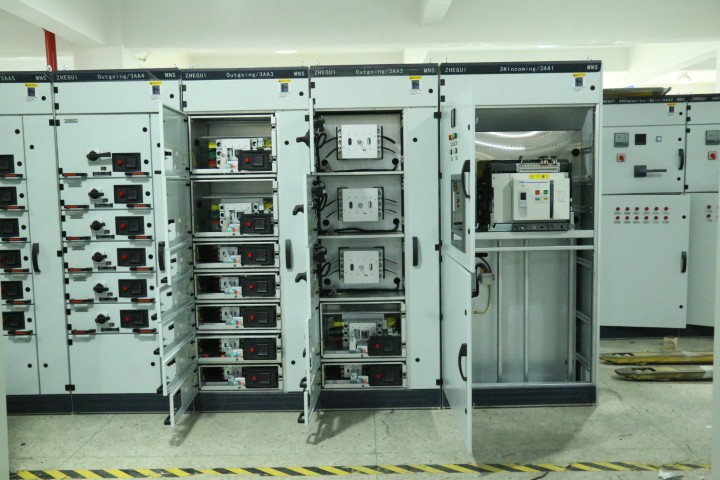
The busbar run is the control point
Current transformers clamp onto the run that feeds each group. That is where the baseline and the later proof are both taken.
Photograph the busbar before and after. It settles arguments about what was changed.
Three changes that pay back fastest in a panel
Three changes cover most of the saving in a motor control lineup. Audits in different industries keep landing on the same short list.
- Variable speed control on fans, pumps and compressors. Power falls roughly with the cube of speed, so part-load running is where the money is.
- Power factor correction at the board rather than at one large motor. A single controller then tracks the whole lineup instead of one feeder.
- Harmonic filtering where drives dominate the load. Detuned reactors protect the capacitors, and an active filter handles what they cannot.
Fans and pumps respond best. Textile plants in Vietnam, Indonesia and Bangladesh report 20 to 35 per cent on those loads.
An electrical panel manufacturer quoting this work should ask for the duty cycle first. If that question never comes, you are holding a price list.
An active filter is chosen by the THD reduction it holds at full load. Its kVA rating on the datasheet tells you very little on its own.
Electrical panel builders working on a live plant should stage the work feeder by feeder. One section at a time keeps production running.
The replacement assembly still has to satisfy IEC 61439, whatever the energy case looks like on paper.
Reading the audit report: the numbers a panel builder can price
A report you cannot price is a report you cannot act on. Ask for one line per controlled load, not one line per electrical room.
Each line needs five fields. Rated power, measured hours, measured load factor, the control method used today, and the metering point behind the figure.
Then the report turns into a scope. A control panel company quoting from that sheet does not have to guess at running hours.
Ask for the metering points to be marked on the drawing. Those are the places where the saving gets measured again next year.
Size the correction bank from the worst half hour, not from the daily average. Peak reactive demand is the only honest basis for the rating.
A partner used to electrical control panel fabrication will keep a spare bank section on the shelf. That way one failed step does not stop the changeover.

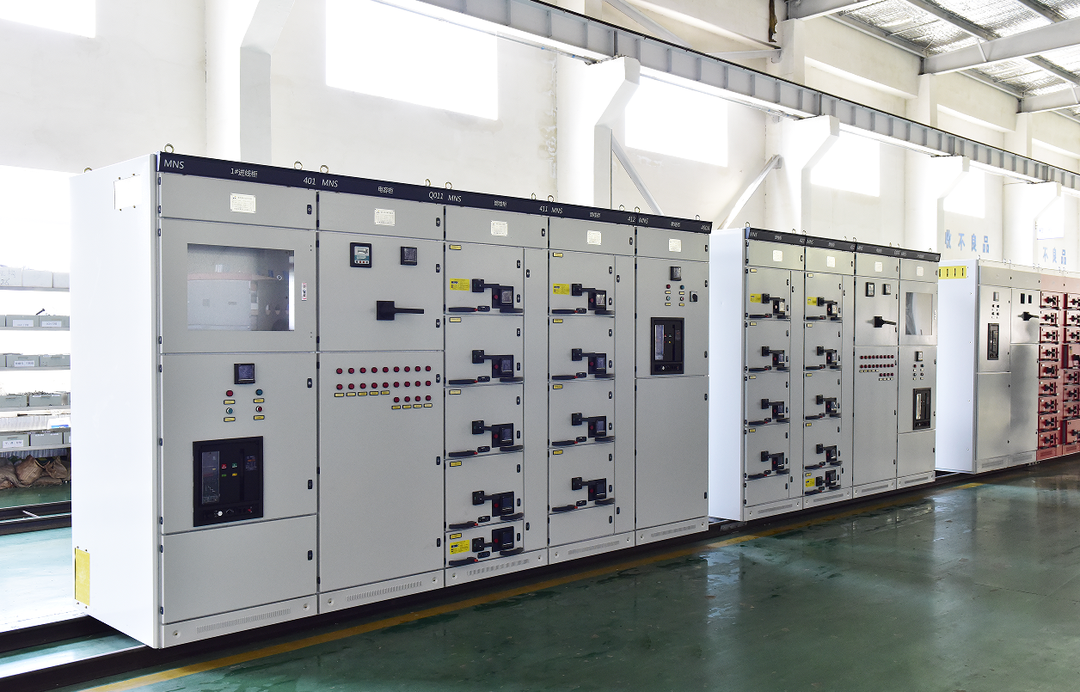
What has to be on every line
Who audits, who builds, and where the seam costs you
Three kinds of company sell into this work, and they do not do the same job. Confusing them is the most expensive mistake in the whole exercise.
Audit specialists measure and report. Some control panel manufacturers now log the plant before they quote, which is the version worth paying for.
An industrial control panel builder measures and then prices the fix. An industrial panel oem mostly sells hardware to a specification someone else wrote.
Bring in control panel designers while the documents are still open. Once the award is made, nobody reopens them.
The seam between the first two is where savings die. An auditor who has never priced a bucket writes a report that no builder can quote.
Ask each candidate which documents they will produce. A measurement schedule, a single-line of the new arrangement and a settings table should all appear.
A control panel maker who logs the plant first is worth the wait. One who quotes from your description is selling hardware, not savings.
Where the audit and the build sit in one firm, ask for the written procedure behind it. A company working to ISO 9001 keeps one.
Proving the saving after the change
The saving is proved by re-measuring the same points, with the same meters, at a comparable production level.
Compare against your own baseline, never against the supplier's model. A model will always produce the figure that won the order.
Where the load swings with the season, compare like with like. One quarter against the same quarter last year is honest. A good month against a bad one is not.
Expect the result to be smaller than the projection. Part-load hours, operator habits and tariff changes all eat into it.
Some of the compensation equipment can report its own performance. A modern correction section logs the reactive current it delivers, hour by hour.
Retire what you remove with a record. Every motor control cabinet pulled out of the lineup leaves a paper trail. Contactors and fuses go the same way.
Leave the metering in place and ask the electrical control panel company to keep it live. Removing it after handover is how a proven saving turns back into a claim.
Frequently asked questions
How long does an energy audit of a motor control system take?
What does an audit cost, and who should pay for it?
Can a panel builder audit its own lineup fairly?
Are variable speed drives always the answer?
How much energy do fans and pumps actually save?
Does power factor correction still pay on a site with drives?
What if the measured saving falls short of the projection?
Should the audit cover medium voltage equipment as well?
Final thoughts
Audit first, then build. The measurement decides what deserves a panel, and the re-measurement decides whether it worked.
Do both and the next capital request writes itself.
Energy intensity in industry is tracked closely by the IEA, and the tariffs behind it are not going down.
Have the load list, need the numbers?
Send the motor list, the control methods and the site tariff. Giantele engineers return a metering plan and a short list of panel changes. Each line of the report gets the fields it needs.