Ordering an industrial control panel for a hazardous area where flammable gases, vapours, or combustible dust are present is fundamentally different from ordering a standard panel. The enclosure is not just a metal box. It is a safety system. Getting the nema rating for explosion proof correct means the difference between a panel that contains an internal explosion and one that becomes the ignition source. This guide explains the enclosure ratings that apply to hazardous locations, what industrial enclosures manufacturers need to know to build a compliant panel, and how to find suppliers who specialise in this demanding engineering discipline.
Key Takeaways
- NEMA 4X is not explosion-proof: The question "is nema 4x explosion proof" has a clear answer: No. NEMA 4 and NEMA 4X enclosures protect against water, dust, and corrosion. They do not contain explosions. Explosion-proof protection comes from NEMA 7 (gas) and NEMA 9 (dust) enclosures, which are designed and tested to withstand and contain internal explosions.
- Class 1 Div 2 allows different construction than Class 1 Div 1: Class 1 Div 2 areas have flammable materials present only under abnormal conditions. Class 1 div 2 electrical enclosures can use non-incendive components and do not require the heavy flameproof construction of a Div 1 enclosure. This distinction can reduce enclosure cost by 30-50%.
- Certification is not a checkbox: The nema rating for explosion proof enclosures must be verified by a recognised testing laboratory. A manufacturer's self-declaration is not sufficient. The certification label on the enclosure is a legal requirement, not a marketing claim.
- Wall mount enclosures for hazardous areas have specific installation rules: The mounting surface, the cable entry method, and the sealing of conduits all affect whether the installation maintains the certified protection level. An industrial electrical enclosures supplier who understands these rules is as important as the enclosure itself.
Understanding explosion-proof enclosure ratings for industrial control panels

The critical distinctions between NEMA protection types
The most common confusion in hazardous area specification is between weatherproof and explosion-proof enclosures. Industrial electrical enclosures with NEMA 4 or NEMA 4X ratings are weatherproof. They protect against water, dust, and ice. NEMA 4X adds corrosion resistance through stainless steel construction. Neither protects against explosions. Explosion-proof enclosures carry NEMA 7 (gas) and NEMA 9 (dust) ratings, designed to contain an internal explosion through machined flame paths between body and cover.
Class 1 div 2 electrical enclosures occupy a middle ground. Flammable materials are present only under abnormal conditions such as pipe leaks or equipment failure. These areas can use non-incendive components and increased safety (Ex e) construction instead of the heavier Ex d flameproof construction required for Division 1. Cost and weight savings are substantial.
The international equivalents help clarify the protection levels. The IECEx and ATEX systems use Zone classifications: Zone 0/1/2 for gases and Zone 20/21/22 for dusts, with Zone 0 and Zone 20 being the most hazardous. An Ex d (flameproof) enclosure certified for Zone 1 is roughly equivalent to a NEMA 7 enclosure for Class I Division 1. An Ex e (increased safety) enclosure for Zone 2 is the international counterpart to a Class 1 Div 2 enclosure. When sourcing globally, look for suppliers whose industrial control panel designs carry both the relevant NEMA certification and the IECEx or ATEX certificate. The IEC 61439 standard provides the verification framework for assemblies but does not cover explosion protection, which is governed by the separate IEC 60079 series.
NEMA ratings comparison for hazardous and non-hazardous applications
| NEMA Rating | Protection Type | Hazardous Area? | Typical Application |
|---|---|---|---|
| NEMA 4 | Watertight, dust-tight. Protects against hose-directed water, windblown dust, and ice. | No — weatherproof only | Outdoor electrical panels in non-hazardous environments: pump stations, wastewater treatment, general outdoor industrial use. |
| NEMA 4X | Same as NEMA 4 plus corrosion resistance. Typically 304 or 316 stainless steel construction. | No — weatherproof only | Coastal outdoor installations, chemical processing areas, food and beverage washdown zones. Anywhere moisture plus corrosive exposure occurs. |
| NEMA 7 | Explosion-proof for Class I hazardous locations. Designed to contain internal gas explosions and prevent ignition of surrounding atmosphere. | Yes — Class I, Div 1 & 2 | Petrochemical refineries, gas processing plants, fuel storage areas, paint spray booths. Anywhere flammable gases or vapours may be present under normal conditions. |
| NEMA 9 | Explosion-proof for Class II hazardous locations. Designed to prevent dust ignition and contain internal dust explosions. | Yes — Class II, Div 1 & 2 | Grain elevators, flour mills, coal handling facilities, metal powder processing. Anywhere combustible dust is present in sufficient concentration to create an explosion hazard. |
| NEMA 7/9 Combined | Explosion-proof for both gas and dust hazards in a single enclosure. | Yes — Class I & II | Chemical plants handling both flammable liquids and combustible powders. Multi-hazard environments where both gas and dust protection are required in the same location. |
The nema rating for explosion proof enclosures is not a single value. The correct rating depends on the specific hazardous material, its concentration, and whether it is present continuously (Division 1), periodically (also Division 1), or only during abnormal conditions (Division 2). A thorough hazardous area classification study determines which rating applies to each location in the plant. The panel supplier cannot make this determination. It must come from the plant's process safety engineer or a qualified hazardous area consultant. The supplier's role is to build the panel to the specified rating with certified components and documented test reports.
What wall mount enclosures for hazardous areas require
Wall mount enclosures in hazardous locations need more than a bracket
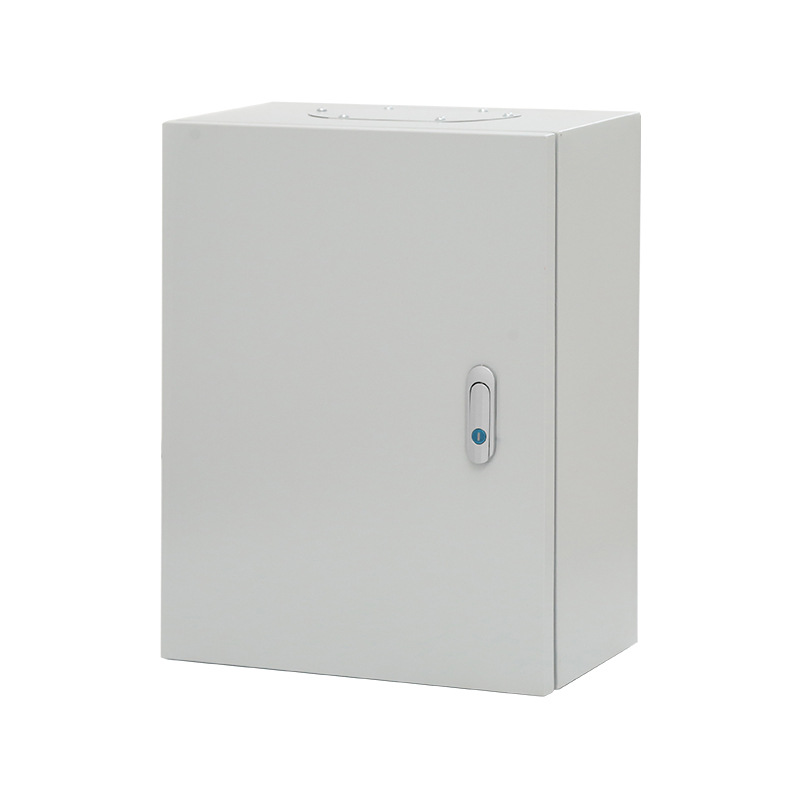
Wall mount enclosures for hazardous areas have requirements that go beyond the enclosure itself. The cable entry method must maintain the explosion-proof integrity. Every cable entering the enclosure must pass through a certified explosion-proof cable gland or conduit seal that prevents flame propagation through the cable entry. A standard cable gland on a NEMA 7 enclosure voids the certification immediately. The cable gland type, size, and installation torque are all part of the certified design.
The mounting surface matters. A wall mount enclosure in a Class 1 Div 2 area must be mounted on a non-combustible surface with the correct standoff distance to allow air circulation behind the enclosure. The mounting bolts must not penetrate the enclosure in a way that creates an unsealed opening. Enclosures industrial specification drawings must show the mounting detail and the cable entry plan as part of the certified assembly.

Industrial enclosures manufacturers with hazardous-area expertise provide more than just the enclosure. They specify the complete certified assembly including the enclosure body, the cover, the gasket or flame path, the cable glands, the breather drains, and the internal mounting plate. Each component must carry its own certification for the target hazardous area classification. A SVG panel installed in a non-hazardous area follows standard electrical installation rules. The same panel in a hazardous area follows an additional set of rules for enclosures, cabling, and component selection that multiply the engineering effort.
Selecting industrial enclosures manufacturers for explosion-proof panels

Four qualifications to verify a hazardous-area supplier
The certification process for explosion-proof industrial electrical enclosures takes months and costs significantly more than standard panel certification. According to ISO 9001 certified manufacturers, the documentation package for a hazardous area panel is typically 3-5 times thicker than for a standard panel because every component, every dimension, and every test must be traceable to the certificate. According to IEA data, industrial safety incidents related to electrical equipment in hazardous areas have declined in facilities that enforce third-party certification and rigorous documentation, underscoring the value of verified compliance over self-declared conformity. An air insulated switchgear supplier who also handles explosion-proof panels should be able to explain the additional requirements without hesitation. A supplier who treats the hazardous-area specification as just another line item on the RFQ probably lacks the depth of experience needed.
Cost factors for explosion-proof industrial control panels
The total cost premium for an explosion-proof enclosures industrial panel compared to a standard power capacitor panel of equivalent electrical specification is typically 2.5x to 4x. The premium is not linear with panel size. A small control station with three pushbuttons and a single starter in an explosion-proof enclosure might cost 5-6x a standard equivalent because the enclosure certification cost dominates. A large multi-section MCC for a hazardous area might cost 2-3x the standard equivalent because the enclosure cost is diluted across more internal components. The capacitor contactor components inside a hazardous-area panel follow the same premium structure.
Frequently asked questions
Is NEMA 4X explosion proof?
What is the nema rating for explosion proof enclosures in gas atmospheres?
When can I use class 1 div 2 electrical enclosures instead of Div 1?
What is the difference between NEMA 4 electrical enclosures and NEMA 4X?
Do I need ATEX/IECEx certification in addition to NEMA ratings?
Can I modify an explosion-proof enclosure after installation?
Final thoughts
Selecting a supplier for explosion-proof industrial control panels requires verification of their certification credentials, their flame path engineering capability, and their component-level traceability. The enclosure rating is not optional or interchangeable. Weatherproof is not explosion-proof. NEMA 4X is not NEMA 7. The correct nema rating for explosion proof enclosures is determined by the hazardous area classification, and the supplier's role is to build a panel that meets that classification with certified components and documented test results. The premium over a standard panel is significant but necessary. There is no cost-saving shortcut around hazardous-area safety.
Discuss Your Explosion-Proof Panel Requirements
Send us your hazardous area classification and motor list. Our engineering team provides a detailed assessment of the enclosure ratings, certified components, and documentation required for your specific installation environment.