


Electrical Power Distribution Boards are not one interchangeable product. They are assemblies arranged for different positions in a power system, from the main point after a transformer to the final circuits serving a room or machine. Choosing by type helps a project team ask the right questions about current duty, protective devices, access, enclosure conditions, and maintenance. The final choice must always follow the approved one-line diagram and applicable rules, but a clear view of the main board categories prevents a common procurement error: treating all panels with breakers as equivalent.
Key Takeaways
Main, sub-, and final boards describe where an assembly sits in the distribution hierarchy.
Single-phase and three-phase boards relate to the supply and load characteristics they serve.
Power, lighting, motor-related, outdoor, and customised boards serve distinct operating purposes.
Type is only a starting point; current, fault duty, environment, protection, and physical layout still determine suitability.
Main, sub-, and final distribution boards
A main distribution board, often called an MDB, is normally the upstream low-voltage hub after a transformer, generator interface, or another principal source. It supplies large outgoing feeders to sub-boards, process equipment, or other major loads. Because it sits close to the source, it often has substantial current and fault-duty requirements, larger cables, more rigorous segregation needs, and significant operational consequences if it is unavailable. A typical main distribution board should be reviewed against the project’s actual incomer duty, outgoing feeder schedule, cable space, and protection study.
A sub-distribution board receives a feeder from an upstream board and serves a local area. It may supply a floor, workshop, production zone, tenant area, or plant room. Its value is geographic and functional segmentation: local circuits can be controlled and investigated without bringing every circuit back to the main board. A final distribution board sits closer to end-use loads and commonly serves lighting, outlets, small equipment, or a defined local group. It typically needs clear circuit identification and branch-level protection suited to its users and loads.
A comparison of common roles
Type | Typical position | Main job | Key specification focus |
|---|---|---|---|
Main distribution board | Close to source | Splits incoming supply into major feeders | Incomer, busbar duty, fault level, segregation, continuity |
Sub-distribution board | Local zone or department | Supplies grouped circuits or a smaller area | Feeder coordination, circuit schedule, cable access, room conditions |
Final distribution board | Near end-use circuits | Protects and controls local final circuits | Branch protection, labels, user safety, available ways |
Single-phase board | Light-load applications | Distributes single-phase circuits | Supply arrangement, neutral, circuit grouping |
Three-phase board | Larger commercial or industrial loads | Serves balanced and three-phase loads | Phase allocation, motor loads, fault duty, capacity |
Single-phase and three-phase distribution boards
A single-phase distribution board is used where the supply and loads are single phase, commonly in smaller residential or light commercial settings. It still requires correctly selected protective devices, adequate circuit capacity, earthing arrangements, and a suitable enclosure. Its apparent simplicity should not result in informal installation or weak documentation.
A three-phase distribution board is common in commercial buildings, workshops, and industrial facilities. It can supply three-phase machines and distribute single-phase circuits across phases. The design team must consider phase balance, neutral current, motor starting, harmonic effects from non-linear loads, and the different protection needs of each circuit. Three-phase is not automatically “better”; it is a supply arrangement chosen for the load and system design.
Functional board types
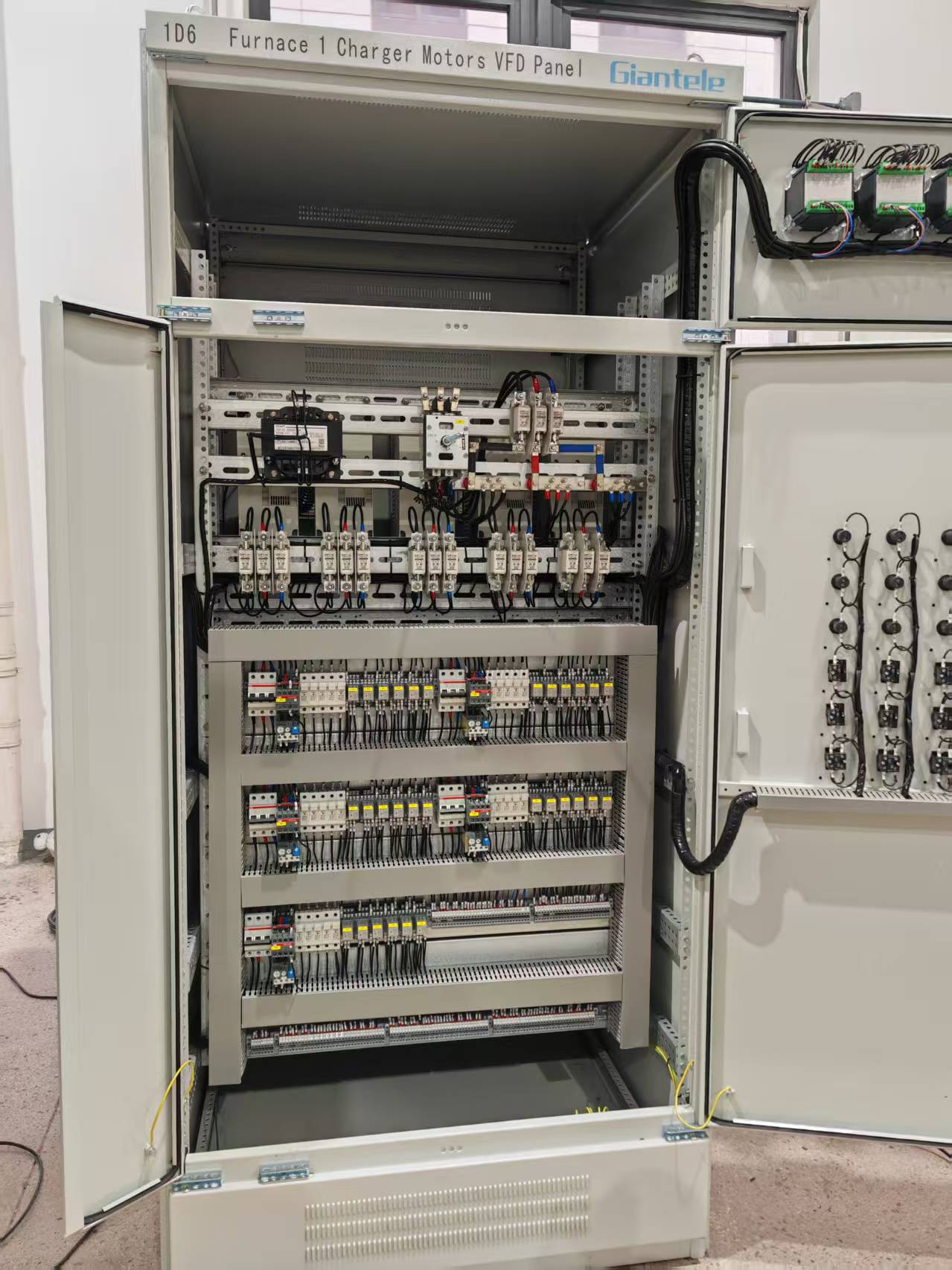
Some descriptions refer to the load served rather than the board’s position in the hierarchy. A power and lighting board separates general power circuits from lighting circuits, often making operating and maintenance tasks clearer. A motor-related distribution assembly may feed starters, drives, or motor-control equipment; its protection and control functions require careful coordination with the driven equipment. An outdoor feeder pillar or weather-exposed board needs construction that matches its environmental exposure. Temporary-site boards, critical-service boards, and metered tenant boards likewise have functions that should be stated before a product is selected.
Customisation does not mean inventing a design after order placement. It means defining the actual load schedule, incoming source, enclosure conditions, cable entry, protection requirements, metering, communications, access method, and future changes, then building an assembly around those data. Zhejiang Zhegui Electric Co., Ltd. offers power distribution board configurations for project requirements, but the engineering brief remains the foundation for every customised arrangement.
Selecting by duty rather than appearance
Two boards can look similar and be unsuitable for the same duty. The selection needs the nominal voltage and frequency, current rating, prospective short-circuit current, earthing system, source type, load schedule, environmental exposure, IP requirement, cable direction, mounting method, and operating constraints. A board’s current rating does not prove its short-circuit performance, and an enclosure rating does not prove its ability to interrupt a fault.
For complex projects, ask how the board supports maintenance. Which parts may need access? Must adjacent circuits stay energised while a feeder is serviced? Are busbar, device, and cable areas separated as the operating strategy requires? Is there room for terminations and future cables? These questions often decide whether a compact layout creates operational difficulty later.
Giant Electric’s guide to board types is useful for comparing role-based categories. Treat it as a vocabulary guide, then use the approved electrical design to validate the final selection.
Installation and lifecycle considerations
The type of board affects installation but does not eliminate common responsibilities. A qualified team must verify location, access, support, earthing, cable termination, environmental protection, and the approved test programme. The operator needs an accurate circuit directory, one-line diagram, settings record, and change log. When a new feeder is added, the team should re-check available capacity, heat, physical space, protection coordination, and the accuracy of labels and documents.
The most practical distribution board selection creates a logical hierarchy: major sources are controlled at the appropriate upstream level, local loads are grouped sensibly downstream, and final circuits can be identified and isolated without unnecessary disruption. Giant Electric can manufacture to an agreed technical brief; responsible design and operation remain shared project disciplines.
Conclusion
Electrical Power Distribution Boards are best understood by their system role. MDBs manage major incoming and outgoing duties, sub-boards localise distribution, and final boards protect end circuits. Single-phase, three-phase, lighting, motor, outdoor, and custom arrangements add functional detail. Once the role is clear, the project can specify the ratings, protection, environment, access, and documentation needed for a reliable installation.
FAQs
Is a sub-distribution board smaller than an MDB?
Often, but physical size is not the defining point. A sub-board is identified by its downstream position and local distribution role. Its required dimensions and rating depend on the feeders, fault conditions, enclosure, and cable arrangement.
Can one board serve lighting and machinery?
It can if the system design, protection scheme, load grouping, and operational priorities support it. Some projects separate these loads to improve fault isolation and maintenance planning.
When is a three-phase board required?
It is required when the supply and connected loads call for a three-phase arrangement, such as many industrial motors or larger commercial systems. A competent electrical designer should determine the proper supply and distribution method.
Are customised boards harder to maintain?
Not if they are documented and designed with access, labels, parts, and operating procedures in mind. Poorly defined customisation is the risk, not customisation itself.
What does spare capacity mean?
It may refer to unused outgoing ways, busbar margin, physical cable space, or upstream capacity. These are different things and should be checked separately before planning future additions.