


Compact air insulated switchgear aims to fit required distribution functions into a smaller practical footprint than a conventional layout, while retaining the insulation, enclosure, and protection functions the project needs. Compact does not mean that every dimension is minimized or that any installation space will work. A useful compact AIS design must still provide its rated insulation performance, cable space, operating access, interlocking, thermal performance, and a maintainable arrangement. The right compact solution reduces unnecessary footprint while keeping installation and service requirements practical.
What “compact” should mean in a project brief
Use measurable project language rather than a broad request for a small cabinet. Identify the maximum available room length, depth, height, door dimensions, cable-trench width, incoming and outgoing cable directions, lifting restrictions, and operating aisle. Then identify the electrical functions that cannot be lost: incomers, feeders, bus sections, transformer protection, metering, relay panels, remote interfaces, and any future bays.
A compact arrangement may reduce panel width, depth, or the external space needed between equipment modules. The result still has to fit the service envelope. A design can be compact on a general arrangement drawing yet difficult to install because the cable bend radius, termination access, door swing, or lifting route was not considered. Make these constraints part of the enquiry so alternatives are compared against the same installation requirements.
Four compact-AIS design checks
Check | Why it matters | Decision question |
|---|---|---|
Electrical duty | Compact construction cannot compensate for inadequate voltage, current, fault, or insulation performance. | Does the selected line-up meet every approved duty and protection requirement? |
Cable interface | Cables and terminations often consume more space than expected. | Can the actual cable type, number, bend radius, screen connection, and test access be accommodated? |
Operating and service access | A narrow room can make a correctly rated panel impractical to operate or service. | Are operating aisles, isolation steps, inspections, and replacement tasks feasible? |
Future changes | A compact line-up can become a bottleneck if additions were not planned. | Is there a defined extension side, spare function, or staged installation plan? |
Choose the right architecture before optimizing dimensions
Start by deciding which construction and distribution arrangement the application requires. Metal-enclosed and metal-clad describe aspects of enclosure construction; fixed and withdrawable describe equipment arrangements; a ring main unit describes a distribution assembly. These descriptions can overlap. The selection depends on network topology, protection requirements, continuity objectives, transformer and feeder duties, and operating practice.
A compact ring-distribution system should be specified around its incoming, outgoing, and transformer-feeder functions. Confirm whether the required switching and protection duties can be provided by the proposed modules before comparing cabinet dimensions. Similar-looking assemblies may have different fault-interruption capabilities, protection arrangements, and extension interfaces.
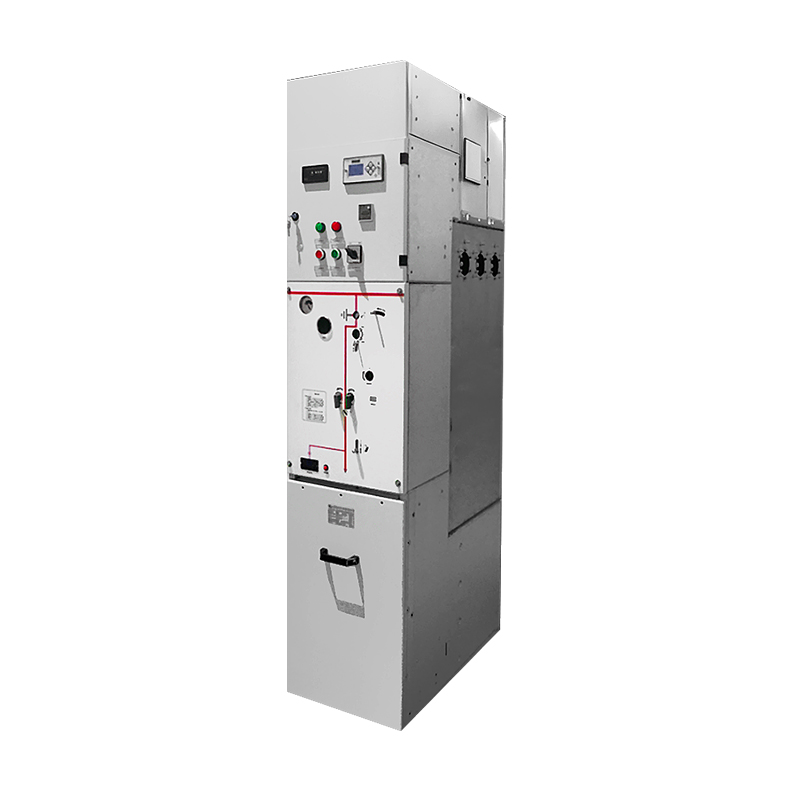
For a specific 12 kV ring-network option, examine the module arrangement of SF6-Free Air-Insulated Switchgear. This product uses a sealed dry-air or nitrogen insulation arrangement, so its primary-component access differs from conventional ambient-air AIS. Confirm the selected voltage, current, fault duty, cable interfaces, enclosure conditions, and operating functions against the project documents.
When comparing insulation approaches for a restricted room, a Gas-Insulated Ring Main Unit provides a separate sealed SF6 option. Compare equivalent feeder configurations and the complete installed footprint, including cable trenches, operating aisles, and service access. Include gas-management and lifecycle responsibilities in the assessment.
Do not sacrifice maintainability for footprint
Compact equipment should support practical installation and future service. Review where technicians will stand, how doors or panels are accessed, how a breaker or component is serviced where applicable, how cable testing is performed, how inspection tools enter the room, and how a fault investigation would proceed. If service requires a special position, lifting device, removal path, or outage sequence, document it early.
Distinguish routine access to cable and control compartments from work inside a sealed primary enclosure. A front-access arrangement does not necessarily mean every component can be inspected or replaced from the front. Confirm permitted access conditions and the service route for each major task using the instructions for the exact assembly.
Maintenance planning also needs environmental context. In a hot, humid, dusty, corrosive, or polluted location, ventilation, enclosure condition, cable sealing, condensation management, and inspection access may have more practical value than a few saved centimetres of panel depth. Compactness is successful when it preserves a controlled, maintainable installation.
Build expansion into the compact layout
A compact project often has the least tolerance for unplanned growth. Define whether a future feeder will be added, whether a bus section will change, whether new loads will need monitoring, and whether the room can accept another module. Reserve an extension location, compatible cable route, protection-panel capacity, and an approved outage strategy where future growth is credible. If future expansion is impossible, make that a deliberate business decision and record the capacity limit.
During the initial layout study, a Solid-Insulated Ring Main Unit can also be assessed as a separate SF6-free alternative. Confirm the offered extension interfaces, installation dimensions, and cable requirements before reserving space. Solid-insulated equipment belongs to a different insulation category, and modules from different systems should not be assumed to be interchangeable.
Obtain drawings showing the initial and proposed final configurations. Identify the extension side, bus connections, cable-entry locations, control interfaces, and any additional space required to perform the work. A reserved strip of floor space is useful only if the electrical and mechanical interfaces also support the planned addition.
Conclusion
Compact air insulated switchgear works best when “compact” is treated as a coordinated layout objective. Verify electrical duty, cable terminations, service access, environment, and future growth together. Distinguish conventional ambient-air AIS from sealed dry-air assemblies, and compare other insulation technologies using equivalent distribution functions. Zhejiang Zhegui Electric Co., Ltd. manufactures low- and medium-voltage distribution equipment; a clear project brief helps identify a compact configuration that remains practical from installation through long-term service.
FAQs
What is compact air insulated switchgear?
It is air-insulated equipment arranged to provide the required distribution functions in a reduced practical footprint while retaining the necessary insulation, protection, enclosure, access, and service provisions. Confirm whether the proposed construction uses conventional air clearances or a sealed dry-air arrangement.
Can compact AIS fit in any small room?
No. The room must still accommodate equipment clearances, operating aisles, cable routing, ventilation, access, and approved emergency and service requirements.
Why are cables important in compact switchgear selection?
Cable size, bend radius, terminations, screen connections, test access, and entry direction can control the required cabinet and trench arrangement.
Is compact AIS harder to maintain?
Not necessarily, but maintainability must be reviewed as part of the layout. Confirm the access, isolation conditions, tools, removal paths, and service procedures required for the actual construction.
Can compact AIS be expanded later?
Expansion depends on compatible modules and bus interfaces, available space, cable routes, protection capacity, and an approved outage method. These provisions should be defined before the initial equipment is ordered.