


Air insulated switchgear is used wherever a power-distribution system needs coordinated switching, protection, isolation, and control and the installation can provide its required electrical clearances, enclosure conditions, and maintenance access. Its applications range from industrial distribution rooms to public infrastructure, commercial facilities, substations, and utility networks. The important point is whether the selected AIS configuration can meet the actual electrical duty and be safely installed, operated, inspected, and maintained throughout its life. Conventional ambient-air panels and sealed dry-air assemblies require different assessments of exposure and service access.
Application starts with the network, not the building type
An industrial plant may need AIS for transformer incomers, motor and process feeders, or a bus section supporting continuity between sources. A commercial development may need a compact indoor distribution arrangement with metering and building-management interfaces. A utility or infrastructure project may need feeders configured for a particular network topology and operating sequence. These are different applications even if they use similar-looking panels.
For each application, establish the source and load arrangement, normal and contingency operating modes, grounding, fault duty, required protective functions, cable system, environmental exposure, and operator access. Zhejiang Zhegui Electric Co., Ltd. offers medium-voltage equipment for differing distribution requirements. Suitability for a specific site still requires an approved engineering design.
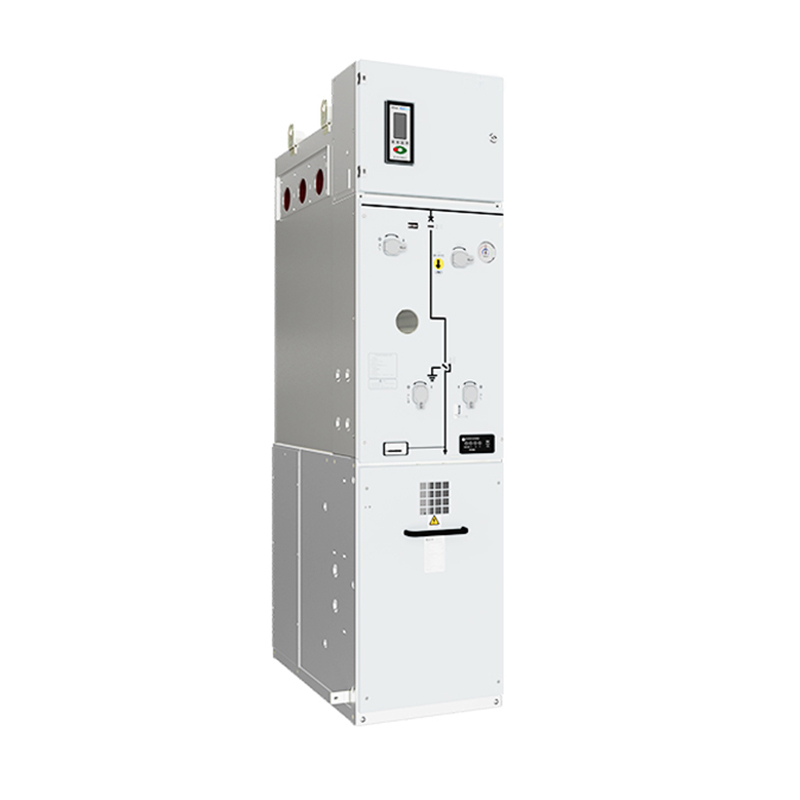
For a 12 kV ring-network application, SF6-Free Air-Insulated Switchgear provides a specific equipment option for review. Its sealed dry-air or nitrogen insulation arrangement differs from conventional ambient-air AIS. Confirm the proposed feeder configuration, protection functions, cable interfaces, and service procedures against the project’s single-line diagram and operating philosophy.
Safety is designed, documented, and practiced
Switchgear safety has physical, electrical, procedural, and human elements. Physical features may include suitable enclosure construction, compartmentation, interlocks, earthing functions, shutters where applicable, cable compartments, pressure-relief arrangements, indicators, and clear labelling. Electrical safety depends on correct ratings, insulation coordination, protective-device selection, relay settings, trip circuits, control power, and commissioning verification. Procedural safety depends on approved switching, isolation, lockout or equivalent control, verification of the de-energized condition, work permits, emergency response, and controlled access.
These elements cannot be separated. A specified interlock must fit the operating sequence. A relay setting must coordinate with the upstream and downstream network. A maintenance instruction must fit the exact assembly. A compliance mark or test document for one product scope does not automatically prove the safety or legal compliance of the entire installed system. Project teams should identify the authorities, standards, and acceptance criteria that apply to their destination market before procurement.
Where internal-arc performance is required, verify the documented classification, test conditions, and installation restrictions for the offered assembly. Pressure-relief provisions and enclosure protection ratings alone do not establish an internal-arc classification or guarantee personnel protection under every fault condition.
A compliance review that avoids assumptions
Review area | Questions to resolve | Project evidence |
|---|---|---|
Applicable requirements | Which national rules, utility requirements, building rules, and technical standards govern the installation? | Target country, authority requirements, project specification, and approved design basis. |
Equipment duty | Are voltage, current, insulation, short-circuit, interruption, enclosure, and environmental requirements all defined? | System study, single-line diagram, environmental schedule, and data sheets. |
Protection and control | Does the system have coordinated functions, interfaces, settings, and test responsibilities? | Protection philosophy, settings study, control schematic, and commissioning plan. |
Installation and access | Can cables, clearances, ventilation, egress, lifting, operating aisles, and maintenance activities be accommodated? | Layout drawings, cable schedule, civil drawings, and method statements. |
Lifecycle control | Who will inspect, maintain, modify, and retain records for the installed equipment? | Asset plan, training plan, maintenance documents, spares, and handover package. |
Use this review before equipment selection and repeat it before energization. The aim is to verify that the ordered equipment, the installation, and the operating system satisfy the defined project requirements. Supporting documents must correspond to the offered model, ratings, configuration, and relevant test scope.
If the project also evaluates a Solid-Insulated Ring Main Unit, apply the same evidence requirements. Solid insulation represents a separate technology; avoiding SF6 does not establish electrical safety, internal-arc performance, or compliance with the destination market’s requirements.
EU framework for claims about CE, LVD and EMC
For equipment placed on the European Economic Area market, CE marking is not an EU product approval or a general quality award. Where required by applicable EU legislation, it indicates that the manufacturer has taken responsibility for conformity with the relevant requirements. The claim must be supported by the appropriate conformity assessment, technical documentation, and EU declaration of conformity for the exact product scope. CE marking should not be applied solely because a buyer requests it or because a product has been tested to a technical standard.
Directive 2014/35/EU, the Low Voltage Directive (LVD), covers electrical equipment designed for use within voltage limits of 50 V to 1,000 V AC and 75 V to 1,500 V DC, subject to its scope and exclusions. A 12 kV switchgear primary circuit falls outside those voltage limits. Low-voltage auxiliary equipment may require a separate assessment; its presence does not bring the complete medium-voltage assembly within the LVD automatically.
Directive 2014/30/EU, the Electromagnetic Compatibility Directive (EMC), addresses electromagnetic emissions and immunity for equipment within its scope. The assessment should distinguish apparatus from fixed installations and identify the requirements applicable to protection relays, electronic controls, communications, and the assembled system. A declaration for an individual control device does not automatically establish conformity of the complete installation.
For European technical-standard references, use the applicable EN or EN IEC designation and verify its current edition and national adoption. EN IEC 62271-200 addresses AC metal-enclosed switchgear and controlgear for rated voltages above 1 kV and up to and including 52 kV. EN IEC 61439-1 and EN IEC 61439-2 concern low-voltage assemblies and should not be presented as the governing assembly standards for a 12 kV primary switchgear system.
A standard reference is not proof that a particular product complies, nor does every standard reference establish a basis for CE marking. Confirm the product scope, verification evidence, applicable legislation, and any relevant harmonised-standard status before making a conformity claim.
Environmental and installation conditions matter
Conventional AIS relies on air clearances as part of its insulation arrangement, so environmental conditions deserve early attention. The specification should address indoor or outdoor location, temperature, humidity, condensation, pollution, dust, salt, corrosive atmospheres, altitude, water exposure, ventilation, and cable-entry sealing. These conditions can influence enclosure selection, room design, inspection frequency, cleaning, and the engineering assessment of insulation performance.
For sealed dry-air equipment, assess the sealed primary enclosure separately from external cable connections, operating mechanisms, control equipment, and the overall cabinet. A protection rating for one enclosure or compartment should not be assumed to apply to the entire assembly.
Do not assume that an outdoor label, an enclosure classification, or a compact cabinet solves every site condition. Cable trenches can admit water; poorly controlled rooms can create condensation; adjacent processes can introduce dust or contaminants; and service access may be constrained after other equipment is installed. A site walk-down and coordinated drawings help expose these installation issues.
Where a project considers a Gas-Insulated Ring Main Unit, include the insulating gas in the environmental and lifecycle review. Check the rules applicable to the equipment type, rated voltage, destination market, and intended commissioning date, together with gas-handling, leakage-management, servicing, and end-of-life responsibilities.
Operational controls for the installed system
Before energization, the owner should have an approved operating philosophy, current drawings, identification and labelling, protection records, test documentation, control and interlock verification, spare-parts information, maintenance instructions, emergency contacts, and a plan for authorized access. The details vary by project, but the purpose is consistent: operators should know the installed configuration and the limits of normal operation before an abnormal condition occurs.
For a ring-network project, define the normal open point, permitted switching sequences, source arrangements, feeder protection, and conditions for restoration of supply. Reconcile the selected equipment with the approved single-line diagram and local requirements. An RMU configuration alone does not establish automatic fault isolation, uninterrupted supply, or an approved restoration sequence.
The handover package should identify responsibility for inspections, functional checks, protection-setting changes, modifications, and record retention. Maintenance and internal access must follow the instructions for the exact assembly and the owner’s authorized work procedures.
Conclusion
Air insulated switchgear can support a broad range of distribution applications, but a safe and compliant outcome is project-specific. Start with electrical duty, then verify environmental conditions, layout, protection, interlocking, installation, testing, operating procedures, and lifecycle ownership. Distinguish conventional AIS from sealed dry-air and other insulation technologies, and require evidence for the exact assembly proposed. Zhejiang Zhegui Electric Co., Ltd. manufactures low- and medium-voltage distribution equipment; the right application depends on matching the selected equipment to a verified system design and the applicable market requirements.
FAQs
Where is air insulated switchgear used?
It can be used in industrial, commercial, utility, infrastructure, and substation distribution systems when the selected configuration meets the electrical, physical, and operational requirements of the site.
Does air insulated switchgear guarantee compliance?
No. Compliance depends on the specific product scope, project design, installation, testing, and applicable requirements. Product documentation must be checked against the actual assembly and intended application.
What safety features should be specified for AIS?
The required features depend on the design, but may include suitable enclosure construction, compartmentation, interlocks, earthing functions, indications, protection, labelling, and documented internal-arc performance where required. These features must be supported by approved operating procedures.
How do environmental conditions affect AIS?
Humidity, contamination, dust, salt, condensation, temperature, altitude, water, and corrosion can affect enclosure selection, room design, insulation assessment, inspection, and maintenance planning. The assessment differs between conventional ambient-air panels and sealed primary enclosures.
Who may operate or maintain air insulated switchgear?
Only personnel authorized and competent under the owner’s procedures and applicable requirements should operate, isolate, test, inspect, or maintain switchgear.