


The Difference Between Ring Main Units and Switchgear
Definition
Ring Main Unit (RMU): An RMU is a device used in power distribution systems, primarily for distributing and protecting electricity. It is commonly utilized in urban distribution networks to enhance the reliability and flexibility of power supply.
Switchgear: Switchgear is equipment designed to control, protect, and isolate electrical devices. It can be used in high-voltage or low-voltage distribution systems and typically includes components such as circuit breakers, contactors, and protection devices.
Commonalities
Function:
Both are used for the distribution and control of electricity, ensuring the safe and reliable operation of power systems.Components:
RMUs and switchgear both include protective devices such as circuit breakers and fuses to prevent overloads and short circuits.Applications:
Both are widely applied in industrial, commercial, and residential power systems.Differences
Structure:
RMUs are typically designed in a ring network configuration, suitable for connecting multiple power sources to enhance power supply reliability.
Switchgear, on the other hand, is linear in structure, mainly used for the control and protection of a single power source.Purpose:
RMUs are mainly used in distribution networks and are ideal for urban grids and large industrial zones.
Switchgear is suitable for various power systems and can be used for both distribution and power generation.Connections
Complementarity:
In practical applications, RMUs and switchgear are often used together to achieve more efficient power management and distribution.System Integration:
In modern power distribution systems, RMUs can be integrated with switchgear to enable intelligent monitoring and management, improving the stability and safety of power supply.Conclusion
RMUs and switchgear play essential roles in power systems. While they differ in structure and purpose, they are closely connected in power distribution and protection. By properly configuring and integrating these two types of equipment, the performance and reliability of power systems can be effectively improved.
Ring main unit vs switchgear comes up on almost every medium voltage project. Both switch and protect the network, but they part ways on structure, fault isolation and protection scope. Below is what actually decides the specification.
RMU vs switchgear: key differences at a glance
The table covers the points that decide most specifications. Treat it as a first filter. Then check protection scope and fault isolation before you size anything. Those two cause the most rework when they get missed.
| Item | Ring main unit (RMU) | Switchgear |
|---|---|---|
| Typical voltage | 11 kV, 24 kV, 33 kV and 36 kV distribution | 0.4 kV up to 40.5 kV and above |
| Insulation | SF6 gas, vacuum or air. Gas insulated is the most common | Air insulated or gas insulated, varies by type |
| Configuration | Ring or loop network, two to four feeders per unit | Linear, single or double busbar |
| Switching device | Load break switch and earthing switch. Some units add a vacuum breaker | Vacuum, air or moulded case circuit breakers, contactors and fuses |
| Fault isolation | Isolates the faulty section, so the ring keeps supplying the rest | Isolates the fault at busbar or outgoing circuit level |
| Protection | Simpler. Often fuses or basic relays | Full relay protection, metering and control |
| Typical use | Utility ring networks, industrial parks, mining sites, wind and solar farms | Main substations, generator rooms, process plants, data centres |
| Standards | IEC 62271-200 | IEC 61439 for LV assemblies, IEC 62271 for MV and HV switchgear |
| Footprint | Compact, often outdoor rated | Larger, usually indoor |
Both families also come in metal clad switchgear and metal enclosed switchgear formats. The construction style changes how you service the unit, not the role it plays on the network. At the other end of the range, low voltage switchgear covers the 0.4 kV assemblies fed from these boards.
Structure and configuration: ring network vs linear
The core difference is topology. An RMU sits inside a ring and can connect several power sources. Conventional switchgear is usually linear, built for one incoming supply and a set of outgoing circuits. That single fact drives most of your layout decisions.
On site, the ring layout earns its keep during faults. The RMU isolates the faulty leg, so the rest of the ring stays live. One habit belongs in your switching schedule. Close the earthing switch before anyone touches a cable termination.
On a compact unit, stress cones and gland plates run tight on space. Plan the cable entry before you order. A larger gland plate fitted later is slow work and often means a new enclosure.
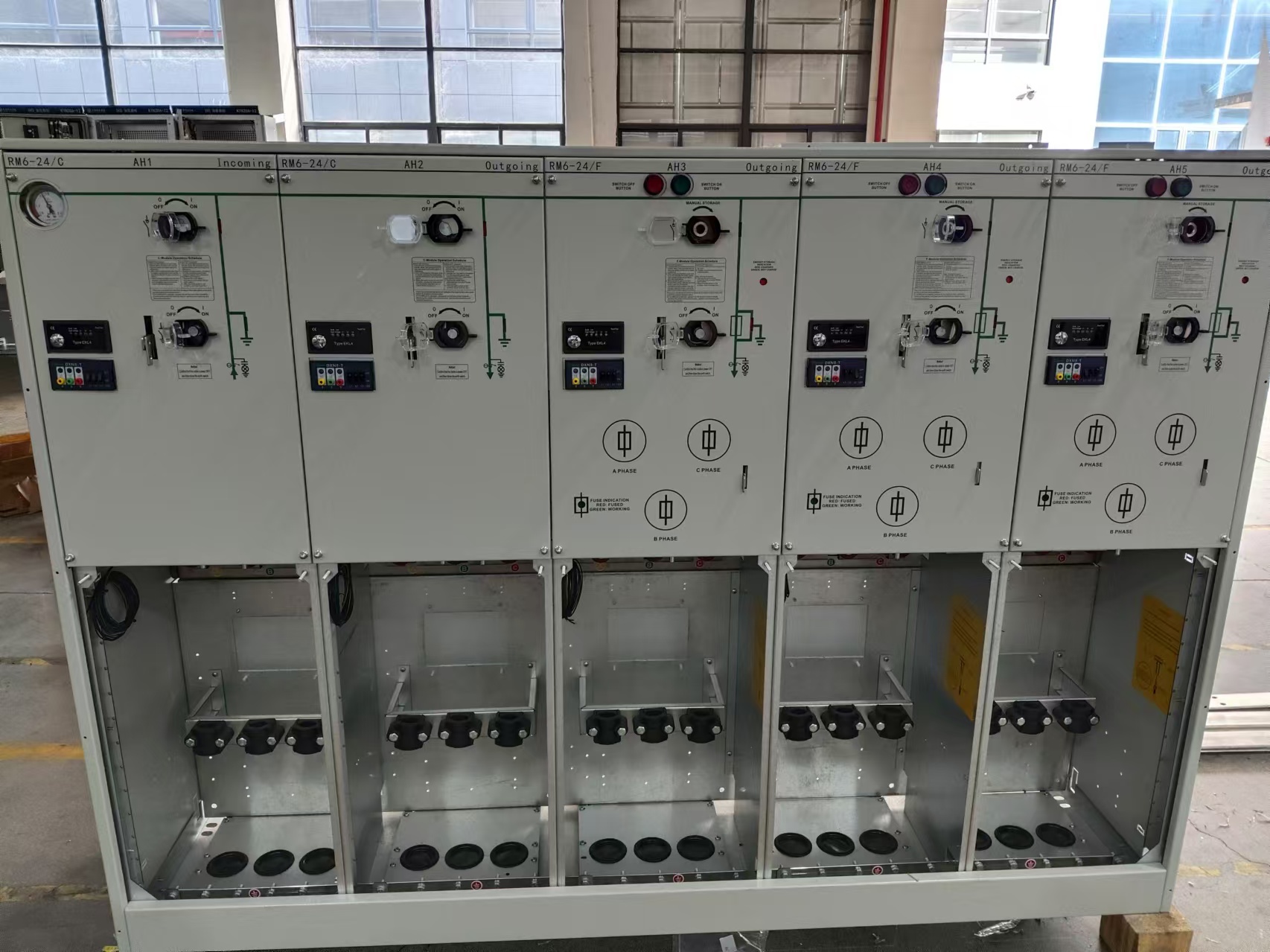
Insulation choice changes the room layout too. Gas insulated switchgear needs less clearance than an air insulated unit. In a tight switchroom, that buys back floor space.
Function, components and protection compared
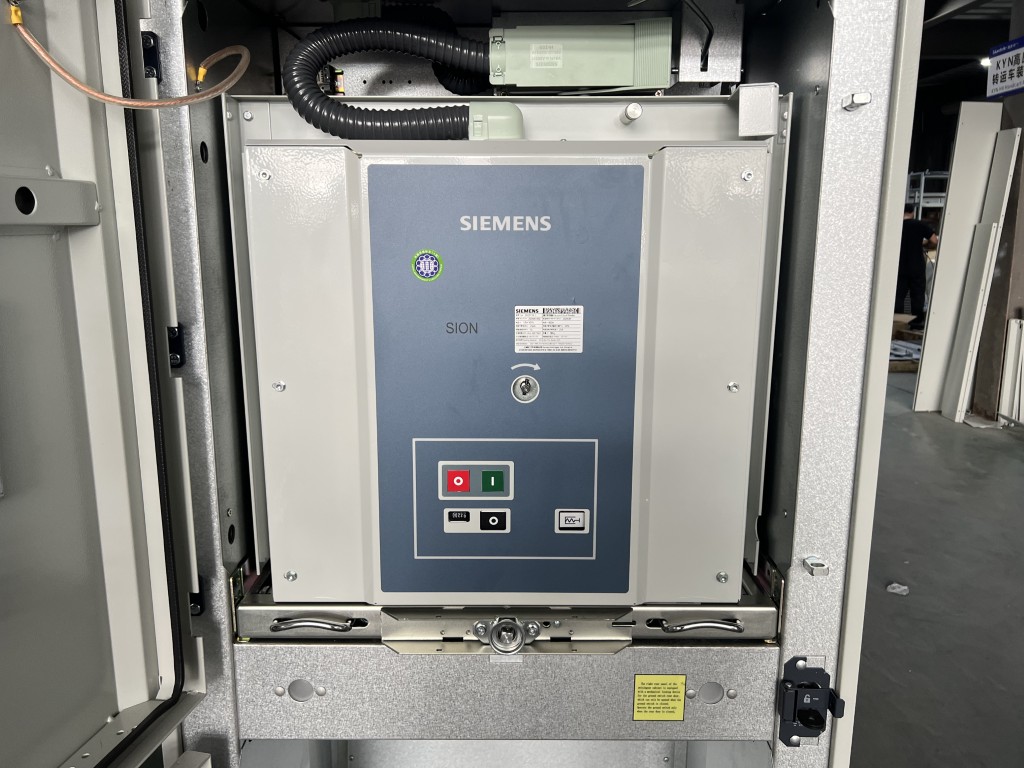
Protection scope is what separates the two. An RMU usually relies on a load break switch, an earthing switch and fuses. Rated currents sit around 630 A or 1,250 A. Short circuit withstand is typically 16 to 25 kA for 3 seconds.
Full switchgear adds vacuum circuit breakers, current transformers, metering and directional overcurrent relays. Medium voltage switchgear in air insulated form is rated under IEC 62271-200.
Both types are type tested before they ship, and the works run to ISO 9001 and ISO 14001. Ask for the type test report with your quotation.
Do not pick an RMU just because it is compact. If your scheme needs directional overcurrent and full metering, an RMU will not carry it. Size the protection first. Then choose the enclosure.
Where each is used: applications and typical projects
RMUs do most of the work in the MV distribution layer. SF6 ring main unit models suit urban ring networks and industrial parks. Air insulated versions fit mining sites, wind and solar farms, and utility substations.
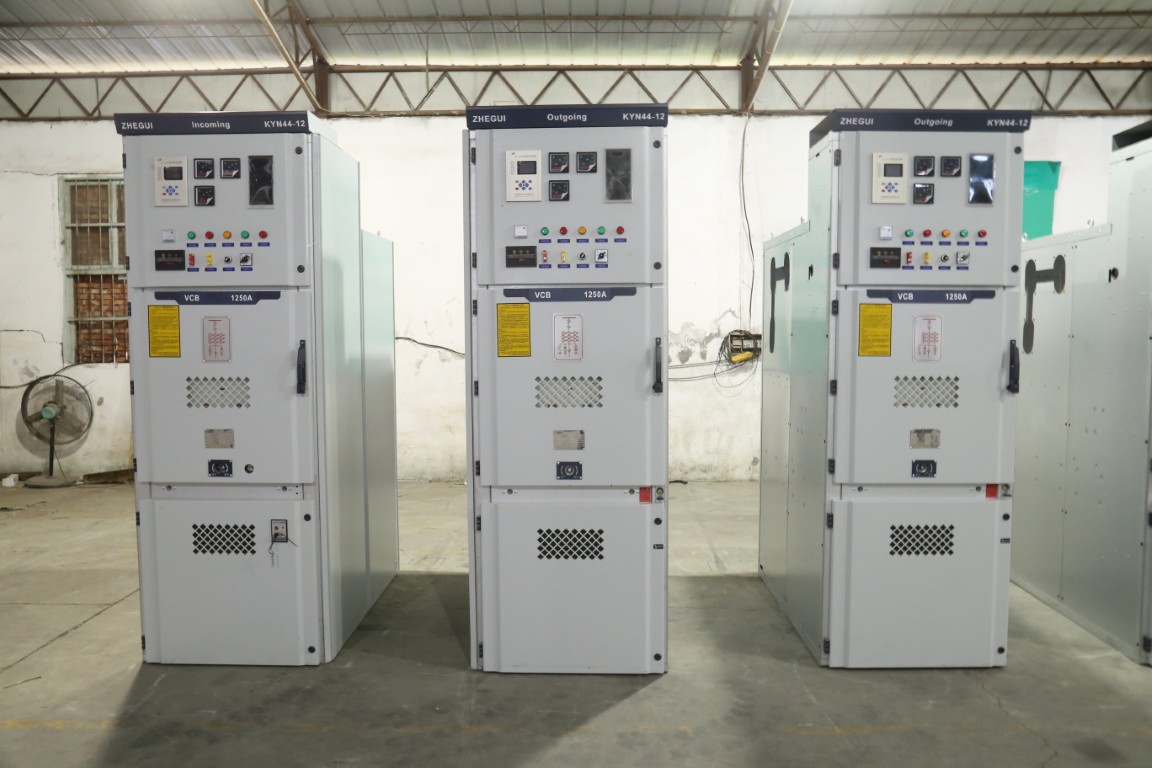
Switchgear takes the busier roles. It handles main substations, generator rooms, heavy process plants and data centres. Those sites will not run on fuses and a simple relay. They need full protection, metering and coordination.
RMU rings show up in transport infrastructure too. Airport and rail distribution is a good example. Ring fed RMUs keep traction and terminal loads alive through a single cable fault.
The same pattern appears in Qatar, South Africa and Turkey. Planners there size the next phase against energy access data rather than guesswork.
How RMUs and switchgear work together
The usual arrangement puts RMUs at the ring positions and switchgear at the main incoming. The switchgear carries protection, metering and the SCADA link. The RMUs handle feeder switching and fault isolation.
With smart relays, you can bring both layers into one monitoring system. That gives you one alarm list, one event log and one set of settings. It also makes fault tracing faster when the network grows.
How to choose: RMU or switchgear for your project
Work through the network before the equipment. Most projects come down to these five checks.
Confirm the topology.
A ring or loop network points to RMUs. A radial layout with one source points to switchgear.Define the protection and metering scope.
Full relay protection and billing metering need switchgear. Feeder switching on its own does not.Match the enclosure to the site.
Outdoor or space limited installations favour a compact RMU. An indoor switchroom gives you more room to work with.Check the fault level.
Compare the calculated fault current against the equipment rating before you order. This is where most late changes start.Plan cable termination space early.
Compact RMUs leave little room for stress cones and gland plates. Decide the cable size now, not on site.
Frequently asked questions
What does RMU mean in electrical systems?
RMU stands for ring main unit: a factory assembled, metal enclosed switchgear unit installed on ring distribution networks. Ratings are typically 11 kV to 36 kV. It switches and isolates feeders, so a fault on one section does not interrupt the rest of the ring.
Can an RMU replace switchgear?
Not in every case. An RMU can replace conventional switchgear where the job is MV ring distribution and protection needs are moderate. Keep conventional switchgear where you need full relay protection, complex busbars or high fault levels. The two are often combined.
Which is better, an RMU or switchgear?
Neither is universally better. It depends on the network. Choose an RMU for compact, outdoor or space limited MV ring distribution. Choose switchgear where you need full protection, metering, multiple busbars or LV and HV coverage. Most projects end up with both.
What voltage is a ring main unit rated for?
Ring main units are medium voltage equipment, most commonly rated 11 kV, 24 kV, 33 kV and 36 kV. Rated currents go up to 630 A or 1,250 A. Short circuit ratings sit around 16 to 25 kA for 3 seconds, in line with IEC 62271-200.
When should you use an RMU instead of switchgear?
Use an RMU when you are building or extending a ring network. It also fits where the installation has to be compact or outdoor rated.
If fast isolation of a faulty section is the priority, an RMU is enough. Go to switchgear when the project needs full protection and metering, or when LV distribution is in scope.
Does an RMU need a separate protection relay?
Not always. Many RMUs use fuses or a simple overcurrent relay, which is enough for a ring feeder.
If you need directional overcurrent, earth fault sensitivity or remote SCADA control, add a dedicated relay. In some cases that means stepping up to full switchgear. Decide this before you order, because retrofitting relays into a sealed unit is difficult.
What this means for your project
Ring main units and switchgear do different jobs on the same network. Match the topology and the protection scope to the site, and the equipment choice makes itself.
Send us your single line diagram and fault level. Our engineers will confirm whether an RMU, switchgear or a combination fits your project.