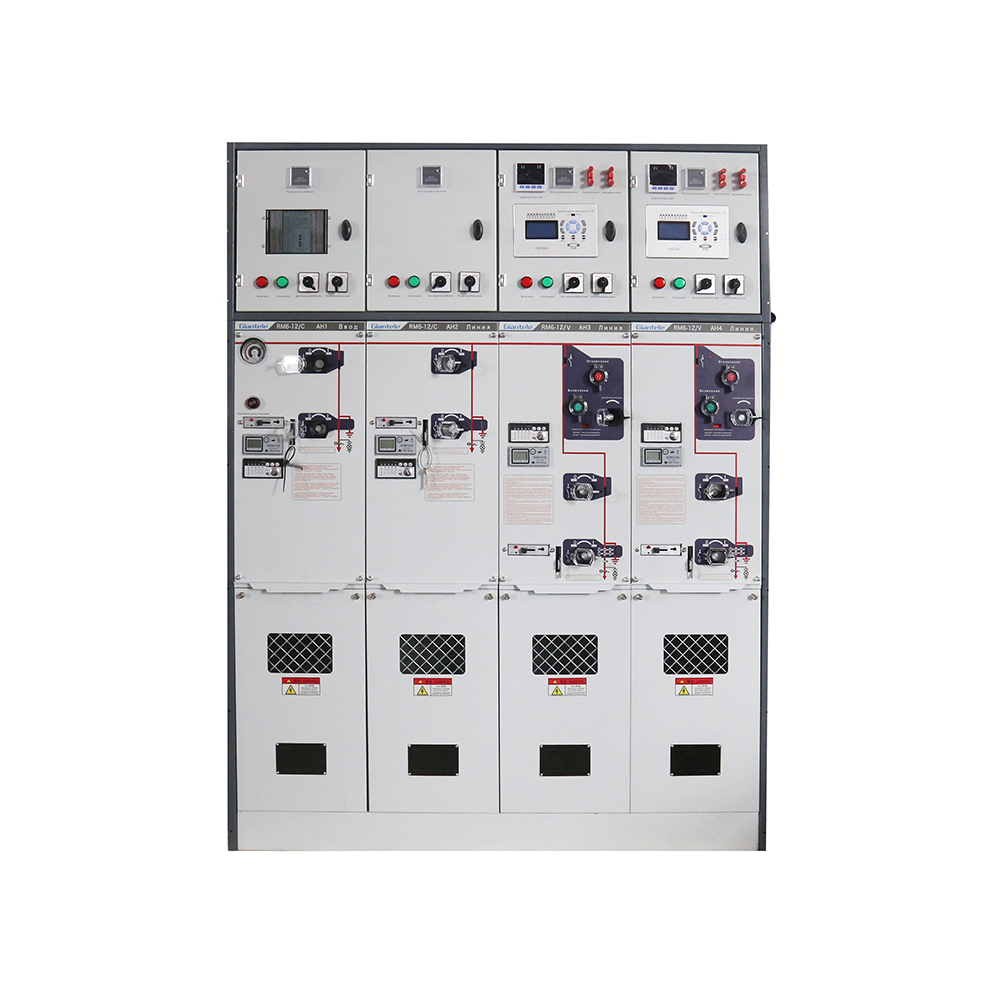
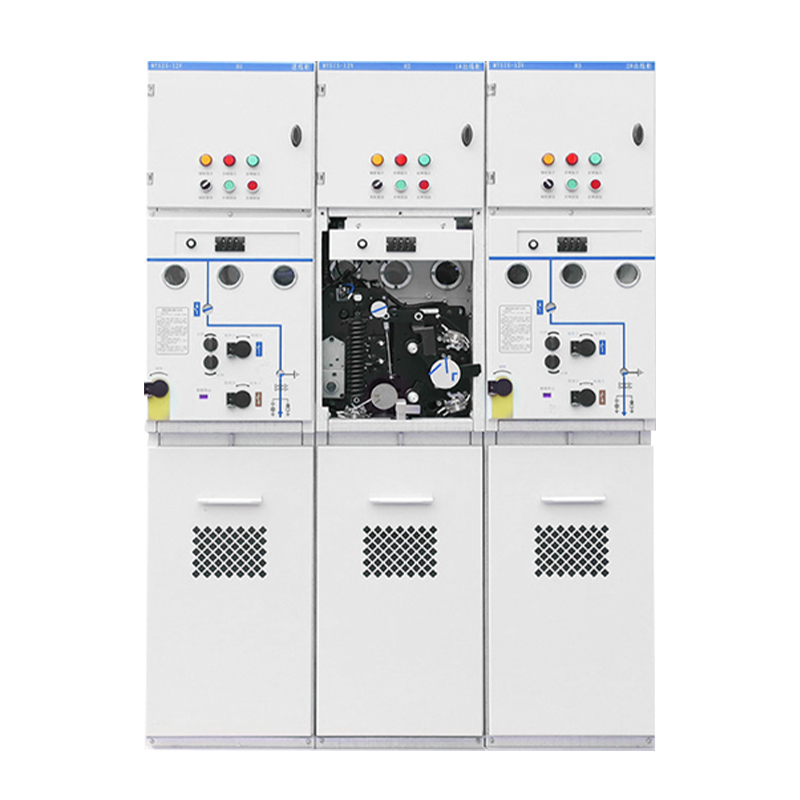
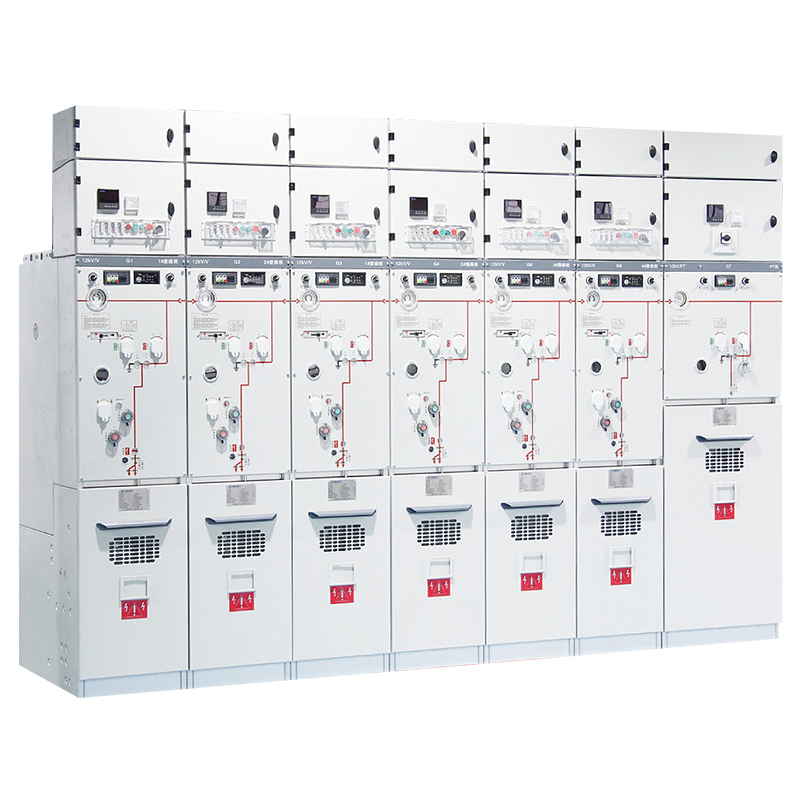
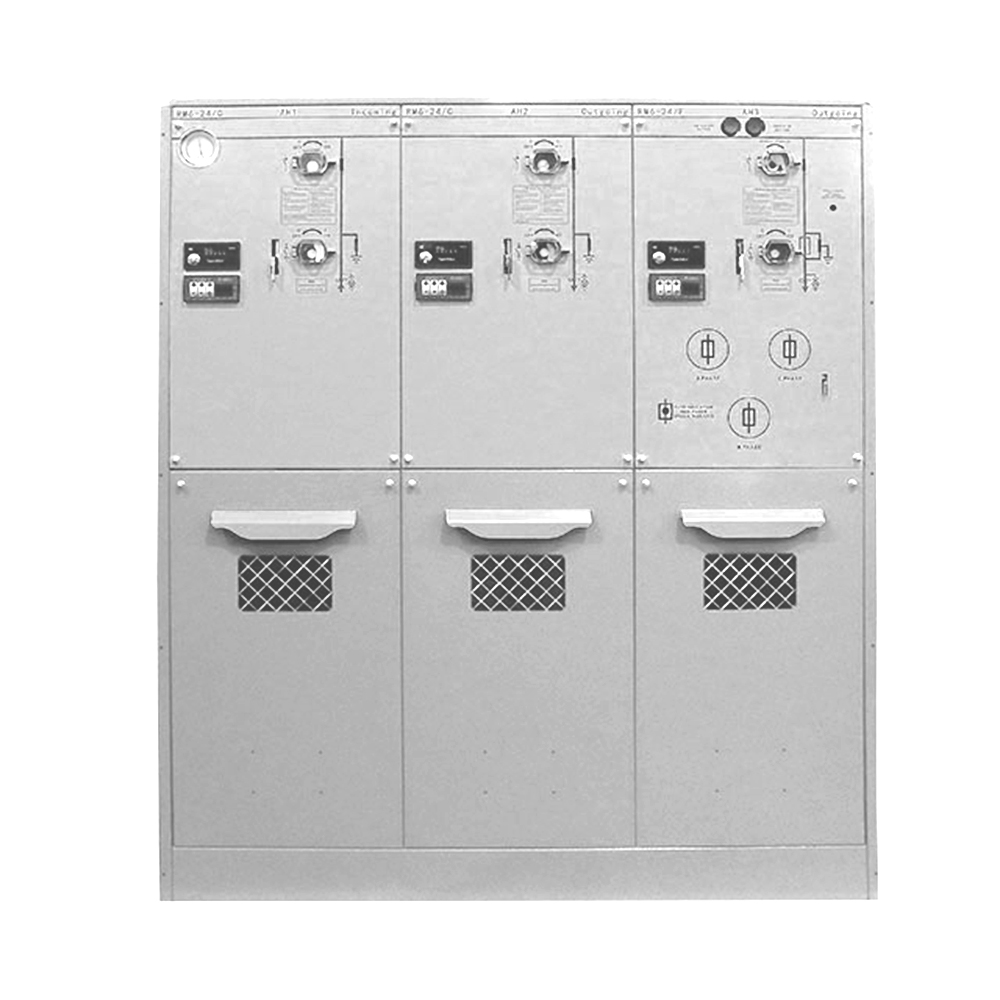
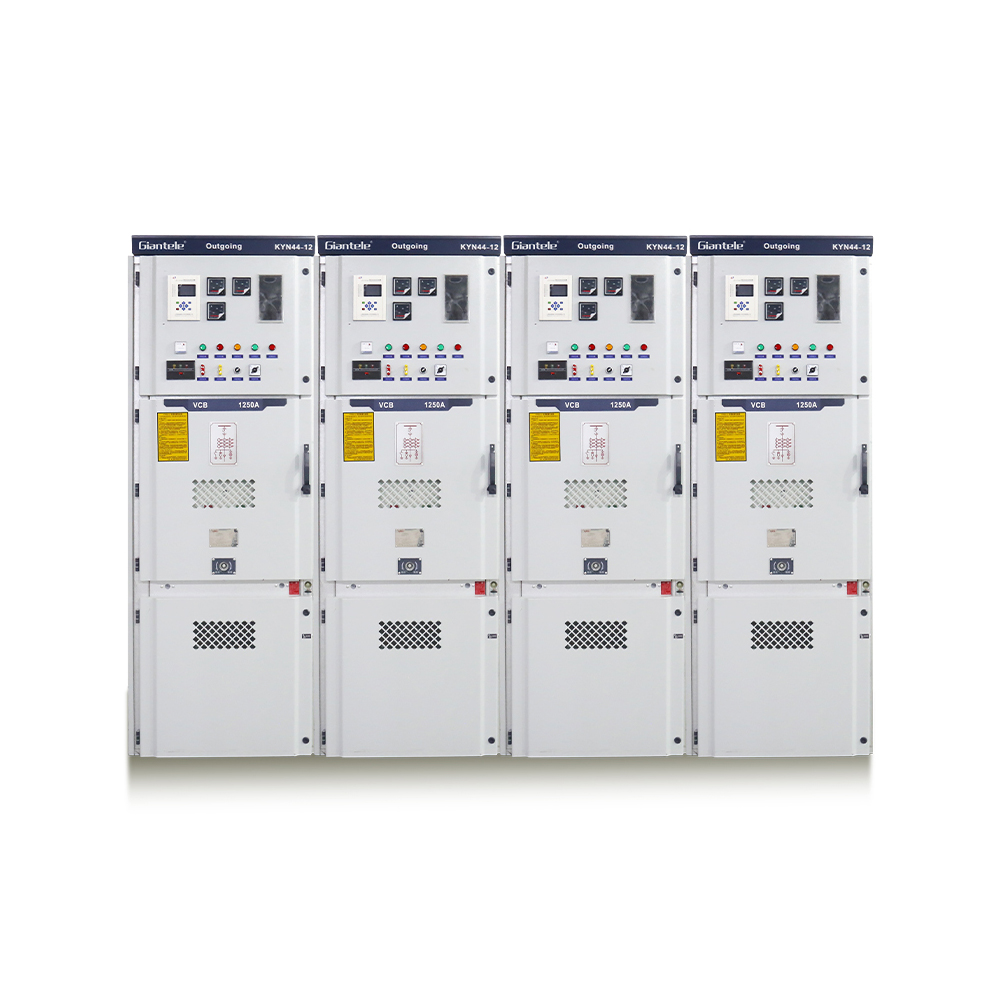
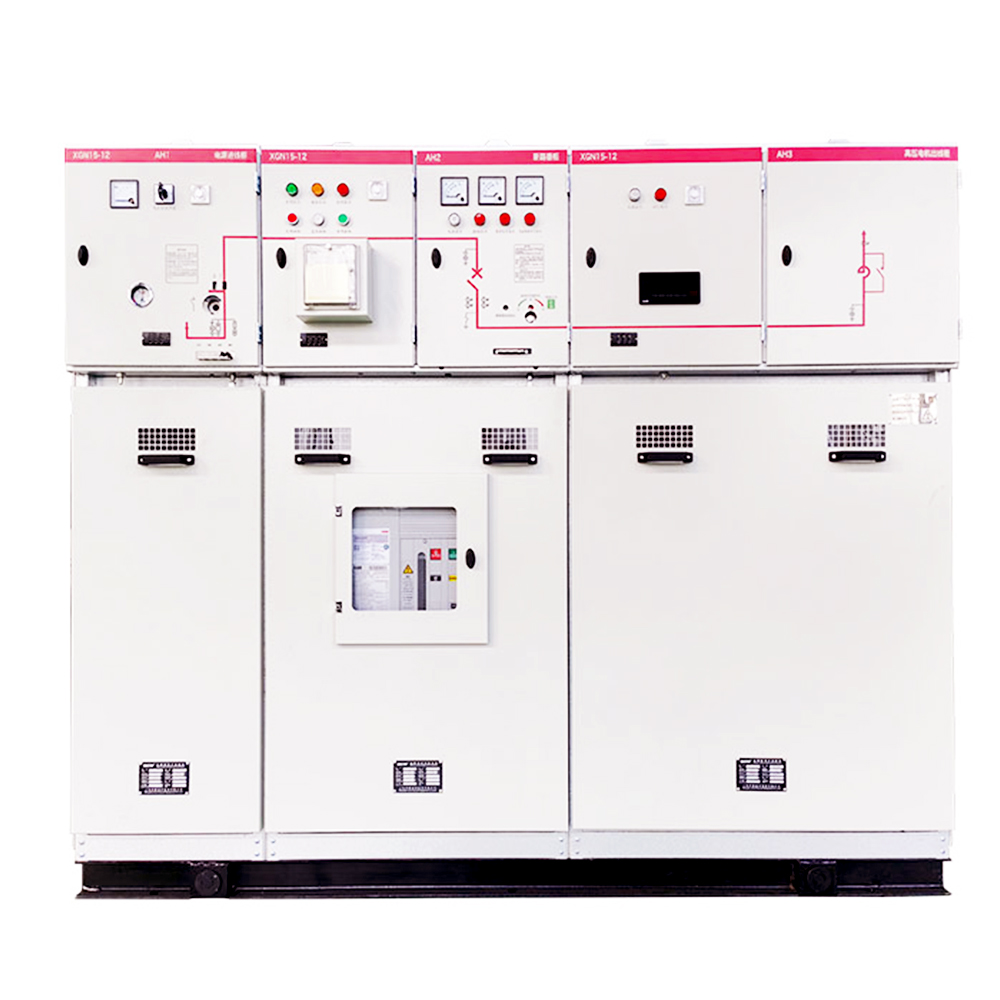
Space is the scarcest resource in modern power distribution. Urban substations fight for every square meter. Rooftop kiosks. Underground vaults. Sidewalk cabinets. This is exactly where gas insulated switchgear earns its cost. It packs the same switching function into half the footprint of air insulated equipment. The secret is SF6.
What makes a gis switchgear smaller than air insulated switchgear
SF6 gas has about three times the dielectric strength of air at the same pressure. That means live conductors can sit much closer together without arcing. The phase-to-phase clearance inside a gas insulated system drops from 125mm to a few millimeters. The whole switching assembly fits inside a sealed stainless steel tank the size of a small suitcase.
An air insulated switchgear panel needs 800mm of width and deep clearance behind it. A GIS ring main unit is 350mm to 600mm wide with no rear clearance. When you lay out a 10-feeder substation, the GIS version fits in a room half the size. That is not a minor saving. In a city, that space difference is the difference between a viable site and no site at all.
The sf6 gas insulated switchgear tank: sealed for 20-plus years
The core of a GIS is a welded stainless steel tank filled with SF6 at low positive pressure. All live parts sit inside. The tank is leak-tested to a strict rate — typically under 0.1 percent per year. A pressure gauge or density monitor watches the gas level. If it drops, an alarm trips before the insulation margin is compromised.
Because the tank is sealed, nothing gets in. No dust. No salt spray. No humidity. No insects. An air insulated switchgear panel in a coastal city degrades over years from corrosion and contamination. A GIS unit does not. This is why utilities in humid coastal regions and dusty industrial zones increasingly specify GIS electrical equipment.
GIS vs AIS: the comparison that decides your substation layout
| Dimension | Gas Insulated (GIS) | Air Insulated (AIS) |
| Insulating medium | SF6 gas in sealed tank | Atmospheric air |
| Panel width | 350 to 600 mm | ~800 mm |
| Maintenance | Sealed — visual check only | Periodic cleaning and inspection |
| Environmental impact | SF6 is a strong greenhouse gas | No greenhouse gas |
| Harsh environment | Sealed — immune to dust and salt | Needs enclosure protection |
| Cost | Higher equipment cost | Lower equipment cost |
The honest answer: GIS costs more up front. It saves money over the life of the substation through smaller civil works, no routine cleaning, and reliability in harsh environments. For urban and coastal sites, the lifetime cost favors GIS. For a spacious rural substation, air insulated switchgear remains the economical choice.
How a ring main unit uses gas insulation to isolate faults
A ring main unit is the workhorse of GIS. It sits in a ring or loop network. Two load break switches connect to the ring on either side. A third or fourth way feeds a transformer through a fuse or circuit breaker. When a cable fault occurs, the load break switches on either side open, isolating the faulted section. The rest of the ring stays energized. Power flows the other way around the loop.
The load break switch handles this switching under full load current. SF6 quenches the arc inside the sealed tank. No external flash. No arc chute. No contact erosion from atmospheric oxidation. A medium voltage switchgear ring main unit can execute thousands of operations over its life without opening the tank.
The SF6 environmental question, and the SF6-free alternatives
SF6 has a global warming potential 23,500 times that of CO2. A single kilogram released into the atmosphere equals 23.5 tonnes of CO2. Regulators in Europe and increasingly Asia are phasing down SF6 use. The F-gas regulation in the EU is the model. This is a real consideration for any buyer specifying gas insulated switchgear solutions today.
The answer is not to abandon gas insulation. It is to manage it. Sealed tanks leak under 0.1 percent per year. Gas handling during maintenance is done with recovery equipment, not venting. At end of life, the SF6 is recovered and recycled. A well-managed GIS has a negligible emission profile.
For sites that simply cannot use SF6, we offer air insulated and solid insulated alternatives. Solid insulated switchgear encapsulates conductors in epoxy instead of gas. It is compact like GIS, with no gas at all. Air insulated switchgear is the traditional option. Both meet IEC 62271. The choice depends on your site's environmental rules.
Where gas insulated switchgear manufacturers earn their reputation
Not every factory can build GIS. The sealed tank must be welded to a vacuum-tight standard. The SF6 fill must be precise. The leak rate must be verified with a calibrated detector. A manufacturer with a sloppy gas handling process ships a unit that slowly loses insulation margin over years — and you only find out when it arcs.
Look for IEC 62271 type-test certificates from an accredited lab. Ask about the leak test procedure. Ask about internal arc classification — IAC AFLR if claimed. Ask what gas recovery equipment they use during routine testing. A gas insulated switchgear manufacturer who answers these questions clearly is the one you want. One who dodges them is not. Cross-check the requirements against the IEC and IEEE standards libraries before you sign.
How to specify a gas insulated system for your network
- Voltage and configuration — 12kV, 24kV, or 40.5kV. Three-way, four-way, or six-way ring main unit.
- Ring main rating — 630A standard. 1250A for higher load networks.
- Transformer feeder protection — fuse, circuit breaker, or both.
- Operation — manual or motorized for remote SCADA switching.
- Environmental rules — SF6 allowed, or SF6-free required by your site.
- Documentation — type-test certificate, routine test report, gas handling procedure.
Final thoughts
Gas insulated switchgear is the answer when space, environment, and reliability all matter. SF6 ring main units pack switching into half the footprint of air insulated equipment, sealed against dust and salt for 20-plus years. IEC 62271 type-tested. SF6-free options available. Standard delivery in 6 to 8 weeks. Send us your network diagram and we will return a technical proposal and pricing within 48 hours. Get in touch and tell us about your ring main unit project.