


Power Distribution Boards are selected for a job, not just a rating. An upstream board may need to handle a large incomer and feed several areas; a downstream panel may need many clearly identified small circuits; an outdoor board may need an enclosure suited to its exposure. Their features—protective devices, busbars, metering, separation, access, enclosure performance, and cable space—only have value when matched to their intended use. This guide compares common applications and gives a disciplined way to avoid feature lists that do not solve the project’s real operating needs.
Key Takeaways
The use case determines which board features matter most.
Major features include incomer arrangement, feeder protection, busbars, enclosure performance, internal separation, metering, and spare capacity.
Industrial and commercial projects need different load, environment, and continuity reviews even when their boards have similar names.
A manufacturer should receive a complete technical brief, not only an ampere value.
Features that matter on every board
A robust distribution board combines electrical and physical features. Electrically, its incomer and outgoing circuit breakers must suit the source, load, cables, and available fault current. Its busbar arrangement must carry the specified duty within the verified construction. Physically, the enclosure, door, internal barriers, cable chambers, terminals, supports, labels, and working access must suit the location and the people who maintain it.
The correct enclosure rating depends on the actual environment. Dust, water, corrosion, washdown, sunlight, ventilation, and indoor or outdoor location should be described in the specification. Selecting the highest familiar rating without understanding heat dissipation, access, or project needs can be as unhelpful as specifying too little protection. A commercial electrical panel in a clean riser room and an industrial distribution board near process equipment may need very different construction.
Feature-to-use comparison
Feature | Useful where | Why it is selected |
|---|---|---|
Main breaker or incomer arrangement | Upstream or independently isolated sections | Controls the incoming source and supports the protection plan |
Multiple outgoing feeders | Buildings, plants, and infrastructure | Separates loads into manageable circuits |
Metering | Tenant, department, energy-management, or critical-load applications | Provides data for an identified operating decision |
Internal separation | Boards with defined service-continuity needs | Reduces unnecessary exposure during access when properly specified |
High fault-duty construction | Locations close to substantial sources | Addresses the project’s prospective short-circuit conditions |
Spare ways and cable space | Sites with planned expansion | Supports controlled future additions after engineering review |
Uses in industrial facilities
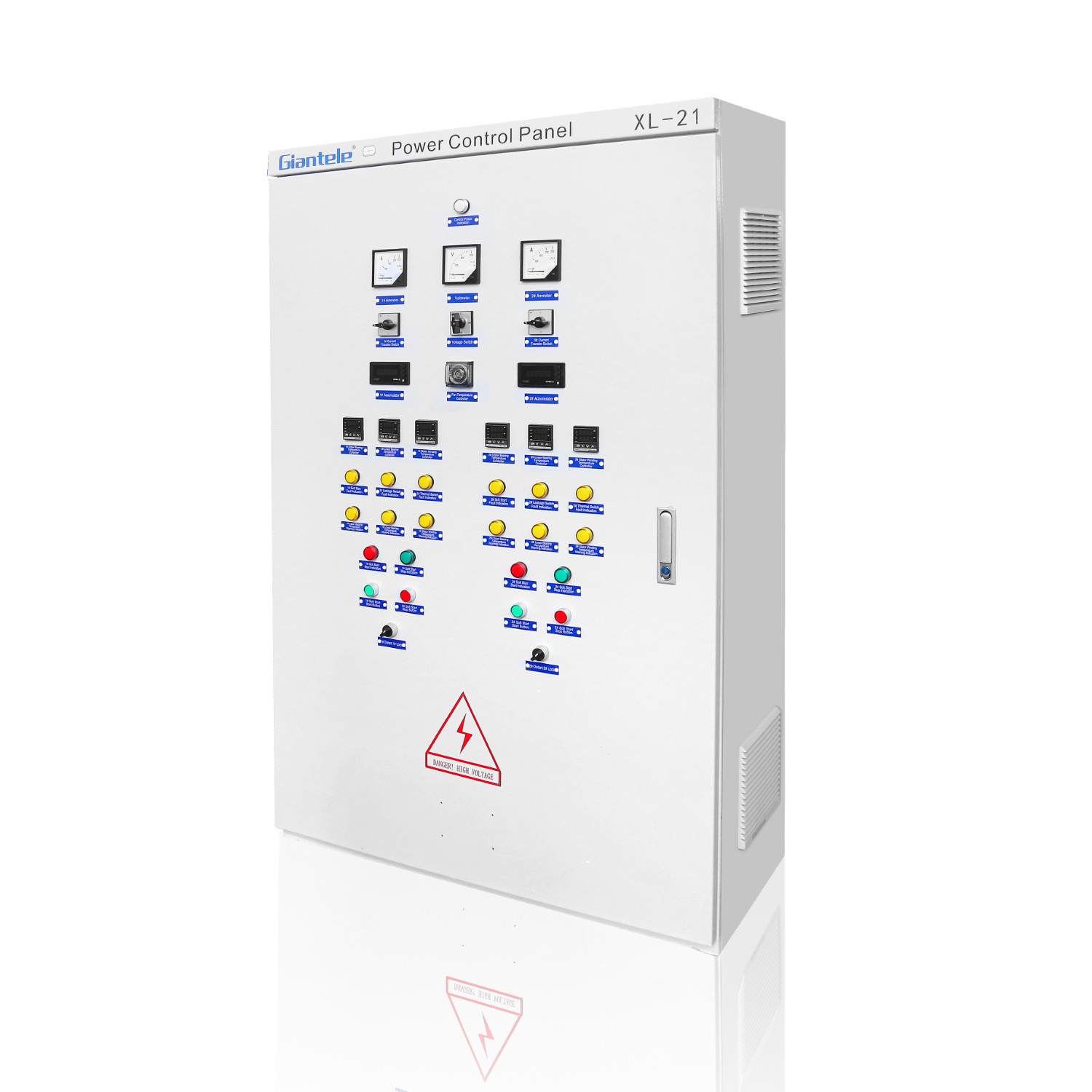
Industrial applications often combine continuous processes, motors, variable-speed drives, pumps, compressors, heating loads, control systems, and maintenance shutdown constraints. Board features should reflect those conditions. Larger feeders may need dedicated protection and cable routes. Motor-related loads may affect starting demand, harmonic behaviour, or coordination settings. Essential process loads may require clear segregation from non-essential services and a documented source-transfer or load-shedding approach.
An industrial distribution board should be located and constructed so that routine inspections and corrective work can be performed under the facility’s safety procedures. This may affect compartmentation, front or rear access, door interlocking, labels, remote indication, and the physical spacing between boards. The point is not to add every feature available; it is to create an assembly that supports the plant’s actual method of operation.
For a project that needs a central industrial hub, review Giant Electric’s main distribution board information alongside the project’s drawings and protection calculations. Product information is useful context, while the final board must follow the approved system duty.
Uses in commercial buildings
Commercial buildings often use a hierarchy of boards to supply floors, tenants, HVAC, lifts, common areas, retail, lighting, and IT spaces. Here, clear circuit grouping can simplify maintenance and energy allocation. Metering may be used for billing or energy review. Load diversity assumptions may be important during design, but operators should not assume those assumptions automatically cover later tenant changes or equipment additions.
A commercial board may need to fit a riser, electrical closet, basement room, or plant space with constrained access. Cable entry, working clearance, door swing, ventilation, and labelling deserve attention before construction. Space for future tenancy changes is valuable only when the upstream feeder, busbars, fault duty, and enclosure layout all support it.
Zhejiang Zhegui Electric Co., Ltd. can manufacture boards for commercial and industrial briefs. A procurement request that includes the current one-line diagram, load schedule, installation details, and applicable standard requirements will produce a more useful technical response than a request for a “standard panel.”
Features for better operating visibility
Electrical metering, indications, and communication interfaces can turn a board into an operational information point. Before adding them, decide what the data will be used for. A facility may need to identify peak demand, compare production areas, allocate costs, verify generator loading, or investigate a recurring issue. The meter and communication architecture should match that purpose, including accuracy, current-transformer sizing, data integration, cyber and access responsibilities where relevant, and maintenance.
Documentation is a feature too. A clear circuit schedule, durable labels, device-setting record, and updated one-line drawing help people interpret what they see on the board. These items reduce avoidable delays when a fault occurs or a modification is planned. Giant Electric’s distribution-board testing guide gives buyers useful prompts for discussing inspection, testing, and handover evidence.
A selection framework for features and uses
Use this order: define the source; define the loads; identify fault duty; set the environment and access constraints; decide continuity and metering needs; then choose the construction and devices. Review the complete configuration against applicable standards and verify that the delivered assembly matches the approved drawings. This prevents a feature-driven purchase where a board has impressive options but lacks the ratings, cable room, or protective coordination the site actually needs.
Giant Electric should be involved early enough to confirm manufacturability of the design, especially where non-standard cable entries, source arrangements, or compartmentation are involved. The responsible electrical designer and installer should remain involved through commissioning and changes.
Conclusion
The features of Power Distribution Boards are useful only in context. A high-capacity incomer, compact final-circuit layout, environmental enclosure, metering package, or separated compartment can each be the right choice for a different job. Match the feature set to the system position, loads, environmental exposure, maintenance strategy, and verified electrical duty. That approach produces a board that is practical in operation as well as correct on paper.
FAQs
What feature is most important in a distribution board?
There is no universal single feature. The most important requirement is that the complete assembly is suitable for the project’s current, fault duty, environmental exposure, protective coordination, and operating needs.
Do all boards need electrical metering?
No. Metering should be installed when it serves a defined purpose such as billing, monitoring, or energy management. Unused data adds cost and maintenance without improving operation.
What makes an industrial board different from a commercial one?
Industrial boards may face different load types, duty cycles, environmental exposure, and continuity requirements. Commercial boards may emphasise tenant distribution, space constraints, and metering. Both still need sound protection and verified construction.
Can enclosure rating be chosen after the board is designed?
It should be set early because it can affect the enclosure construction, thermal behaviour, cable entries, accessories, and location. Confirm the actual environmental conditions before finalising the design.
What is a circuit schedule?
It is a controlled list identifying each incoming and outgoing circuit, its device, rating, destination, and other project details. It should match the installed board and be updated after changes.