


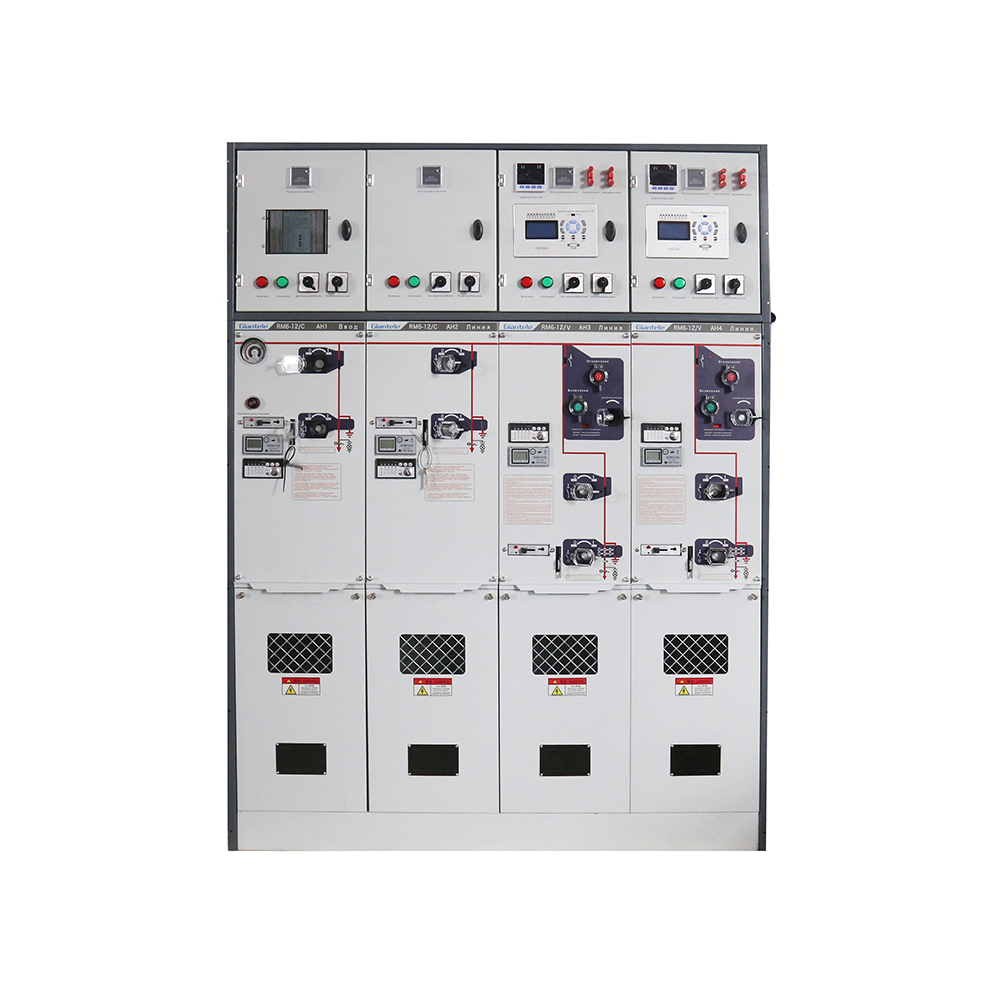
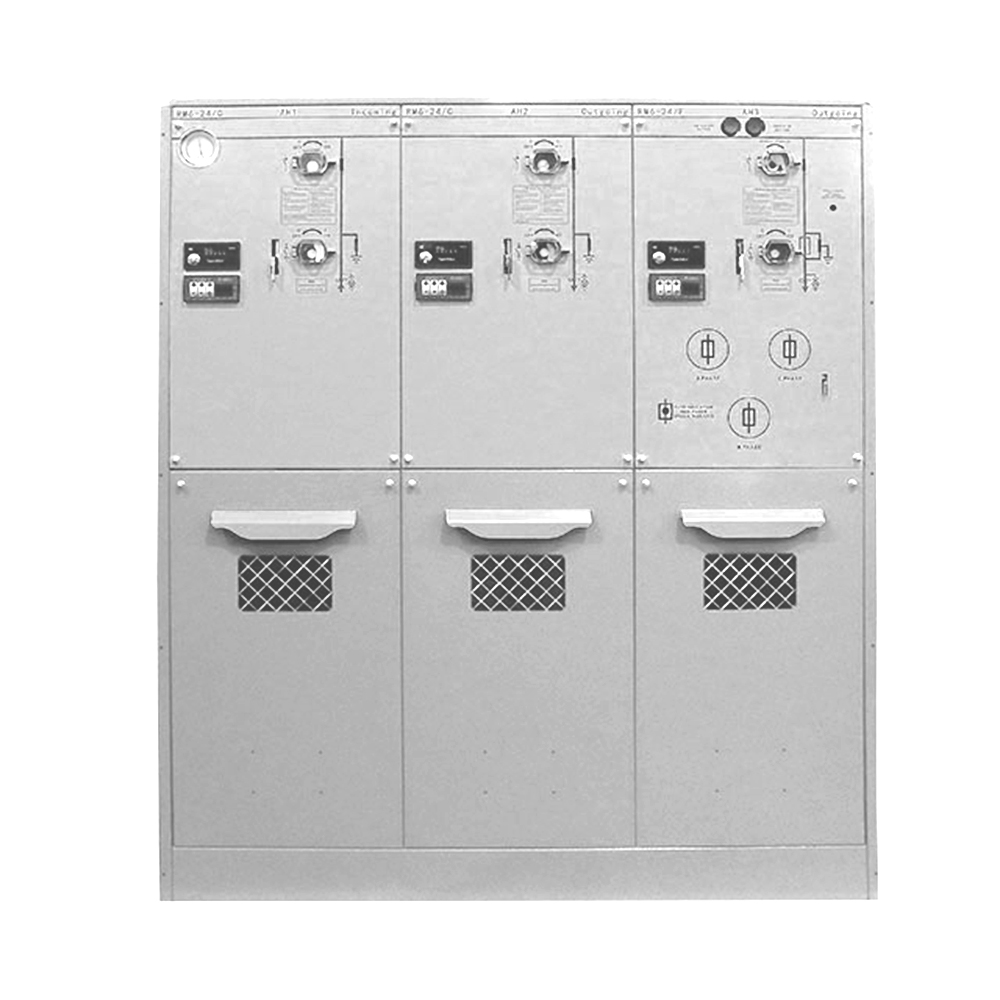
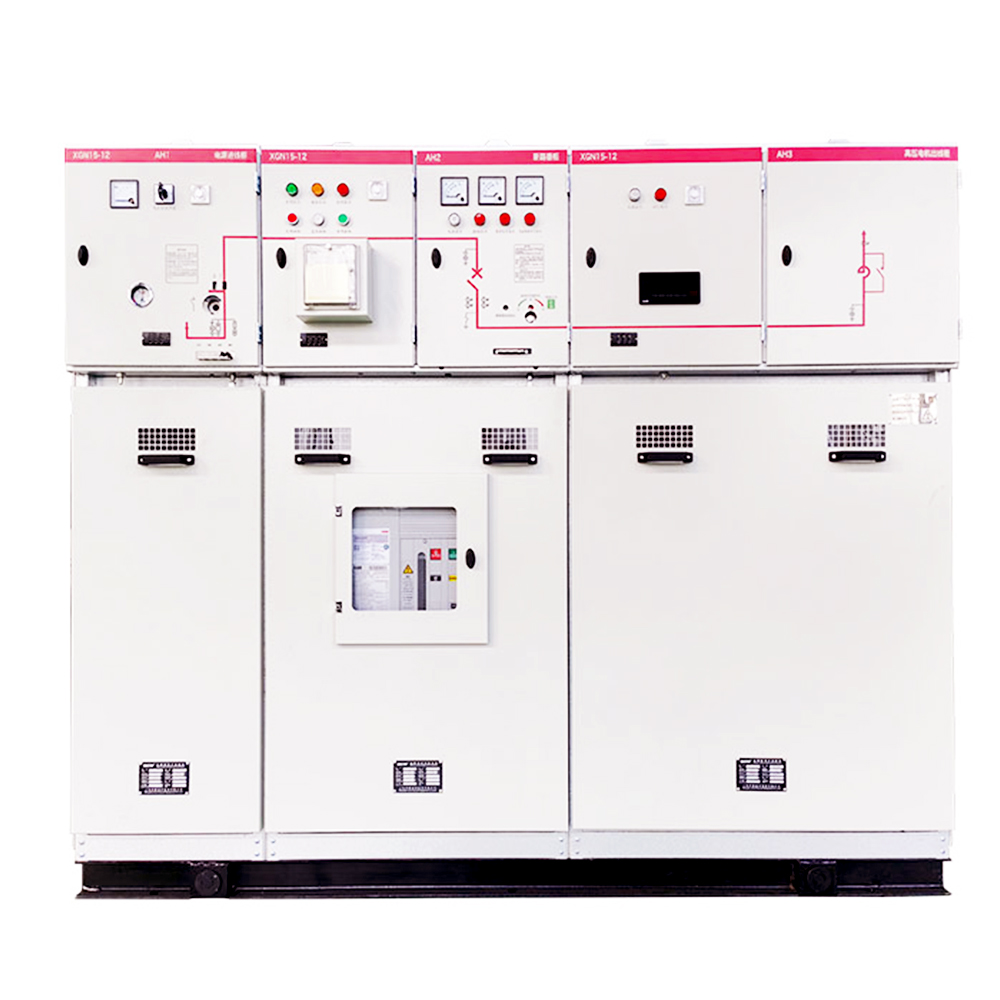
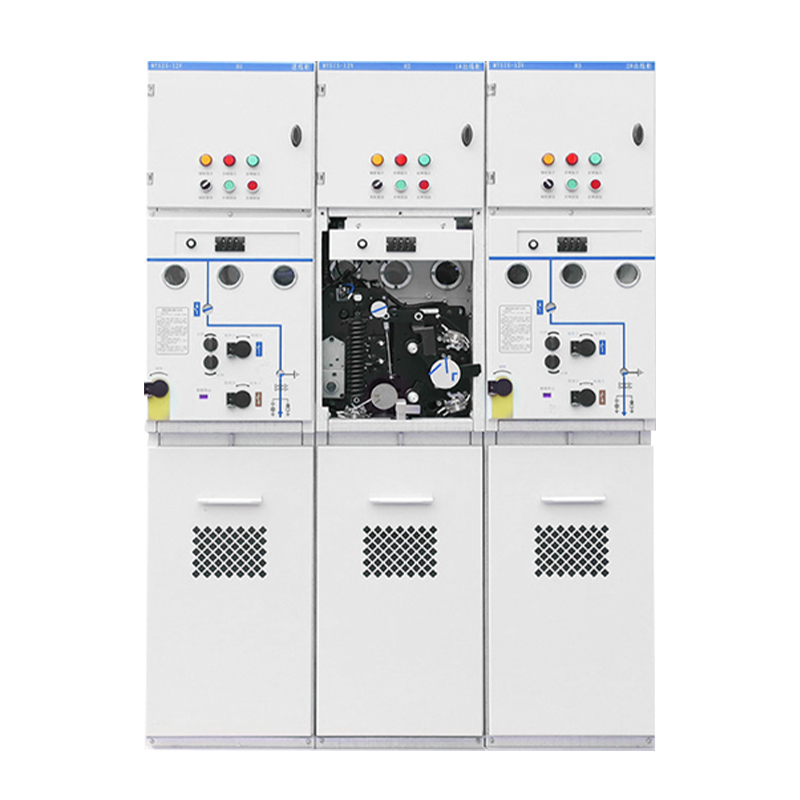


Rated 12kV with 11kV as the working voltage in many markets. The busbar is 630A and every way uses a three-position load break switch rated 20kA/3s short-circuit. The complete ring main unit switchgear assembly is type-tested to IEC 62271-200 and ships IP54 for outdoor duty. We also build the SF6-free solid insulated ring main unit if your tender requires it.
Yes, for most utility projects outside the EU. SF6 remains the default dielectric for a gas insulated substation and for the gis substation class of switchgear in Africa, the Middle East, and Southeast Asia. Inside the EU, F-gas rules phase down new SF6-filled equipment, so an SF6 insulated ring main unit there needs registry checks on gas quantity. Sealed-for-life tanks keep leak rates small, which is why SF6 still dominates.
A sealed-for-life SF6 gas insulated switchgear tank needs no internal maintenance for 30 years. The SF6 gas insulated RMU tank is welded shut at the factory, filled once, and never opened in the field. Only external items need checks: cable terminations, enclosure seals, and the motor mechanism, usually every 5 to 10 years. That long interval is the main reason utilities stay with this SF6 gas insulated switchgear design.
Yes. The sealed SF6 tank is an outdoor ring main unit built for pad-mounting, IP54 rated, dust-tight and splash-proof. As an SF6 insulated ring main unit, everything live sits inside the sealed tank, so rain, dust, and coastal humidity stay out. Motor operation is available, which makes it a SCADA-ready remote switching point. No building and no fencing are required, which is what most ring main unit switchgear buyers want.
A gas insulated substation is the larger integrated form: full circuit breakers, disconnectors, and busbars in SF6 enclosures, usually above 33kV. The RMU, which you may see written as gas insulated rmu, is the compact member of the same gis switchgear family for 12kV distribution. Both use SF6 dielectric; the gis substation feeds a region, the RMU switches a ring at the transformer pad.
SF6 gas carries three to four times the dielectric strength of air, so phase spacing shrinks and the cabinet stays compact. That is the whole reason gas insulated switchgear became standard for outdoor distribution, and why our SF6 gas insulated RMU is built as an SF6 gas insulated switchgear unit rather than an air-insulated one. The gas also quenches arcs fast, which makes the three-position switch reliable at 20kA/3s.
It is a compact member of the gis switchgear family, and most buyers call it a gas insulated rmu. Inside a sealed stainless-steel tank, SF6 gas surrounds three-position load break switches with closed, open, and earthed positions. The SF6 gas insulated RMU works at 12kV (11kV), rated 630A busbar with 20kA/3s short-circuit. It does the same job as a ring main unit or ring main unit switchgear but in a smaller footprint.


An SF6 gas insulated ring main unit is the compact member of the gas insulated switchgear family: a sealed stainless-steel tank that puts three-position load break switches, a 630A busbar, and 20kA/3s rating into a pad-mounted 12kV (11kV) cabinet. Our SF6 gas insulated RMU is type-tested to IEC 62271-200 and built for a 30-year maintenance-free service life. SF6 gas carries three to four times the dielectric strength of air, which is why a complete ring switching point now fits in a cabinet smaller than a fridge.
An SF6 gas insulated ring main unit is a factory-sealed medium voltage switchgear cabinet for 12kV (11kV) distribution. Inside the stainless-steel tank, sulfur hexafluoride gas surrounds three-position load break switches. Each switch gives you closed, open, and earthed positions, so a feeder can be energized, isolated, or earthed for work. The same hardware goes by several names: ring main unit switchgear, gas insulated RMU, or simply RMU. They all mean the same compact switchgear family that connects a loop of feeders and lets a utility cut one section without dropping the ring. Our SF6 gas insulated switchgear version is built for outdoor pad-mounting.
Because SF6 is an unusually good dielectric. Its molecules resist current flow three to four times better than air at the same pressure, and the gas absorbs arc energy so a switching arc extinguishes fast. That lets the manufacturer shrink phase spacing, and smaller spacing is the whole trick behind compact gas insulated switchgear. A 630A busbar inside a sealed SF6 tank needs a fraction of the enclosure volume an air design needs at 12kV. Smaller gaps mean smaller tanks, smaller cabinets, and cheaper pads than air insulated switchgear. Air designs exist, but the cabinet grows fast above 11kV and 630A, and the utility footprint gets harder to justify.
Four physical properties of SF6 explain why sealed-tank ring main unit switchgear works at all.
| Property | Value relative to air | Why it matters for an RMU |
|---|---|---|
| Dielectric strength | 3 to 4 times | Phase spacing shrinks, cabinet volume drops |
| Arc-quenching | Absorbs electrons, fast extinction | Three-position switch clears an arc without damage |
| Molecular weight | About 5 times | Gas stays in the tank, leaks are slow and detectable |
| Sealed service life | 30 years, no top-up | No gas handling, no internal maintenance |
Together these properties let a factory seal the switchgear for life, with no top-up and no field opening of the switching chamber.
A sealed SF6 gas insulated RMU is designed for 30 years of service without opening the tank. The tank is laser-welded stainless steel, filled once at the factory, and sealed for life. No gas top-up, no pressure checks, no breaker work inside the gas. What you do maintain sits outside the tank: cable terminations, the IP54 enclosure, and the motor mechanism. In practice, utilities inspect an SF6 insulated ring main unit every 5 to 10 years, mostly to check cabinet seals and the cable chamber. The switching element itself stays untouched for the life of the unit. For a utility running twenty units across a district, that saves real labor hours.
The sealed tank keeps a full 12kV ring switching point in one sealed tank. Rated voltage is 12kV, with 11kV as the working voltage in many markets. Busbar rating is 630A. Every way uses a three-position load break switch, closed, open, and earthed, with 20kA/3s short-circuit withstand. Protection options include fuse-switch or vacuum circuit breaker ways for transformer feeders. For utilities that run an 11kv ring main unit, the SF6 gas insulated RMU is a direct replacement for aging oil or air switchgear. The whole unit is type-tested to IEC 62271-200, the standard for medium voltage ring main unit switchgear. Motor operation is optional, for SCADA-controlled remote switching.
A ring main unit only earns its name because the network feeds it from two directions. Power enters the ring at two points, usually two different substations. When a cable section faults, the two RMUs bracketing that section each open their switch, and the healthy part of the loop keeps every downstream customer fed from the other direction. Nobody loses power except the short cable section between the open switches. That two-directional feed is the whole point of ring main unit switchgear. On a radial network, one cable fault drops everyone behind it. On a ring, fault isolation is two switch operations, and with motor-driven units a SCADA master does it remotely.
A gis substation, also written gas insulated substation, is the larger integrated form of the same SF6 idea. Where an RMU is a compact distribution cabinet, a GIS substation houses full circuit breakers, disconnectors, and busbars in gas-filled enclosures, covering feeders at 33kV and above. The dielectric is the same SF6 gas insulated switchgear technology, just scaled up. The ring main unit is the small, cheap, mass-produced member that sits on a pad next to a transformer; the gas insulated substation is the integrated plant that feeds a whole region. Both exist because SF6 made the phase spacing small enough to fit inside a building.
If a tender uses the words gis switchgear and gas insulated rmu in the same sentence, here is the practical difference.
| Characteristic | SF6 gas insulated RMU | GIS substation |
|---|---|---|
| Working voltage | 12kV (11kV) primary and secondary distribution | 33kV and above, transmission-level feeds |
| Core function | Ring switching and fault isolation | Incoming feed, transformation, full protection |
| Switching element | Three-position load break switch | Circuit breakers with protection relays |
| Enclosure | Pad-mounted cabinet, IP54, outdoor | Indoor building or containerized station |
| Typical buyer | Distribution utility, solar and wind collector | Transmission or large distribution utility |
Both belong to the gas insulated switchgear family. Pick the RMU for distributed switching points and the GIS substation for one integrated intake point.
SF6 is safe to handle inside a sealed RMU. The gas is non-toxic and non-flammable, stored at low pressure. The environmental concern is real: SF6 has a very high global warming potential, which is why the EU F-gas regulation phases it down. For a sealed-for-life 12kV tank, the leak rate is small across a 30-year life, and that is exactly why the industry moved to factory-sealed tanks rather than field-assembled compartments. The IEC test procedures for medium voltage switchgear assume that sealed-tank design. If your order lands in the EU, check the F-gas registry requirements for gas quantity. In most other markets, Africa, the Middle East, and Southeast Asia included, SF6 remains the default for outdoor ring main units, and IEEE literature has documented its field behavior for decades.
If your tender mandates SF6-free, the solid insulated ring main unit is the alternative to specify, and we build a 12kV SF6-free version. If the tender is silent on the gas, SF6 stays the lower-risk and lower-cost choice for most utility projects. The sealed tank brings a proven 30-year record, the IEC 62271-200 type test, and no moving-part wear inside the gas. SF6-free solid insulation is newer, with less 12kV field history and often a heavier enclosure. Our default advice for a distribution utility: spec the SF6 gas insulated ring main unit unless a regulation or tender clause forces SF6-free. The SF6 gas insulated RMU is running in that configuration across multiple markets today.
A checklist saves a bad purchase. Here is what we tell buyers who compare outdoor ring main unit offers from different factories.
Any supplier should answer all five in writing. Vague answers mean a vague quote.
SF6 gas is the dielectric that made compact outdoor distribution possible, and the sealed tank packages that technology for 12kV networks. Sealed tank, three-position switching, 630A busbar, 20kA/3s, IEC 62271-200 type-tested: these are the numbers a utility or EPC buyer compares across RMU offers. F-gas pressure is real in Europe, but for most markets the SF6 gas insulated ring main unit is still the sensible default, with SF6-free as a growing alternative. Send us your single-line diagram and we will send back a technical proposal within 48 hours.
