


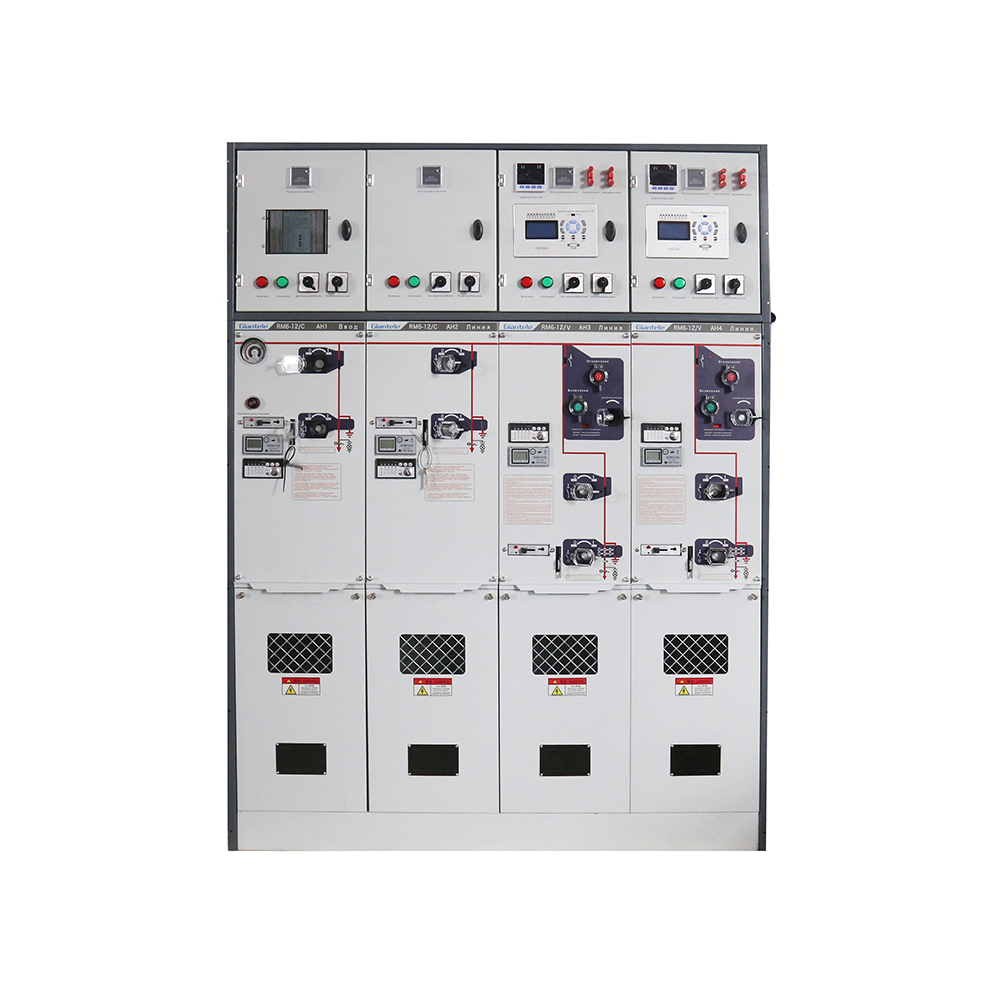
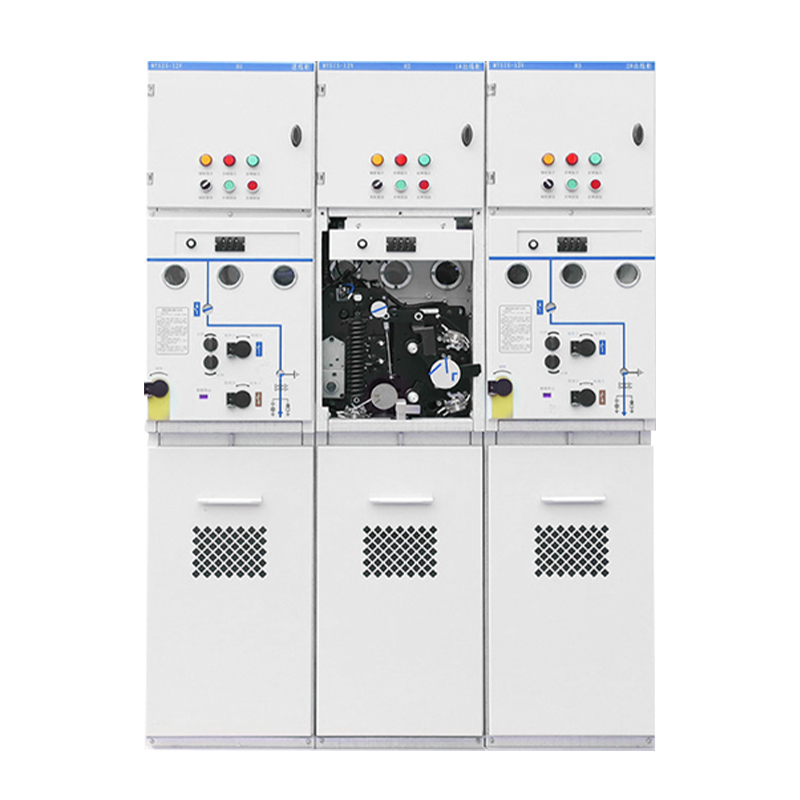
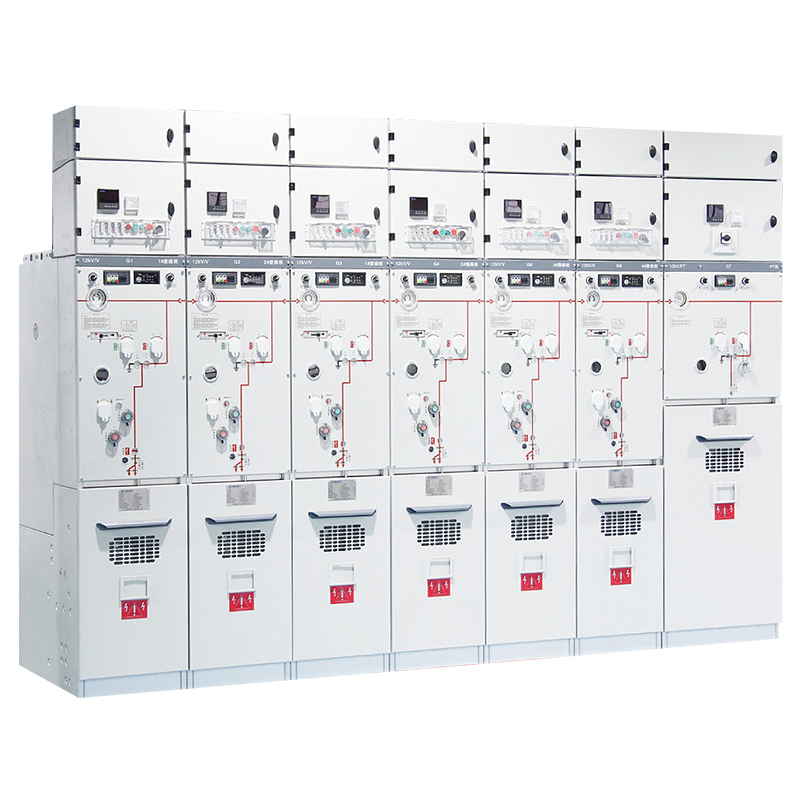
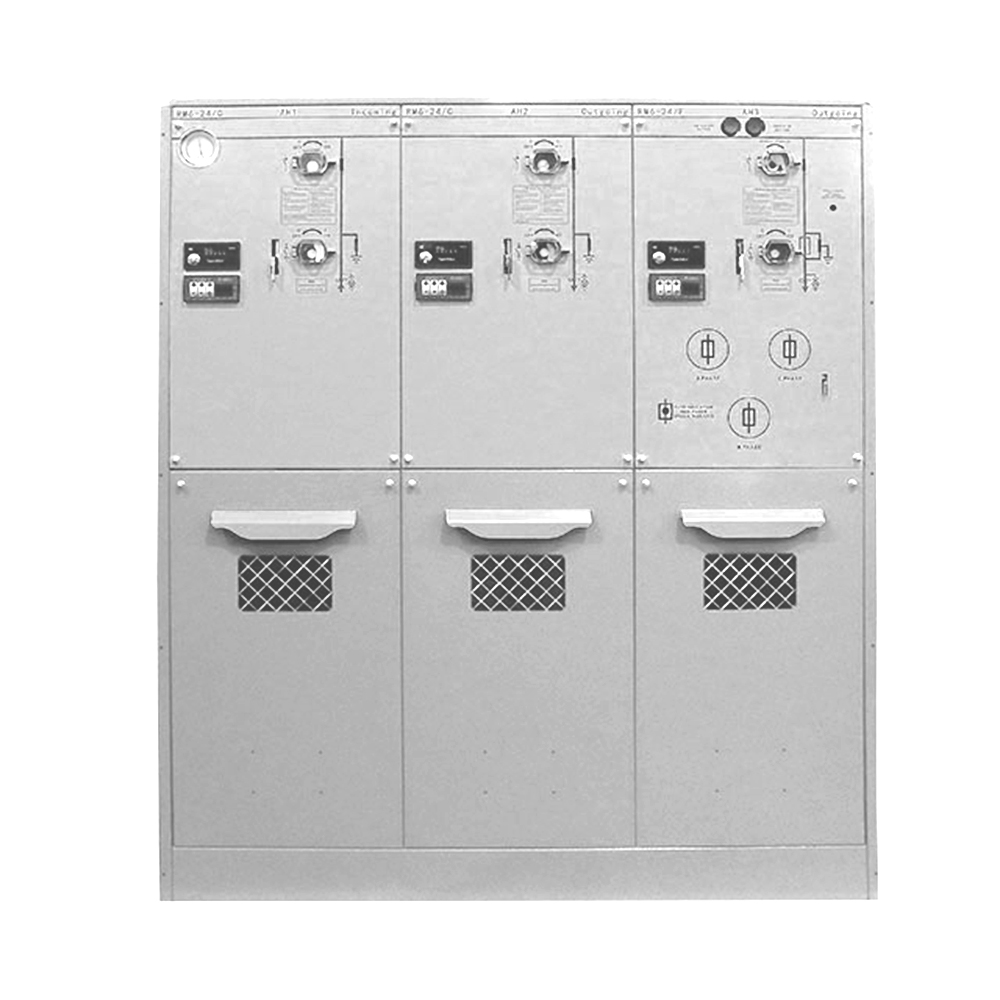


Every ring main unit is type-tested to IEC 62271-200 at an accredited lab — internal arc classification, short-circuit withstand, dielectric, and mechanical endurance. ISO 9001 quality management covers production. We configure export orders for your market and can arrange third-party re-testing at KEMA or ASTA. Test reports ship with every order.
Our ring main units cover 12kV (11kV systems) and 24kV, with 630A busbar and 20kA/3s short-circuit withstand. All are type-tested to IEC 62271-200. SF6, solid, and air insulation options available. Standard configs ship in 4 to 6 weeks.
Yes. As ring main unit suppliers, we offer a smart ring main unit with motor operators and a SCADA controller. Operators open, close, and earth each switch from a control center over RS485, IEC 61850, or fiber. This matters for wind and solar collector sites, where a crew visit can cost a full day.
Yes. Our outdoor ring main unit range includes the SF6 insulated ring main unit in an IP54 pad-mounted cabinet. The sealed SF6 tank needs no maintenance for 30 years, and the powder-coated steel enclosure handles rain, dust, and coastal salt spray. For sites where SF6 is restricted, choose the solid insulated or air insulated RMU instead.
The ring main unit is the cabinet; ring main unit switchgear is the switching assembly inside it — the load break switch, fuse ways, earth switch, and cable chamber. In practice, tenders use the two terms interchangeably. Both refer to the 12kV (11kV) metal-enclosed switchgear that connects a ring network to transformers and loads.
If you are asking what is ring main unit switchgear, the answer is the complete switching assembly — load break switch, fuse switch or VCB, earth switch, and cable chamber — built for ring topology distribution. When you specify an 11kv ring main unit for an urban feeder, that is ring main unit switchgear. We build SF6, solid, and air insulated RMU series at 12kV, 630A busbar, 20kA/3s, IEC 62271-200 type-tested.
A ring main unit is a compact metal-enclosed switchgear assembly used in 12kV (11kV) ring distribution networks. If you ask what is ring main unit, the short answer is a device that isolates a faulted cable section while the rest of the network keeps supplying power. Our ring main units come in SF6, solid, and air insulated versions, all type-tested to IEC 62271-200 with 630A busbar and 20kA/3s short-circuit withstand.


A ring main unit (RMU), specified in utility tenders as ring main unit switchgear, is the compact switchgear at the heart of a ring distribution network — and the reason a single cable fault no longer means a blackout. At 12kV (11kV system) with a 630A busbar, it feeds every load from two directions, so when one cable fails, the two RMUs that bracket the fault open and the rest of the loop keeps supply. We build three insulation technologies — SF6 gas insulated, solid insulated, and air insulated — all type-tested to IEC 62271-200.
If you search what is ring main unit, the short answer is a sealed, metal-enclosed switchgear assembly used in medium voltage distribution, typically at 12kV for 11kV systems. It combines a load break switch (LBS), fuse switch, or vacuum circuit breaker in a compact cabinet between the incoming ring feeder and the transformer. The name comes from the network shape: a loop of cable fed from two directions, with each ring main unit connecting the loop to a transformer or load. That two-directional feed is the whole point: if a cable faults at one point in the loop, the RMUs on either side open and every downstream load re-supplies from the other direction.
A radial network has one source and one path to each load, so a fault anywhere kills everything behind it. A ring network loops the cable back to the source, giving every point two paths. Each ring main unit along the loop breaks the circuit with its load break switch; when a cable faults, the operator opens the two LBS panels that bracket it and the rest of the loop keeps feeding from both ends. Most urban 11kV and 12kV networks use ring topology for exactly this reason — fault isolation without load shedding.
The practical payoff: an urban ring network holds supply availability above 99.9 percent. Field data from our utility customers shows a typical ring restores healthy sections within 1 to 3 minutes of a cable fault, against 30 to 60 minutes for a radial feeder that needs a crew dispatched. The RMU makes this possible because each unit is a self-contained switching point — an operator opens and closes the LBS remotely or on site, no maintenance team needed. For a hospital or water plant feeder, that is the difference between a brief flicker and a long outage.
Ring networks are often compared with air insulated switchgear on footprint — gas or solid RMUs shrink it enough that the loop fits at street level.
Our SF6 insulated ring main unit is the sealed-tank option. All live parts sit inside a sealed stainless steel tank filled with SF6 gas, which carries three to four times the dielectric strength of air in a fraction of the space. Three-position load break switch (closed, open, earthed), 630A busbar, 20kA/3s. Because the tank is sealed, the gas never leaks, so the unit runs maintenance-free for 30 years — no topping up, no internal inspections. Outdoor pad-mounted construction with an IP54 cabinet keeps rain, dust, and salt spray out. For most utilities, SF6 RMUs remain the default for new ring networks.
The solid insulated unit is our SF6-free alternative. Live conductors are cast inside solid insulation, typically epoxy or EPDM, and switching uses vacuum interrupters — no greenhouse gas, no pressure monitoring, no gas handling permits. That makes the solid insulated ring main unit the practical pick for the EU, where SF6 is on the F-gas phase-down path, and for Australia, where utilities specify SF6-free equipment. Ratings match the SF6 unit: 12kV, 630A busbar, 20kA/3s. The solid design pairs well with solid insulated switchgear across the wider network.
The air insulated ring main unit uses no gas at all. Open air plus solid epoxy barriers separate the live parts, so there is no gas at all. That is the cleanest option for LEED-certified buildings and coastal sites where salt air punishes gasketed tanks over time. It is also the most transparent design — operators can see the barriers and switching contacts directly. The trade-off is footprint: air needs room, so the air insulated cabinet is larger than the SF6 tank — usually acceptable for pad-mounted outdoor spots.
The choice comes down to three questions: what does your tender allow, how much space do you have, and what is the site environment? If the spec demands SF6-free, solid insulation is the drop-in replacement — same footprint, same ratings. If space is tight and the climate harsh, the sealed SF6 tank wins. If the site is coastal or green-certified, air insulation avoids gas entirely.
| Feature | SF6 Insulated RMU | Solid Insulated RMU | Air Insulated RMU |
|---|---|---|---|
| Insulation | Sealed SF6 gas tank | Solid epoxy / EPDM | Open air + solid barriers |
| Switching | Three-position LBS | Vacuum interrupters | LBS / fuse switch |
| Maintenance | 30-year, sealed for life | Low, no gas handling | Lowest, fully inspectable |
| Best fit | Utility default, harsh climate | EU and Australia, SF6-free tenders | Coastal, LEED, green sites |
| Footprint | Smallest | Same as SF6 | Largest |
All three carry the same 12kV rating, 630A busbar, and 20kA/3s withstand, so the choice is about environment and policy, not performance. An gas insulated switchgear overview explains the SF6 side in more detail.
Outdoor ring main units mount on a concrete pad, not inside a building. The IP54 cabinet is powder-coated steel, cable entry comes from below through sealed glands, and the operating handle sits at standing height with room for the transformer beside it. For solar farms, wind collectors, and remote pumping stations, the pad-mounted unit avoids building a switchroom, cutting civil cost.
Yes. A smart ring main unit adds a motor operator to each load break switch plus a controller with a SCADA interface. Operators open, close, and earth each way from a control center over RS485, IEC 61850, or fiber, cutting fault isolation from an hour-long drive to seconds. All three ranges accept motor operation and RTU/DNP3 or IEC 61850 communications. For remote wind and solar collector sites, remote operation is close to mandatory — a crew visit costs a full day.
The same logic applies to medium voltage switchgear generally — SCADA readiness is now standard in utility tenders, with frameworks set by the International Electrotechnical Commission.
Four application groups cover most RMU installations:
Ring main units sit between the ring and the transformer, isolating faults and keeping the loop alive.
If you already have a switchroom, an indoor RMU is cheaper to install and easier to maintain. If the site is remote or has no building, the outdoor pad-mounted unit saves the cost of a room. Climate decides the cabinet spec: desert sites need sun shading, coastal sites need corrosion protection, cold regions need anti-condensation heaters. Tell us the site and we configure the cabinet — the switching core stays the same.
| Factor | Outdoor pad-mounted | Indoor |
|---|---|---|
| Enclosure | IP54, powder-coated steel | IP2X to IP4X |
| Civil works | Concrete pad only | Switchroom required |
| Access | Standing-height handles | Full-height access |
| Climate kit | Sun shade, heaters, corrosion | Basic ventilation |
Keep the unit on a ring — two-directional feed buys the fault ride-through; a single radial feeder backed by one RMU is still a single point of failure.
Know what is ring main unit switchgear before comparing quotes — an 11kv ring main unit built for urban feeders is the baseline spec for most tenders. Ring main unit suppliers are not all the same, so check five things. One: type-test reports to IEC 62271-200 from an accredited lab. Two: real factory capacity — ask about throughput and lead time. Three: component traceability, especially the load break switch and vacuum interrupter brands. Four: export experience to your region, because compliance paperwork differs. Five: after-sales support — spares and commissioning engineers available? A good supplier validates your single-line diagram and replies with a technical proposal, not a generic quote.
Related reading: our 24kv ring unit page covers the higher-voltage version, and the low voltage switchgear range covers the downstream side of the same substation; the IEEE documents distribution practices for the engineering reference.
Send us your single-line diagram — we reply with a technical proposal within 48 hours.
