


A capacitor bank in a solar plant is part of the site’s reactive-power and voltage-management strategy. It does not generate more solar energy or replace the inverter controls. Instead, when correctly engineered, it can supply reactive power locally, reduce reactive current in selected parts of the network, and support voltage performance. Whether a bank is needed, where it should be connected, and how it should be controlled depend on the interconnection requirements, inverter capabilities, feeder characteristics, transformer arrangement, and harmonic conditions.
Key Takeaways
- Solar inverters may provide reactive-power functions, but a capacitor bank can still be considered for particular network duties.
- Do not size solar-plant capacitors from MW capacity alone; study voltage, reactive demand, operating modes, and grid requirements.
- Inverter switching and plant cables can affect harmonic and resonance behaviour, so a power-quality study is essential.
- Automatic or coordinated control can prevent inappropriate capacitor connection during light generation or changing grid conditions.
Why reactive power matters in solar plants
Real power transfers useful energy from the solar array through inverters to the network. Reactive power supports electric and magnetic fields in AC systems and affects voltage along lines, transformers, and cables. At a solar plant’s point of connection, the grid operator may require a defined power-factor range, reactive-power capability, or voltage-control behaviour. The plant must meet those obligations across operating conditions, not only at full sunlight.
Inverter-based resources can often control reactive power within their capability limits. However, using reactive current can constrain real-power output at the edge of inverter capacity, and the required response may vary at collector circuits, transformer buses, or the interconnection point. A capacitor bank is therefore evaluated as part of an integrated plant study, alongside inverter settings, tap changers, STATCOM/SVG equipment, cables, transformers, and protection philosophy.
Where a capacitor bank may be used
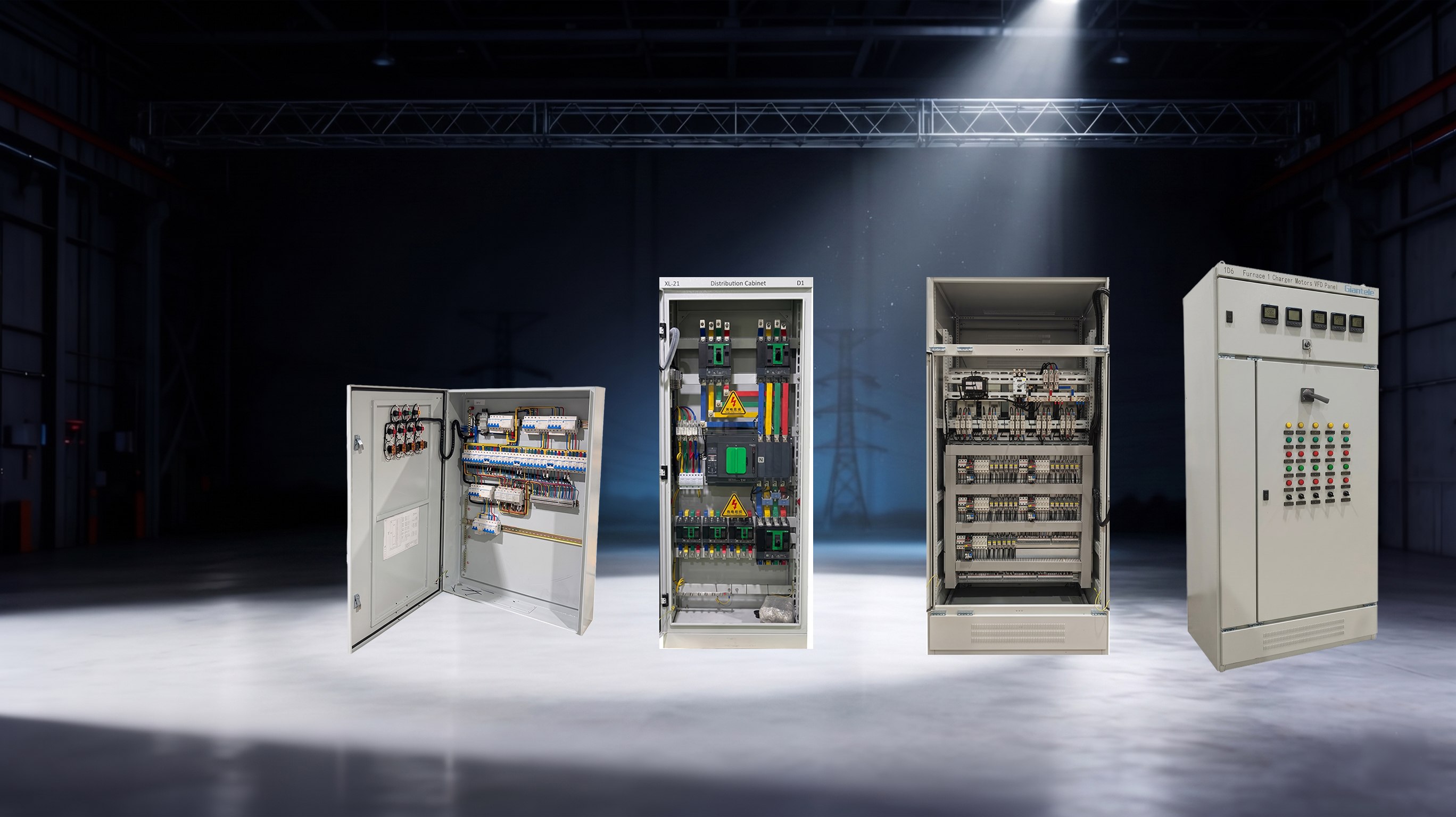
A bank may be placed at a plant substation, collector bus, or another engineered point to reduce reactive current through a particular transformer or feeder. It may be fixed, switched, or automatically controlled. The choice depends on whether the reactive requirement is stable and on the risk of overvoltage. A fixed bank that is suitable at high generation may inject too much reactive power when the plant is lightly loaded or disconnected, so switching and interlocks are often central design issues.
The company’s renewable-energy capacitor cabinet discussion highlights voltage stabilisation and reactive-power support, as well as harmonic challenges from inverters and converters. Use that as application context, while treating the interconnection agreement and detailed study as the governing source for a specific solar project.
Selection framework for a solar application
| Input | Why it matters | Decision affected |
|---|---|---|
| Grid-code or interconnection requirement | Defines required reactive and voltage behaviour | Capability and control philosophy |
| Inverter capability curves | Shows available VAR support at different MW outputs | Whether external compensation is required |
| Collector cable and transformer data | Influences voltage drop and resonance | Location and kVAr range |
| Harmonic study | Identifies distortion and resonance risks | Detuning, filters, or alternative technology |
| Operating modes | Generation, night-time, outage, and maintenance conditions differ | Switching logic and interlocks |
Harmonics, resonance, and switching
Inverter switching does not automatically mean that a capacitor bank is unsuitable, but it does make unstudied capacitor additions risky. The network impedance, cable capacitance, transformers, filters, and existing compensation can create resonant points that increase harmonic current. Use a measured or modelled spectrum and conduct a harmonic assessment before settling on a bank or reactor arrangement.
If detuning is required, the reactor and capacitor steps are designed as a pair. Giantele’s reactor guidance for capacitor banks explains that reactors help reduce harmonic amplification, but they are not a blanket substitute for plant-level harmonic design. High or rapidly changing reactive demand may instead point to a dynamic device such as an SVG, depending on the study results.
Control and protection priorities
A solar plant control system should coordinate capacitor switching with inverter reactive-power modes, transformer tap operation, breaker status, and plant availability. The system must avoid energising a bank into an abnormal bus condition or leaving it connected after the intended source is unavailable. Protection and interlocking must be developed by qualified engineers for the voltage level and site architecture.
Maintenance planning also matters. Inspect capacitor condition, fuses or breakers, contactors, reactors, ventilation, terminals, control alarms, and enclosure integrity. Compare operating voltage, current, kVAr, temperature, and harmonic measurements with commissioning data. A clean schedule and accurate event history are usually more useful than waiting for a capacitor failure to reveal that the grid or inverter settings have changed.
Capacitor bank, APFC, or SVG?
For a steady, well-understood reactive duty, a fixed or switched capacitor bank may be the economical answer. Where demand changes more gradually, an automatic power factor correction panel may add steps as required. Where the plant needs fast, precise, dynamic response, a static var generator panel is another option to evaluate. None is universally superior; response speed, harmonics, network conditions, project specification, and lifecycle service must drive the choice.
Conclusion
In solar plants, a capacitor bank is a network-support asset, not an isolated accessory. It can contribute to reactive-power management and voltage performance when location, control, protection, and harmonic behaviour are engineered together. Zhejiang Zhegui Electric Co., Ltd. can use the plant study, interconnection requirements, and operating data to review which compensation equipment best fits the project.
FAQs
Does a capacitor bank increase solar generation?
It does not create real solar energy. It may improve the electrical conditions around reactive power and voltage, subject to the plant design and grid requirements.
Can solar inverters replace capacitor banks?
Inverters can provide reactive-power capability within their limits. Whether they eliminate the need for external compensation depends on the required duty, grid conditions, and operating strategy.
Why can a capacitor bank cause overvoltage?
If it injects reactive power when demand is low or the network is lightly loaded, local voltage can rise. Control and switching logic are designed to prevent unsuitable operation.
Are detuned reactors always needed with solar?
No. They are chosen after harmonic and resonance analysis. Some sites need a different or additional solution.
What data should be provided for a solar-plant enquiry?
Provide the single-line diagram, point-of-connection requirements, inverter data, transformer and cable details, voltage level, MW/MVAr operating profile, harmonic study, site environment, and preferred control interface.