


Power distribution operators need more than a compact cabinet that opens and closes medium-voltage circuits. They also need timely fault information, visible switch status, remote operating capability, and data that supports safer maintenance decisions. A smart RMU combines the traditional switching, protection, and isolation role of a ring main unit with sensors, communication, and automation functions. Understanding its importance helps utilities, EPC contractors, and facility engineers determine where intelligence creates operational value and where poor integration could introduce unnecessary complexity.
Why a Smart RMU Is More Than a Motorized Switch
A conventional RMU provides controlled switching points within a medium-voltage ring or radial network. Operators can use it to isolate a damaged cable section, earth equipment for maintenance, and restore healthy parts of a ring from an alternative supply direction. These functions already improve network flexibility, but they often depend on local inspection, telephone coordination, and manual switching. Adding a motor mechanism alone does not make the equipment genuinely smart because motorization provides movement without necessarily providing reliable information, decision logic, or secure communication.
A smart RMU becomes operationally valuable when its field data supports a clear action. Current and voltage measurements can help operators understand feeder conditions, while switch-position indications confirm whether a command was completed. Fault indicators can narrow the suspected fault area, and environmental or equipment-condition signals can reveal developing problems. Communication equipment then transfers selected information to a distribution management, SCADA, or local automation platform, where alarms and operating commands can be coordinated.
The importance of this arrangement lies in the shortened distance between an event and a verified response. Without digital visibility, a control room may know that customers have lost supply but not know which section failed or how the local switches are positioned. With suitable monitoring, operators can examine the affected feeder, confirm equipment status, and prepare a switching sequence before dispatching personnel. The smart RMU therefore acts as a distributed observation and control point rather than an isolated mechanical cabinet.
Intelligence should still be judged by operational outcomes, not by the number of electronic devices installed. Data that is inaccurate, delayed, poorly labeled, or unavailable during a power loss can create more uncertainty than a straightforward local indicator. A useful specification connects every sensor, alarm, and control function to a defined operating decision. This approach prevents unnecessary features from increasing cost, commissioning time, and maintenance responsibilities without improving network performance.
How RMU Intelligence Limits the Impact of a Fault
A ring network is designed so that healthy loads may be supplied from another direction after a damaged section has been isolated. The RMU provides the sectionalizing points required to separate the faulted cable or feeder from the remaining network. Smart functions improve this process by giving operators earlier fault indications, clearer switch-state information, and remote access to motorized devices. However, the equipment does not independently guarantee uninterrupted supply; the result also depends on network topology, protection coordination, communication availability, and the capacity of the alternative feeder.
A practical fault-response sequence begins with detection rather than switching. Protection devices clear dangerous current, while indicators and measurements help identify the affected section. Operators or automation logic then verify the network state, isolate the fault between suitable switching points, and restore healthy loads where system conditions permit. Remote control can reduce the delay between these stages, especially when substations are dispersed, difficult to access, or normally unattended.
Available Information | Operational Decision | Potential Network Result |
|---|---|---|
Fault direction or feeder alarm | Identify the likely damaged section | Less time spent searching along the circuit |
Confirmed switch position | Validate isolation before restoration | Lower risk of an incorrect switching sequence |
Current and voltage measurements | Check whether the alternative path can carry the load | More controlled service restoration |
Communication and equipment alarms | Decide whether remote operation remains dependable | Timely dispatch when local intervention is required |
The greatest benefit is often a smaller outage area rather than the complete elimination of outages. A properly sectionalized network can keep unaffected transformers or customer groups energized while technicians investigate the isolated section. This is particularly valuable for industrial parks, commercial districts, transport systems, data facilities, and other sites where a local cable fault should not interrupt every connected load. The RMU supports resilience by turning one large electrical section into several manageable operating zones.
Automation must also include conservative blocking conditions. A remote command should not override mechanical interlocks, earthing status, protection lockouts, or other safety conditions. Restoration logic must account for feeder loading, voltage conditions, and the location of the normally open point. Smart operation is effective when it accelerates a verified switching plan, not when it replaces electrical protection principles or established operating procedures.
Safer Operation and More Focused Maintenance
Remote operation can reduce the need for personnel to approach energized medium-voltage equipment during routine switching or initial fault investigation. This may lower exposure to traffic, weather, difficult access routes, and hazardous electrical conditions. Yet remote capability does not remove the need for local isolation, voltage verification, earthing, lockout procedures, and authorized access before physical work begins. The RMU remains part of a complete safety system that includes interlocks, protection, enclosure design, operating rules, and trained personnel.
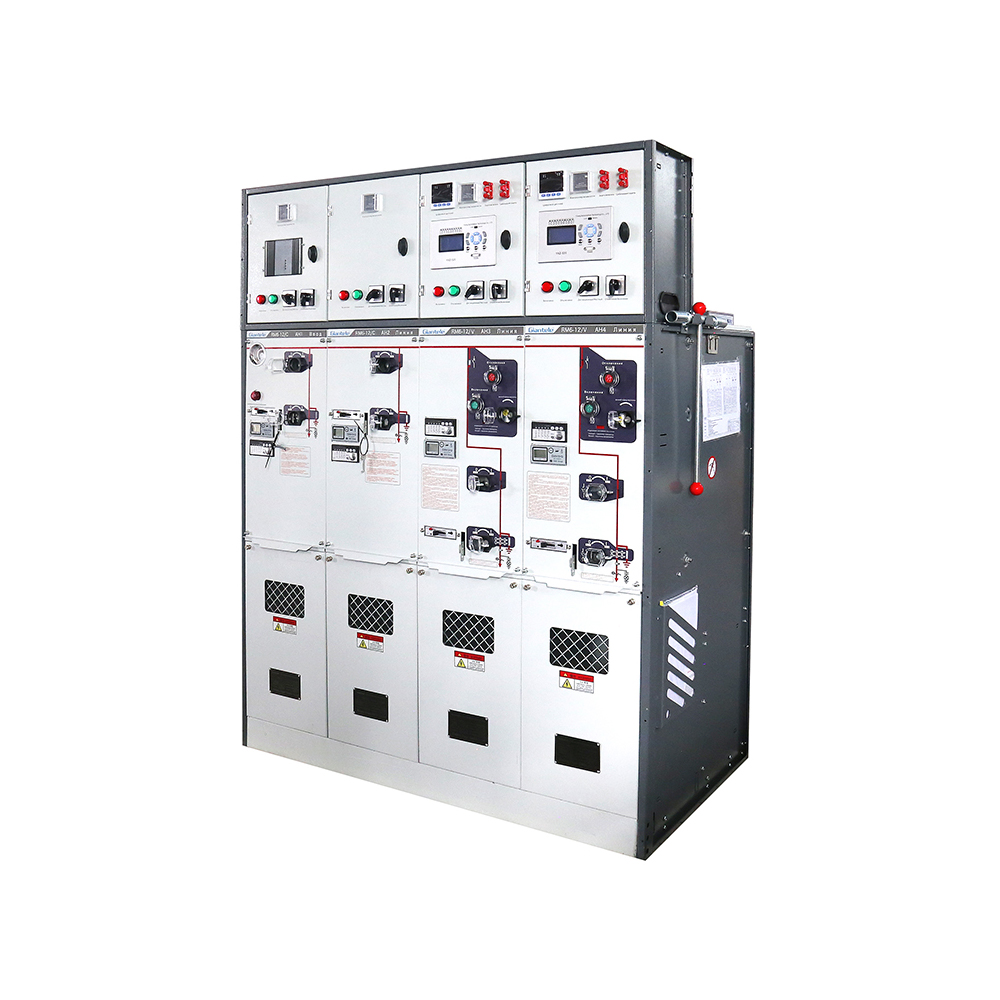
Zhejiang Zhegui Electric’s Automated SF6 RMU supports optional electric operating mechanisms and remote-control integration. It also incorporates sealed live parts, modular functional combinations, interlocking, and a pressure-relief arrangement. These characteristics illustrate why automation should be evaluated together with primary switching construction rather than treated as a separate communication accessory.
Monitoring can also improve maintenance planning, but only when measurements are suitable for the failure modes being managed. Operations teams may use switching counters, communication-health alarms, mechanism status, temperature trends, fault records, or gas-related signals where applicable. A single abnormal reading should not automatically be interpreted as equipment failure; trends, load conditions, sensor accuracy, and inspection findings must be considered together. The objective is to direct attention toward assets showing meaningful change instead of replacing every scheduled task with an unverified predictive-maintenance claim.
Alarm design is particularly important when many units report to one control center. Excessive low-value alarms can hide the events that require immediate action, while vague descriptions slow troubleshooting. Each alarm should have a defined priority, timestamp, source, operating consequence, and response procedure. The project team should also decide how alarms behave during communication loss, auxiliary-power failure, testing, and maintenance so operators can distinguish a real network problem from unavailable telemetry.
Matching Insulation Technology to the Operating Environment
Smart functionality does not determine the insulation medium, and similar monitoring objectives may be implemented with gas-insulated, solid-insulated, or air-insulated equipment. The correct choice depends on voltage, available space, environmental conditions, service practices, regulatory requirements, expansion plans, and the owner’s lifecycle strategy. Procurement teams should therefore avoid selecting a smart RMU based only on its communication features. Primary insulation and switching performance remain fundamental even when sophisticated digital equipment is installed.
A Solid Insulated RMU can be considered when the project requires an SF6-free 12 kV design. It uses sealed epoxy-resin insulation, supports modular functional combinations, and provides an intelligent-controller interface for remote control, measurement, and communication. The design also provides IP67 protection.
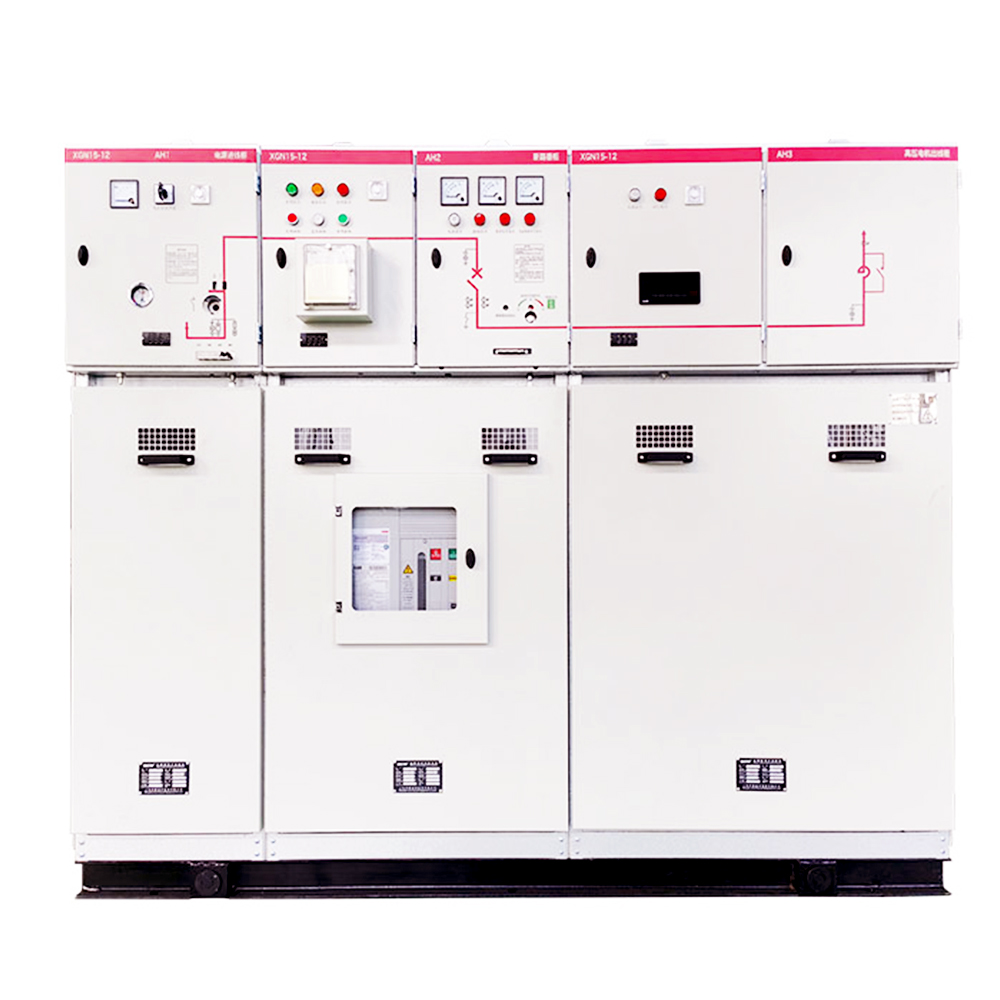
Gas-insulated designs remain relevant where compact construction, sealed primary parts, and established operating practices match the project requirements. For projects with a specified 35 kV system level, the 35kV SF6 RMU is designed for industrial and commercial distribution applications with a fixed metal-enclosed architecture. It is suitable for indoor applications such as high-rise buildings and pre-installed substations and incorporates five-prevention mechanical interlocking.
Environmental policy is now a direct procurement consideration rather than a distant technology trend. Regulation (EU) 2024/573 introduces restrictions affecting new medium-voltage electrical switchgear using fluorinated greenhouse gases, including requirements beginning January 1, 2026, for specified primary and secondary distribution equipment up to and including 24 kV, subject to the regulation’s conditions and exceptions. Projects serving European markets should review the complete legal requirements instead of assuming that every gas-insulated design is treated identically.
The selection process should document why the insulation technology fits the actual site. Temperature range, altitude, humidity, pollution, flooding exposure, cable access, indoor or outdoor location, and available maintenance capability can materially affect suitability. Future environmental obligations, end-of-life handling, technician competence, and spare-part support should also be considered. Digital features cannot compensate for primary equipment that is mismatched to its physical environment.
Smart RMU Design, Compliance, and Communication
A smart RMU is designed around the single-line diagram and the operating requirements of the distribution network. Its configuration covers feeder arrangement, rated current, fault level, insulation level, protection, motor operation, telemetry, remote control, and future expansion. Safe local operation remains available when the communication system is offline.
For the European market, CE marking indicates conformity with applicable EU requirements. Zhejiang Zhegui Electric’s smart RMUs incorporate low-voltage auxiliary components, including control power supplies, heaters, communication modules, and motor-control circuits, designed to meet relevant electrical safety and EMC requirements.
EN IEC 61439 applies to integrated low-voltage control assemblies, while EN IEC 62271-200 covers medium-voltage metal-enclosed switchgear up to 52 kV. These standards address insulation, temperature rise, short-circuit performance, interlocking, service continuity, and internal arc classification.
Communication functions include status monitoring, alarm transmission, command feedback, time synchronization, and SCADA integration. Authentication, access control, event logging, network segmentation, secure remote access, and firmware management support reliable and traceable operation.
Conclusion
A smart RMU is important because it connects compact medium-voltage switching with the information and control needed for faster, safer, and more disciplined network operation. Its value depends on correct topology, protection coordination, dependable communications, appropriate insulation, cybersecurity, European compliance, and realistic maintenance planning. Zhejiang Zhegui Electric Co., Ltd. is a manufacturer with documented production facilities and experience in low- and medium-voltage distribution equipment. Its RMU options can support different voltage, insulation, automation, and environmental requirements when selected according to verified project conditions.
FAQ
Q: What makes an RMU smart?
A: A smart RMU combines medium-voltage switching and protection with sensors, status monitoring, communication interfaces, remote operation, and data that supports fault response and maintenance decisions.
Q: Can a smart RMU prevent every power outage?
A: No. It can accelerate fault location, isolation, and restoration, but results also depend on network topology, protection coordination, communication availability, and alternative feeder capacity.
Q: Does remote control eliminate the need for local safety procedures?
A: No. Remote operation can reduce unnecessary site visits, but physical maintenance still requires approved isolation, earthing, voltage verification, access control, and lockout procedures.
Q: Can SF6-free equipment include smart functions?
A: Yes. Insulation technology and digital capability are separate design decisions, so solid- or air-insulated equipment can support monitoring, communication, motor operation, and remote control.
Q: Which European standard applies to a medium-voltage RMU?
A: EN IEC 62271-200 applies to AC metal-enclosed switchgear above 1 kV and up to 52 kV, covering construction, testing, interlocking, accessibility, and internal-arc classification.
Q: What should buyers test before accepting a smart RMU?
A: Buyers should test protection, interlocks, local operation, telemetry accuracy, point mapping, command feedback, alarms, communication failure behavior, auxiliary power, cybersecurity settings, and documentation.