


A cable fault, planned maintenance task, or incorrect switching sequence can disconnect more loads than the damaged section alone. A Ring Main Unit gives operators controlled points for switching, protection, isolation, and network reconfiguration within a medium-voltage distribution system. However, installing an RMU does not automatically guarantee continuous power. Reliability depends on the network topology, protection coordination, equipment ratings, operating procedures, and available alternative supply path. Understanding these relationships helps engineers select a practical configuration instead of treating the Ring Main Unit as a standard cabinet that fits every project.
Why a Ring Main Unit Improves Distribution Continuity
Normal Operation Uses Controlled Power Paths
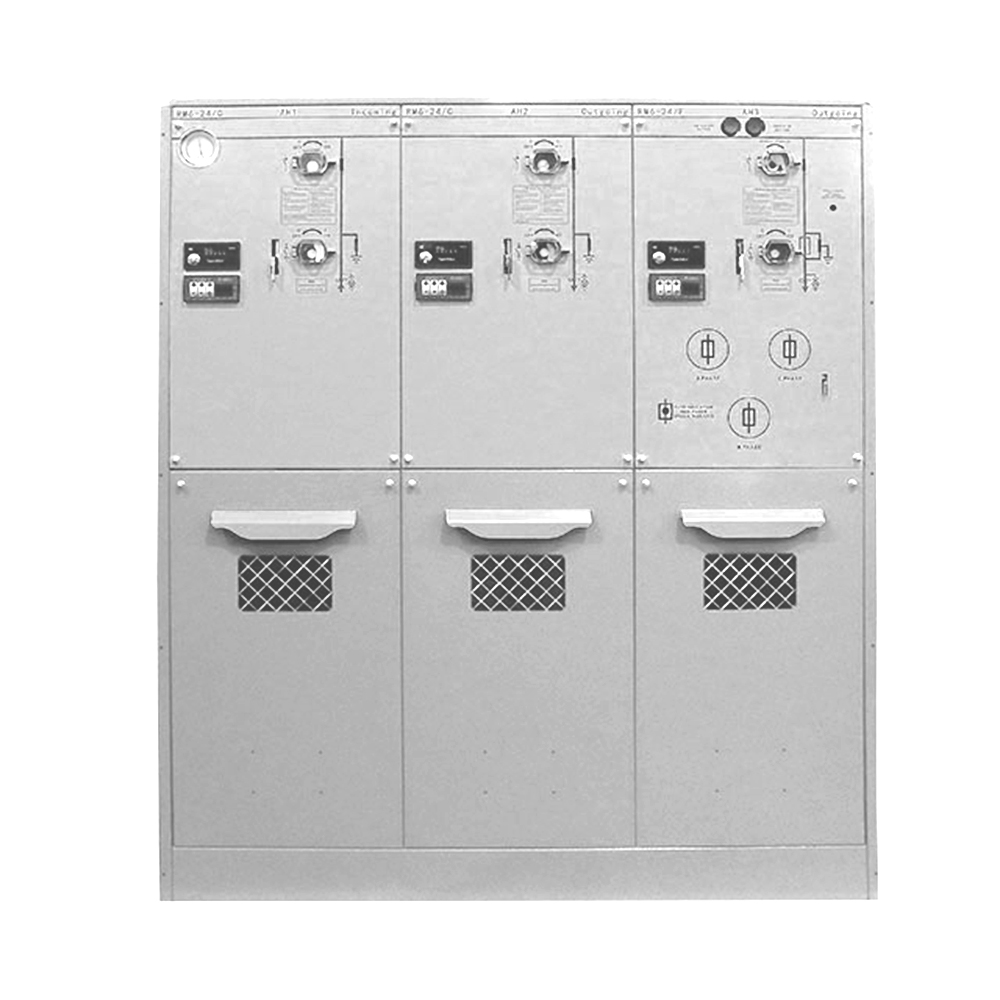
A Ring Main Unit is a compact, enclosed form of medium-voltage switchgear installed at load connection points, secondary substations, transformer stations, and feeder junctions. A common arrangement has two ring feeder ways and one protected tee-off feeding a transformer or local circuit. The ring may provide two possible supply directions while operating with a designated open point that prevents uncontrolled parallel operation. Operators can change that open point as network conditions require, but only after checking load transfer capacity, phase conditions, protection settings, and the approved switching procedure.
The Ring Main Unit therefore manages the path of electricity rather than changing its voltage. The incoming and outgoing ring switches connect neighboring sections, while the protected branch supplies a transformer or another downstream load. Unlike a transformer, which converts voltage, the RMU switches, isolates, earths, and protects parts of the medium-voltage network. This distinction affects the single-line diagram, cable arrangement, protection study, room layout, and maintenance plan.
Fault Isolation Limits the Affected Area
When a cable section develops a fault, the protection system must first interrupt the fault current through the appropriate circuit breaker, fuse, or upstream protective device. Operators then identify the damaged section and open the switches on both sides to isolate it. After verifying isolation and applying the required earthing procedure, healthy sections can often be re-energized from the alternative direction. The Ring Main Unit creates the sectionalizing points needed for this sequence, reducing the number of consumers or processes that remain disconnected.
Restoration may be manual, remotely controlled, or automated, depending on the installed mechanisms, fault indicators, communication equipment, and distribution management system. A basic manual RMU cannot locate every fault or restore supply without trained operators. Even an automated Ring Main Unit cannot back-feed healthy loads if the alternative feeder lacks capacity or protection coordination. The practical benefit is therefore a smaller outage area and faster restoration opportunity, not an unconditional promise of zero interruption.
Network design remains the foundation of reliability. A single-ended radial feeder may use an RMU for local switching, but it cannot provide a second source that does not exist. Similarly, a ring supplied from only one substation may still lose all loads if the common source fails. Engineers should evaluate feeder diversity, transformer loading, source independence, cable fault levels, and switching time before estimating the continuity improvement provided by a Ring Main Unit.
Which RMU Functions Determine Real Performance?
The load-break switch, circuit breaker, and switch-fuse combination perform different duties. A load-break switch controls normal load current and provides a sectionalizing function, but it is not automatically equivalent to a circuit breaker designed to interrupt specified fault currents. A circuit breaker works with protection relays to detect and clear abnormal conditions, while a switch-fuse combination can protect an appropriate transformer feeder through coordinated fuse operation. The selected protection method must match transformer rating, inrush characteristics, cable requirements, fault level, and utility practice.
Earthing switches provide a defined method for grounding an isolated cable or circuit before authorized work begins. Mechanical and electrical interlocks help prevent unsafe sequences, such as closing an earthing switch onto an energized circuit or accessing a cable compartment before the required switch position is established. Voltage-presence indicators, switch-position displays, pressure or density indicators, and mimic diagrams improve operational awareness. These features support safety, but they do not replace voltage testing, lockout procedures, approved switching instructions, or competent personnel.
Busbars and internal connections distribute current between functional ways, while cable compartments provide the interface with incoming, outgoing, and transformer cables. Motorized mechanisms, auxiliary contacts, fault-passage indicators, current or voltage sensors, and remote terminal units can extend the Ring Main Unit into an automated distribution node. Remote operation can shorten response time, yet the specification must define communication protocols, auxiliary power, signal mapping, cybersecurity responsibilities, and behavior after communication loss. Not every RMU contains the same monitoring or automation functions, so these requirements should appear explicitly in the project documents.
How to Specify the Right Ring Main Unit
Selection should begin with the electrical study, not the enclosure appearance or nominal voltage alone. Engineers must establish the system voltage, insulation level, continuous current, short-time withstand requirement, expected peak current, protection arrangement, and cable interface. They must also define the number of ring ways, transformer feeders, metering sections, bus-section functions, spare ways, and future expansion requirements. Environmental and operational details then determine whether the proposed Ring Main Unit can perform those duties throughout its intended service life.
Selection Area | Questions to Resolve | Practical Consequence |
|---|---|---|
Network ratings | What are the nominal voltage, maximum system voltage, load current, and calculated fault level? | Determines insulation, current, making, breaking, and short-time withstand ratings |
Feeder scheme | How many ring ways, transformer branches, metering ways, and future connections are required? | Defines the fixed or extensible configuration and panel arrangement |
Protection | Will the outgoing circuit use a switch-fuse combination or circuit breaker with relay? | Affects selectivity, transformer protection, resetting, and maintenance |
Installation site | What are the altitude, temperature, humidity, pollution, flooding, seismic, and indoor or outdoor conditions? | Influences enclosure protection, insulation choice, derating, and accessories |
Automation | Is local control sufficient, or are remote switching and fault indication required? | Defines motors, sensors, auxiliary supply, communication, and I/O |
Lifecycle policy | What environmental rules, service skills, spares, and gas-handling resources apply? | Influences insulation technology and long-term ownership requirements |
For 12kV systems, the 12kV SF6 Ring Main Unit is available with 630A and 1250A rated-current options, an IP67 protection rating, and fixed or expandable unit combinations. These details may suit compact substations and demanding environments, but the engineer must still compare the selected functional modules with the approved single-line diagram and fault study.
Projects operating at a higher distribution voltage can evaluate the 24kV Gas-Insulated RMU. This configuration is rated at 24kV, 50Hz, and 630A, with IP67 protection and modular functional units. Site altitude, ambient temperature, humidity, cable type, and automation requirements still need confirmation before ordering. A voltage label alone does not verify that the complete Ring Main Unit meets the project’s insulation and short-circuit requirements.
For networks specified at 35kV, the 35kV Metal-Enclosed RMU is available as a fixed metal-enclosed arrangement with 125A and 630A current options. The final purchase specification should reconcile the approved technical datasheet, drawings, test documentation, and project requirements before production. This document control is especially important when equipment names, functional units, or technical tables use different classification conventions.
Where an RMU Fits—and Where It May Not
A Ring Main Unit is particularly useful in urban underground networks, compact substations, industrial facilities, commercial developments, renewable-energy collection systems, and infrastructure with several medium-voltage distribution nodes. These applications benefit from a small footprint, enclosed live parts, repeatable feeder arrangements, and the ability to isolate individual cable sections. Industrial sites also value faster restoration because a limited electrical fault can otherwise stop unrelated production lines, pumps, ventilation systems, or material-handling equipment.
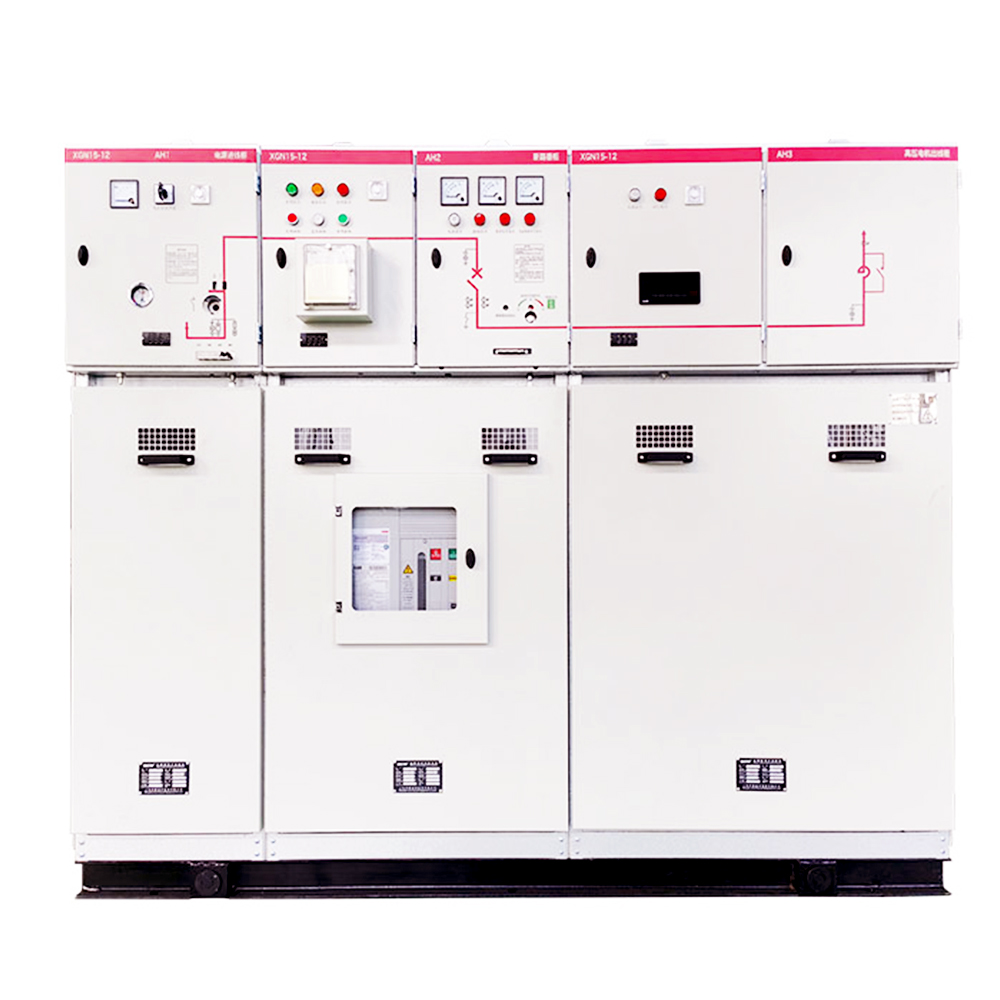
An RMU is not necessarily the most economical or flexible solution for every medium-voltage installation. A simple radial feeder with no alternative supply path may need protection and isolation without gaining the full operational value of a ring. A large primary substation with numerous feeders, bus couplers, complex differential protection, extensive metering, and frequent expansion may be better served by a conventional switchgear lineup. The decision should compare civil space, required functions, outage cost, expansion, testing, operator familiarity, spare parts, and maintenance resources rather than equipment price alone.
Insulation technology also affects suitability. Gas-insulated designs offer compact sealed construction, while air-insulated and solid-insulated alternatives may support different environmental policies, maintenance strategies, or site preferences. No insulation method is universally superior. The correct Ring Main Unit must balance footprint, operating environment, dielectric performance, accessibility, lifecycle support, applicable regulations, and the owner’s ability to maintain or recover insulating media safely.
Procurement, Testing, and Maintenance Controls
Confirm EU Market Requirements Before Production
Electrical equipment placed on the European Union market must comply with all applicable EU legislation before a CE mark is affixed. CE marking indicates that the manufacturer has assessed the equipment against the relevant safety, health, environmental, and consumer-protection requirements and has prepared the required technical documentation and EU Declaration of Conformity. It is a legal market-access marking rather than a general indication that one product is superior to another.
ECM is an Italian notified body identified by number 1282. The number may accompany a CE mark only when ECM has participated in a conformity-assessment procedure that legally requires notified-body involvement. A product-specific ECM 1282 claim should therefore be made only when the certificate, covered model, applicable EU legislation, validity, and certification scope have been verified. It should not be treated as a mandatory marking for every Ring Main Unit.
EN IEC 62271-200 is the principal European standard for AC metal-enclosed switchgear and controlgear above 1kV and up to and including 52kV. It addresses construction, rated characteristics, dielectric performance, temperature rise, short-time withstand capability, accessibility, pressure relief, mechanical operation, interlocking, and internal-arc classification where an IAC rating is specified. An internal-arc claim should identify the tested accessibility type, protected sides, arc current, arc duration, exhaust arrangement, and representative cabinet configuration. Pressure-relief features alone do not establish an IAC classification.
SF6-insulated equipment intended for the EU also requires review under Regulation (EU) 2024/573 on fluorinated greenhouse gases. Procurement teams should confirm the applicable placing-on-the-market restrictions, implementation dates, voltage categories, exemptions, labeling, service obligations, gas recovery, and end-of-life requirements before approving the insulation technology. These requirements should be assessed during equipment selection rather than after manufacturing has been completed.
Define the Deliverables Before Production
The purchase specification should include the single-line diagram, equipment schedule, cable data, transformer information, calculated fault levels, protection philosophy, interlocking matrix, control voltage, communication requirements, installation environment, and applicable EU requirements. The manufacturer should submit approved drawings, technical data, protection information, terminal plans, cable-entry details, operating instructions, conformity documentation, and test records. Factory acceptance activities should follow the agreed inspection and test plan.
Depending on the specification, checks may cover nameplates, wiring, mechanical operations, switch positions, interlocks, alarms, auxiliary circuits, relay functions, local and remote control, and communication signals. Witness criteria and acceptance records should be agreed before the Ring Main Unit reaches the production-complete stage. Type-test evidence should also be distinguished from routine tests performed on each delivered unit.
Control Installation and Commissioning Risks
Commissioning must confirm that the delivered configuration matches the approved drawings and that transport has not damaged the enclosure, mechanisms, indicators, bushings, or auxiliary wiring. Cable tests, termination work, phase identification, earthing connections, relay settings, control-power checks, and functional switching should follow the manufacturer’s instructions and the project method statement. Operators should also test remote commands, position feedback, fault indications, and loss-of-power behavior where automation is installed.
Maintenance should focus on the items accessible under the approved service procedure, including enclosure condition, cable terminations, operating mechanisms, indications, auxiliary circuits, heaters, relays, batteries, and event records. Gas-insulated equipment also requires compliance with specified pressure or density limits and appropriate procedures for leak response, recovery, and end-of-life handling. The relevant EU fluorinated-gas requirements and the owner’s environmental procedures should be incorporated into the maintenance plan.
Conclusion
A Ring Main Unit improves electrical distribution reliability by creating safe switching and sectionalizing points, but its value depends on the surrounding network design. Engineers should verify ratings, feeder configuration, protection coordination, site conditions, automation, EU compliance, testing, and lifecycle obligations before selection. Zhejiang Zhegui Electric Co., Ltd. is a manufacturer with its own production workshops, processing equipment, testing facilities, and switchgear production lines. Its 12kV, 24kV, and 35kV RMU options can support different distribution schemes when matched carefully to approved technical requirements.
FAQ
Q: What does a Ring Main Unit do in a distribution system?
A: It connects medium-voltage feeders, switches load paths, isolates faulty sections, earths circuits for maintenance, and protects transformer or outgoing branches according to its configuration.
Q: How does a Ring Main Unit isolate a cable fault?
A: Protective equipment clears the fault, after which switches on both sides isolate the damaged section so healthy parts may be restored from an available alternative source.
Q: Is a Ring Main Unit the same as medium-voltage switchgear?
A: A Ring Main Unit is a compact type of medium-voltage switchgear optimized for ring, loop, or standardized secondary distribution arrangements. Switchgear is the broader equipment category.
Q: Does every RMU restore power automatically?
A: No. Automatic restoration requires motorized mechanisms, fault detection, communications, control logic, coordinated protection, and sufficient capacity from the alternative feeder.
Q: Is SF6 insulation required for every Ring Main Unit?
A: No. Gas-insulated, air-insulated, and solid-insulated designs are available. Selection depends on footprint, environment, EU regulations, lifecycle policy, maintenance capability, and project specifications.