


Choosing air insulated switchgear is not a catalogue exercise. The right arrangement must work with a real network, a real installation envelope, and the people who will operate it after commissioning. Begin with the duty the equipment must perform, then test each proposed AIS design against space, environment, protection, cable termination, access, continuity, and future expansion. This process avoids a common failure: selecting a line-up that appears suitable on a data sheet but creates avoidable restrictions in the switchroom or during service.
Start with the electrical basis of design
Give suppliers a clear single-line diagram and system description. State nominal voltage, frequency, earthing arrangement, source configuration, transformer data, normal and maximum load, feeder functions, fault level, and the required interrupting and withstand duties. Define the protection philosophy as well: which faults must be detected, how selectivity is expected to work, which measurements are needed, and whether remote signalling or control is required.
Do not select on voltage alone. Two systems with the same nominal voltage can differ materially in fault duty, neutral treatment, motor contribution, cable length, transformer impedance, and continuity objective. Those differences affect the circuit breaker or switching device, busbar system, instrument transformers, protection relays, interlocks, and test scope. The correct order is duty first, equipment construction second.
Specify fault interruption separately from normal-load switching. A load-switch feeder and a circuit-breaker feeder may perform different duties even when their nominal voltage and continuous-current ratings are similar. Confirm which device clears faults and how its protection coordinates with the rest of the network.
Match the AIS structure to the installation
Project question | Why it affects selection | Evidence to include in the enquiry |
|---|---|---|
How much space is truly available? | AIS needs the insulation clearances appropriate to its construction, operating aisles, cable space, and service access. | Room plan, elevations, door size, lifting path, and reserved future area. |
What will the environment be? | Humidity, dust, salt, heat, corrosion, altitude, and water risk affect enclosure and insulation choices. | Site location, indoor or outdoor designation, climate data, contamination, and enclosure requirements. |
How will cables enter and terminate? | Cable size, bend radius, termination accessories, and test access can determine cabinet arrangement. | Cable schedule, entry direction, conductor size, termination requirements, and trench details. |
Who will maintain the equipment? | Access, isolation, spare parts, monitoring, and maintenance procedures must fit the operating organization. | Maintenance strategy, outage windows, site staffing, and required documentation. |
What will grow later? | Future feeders or load changes need physical and electrical capacity. | Expansion phasing, spare feeder needs, bus-extension side, and relay-panel allowance. |
For projects that need compartmented equipment for practical indoor distribution, Zhejiang Zhegui Electric Co., Ltd. offers metal-clad medium-voltage arrangements alongside other MV structures. Confirm the exact selected assembly against the approved single-line diagram and physical layout.
Distinguish conventional ambient-air AIS from sealed dry-air equipment. Both may be described using air-insulation terminology, but their primary-component access, environmental exposure, and service procedures differ. Ask the supplier to identify the actual insulation arrangement and the compartments that may be accessed under the approved maintenance conditions.
Evaluate safety as a system property
Safe operation depends on more than a cabinet enclosure. Review interlocking logic, earthing-switch functions, access sequence, isolation points, voltage indication, relay protection, cable-test provisions, arc-risk assessment, emergency procedures, documentation, and training. The appropriate requirements vary by project and jurisdiction. Responsibilities for equipment conformity, system coordination, installation, commissioning, and site procedures should be explicitly assigned.
Ask which actions are possible in normal operation, which require a planned outage, and which must be blocked by mechanical or electrical interlocks. A useful specification describes the intended operating sequence rather than simply asking for “safe switchgear.” This makes interfaces between the line-up, protection panels, remote-control system, and field operating practice visible before manufacture.
Where internal-arc performance is required, request the documented classification and installation conditions for the offered assembly. An enclosure protection rating or pressure-relief feature alone does not establish internal-arc performance. Review these requirements together with the room layout and the owner’s operating controls.
Compare lifecycle decisions, not only initial price
Initial equipment cost is only one line in the project comparison. Include civil works, room size, ventilation, cable installation, handling, commissioning, protection testing, spares, planned maintenance, training, service support, downtime, and planned expansion. A design with additional space may simplify access and future changes; a more compact design may reduce building scope. The relevant question is which trade-off serves the installed system over its intended life.
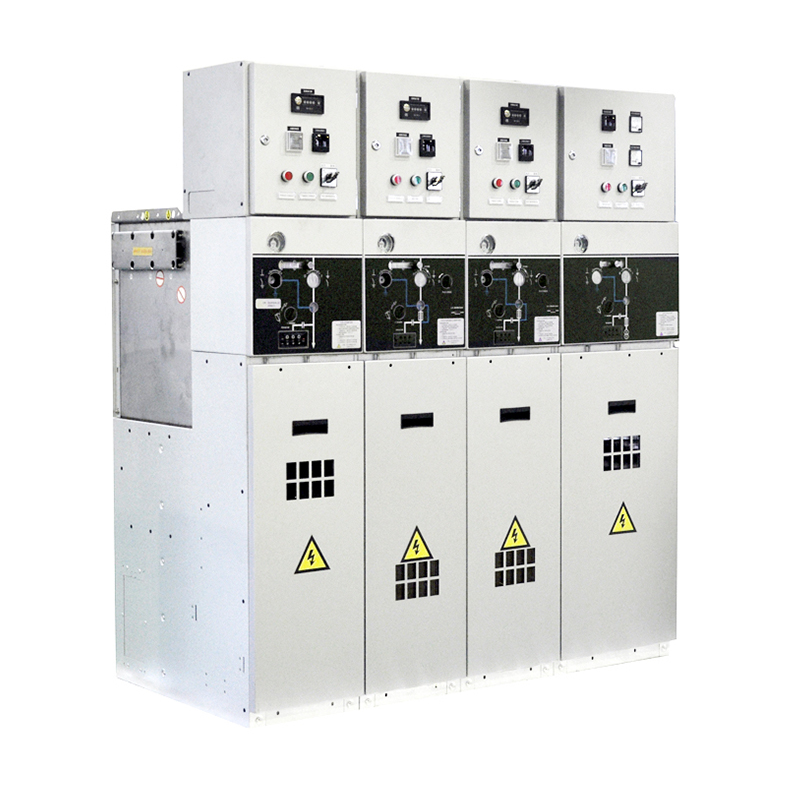
For a compact ring-distribution application, SF6-Free Air-Insulated Switchgear is a specific 12 kV option to examine. Its sealed dry-air or nitrogen construction should be evaluated against the approved network topology, electrical duty, cable interfaces, enclosure requirements, and service strategy. Its product designation does not replace a complete selection assessment.
If space and environmental exposure justify comparing a sealed SF6 design, include a Gas-Insulated Ring Main Unit in the lifecycle assessment. Compare equivalent feeder configurations and complete installed layouts, then account for gas handling, specialist service, and end-of-life responsibilities under the destination market’s requirements.
Keep assumptions consistent across alternatives. Use the same feeder count, protection duties, installation conditions, expansion plan, and service scope. Otherwise, a price comparison may reflect differences in the supplied functions rather than the value of the equipment architecture.
Use a pre-quotation checklist
Before releasing an RFQ, confirm that the following questions have answers:
What are the maximum and minimum operating conditions?
What fault duty and protection coordination are required?
What is the earthing method?
Where will incoming and outgoing cables enter, and which terminations are required?
Which communications protocols or remote functions are necessary?
What enclosure and environmental conditions apply?
What inspection and maintenance access is required?
Which drawings, tests, training, spares, and records are required at handover?
Which additions must be possible later, and how will they be installed?
Where an SF6-free procurement requirement allows more than one insulation technology, a Solid-Insulated Ring Main Unit can be assessed as a separate alternative. It is not an AIS construction merely because it avoids SF6. Check its offered ratings, interfaces, extension provisions, and maintenance requirements against the same technical schedule.
If any answer is unknown, flag it rather than hiding the uncertainty. This lets the engineering team develop assumptions openly and reduces the risk of receiving incomparable quotations. Ask each bidder to identify deviations, exclusions, and outstanding project data.
Before placing an order, reconcile the final drawings, technical schedule, supporting test documents, and scope of supply. The selected air insulated switchgear should meet an agreed duty and operating strategy with evidence for the exact configuration offered.
Conclusion
Choose air insulated switchgear by turning electrical, physical, and operational requirements into one coordinated brief. Verify ratings and protection first, then validate space, environment, cable interfaces, access, maintenance, and growth. Identify the actual insulation construction and compare alternatives using equivalent duties and lifecycle assumptions. Zhejiang Zhegui Electric Co., Ltd. manufactures low- and medium-voltage distribution equipment, but the final configuration must be confirmed against the project’s approved technical requirements, installation conditions, and applicable market rules.
FAQs
What information is needed to select air insulated switchgear?
At minimum, provide the single-line diagram, voltage and frequency, fault duty, load and feeder data, earthing method, protection functions, layout, cable details, environment, and applicable standards.
Should AIS be selected before the building layout?
Equipment and building design should be coordinated. Clearances, access aisles, lifting routes, cable routing, ventilation, and future bays can affect both sides of the decision.
How do I compare AIS quotations fairly?
Use one controlled technical schedule and ask each bidder to state assumptions, exclusions, ratings, interfaces, tests, documents, spares, and service scope. Resolve material differences before comparing prices.
Does an expandable line-up guarantee easy future expansion?
No. The project must reserve compatible physical space, bus-extension provisions, protection capacity, cable routes, and an agreed outage method. Confirm the interfaces for the actual equipment system.
Can a product page replace an engineering specification?
No. A product page provides context; the project specification establishes the actual system duty, interfaces, installation conditions, and acceptance requirements.