


A switchgear decision can shape a substation’s layout, service routine, expansion options, and risk controls for decades. The basic choice is often between conventional air insulated switchgear (AIS), which uses air clearances around primary conductors and components, and gas insulated switchgear (GIS), which places primary equipment in sealed metal enclosures with an insulating gas system. Neither technology is automatically right for every project. The better choice comes from matching the insulation arrangement to available land, required continuity, environment, access strategy, and the people who will operate and maintain the installation.
Quick comparison: what changes between AIS and GIS?
| Decision factor | Conventional air insulated switchgear | Gas insulated switchgear | What the project team should confirm |
|---|---|---|---|
| Insulation arrangement | Air clearances provide insulation between primary parts and grounded metalwork. | Primary parts are enclosed in sealed gas-filled compartments. | Required insulation coordination and the permitted equipment construction. |
| Footprint | Usually needs more physical clearance and room for comparable duties. | Usually achieves a more compact primary-circuit arrangement. | Actual building, yard, transport, and access constraints. |
| Service access | Visual inspection and component access can be comparatively direct during authorized, de-energized maintenance. | Internal work is more dependent on sealed-compartment procedures. | Available skills, outage windows, and service documentation. |
| Environmental exposure | Layout and enclosure selection must address dust, moisture, salt, pollution, and wildlife as relevant. | Sealed construction can isolate primary parts from outside contamination. | Site climate, elevation, contamination, and enclosure requirements. |
| Expansion | May offer more straightforward space-based additions when the layout allows. | Can be compact, but extensions must fit the original system design. | Future feeder, transformer, and bus-section plans. |
How air insulated switchgear works
In conventional air insulated switchgear, air is the insulating medium between energized parts and grounded metalwork. The assembly still includes the equipment needed to receive, control, protect, isolate, meter, and distribute electrical power: switching devices, busbars, instrument transformers, protection and control circuits, disconnecting functions, earthing arrangements, and interlocks. The physical spacing, insulation system, enclosure construction, and interrupting technology must be engineered together for the selected duty.
The compartmented character of many AIS arrangements is one reason they remain useful where technicians need practical access for inspection and planned maintenance. Zhejiang Zhegui Electric Co., Ltd. offers medium-voltage equipment in different structures for differing distribution layouts. A product family does not remove the need for project engineering; the nominal voltage, current, short-circuit rating, cable system, protection philosophy, and installation conditions must still align.
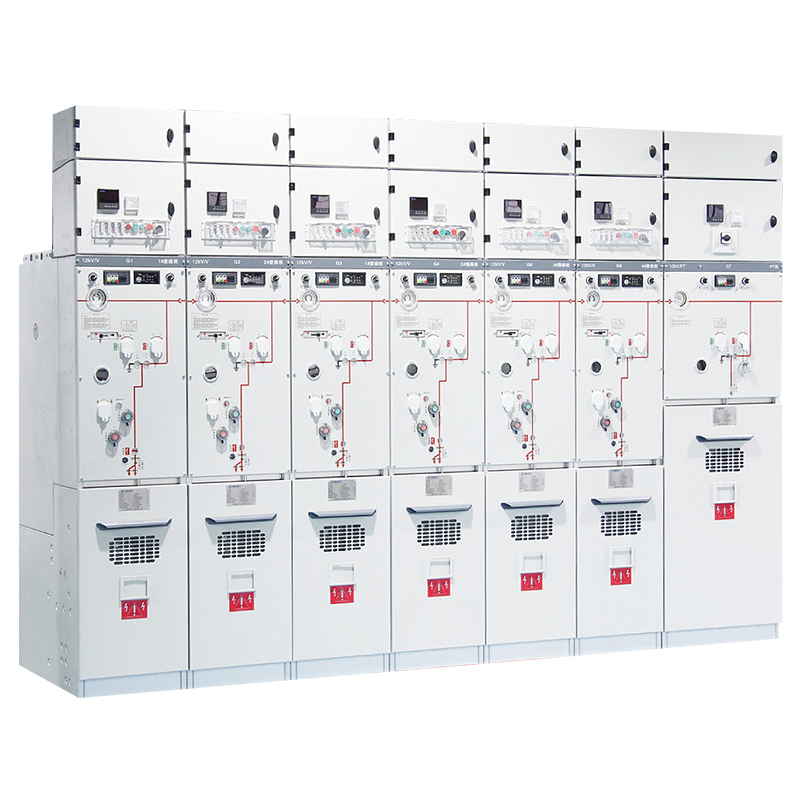
For a product-level comparison, examine the insulation arrangement and module configuration of SF6-Free Air-Insulated Switchgear. This 12 kV RMU uses a sealed dry-air or nitrogen insulation arrangement, so it should be distinguished from conventional ambient-air AIS. Being SF6-free does not, by itself, establish whether primary parts are accessible or whether the equipment has a sealed gas compartment.
What makes GIS different?
GIS concentrates its primary circuit inside metal enclosures. This compact construction can be valuable when an installation has a restricted building envelope, expensive urban land, difficult right-of-way conditions, or a layout where equipment must be brought close together. The sealed system also changes the maintenance model. Teams must plan competent handling, diagnostics, documented procedures, and a route for any specialist service work.
A Gas-Insulated Ring Main Unit provides a specific medium-voltage example of sealed SF6 construction. When comparing it with an air-insulated assembly, match the feeder duties, protection functions, and extension requirements so that the comparison covers equivalent equipment configurations.
The choice should not be reduced to “AIS is inexpensive and GIS is compact.” Up-front price, civil works, shipping and lifting, installation duration, spares, planned outages, inspection access, environmental controls, and end-of-life responsibilities all affect the delivered lifecycle position. A low initial equipment price can lose its advantage if it forces an unsuitable building extension. A compact sealed design can lose its advantage if the owner cannot support its maintenance and gas-management requirements.
Use the site conditions to make the comparison meaningful
Space and constructability
Start with the real plot plan rather than a generic footprint claim. Mark cable routes, transformer clearances, doors, crane paths, fire separation, emergency egress, operating aisles, ventilation, and future bays. Conventional AIS is often a strong fit where land and building space are available and the owner values accessible equipment. GIS becomes a serious candidate where the physical envelope is the dominant constraint. The comparison needs the exact arrangement offered for the selected voltage and project—not a brochure-level statement.
Environment and enclosure
Dust, humidity, condensation, salt-laden air, flooding risk, corrosive contaminants, insects, and extreme temperatures can all influence the required enclosure, insulation margins, cleaning needs, and inspection plan. AIS is not unsuitable by definition in demanding environments, but the project must address exposure deliberately. GIS can protect the primary circuit from some external contamination, yet external auxiliaries, cable terminations, building conditions, and access procedures still need attention.
People and maintainability
Define who will operate the system five, ten, and twenty years after energization. Ask whether the owner has trained medium-voltage personnel, the documentation needed for fault response, a realistic spare-parts plan, and authorized service support. Conventional AIS can make visual condition checks and component-level access easier in a well-designed installation. GIS can reduce routine exposure of primary parts but requires disciplined procedures when internal work is necessary. Both options need an asset-management plan.
A selection framework that prevents a misleading “best” answer
Build a weighted project brief before asking suppliers to compare equipment. First, fix the system basis: voltage, frequency, earthing method, load profile, transformer arrangement, feeder count, protection functions, required continuity, and fault duty. Next, define the physical basis: room dimensions, yard area, transport limits, cable entry, lifting access, civil scope, seismic or environmental exposure, and expansion zones. Finally, define the operating basis: available technicians, inspection intervals, planned outage tolerance, remote monitoring expectations, spares, and end-of-life responsibilities.
Then compare AIS and GIS against the same brief. Do not score a design merely because it has a small footprint or a familiar name. For example, a factory substation with available indoor space and a local service team may prioritize accessible panels, future feeders, and a clear maintenance route. A densely built installation may assign much more weight to footprint and a sealed primary enclosure.
If a ring-network application also requires an SF6-free insulation approach, assess the actual construction rather than relying on the product label. A Solid-Insulated Ring Main Unit introduces a separate insulation option alongside conventional AIS and sealed gas-insulated designs. Compare its electrical duties, cable interfaces, extension arrangement, and service procedures against the same project brief. Solid insulation should not be classified as air insulation simply because it avoids SF6.
For any proposed 12 kV RMU, the selected ratings and configuration must be checked against the project’s approved specification rather than used as universal design values. Require supporting documentation for the offered assembly, including the relevant performance tests and installation requirements.
Common specification mistakes
The first mistake is comparing only the switchgear cabinet price. The decision also affects building size, cable work, installation sequencing, commissioning, access equipment, future modifications, and service contracts. The second is calling an arrangement “maintenance free.” Every power-distribution asset needs an operating and inspection strategy; the intervals and tasks vary by design, environment, duty, manufacturer documentation, and local requirements.
A third mistake is treating nominal voltage as a complete specification. The purchase specification needs compatible ratings and documented performance for the entire duty, plus the protection, interlocking, internal-arc, enclosure, metering, communications, and cable-interface requirements that matter to the installation. Internal-arc performance must be assessed using the documented classification and installation conditions for the offered assembly.
The fourth mistake is leaving expansion to a verbal promise. Reserve space or define compatible extension bays, bus interfaces, protection-panel capacity, and outage steps in the approved design. Confirm whether an extension requires access to sealed compartments, specialist tools, or a planned shutdown.
Conclusion
Conventional air insulated switchgear is often compelling when accessible equipment, usable space, practical expansion, and a clear field-service model matter most. GIS can be compelling where a compact, enclosed primary system solves a genuine footprint or exposure constraint. SF6-free sealed-air and solid-insulated designs add further options, but each requires assessment of its actual construction. The correct result is a project-specific comparison. Zhejiang Zhegui Electric Co., Ltd. manufactures low- and medium-voltage power-distribution equipment; the proposed assembly should be selected after the project team verifies its duties, interfaces, supporting documentation, and installation requirements.
FAQs
Is air insulated switchgear cheaper than GIS?
AIS may have a different initial equipment and civil-work profile, but the total project cost depends on the required layout, construction scope, operating strategy, and future changes. Compare complete project costs rather than cabinet prices alone.
Does GIS always require less maintenance?
Its sealed primary system changes routine maintenance needs, but it does not eliminate inspection, functional testing, documentation, or specialist procedures. Follow the approved manufacturer instructions and asset plan.
Where is air insulated switchgear commonly suitable?
AIS can suit indoor distribution rooms, industrial facilities, substations, and applications where the required clearances and environmental controls can be provided. The actual suitability depends on the approved electrical and physical design.
Can AIS be used where space is limited?
It can be considered if the required clearances, access, cable routing, and safety provisions fit the available envelope. If they do not, a more compact system architecture may be necessary.
What should be on an AIS versus GIS request for quotation?
Include system voltage and frequency, current and fault duty, single-line diagram, protection functions, enclosure and environmental conditions, cable details, layout constraints, standards, testing expectations, communications, spares, and expansion requirements.