


Air insulated switchgear is electrical distribution equipment that uses air as the principal insulation medium around energized primary conductors and equipment. Conventional AIS relies on designed air clearances, while some compact products use a sealed dry-air insulation arrangement. It receives, controls, protects, isolates, and distributes power where the required electrical ratings, enclosure conditions, and operating procedures can be provided. For buyers, AIS is more than a product label. It is a system choice that influences room layout, cable routing, inspection access, service planning, expansion, and the specification effort needed before equipment is ordered.
Key takeaways
- Conventional AIS uses air and designed clearances as part of its insulation system.
- Its construction can support access for inspection and planned service under approved, de-energized conditions.
- Voltage, current, fault duty, enclosure, cable interfaces, environment, and protection functions must be specified together.
- Space availability and maintenance capability are as important as the initial purchase comparison.
- SF6-free construction does not automatically mean an assembly uses ambient-air insulation or has accessible primary parts.
What equipment does an AIS assembly include?
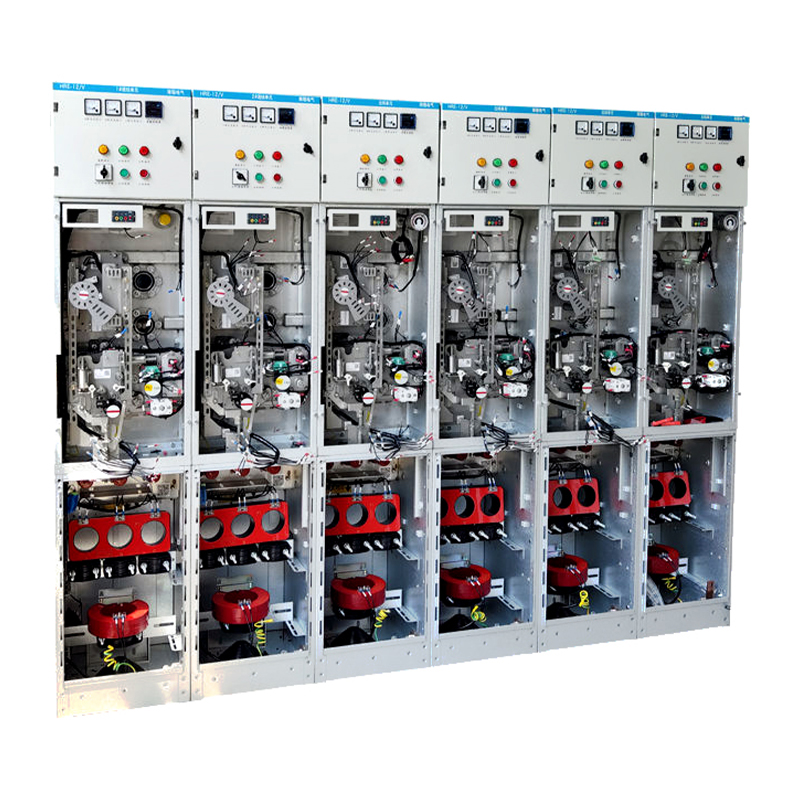
An air insulated switchgear assembly is built from coordinated primary and secondary functions. The primary circuit may include busbars, circuit breakers or load-switching devices, disconnectors, earthing switches, fuses where applicable, instrument transformers, cable connections, and the insulation and enclosure structures that keep clearances controlled. The secondary system includes protection relays, control devices, indications, metering, interlocks, auxiliary power, and communications where the project requires them.
Each function matters because a switchgear line-up must do more than carry normal load current. It must perform the required control and protective actions under the conditions defined in the project. A cabinet that looks similar to another cabinet can have a different duty, internal arrangement, breaker technology, protection scheme, or cable interface. That is why the purchase process should start from the single-line diagram and operating requirements rather than from exterior dimensions alone.
Features that make air insulated switchgear useful
| Feature | Potential project value | What to verify |
|---|---|---|
| Air-based insulation | Uses air as an insulating medium, with clearances and construction designed for the required duty. | Insulation arrangement, clearances, insulation coordination, pollution conditions, and enclosure design. |
| Compartmental construction | Can separate functional zones and support orderly inspection and servicing. | Actual compartment arrangement, interlocks, and permitted access conditions. |
| Accessible primary equipment in conventional designs | Can support visual inspection and component-level service planning during authorized outages. | Required safety procedures, isolation conditions, and personnel competence. |
| Flexible layouts | Can accommodate multiple feeder, incomer, bus-section, metering, or control arrangements. | Future-space allowance, compatible interfaces, and the approved system architecture. |
| Application range | Can suit industrial, commercial, utility, and infrastructure distribution projects. | Compatibility with the actual network duty and environment. |
AIS does not have one fixed form. It can be supplied in different constructions, including metal-enclosed, metal-clad, fixed, or ring-network arrangements. These descriptions identify different aspects of the equipment and are not mutually exclusive. The correct construction follows the protection, continuity, access, layout, and maintenance objectives. Zhejiang Zhegui Electric Co., Ltd. offers several medium-voltage equipment structures; a project should compare the selected configuration against its own approved electrical duties.
Benefits that should be evaluated in context
Inspection and maintainability
One practical advantage of many conventional AIS designs is that service personnel can work with an equipment arrangement intended for accessible inspection and maintenance. This can be meaningful where the owner has a mature maintenance organization and expects to inspect components during planned outages. The benefit depends on physical access, isolation procedures, arc-risk controls, documentation, and trained people.
Access must be assessed for the actual construction. A sealed dry-air RMU does not provide the same primary-component access as a conventional panel simply because both are described as air-insulated. Confirm which compartments may be opened, under what conditions, and whether internal work requires specialist service.
Expansion and adaptation
Where a building or switchroom has reserved length and cable-routing capacity, AIS can support a staged distribution plan. This is useful for projects whose load growth, feeder count, or process additions cannot be fixed on day one. However, “expandable” needs a defined engineering answer: which side can accept a new bay, what bus connection is provided, which relays and control panels have spare capacity, and what outage is needed for the work.
A familiar service model
Conventional ambient-air AIS does not depend on a stored insulating-gas system, but this does not mean it lacks environmental or maintenance needs. Dust, pollution, condensation, salt, and contaminants can affect insulation and enclosure conditions. A good specification states the site conditions, enclosure requirements, ventilation or HVAC approach, cable-entry arrangement, and cleaning or inspection responsibilities. Sealed dry-air designs require a service plan appropriate to their sealed construction.
Where is air insulated switchgear used?
AIS can be applied in medium-voltage power distribution for industrial plants, commercial and public buildings, utility and urban distribution, infrastructure projects, substations, and energy-related facilities when the selected design fits the local network and physical conditions. Typical applications do not determine suitability by themselves. A factory, water-treatment site, or commercial facility may all have different sources, loads, motor starting duties, fault levels, continuity targets, and operator resources.
For compact ring-network distribution, an owner may evaluate SF6-Free Air-Insulated Switchgear designed for a 12 kV, three-phase system. This product uses a sealed dry-air or nitrogen insulation arrangement, which differs from conventional ambient-air AIS. The project engineer should confirm that the selected electrical ratings, protection arrangement, terminal interfaces, enclosure conditions, and test documentation match the application.
Buyer checklist: questions to answer before requesting a quotation
First, provide the network data. This includes nominal voltage and frequency, grounding arrangement, maximum load, transformer details, feeder count, short-circuit duty, and required protection and metering functions. Second, describe the installation: indoor or outdoor location, available dimensions, cable direction and type, altitude, temperature range, humidity, pollution, corrosion, seismic needs, and access restrictions.
Third, define operational requirements. State the desired continuity philosophy, operating sequence, remote-control or monitoring requirements, interlocking expectations, maintenance windows, required documentation, test records, spare parts, training, and handover requirements. Finally, write future expansion into the technical scope. The most useful quotation is one that makes assumptions visible and identifies any project data still needed.
If the procurement specification requires an SF6-free solution, a Solid-Insulated Ring Main Unit can be assessed as a separate alternative. Compare its insulation construction, feeder configuration, service access, and cable interfaces against the same project requirements. Solid-insulated equipment should not be classified as AIS merely because it avoids SF6.
Limitations to plan for
Conventional AIS usually needs sufficient clearance and installation space. Its primary insulation can be more affected by local contamination and condensation than primary parts within a sealed enclosure, so site conditions cannot be treated as an afterthought. In a space-constrained project, the building and access requirements can dominate the comparison. In a polluted or humid environment, enclosure and maintenance choices can be decisive.
Where space or exposure constraints justify reviewing a sealed SF6 design, a Gas-Insulated Ring Main Unit provides a relevant comparison. Evaluate equivalent feeder duties and the complete installation footprint, including operating aisles and cable access. Include gas-management and end-of-life responsibilities in the assessment rather than comparing cabinet dimensions alone.
All switchgear must be installed, operated, and serviced under approved procedures by competent personnel. Enclosure protection, interlocks, and insulation technology support the equipment design, but they do not replace the required operating controls or establish suitability for every site.
Conclusion
Air insulated switchgear is a practical power-distribution architecture when its physical clearances, environmental controls, protection design, and maintenance route align with the project. Its useful features are design choices that must be verified against the network and site. Buyers should distinguish conventional ambient-air panels from sealed dry-air products and compare alternative insulation systems using equivalent duties. Zhejiang Zhegui Electric Co., Ltd. manufactures low- and medium-voltage distribution equipment. A well-prepared AIS specification gives both the buyer and manufacturer a clearer basis for selecting a compatible arrangement and defining its installation and service requirements.
FAQs
What does air insulated switchgear do?
It helps receive, control, protect, isolate, meter, and distribute electrical power through a coordinated assembly of primary and secondary equipment.
Is air insulated switchgear suitable for indoor use?
It can be, provided the room, clearances, enclosure, ventilation, cable routing, access, and rated duty satisfy the approved design and applicable requirements.
What is the difference between AIS and a ring main unit?
AIS describes an insulation approach. A ring main unit describes a distribution-system arrangement and product category. An RMU can use different insulation technologies depending on its design.
Does AIS need maintenance?
Yes. The tasks and intervals depend on the equipment design, environment, operating duty, manufacturer documentation, and the owner’s maintenance plan. Sealed construction changes the required tasks but does not eliminate the need for an asset-management plan.
Which AIS ratings matter most?
Voltage, current, short-circuit duty, insulation and enclosure requirements, interruption and protection functions, cable interfaces, and environmental conditions must be considered together.