


The purpose of a Ring Main Unit is to give a medium-voltage distribution system controlled points for feeder switching, protection, and safe isolation. In a ring distribution system, that capability can help operators separate a faulted cable section and restore healthy loads from another direction when the network has adequate capacity. In a radial arrangement, the same compact switchgear can establish a clear transformer or feeder interface. The purpose is therefore operational, not merely physical: an RMU helps turn a power route into a system that can be protected, maintained, and reconfigured with discipline.
Key Takeaways
The primary RMU purpose is controlled switching, protection, and isolation at medium voltage.
In a ring distribution system, it supports fault sectionalizing and load transfer where the system design allows it.
An RMU does not convert voltage; it complements the transformer that does.
The required configuration follows the single-line diagram and protection philosophy, rather than a generic cabinet layout.
Safe outcomes depend on qualified design, approved operating procedures, interlocks, and appropriately trained personnel.
The Purpose in One Sentence—and Why That Needs Context
The simple answer is that a Ring Main Unit manages the paths through which medium-voltage power reaches transformers and downstream loads. It allows an operator or an authorized automation system to connect, disconnect, protect, and isolate those paths in a defined way. That is the core purpose of RMU switchgear.
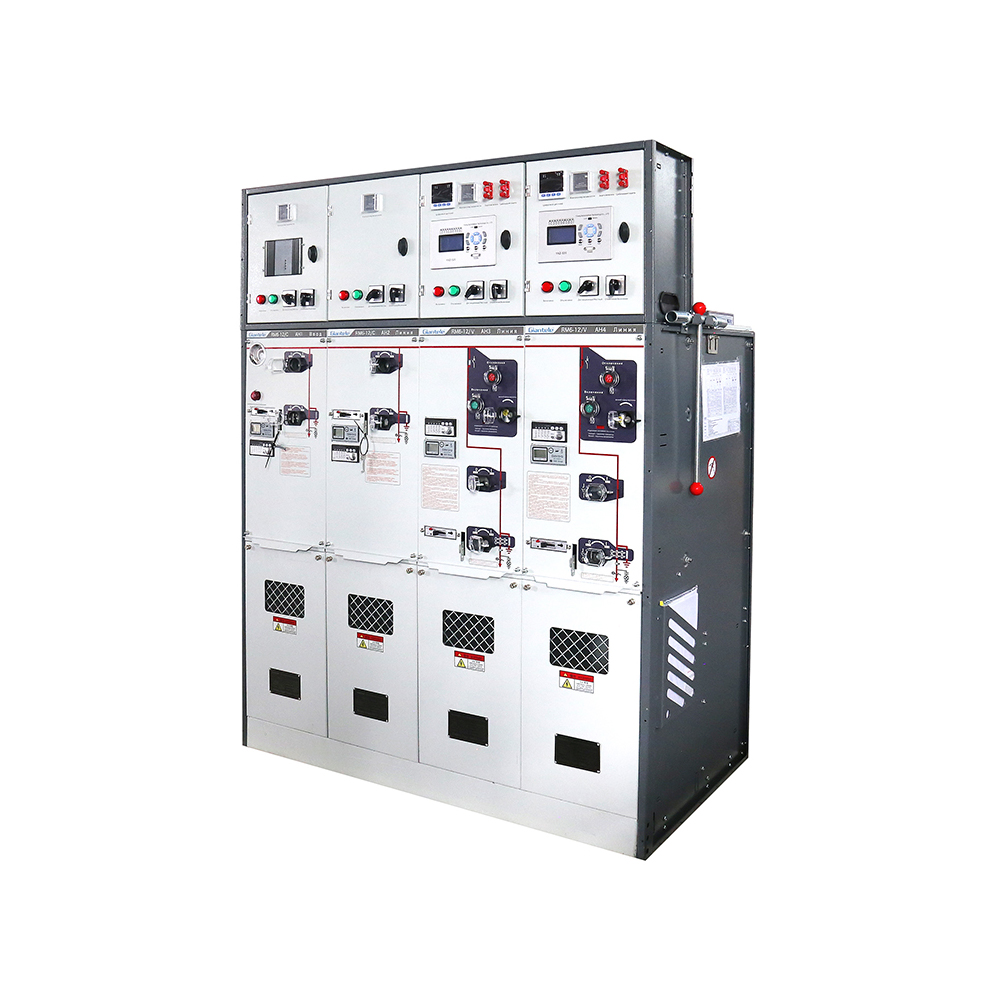
The fuller answer is more useful to a buyer. Power distribution involves normal loading, planned maintenance, cable faults, transformer issues, future extensions, and occasional changes in how a facility is operated. The RMU provides a compact location where those conditions can be handled through selected switching and protection functions. It may include incoming and outgoing ring ways, a transformer branch, earthing facilities, cable compartments, interlocking, local indication, and optional monitoring or remote-control hardware.
An RMU should not be sold as a universal guarantee of reliability. It is part of a coordinated electrical system. If a fault occurs, system performance still depends on the protection settings, cable ratings, alternative-source capacity, operator response, and utility rules. The equipment is important because it provides the equipment boundary and switching means necessary to execute the system plan safely.
Purpose 1: Keep Feeder Operation Flexible
In medium-voltage distribution, a feeder is not simply a conductor that is either energized or not. It is part of an operating arrangement that may need to be sectionalized, inspected, extended, or returned to service. A Ring Main Unit creates defined feeder ways that can be operated in accordance with the single-line diagram and procedure.
In a typical ring layout, the two ring ways connect the node to two cable directions. Under normal conditions, the operator may run the network with a specified normally open point. When a cable section needs work, the operator can open the required switches, verify the intended isolation, apply the approved earthing procedure, and establish the safe work boundary. If the rest of the system can accept the transferred load, healthy sections may remain or be returned to service through the alternate direction.
This is why feeder switching is central to the RMU purpose. It allows distribution engineers to divide a larger network into controllable sections. It also makes future expansion more orderly because a new load or transformer branch can be assessed against a known switching and protection structure instead of being added as an improvised connection.
Purpose 2: Limit the Impact of a Local Fault
Fault sectionalizing is one of the strongest reasons to use an RMU in an appropriate network. A cable fault should ideally be separated from healthy portions of the electrical distribution system as quickly and selectively as protection coordination allows. The RMU provides the switches and protection interface through which the affected section can be isolated.
The practical sequence varies by system and must follow the approved operating procedure. Broadly, protective devices detect abnormal conditions; the affected feeder or transformer branch is disconnected as designed; operators determine the faulted section; and switching isolates that section. A healthy area may then be supplied from the alternate side if that source path is available and adequately rated. The equipment does not decide that a backfeed is safe on its own. Engineering and operating rules do.
This purpose matters in facilities where a broad outage has consequences beyond inconvenience. Examples can include process areas, commercial complexes, water-treatment assets, hospitals, data-related facilities, and public infrastructure. The exact continuity requirements differ significantly between those sites, so the RMU configuration should never be copied without reviewing the critical-load plan and the permissible restoration time.
Purpose 3: Provide a Coordinated Transformer-Protection Interface
Many RMUs include a dedicated way for a distribution transformer. This is not because the RMU and transformer perform the same job. Their roles are complementary. The transformer changes medium voltage to the lower voltage used by downstream equipment; the RMU provides the medium-voltage switching, isolation, and chosen protection arrangement on the transformer branch.
The arrangement may use a fuse-switch combination or a circuit breaker with protection relay, depending on the project. Neither is automatically superior. A fuse-based approach may suit some transformer applications, while a circuit-breaker approach may be needed where particular protection functions, settings, remote operation, or coordination requirements apply. The decision should follow the transformer data, inrush behavior, fault level, protection study, utility requirements, and maintainability.
Question | Why it affects the RMU purpose |
|---|---|
What load does the transformer serve? | Criticality and load behavior influence protection and restoration planning. |
What is the transformer rating and connection? | These inputs affect the suitable protection approach and cable interface. |
Is selective coordination required upstream and downstream? | The RMU protection way must coordinate with the larger protection scheme. |
Is remote indication or control required? | The chosen arrangement may need sensing, auxiliary supply, or communications. |
Is future transformer expansion expected? | Spare capacity or a different configuration may be more appropriate now. |
The important procurement lesson is that the RMU should be specified as part of the transformer node, not as a disconnected product category. That keeps voltage-conversion decisions and medium-voltage switching/protection decisions connected without confusing their different functions.
Purpose 4: Establish Safe Isolation for Work
Maintenance is a normal part of electrical system ownership. Cables, terminations, transformers, and switchgear require inspection, testing, repair, or expansion at different times. The Ring Main Unit helps establish a controllable isolation boundary for such work. Its switching devices, earthing facilities, access arrangements, and interlocks are intended to support a defined safe sequence.
Safe isolation is never just a mechanical action. It requires authorized personnel, a verified switching schedule, isolation of all relevant sources including potential backfeeds, testing in accordance with the procedure, application of earths where required, lockout and tagging, and clear communication with the work team. The RMU’s design should make the desired sequence understandable and resistant to operating error, but it cannot replace competent site rules.
Interlocks deserve particular attention. They may prevent a door or compartment from being opened in an unsafe switch position or prevent conflicting operations. The operating logic needs to match the actual maintenance procedure. Buyers should ask for operating instructions, interlock diagrams, test and commissioning requirements, and training needs early enough to influence the configuration.
Purpose 5: Use Space Efficiently at Distribution Nodes
Space is often a design constraint at urban substations, industrial rooms, prefabricated kiosks, and utility feeder points. A Ring Main Unit is designed to package several distribution functions into a compact medium-voltage switchgear assembly. This can simplify the physical arrangement compared with a larger, separately assembled solution, subject to the required clearances, cable routing, access, and site conditions.
Compactness should be assessed honestly. The cabinet footprint is only one part of the installation. Cable bending radii, connector access, operating space, rear or front maintenance requirements, ventilation or environmental provisions, transport route, foundation, lifting, and future replacement must all be considered. A unit that fits on a drawing but cannot be safely terminated or maintained in the actual room is not a successful compact design.
Giantele’s medium-voltage switchgear solutions place the RMU within a wider set of MV equipment choices. That wider view is helpful when a project has more complex feeder, metering, or protection needs than a compact RMU arrangement can reasonably serve.
Purpose 6: Enable Planned Load Transfer and Network Growth
An electrical system rarely remains static. A commercial site adds a building, a factory adds a process line, or a utility network gains new loads. An RMU can support an orderly expansion approach by providing recognizable feeder positions and a system structure that can be studied before changes are made.
Load transfer is often described too casually. In practice, it must satisfy a simple check: alternate-path available capacity must be greater than or equal to the load intended to be transferred. Even then, engineers must review voltage drop, transformer capability, emergency load priorities, cable ratings, motor starts, fault levels, and protection coordination. The RMU makes switching feasible; it does not enlarge upstream supply capacity.
When planning future growth, include spare ways only if they fit a real expansion scenario. A spare feeder position is valuable when its rating, cable route, and protection integration have a purpose. Otherwise, a modular or alternative configuration may be more sensible. The project should document the assumed normal state, open point, contingency state, and permitted switching steps so the equipment continues to serve its intended purpose after the original design team has moved on.
Purpose 7: Improve Visibility When Smart Functions Are Justified
Some applications need more than a local operating handle and position indicator. Motor operators, fault passage indicators, sensors, protection relays, communications units, and supervisory interfaces can extend the RMU’s purpose from local switching to monitored distribution operation. For a utility or multi-site owner, that can support faster fault location, more informed dispatching, remote status checks, and selected automation schemes.
The right level of intelligence is determined by the operating model. A compact industrial substation may need reliable local indication and a simple maintenance plan. A utility ring may need remotely reported switch positions, fault indication, and approved remote operation. In either case, the specification should define the data points, protocols, auxiliary supply behavior, communications resilience, authority to operate, and cyber controls. Adding a vague requirement for a “smart RMU” is not enough.
Zhejiang Zhegui Electric Co., Ltd. offers multiple RMU product directions, including SF6-free Ring Main Unit solutions. Environmental, insulation, maintenance, and operational expectations should be reviewed together when selecting between technologies.
How to Specify an RMU Around Its Intended Purpose
Start with function, then translate it into technical requirements. Define the network topology; supply sources; voltage; normal and contingency operating states; critical loads; transformer branches; fault level; protection philosophy; installation environment; and the required number of feeder ways. Include the cable termination system and any metering, indication, remote-control, or communications requirements.
Next, test the operating scenarios. Ask what happens when each feeder is unavailable, when the transformer branch trips, during cable maintenance, during loss of auxiliary supply, and when communications are unavailable. Confirm who may operate locally or remotely, how earthing is applied, and how the work boundary is proved. These questions expose gaps that a product-data comparison alone cannot reveal.
Finally, use manufacturer discussion to refine—not replace—the engineering brief. Giantele can be engaged to discuss a Ring Main Unit configuration against a defined project need. The final selection should be validated against applicable standards, utility rules, and qualified electrical design.
Conclusion
The purpose of a Ring Main Unit is straightforward in principle: it creates a controlled medium-voltage node for switching, protection, and isolation. Its real value appears when that node supports a larger goal—selective fault sectionalizing, a safer maintenance boundary, a transformer-protection interface, planned load transfer, or compact distribution in limited space.
An RMU delivers those benefits only as part of a complete design. Specify it from the network diagram, protection study, operating procedure, and site conditions. When the equipment and operating philosophy are aligned, the RMU becomes a useful foundation for dependable electrical distribution rather than just another cabinet in the substation.
FAQs
What is the main purpose of an RMU?
Its main purpose is to provide medium-voltage feeder switching, protection, and isolation. In a suitable ring network, it can help isolate a faulted section and support restoration of healthy loads from an alternate direction.
Is a Ring Main Unit the same as switchgear?
An RMU is a type of compact medium-voltage switchgear designed for particular feeder, protection, and distribution-node roles. The broader switchgear category also includes assemblies with different arrangements and capabilities.
Can an RMU protect a transformer?
Yes, an RMU can include a dedicated transformer-protection way. The suitable approach—such as fuse-switch or circuit breaker with relay—depends on the transformer and the project’s protection-coordination requirements.
What does fault sectionalizing mean?
It means separating the faulted portion of a feeder or network from healthy portions. This helps avoid extending the outage unnecessarily and can allow recovery of unaffected loads when an adequate alternate supply is available.
Are RMUs suitable for indoor and outdoor locations?
They can be selected for different installation conditions, but the enclosure, environmental rating, cable arrangement, access, corrosion exposure, temperature, and maintenance method must be evaluated for the actual site.
Do all RMUs need remote control?
No. Remote capability is useful only where it supports the operating model. Local-only, monitored, or remotely operated configurations should be chosen based on system requirements and clear control procedures.