


In our day-to-day work with power capacitor applications—especially power factor correction and voltage support—the phrase “how to charge a power capacitor” comes up more often than you might expect. Sometimes it’s asked by a new engineer who has only seen capacitor banks on single-line diagrams. Sometimes it’s an operations team member who has watched a bank trip on energization and wants to understand why. And sometimes it’s a procurement manager who simply wants confidence that a capacitor system can be commissioned safely and repeatably. What we’ve learned is that most confusion comes from mixing up electronics-style capacitor charging (small components on a lab bench) with power-system capacitor energizing (equipment connected to MV/LV networks with real fault energy behind it). In the power world, “charging” is not a DIY process. It’s the controlled energization of a power capacitor bank through approved switching, inrush-limiting design, and protection logic—done by qualified personnel under a documented procedure. In this article, we’ll explain what “charging” really means for power capacitors, the methods commonly used to energize them safely, what equipment is involved, and how to avoid the most common commissioning mistakes—while keeping the discussion practical and non-hazardous.
What “charging a power capacitor” means in power systems
A power capacitor stores electrical energy in an electric field. When connected to an AC system, it draws a leading current and supplies reactive power (kVAr), which is why it’s used for power factor correction, voltage support, and loss reduction in distribution systems.
When people say “charge a power capacitor,” they often mean one of these situations:
Energizing a capacitor bank by closing a switching device (contactor, breaker, or switch)
Re-energizing after a trip and verifying that the bank can come back online without nuisance faults
Commissioning a new installation, where the first energization must be controlled and verified
Handling residual charge safely after de-energization (this is technically “discharging,” but it’s closely related)
In practice, the “charging” event you care about is the energization transient—especially inrush current and possible resonance/harmonic interaction—and whether the system design handles it cleanly.
Why energizing a power capacitor can be challenging
Unlike resistive loads, capacitors can produce high transient currents at the moment of energization. The main issues we watch for are:
Inrush current: a brief but potentially very large current spike when the bank is switched on
Switching transients: voltage steps that can stress insulation or trigger protection
Back-to-back switching: energizing one capacitor bank when another is already on the bus can amplify inrush
Harmonics and resonance: capacitors interact with system inductance; under certain conditions, resonance can increase current and heating
Incorrect wiring or polarity of CT/VT inputs (for automatic banks): leading to wrong control decisions or false trips
This is why “how to charge a power capacitor” is less about a manual technique and more about system design + correct energization method.
The safe, standard way power capacitors are “charged” in the field
At a high level, energizing a power capacitor bank follows a controlled sequence:
System and equipment checks (nameplate matching, wiring verification, grounding, clearances, mechanical inspection)
Protection readiness (fuses/breakers, relays, thermal/overpressure indications if applicable, controller settings for automatic banks)
Controlled switching (using the correct device and inrush-limiting method)
Verification measurements (current balance, voltage, temperature trend, harmonic indicators if monitored)
Operational lock-in (document the conditions and results; confirm switching intervals and controller logic)
Because this involves real system energy, we strongly recommend that energization and commissioning be performed by qualified professionals following local electrical safety rules and the equipment’s documentation.
What equipment is typically involved in charging a power capacitor bank
Here’s a practical “who does what” view:
Component | Role during energization | Why it matters |
Switching device (contactor, breaker, switch) | Connects the bank to the bus | Switching capability must suit capacitor duty |
Inrush limiting method (reactor/resistor/pre-insertion/controlled switching) | Reduces transient current | Helps prevent nuisance trips and contact wear |
Discharge resistors (or discharge devices) | Bleeds stored charge after off | Critical for safety and re-energization timing |
Protection (fuses, breakers, relays) | Clears faults and abnormal conditions | Prevents damage and improves reliability |
Power factor controller (automatic banks) | Decides when steps energize | Settings must match site load and harmonics |
Detuning reactor (if used) | Mitigates resonance with harmonics | Often essential in harmonic-rich sites |
Common energization methods for power capacitors
Different installations use different methods depending on voltage level, step size, and network conditions.
1 Contactor switching for LV capacitor banks
In many LV power factor correction systems, capacitor steps are switched by capacitors-duty contactors designed to handle inrush (often with pre-charge features). The controller adds/removes steps based on reactive power demand.
Where it fits best: commercial buildings, light industrial, relatively moderate harmonic environments.
2 Circuit breaker switching for MV capacitor banks
In MV systems, energization is often done with a breaker or switchgear solution engineered for capacitor switching duty. Some systems incorporate controlled switching to close near voltage zero to reduce transients.
Where it fits best: substations, utility feeders, large industrial networks.
3 Pre-insertion or pre-charge concepts
Some designs reduce the transient by briefly inserting impedance (resistance/reactance) before the main connection is fully established—limiting inrush and protecting contacts.
Where it fits best: larger steps, sensitive networks, repeated switching.
4 Detuned reactor (series reactor) configurations
In harmonic-rich environments, adding a reactor can “detune” the capacitor bank so it avoids resonance with dominant harmonics. While this is not strictly a “charging method,” it strongly affects whether energization is stable and whether the bank runs cool.
Where it fits best: facilities with VFDs, rectifiers, UPS systems, welding loads, and other nonlinear loads.
Quick selection guide for energization approach
Your site condition | Common risk when energizing | Typical design response |
Mostly linear loads, low harmonics | Inrush / contact wear | Capacitor-duty contactors, staged switching |
Large step sizes | High transient current | Breaker switching, controlled closing, reactors |
Back-to-back capacitor steps | Amplified inrush | Reactors, appropriate switching devices |
High harmonic content | Overcurrent/heating, resonance | Detuned reactors, harmonic study, relay settings |
Frequent switching needs | Thermal stress, premature failures | Correct duty-rated switching + controller tuning |
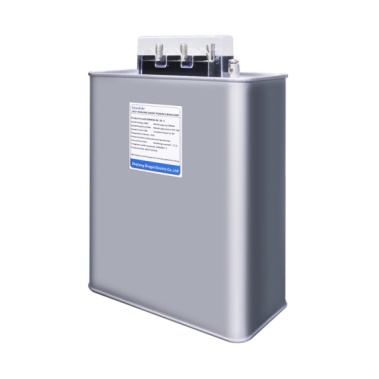
How we recommend thinking about “charging” during commissioning
Without giving unsafe, step-by-step field instructions, here’s the way we structure commissioning reviews:
Confirm the capacitor bank is matched to the network
Voltage rating and frequency must match the system
Step sizes should align with load profile (avoid hunting)
If harmonics are present, verify whether detuning is required
Confirm the switching device is capacitor-duty appropriate
Capacitor switching is a special duty. Using a general-purpose contactor or breaker without capacitor duty consideration can cause early wear or nuisance issues.
Confirm discharge behavior and re-energization timing
A power capacitor can retain charge after de-energization. Proper discharge elements are essential for safe maintenance and for predictable re-energization behavior. In operations, you typically enforce a minimum off-time between switching events so the bank can discharge and temperatures stabilize.
Confirm measurement and control signals
Automatic banks rely on correct CT orientation, correct measurement points, and correct controller settings. A surprising number of problems are control-input issues—not capacitor issues.
How to cleanly remove outdoor stains of misconceptions about power capacitors
We often hear statements like:
“Capacitors are simple, you just connect them.”
“If it trips when switching on, it must be defective.”
“More kVAr is always better.”
In reality:
Energization transients are normal; the system must be designed for them
Nuisance trips often come from inrush, harmonics, or incorrect protection coordination
Oversizing can cause overcompensation, higher voltage, and operational instability
Understanding “charging” as controlled energization makes the whole topic easier and safer.
Closing thoughts and where to learn more
If you take one idea from this article, let it be this: in power systems, “how to charge a power capacitor” really means how to energize a power capacitor bank safely and predictably. That depends on the right switching duty, the right inrush-limiting approach, correct discharge design, and protection/control coordination that matches your network—especially if harmonics are present. In our experience, most commissioning headaches can be avoided early by treating capacitor banks as part of the power quality system, not as a standalone accessory. If you’re planning a new installation, troubleshooting energization trips, or deciding whether detuned solutions are needed for your load profile, you can contact Zhejiang Zhegui Electric Co., Ltd. to learn more about practical power capacitor applications and capacitor bank configurations. Share your voltage level, typical load types, and whether you have harmonic sources, and we can help you frame the right technical questions and selection direction—without turning the discussion into a hard sell.
FAQ
1) What does charging mean for a power capacitor bank in AC systems
Charging usually refers to energizing the capacitor bank onto the bus through a switching device, where inrush current and transients must be managed by design and protection.
2) Why can a power capacitor bank trip immediately when switched on
Common causes include inrush current, back-to-back switching effects, incorrect protection settings, wiring/measurement issues, or harmonic resonance conditions in the network.
3) Do power capacitors need a discharge device after switching off
Yes, discharge elements are essential to reduce residual voltage after de-energization and to support safe maintenance and predictable re-energization intervals.
4) When should you consider detuned reactors with a power capacitor bank
If your site has significant nonlinear loads (like drives, rectifiers, UPS systems), detuned reactors are often used to reduce resonance risk and improve capacitor bank thermal performance.