


In electrical systems, many of the problems people call “mysterious” are actually predictable: higher-than-expected current, warm cables, overloaded transformers, nuisance trips, or a voltage profile that seems to sag when motors start. We see this pattern in factories, commercial buildings, and distribution networks—especially where inductive loads dominate. The good news is that these issues often share the same root cause: reactive power demand. That’s where a power capacitor becomes one of the most practical and cost-effective tools in power engineering. From our perspective as a manufacturer serving industrial and utility customers, a power capacitor is not a “nice-to-have accessory.” It’s a system component used to manage power factor, reduce losses, stabilize voltage, and improve the capacity you already have—without rebuilding the entire network. In this article, we’ll explain what a power capacitor is for, where it makes the biggest impact, how capacitor banks are applied safely, and what to consider when selecting solutions for real-world operating conditions.
1 What Is a Power Capacitor?
A power capacitor is an electrical device that stores and releases energy in an electric field. In AC power systems, its main value is not “energy storage” in the battery sense. Instead, it provides reactive power (kvar) locally to offset the reactive power drawn by inductive loads like motors, transformers, welding machines, and HVAC systems.
In simple terms:
Inductive loads consume reactive power to create magnetic fields.
Reactive power increases current flow without producing useful work (kW).
Higher current means higher losses, more heating, and reduced capacity.
A power capacitor supplies reactive power near the load, reducing the burden on the upstream network.
2 What Is a Power Capacitor For? The Core Purposes
Purpose A: Power factor correction (PFC)
This is the most common reason power capacitors are installed. Many facilities are billed or penalized for low power factor, and even when penalties are not explicit, low power factor still increases system current and losses.
A power capacitor improves power factor by reducing reactive current demand from the grid.
Purpose B: Reduce current, losses, and heating
When power factor is poor, current is higher for the same real power (kW). Higher current leads to:
More I²R losses in cables and busbars
Extra heating in switchgear
Reduced usable capacity in transformers and generators
Adding capacitors reduces reactive current, which often lowers operating temperatures and improves reliability.
Purpose C: Improve voltage stability
Reactive power affects voltage. In many systems, local capacitor support helps:
Reduce voltage dips when motors start
Maintain a more stable voltage profile along feeders
Improve equipment performance and reduce nuisance trips
Purpose D: Increase available capacity without major upgrades
When current drops, capacity effectively increases. This often means you can:
Add new loads without upgrading transformers/cables immediately
Reduce loading stress on existing assets
Improve system headroom during peak production
3 Where Reactive Power Comes From (And Why You Feel It)
Most industrial and commercial sites are inductive by nature. Common reactive power “drivers” include:
Induction motors (pumps, compressors, fans, conveyors)
Transformers (especially lightly loaded or with high magnetizing current)
Welding equipment
Large HVAC and refrigeration systems
UPS systems and some rectifier loads (depending on design)
Even if your kW demand is stable, reactive demand can vary throughout the day—especially when many motors cycle on/off. That’s why capacitor solutions may be fixed, switched, or automatic depending on load behavior.
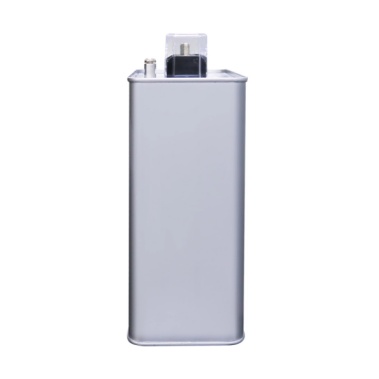
4 Typical Capacitor Solutions: From Single Units to Banks
A Individual (local) capacitors
Installed close to a motor or a group of small motors. Benefits include:
Reactive power supplied at the source
Reduced feeder current
Simple and effective for steady loads
B Centralized capacitor banks
Installed at the main distribution board or substation. Benefits include:
One system to manage plant-wide reactive demand
Easier maintenance and monitoring
Can be stepped/automatic to track changing loads
C Automatic power factor correction (APFC) banks
Uses a controller and switching (contactors or thyristors) to add/remove capacitor steps based on measured power factor. This is often preferred when loads vary significantly.
5 Power Capacitor vs “Just Paying the Penalty”: Why It Often Pays Back
We usually frame this decision in two categories: direct cost and hidden cost.
Direct cost may include:
Utility power factor penalties (where applicable)
Demand charges influenced by higher current
Hidden cost often includes:
More heat in cables/transformers (shorter component life)
Less spare capacity (forcing earlier upgrades)
Lower voltage at load during peak operation
Increased risk of nuisance trips and downtime
A well-designed power capacitor system can reduce these costs by improving the electrical “efficiency” of power delivery—not by reducing kW consumption, but by reducing the wasteful current that doesn’t do real work.
6 Key Specifications That Matter in a Power Capacitor
When selecting a power capacitor, the label kVAr rating is only the beginning. The right solution depends on the system environment.
Here are common parameters we consider in real projects:
Parameter | Why It Matters | Typical Notes |
Rated voltage | Must match system and harmonics margin | Often higher than nominal for safety |
kVAr rating | Determines reactive compensation level | Can be stepped in banks |
Frequency | 50/60 Hz system match | Some regions differ |
Insulation & dielectric | Impacts loss, life, and reliability | Film capacitors common |
Temperature class | Capacitors age faster when hot | Ventilation matters |
Discharge resistors | Safety after switching off | Ensures safe residual voltage |
Duty cycle / switching | Frequent switching needs robust design | Thyristor switching for rapid changes |
7 The Harmonics Question: When Capacitors Need Extra Attention
Many modern facilities include non-linear loads:
Variable frequency drives (VFDs)
Inverters
Rectifiers
UPS systems
These loads create harmonics, which can interact with capacitors and cause resonance—leading to higher currents and overheating.
That doesn’t mean “don’t use capacitors.” It means:
Assess harmonic levels
Consider detuned reactors (capacitor banks with series reactors)
Select bank designs that avoid resonance frequencies
Ensure adequate protection and monitoring
A practical rule: if your site has many VFDs or power electronics, don’t treat capacitor selection as “plug and play.” Proper bank design keeps the benefits while protecting the system.
8 Protection and Safety: What Makes a Capacitor System Reliable
From an operational viewpoint, the best capacitor system is one you rarely have to think about. Achieving that usually requires:
Proper fusing/MCB or dedicated capacitor protection
Overcurrent and overtemperature considerations
Reliable switching elements (contactor or thyristor)
Discharge devices to reduce residual voltage
Adequate ventilation and enclosure design
Clear maintenance procedures and labeling
Capacitors store energy. Even after power is removed, voltage can remain briefly. That’s why discharge and interlocks are not optional details—they are safety fundamentals.
9 How to Decide the Right Compensation Approach
A practical selection flow we use:
Measure: Power factor profile, load variation, harmonic content
Set targets: Desired power factor (often near utility requirements)
Choose architecture: local, centralized, or hybrid
Choose control: fixed steps vs automatic controller
Harmonic mitigation: detuned/reactor if needed
Verify protection: coordination and switching duty suitability
A quick guide by load behavior
Load Behavior | Recommended Approach | Why |
Steady motors running long hours | Local fixed capacitors | Simple and efficient |
Plant load varies by shifts/process | APFC stepped bank | Tracks changing kvar demand |
High harmonics (many VFDs/UPS) | Detuned capacitor bank | Reduces resonance risk |
Mixed loads across large site | Hybrid: local + central | Better results and control |
Final Thoughts
So, what is a power capacitor for? In real operating environments, it’s for making your electrical system work smarter: supplying reactive power where it’s needed, improving power factor, stabilizing voltage, cutting losses, and freeing capacity that would otherwise be wasted as heat and unnecessary current. When implemented correctly—especially with attention to load variation and harmonics—power capacitors and capacitor banks often become one of the most practical upgrades a facility can make, because they improve performance without forcing a full infrastructure rebuild. If you’re evaluating power factor correction, capacitor banks, or harmonic-aware compensation solutions, you can learn more from Zhejiang Zhegui Electric Co., Ltd. and contact the team to discuss your system voltage, load profile, and application goals in a straightforward way.
FAQ
1) What is a power capacitor used for in industrial power systems?
A power capacitor is used for power factor correction by supplying reactive power (kvar) locally, which reduces reactive current drawn from the grid and improves system efficiency.
2) How does a power capacitor help reduce losses and heating?
By improving power factor, the power capacitor reduces overall current in cables and transformers. Lower current reduces I²R losses, helping equipment run cooler and more reliably.
3) Should I use fixed or automatic capacitor banks for power factor correction?
Fixed capacitors suit steady loads, while automatic (stepped) capacitor banks are better when loads change throughout the day. Many sites use a hybrid approach.
4) Can power capacitors cause problems with harmonics?
They can if harmonics are high and resonance occurs. In systems with many VFDs or UPS loads, detuned capacitor banks with series reactors are often used to reduce resonance risk.