





Single control panels typically ship in 3 to 4 weeks after drawing approval. Every panel runs a factory acceptance test before crating: insulation resistance per circuit, IO continuity against the wiring schedule, and a staged simulation of the control sequence. You receive the FAT report with the panel, along with the wiring schedule. Brand-specified components are sourced from your approved list, and nothing is substituted without written approval.
An HVAC control panel groups the control gear for chillers, AHU fans, cooling towers, and pumps into one industrial electrical cabinet. The HVAC control panel components that matter are VFDs for fan and pump speed, contactors for changeover, temperature and pressure inputs, and fire-safety interlocks. Rooftop units often mount the panel inside an outdoor weatherproof enclosure cabinet box because the equipment lives outside. We size fan drives from motor data plates and verify every interlock during the factory acceptance test.
Yes, for Class I Division 2 locations. We build Class 1 Div 2 electrical enclosures with proper cable glands, rated terminals, non-incendive field wiring, and no exposed arcing parts. The panel is documented against the enclosure and component rules so your project engineer can review it. Where the site is outdoor and chemical-laden, we combine this with a NEMA 4X stainless steel enclosure. We do not claim third-party listing certificates; we deliver a designed, documented build.
The IP66 vs NEMA 4X question is about standards and materials. IP66 comes from IEC 60529 and certifies dust-tight plus protection against powerful water jets. NEMA 4X comes from NEMA 250 and adds corrosion resistance, typically built in 304 or 316 stainless steel. For coastal, food, or chemical sites choose NEMA 4X; for mild outdoor duty IP66 is sufficient. We also apply design rules for Class 1 Div 2 electrical enclosures on hazardous-area projects, where enclosure and component selection follow the gas classification.
Choose a NEMA 4X stainless steel enclosure when the panel lives outdoors, gets washed down, or sits near salt air or chemicals. Stainless in 304 or 316 grade resists the corrosion that ends a painted carbon steel box. If the site is simply dusty and rainy, an outdoor weatherproof enclosure cabinet box with an IP66 gasket is usually enough. Match the material to the environment, not the budget line.
Yes. We build VFD panels, motor control centers, and ATS cabinets from your IO list, logic drawings, and approved component schedule. If a specified part has a long lead time, we flag it before ordering and propose an equivalent for your written approval. For OEM customers we also produce custom electrical panels under your brand, with your wiring standards and documentation.
An industrial control panel is an assembled cabinet that controls motors, pumps, and processes. It contains IO modules, relays, contactors, drives, and protection devices, wired to numbered terminal blocks. Unlike a switchboard that distributes power, a control panel runs logic and automation. Industrial control panel manufacturers build these to your drawings, and an industrial control panel builder assembles, wires, and tests each unit before shipping.


An industrial control panel is the brain of a machine, a process, or a building. It turns low voltage power at 400V or 480V into controlled motion: starting motors, regulating speed, sequencing pumps, and reporting to a plant-wide SCADA system. If you are searching for industrial control panel manufacturers, you are most likely a system integrator or plant engineer who wants a panel built to a drawing, tested, and shipped ready to wire in. This page covers the four control panel types we build and the enclosures around them, so you can spec against one consistent reference.
An industrial control panel is an assembled cabinet that controls motors, valves, and processes. Inside sit a programmable logic controller, IO modules, relays, contactors, drives, and the protection devices feeding them. Every wire runs to a numbered terminal block, so a maintenance electrician can trace a fault in minutes. A control panel reads inputs and drives outputs; it does not feed power outward the way a switchboard does. The design starts from your logic and duty cycle, not just ampacity.
A switchboard, or power distribution board, takes a main supply and splits it into outgoing feeders. A control panel takes power and uses it to run logic. The plant incoming section is a switchboard; the cabinet that starts the conveyor motors is a control panel.
Buyers often ask for control panels when they actually need a power distribution board. If you need to split 400V incoming into feeder circuits, look at a power distribution board. If you need motor starting, speed control, or process sequencing, you need a control panels solution built around automation. Most projects have both.
Four assembled products cover most automation projects. The table compares them by job, hardware, and typical spec. Your project may combine several.
| Panel type | What it does | Core hardware | Typical spec |
|---|---|---|---|
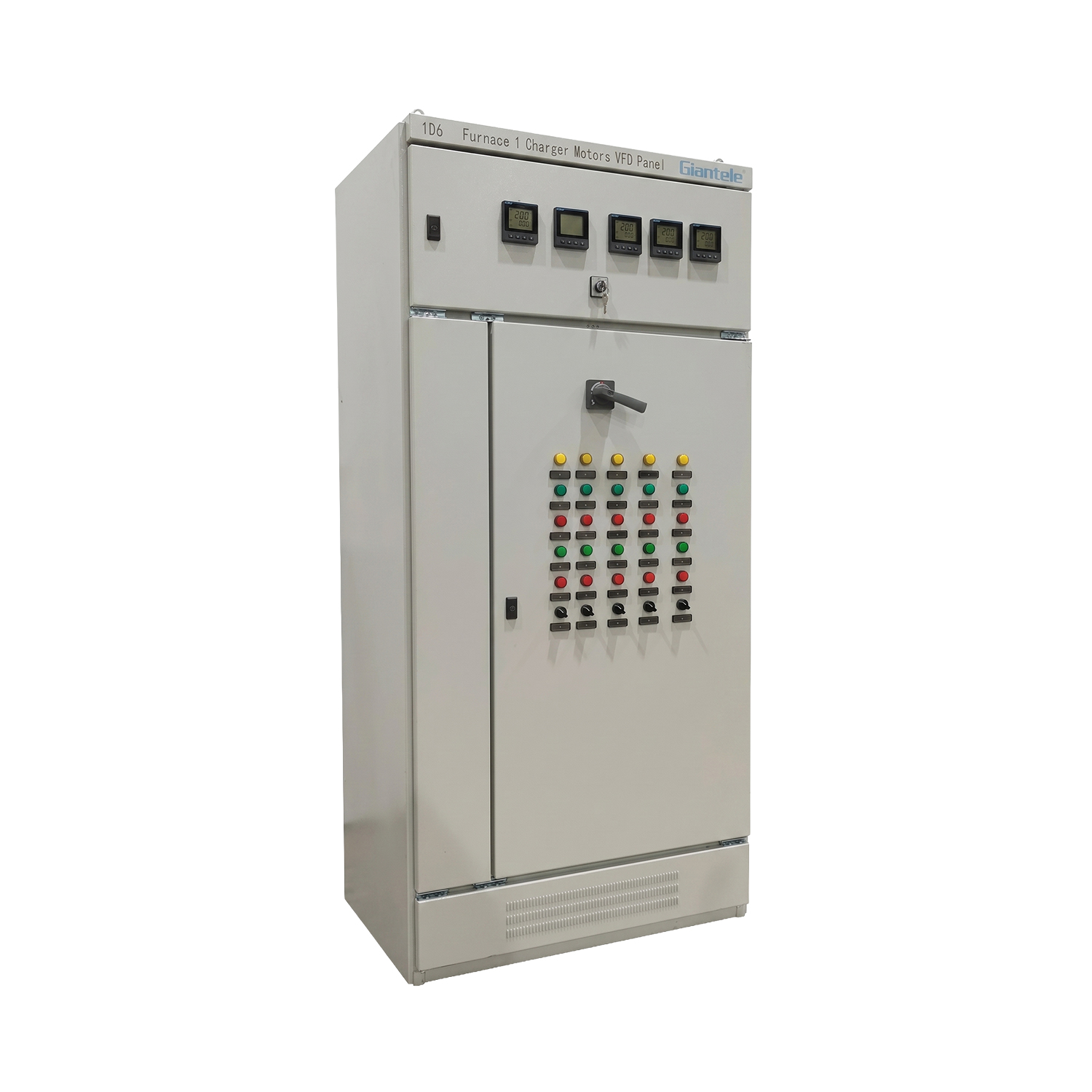
| VFD control panel | Varies motor speed to save energy | VFD, protection, bypass | 0.75kW to 400kW, 380V to 690V |
| Motor control center | Groups motor starters in one cabinet | Contactors, overloads, soft starters | Star-delta or soft-start |
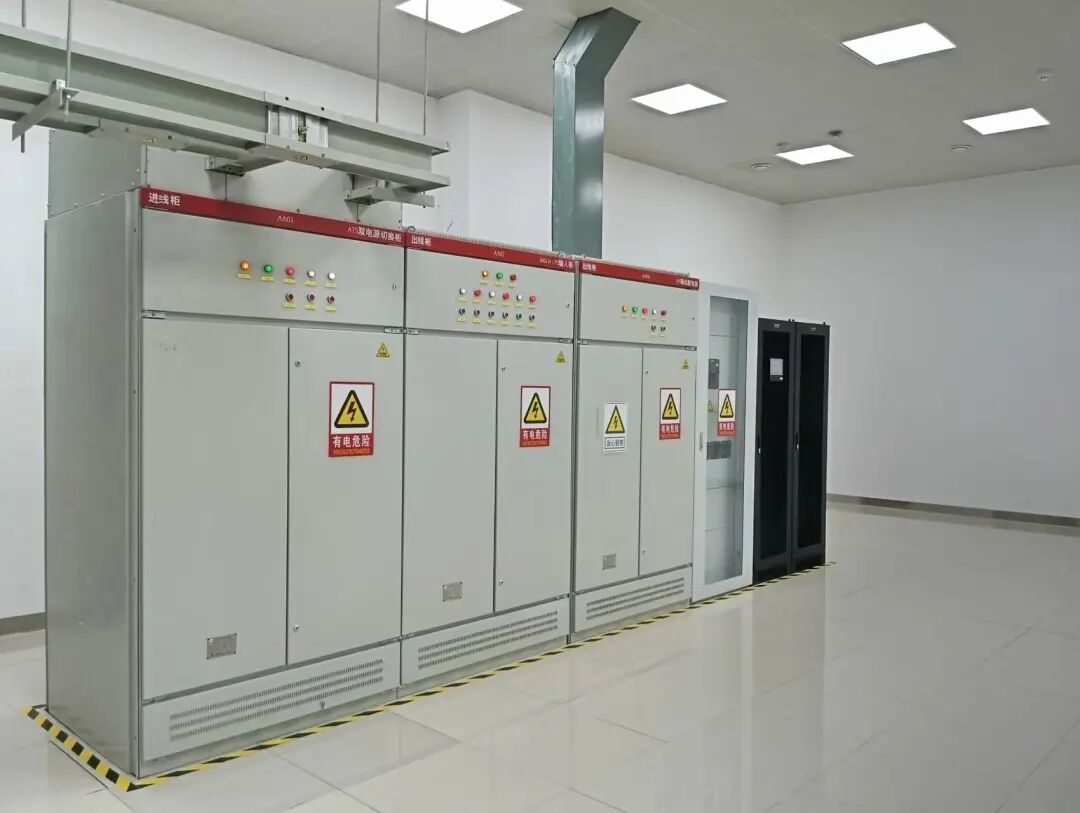
| ATS and SCADA cabinet | Supply transfer and remote monitoring | ATS controller, telemetry | 50Hz or 60Hz, remote monitoring |
Each type is assembled in-house, wired with numbered conductors, and tested before shipment, with design verification per IEC 61439-1, the standard for LV switchgear and controlgear assemblies. If your panel combines functions, say a controller supervising VFDs, we build it as one integrated cabinet.
Heating, ventilation, and air conditioning loads rarely run at full speed. A dedicated HVAC panel groups the controls for chillers, AHU fans, cooling towers, and pumps so the building management system can command them as one set. The HVAC control panel components that matter are the VFD for fan and pump speed, contactors for changeover, temperature and pressure inputs, and the fire-safety interlocks. On a rooftop unit the panel often lives inside an outdoor weatherproof enclosure cabinet box because the equipment sits outside. We size the fan VFD from the motor data plate and verify every interlock in the factory test.
The quick answer: if the site is outdoor, washed down, or corrosive, choose a NEMA 4X stainless steel enclosure; if the environment is mild and the panel only needs protection from rain and dust, IP66 is enough. The two systems come from different standards, the IP code per IEC 60529 and enclosure ratings per NEMA 250, so a side-by-side comparison helps.
| Criterion | IP66 (per IEC 60529) | NEMA 4X (per NEMA 250) |
|---|---|---|
| Origin standard | IEC 60529 | NEMA 250 |
| Dust protection | Dust-tight | Dust-tight |
| Water protection | Powerful water jets | Hose-down and washdown |
| Corrosion resistance | Not rated | 304 or 316 stainless |
| Typical use | Indoor cabinets, mild outdoor | Food, coastal, chemical, outdoor |
So the IP66 vs NEMA 4X choice comes down to environment and washdown frequency, not price. Stainless costs more, but a painted box on a coastal pump station rusts out in a few years. Match the rating to the site.
Yes. A Class I Division 2 location is one where flammable gas appears only under abnormal conditions, and a control panel there must not become an ignition source. We apply Class 1 Div 2 electrical enclosures design rules per NEMA 250: proper cable glands, rated terminals and components, non-incendive field wiring where needed, and no exposed arcing parts. The enclosure is typically NEMA 4X stainless or fiberglass, depending on the chemical environment. We do not claim third-party listing certificates; we deliver a panel documented to the enclosure and component rules, with a component schedule your engineer can review.
Many projects arrive with an approved component list: specific drives, breakers, and relays the client maintenance team already stocks. A control panel builder that ignores that list creates a spares problem on day one. We build to your brand-specified schedule and keep a component traceability record for every panel.
If a specified part has a long lead time, we flag it early and propose an equivalent for your written approval before ordering. For OEM customers we also supply custom electrical panels under their brand, with the same wiring and test standard. Nothing gets substituted silently. For the full design-to-FAT workflow, the custom control panels guide covers each stage.
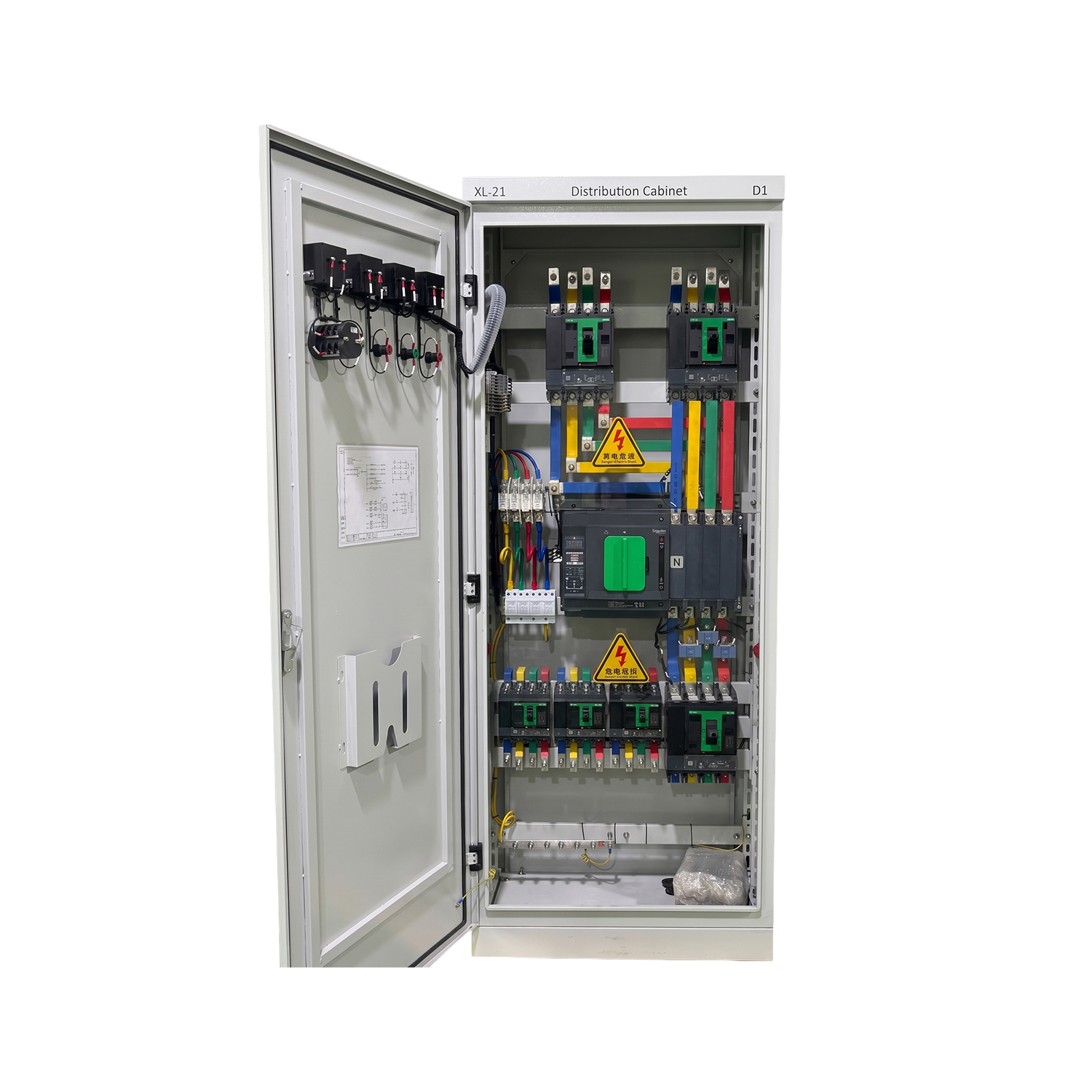
Two things separate a panel that runs for twenty years from one that fails in the first summer: wiring clarity and heat management. Every conductor carries a number matching the schematic, and the same number appears on the terminal block and the cable label. In a VFD panel, control wiring runs in separate trunks from power cables to avoid induced noise. Thermal design starts with a heat-load calculation, then ventilation, fans, and louvers are sized from data sheets. We verify the temperature rise so components stay inside their rated window even at 50 degrees C ambient.
The factory acceptance test is where the panel proves it matches the drawings before it ships. We run a staged simulation of the control sequence, so the control logic and interlocking are exercised without the motors connected. Insulation resistance is measured per circuit at 500VDC, every IO point is checked against the wiring schedule, and the results go into a FAT report with photos. If required, we run the FAT live on a video call. The report travels with the panel.
Ask the same six questions of any industrial control panel builder before you commit. The answers should come back as documents, not promises.
A builder who answers with evidence, drawings, records, and test reports, is one you can schedule a project around. We are among the industrial control panel manufacturers who do all of the above.
The same four panel types repeat across industries, and each one is an industrial electrical cabinet built for its duty. Water and wastewater plants use VFD panels for pumps and blowers, with SCADA cabinets in the control room. Pump stations put MCCs and VFD panels in outdoor NEMA 4X enclosures because there is no building. Mining runs conveyor and crusher controls in dust-tight cabinets. Food and beverage plants wash everything down, so enclosures trend toward stainless. Production lines combine VFD speed control with relay interlocking at each station. For the speed-control side, the vfd panel guide covers drive sizing; for grouped motor starting, the motor control center guide covers starter selection.
A control panel project starts with three things: a single-line diagram, an IO list, and an enclosure requirement. Send those and we reply with a technical proposal within 48 hours covering panel type, component schedule, enclosure rating, thermal plan, FAT scope, and a price for your quantity.
We build VFD panels, MCCs, ATS cabinets, and custom enclosures from 0.75kW to 400kW at 400V, 480V, or 690V, 50Hz or 60Hz. If you are new to the terminology, start with our explainer on industrial control panel basics before you write the spec.
