


A power distribution box is the main point in an electrical system. You use it to control and send power to many circuits. This system helps move power safely and quickly to different outlets. You can see these boxes in many places:
Outdoor festivals and concerts use them for stage lights and sound.
Trade shows and exhibitions give power to booths with them.
Sporting events use them for scoreboards and broadcast equipment.
Homes and vehicles use them to give safe, neat power.
You depend on these boxes to stop problems and keep other circuits working if something goes wrong. This setup lowers the chance of electrical accidents and keeps you safe.
Key Takeaways
A power distribution box sends electricity to many circuits. It helps keep electricity safe in homes, events, and factories.
Circuit breakers and fuses are safety features. They stop too much electricity and keep people and equipment safe from harm.
Check your power distribution box often. This helps you find problems early. It keeps your electrical system safe and working well.
Pick the right power distribution box for your needs. Think about how many circuits you need. Also, think about how much power you use and where you will use it.
Always ask a licensed electrician to install it. Get help with hard problems. This keeps you safe and follows the rules.
Power distribution box basics
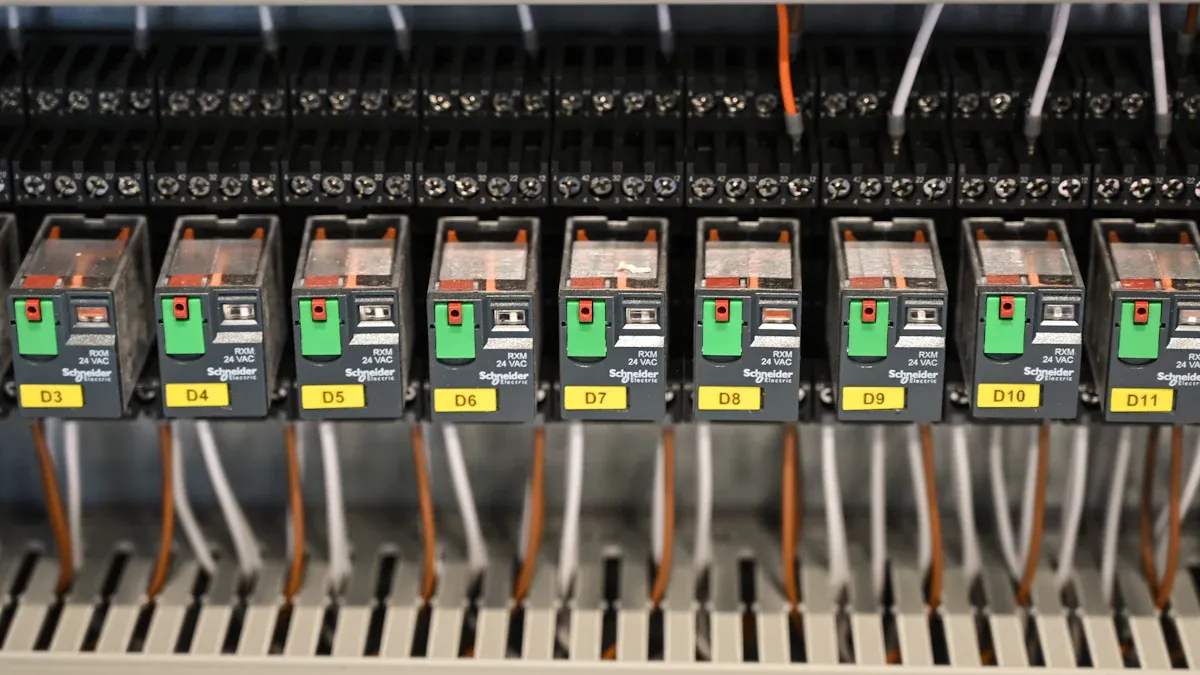
What is a power distribution box
A power distribution box helps you control electricity in many places. This box is the main spot for electrical power. It takes power from one big source and sends it to smaller circuits. You can find these boxes in homes, schools, factories, and at outdoor events. They help keep wires tidy and make fixing things easier.
Here is a table that shows the main benefits of a power distribution box:
Benefit | Explanation |
|---|---|
Central Power Hub | Distributes electricity safely to various circuits and devices. |
Safety Features | Incorporates breakers or fuses to prevent overloads and ensure safety. |
Easy Maintenance | Organizes wires for straightforward repairs and management. |
You need this box to keep your electrical system safe and neat. It helps stop overloads and short circuits. You can find and fix problems fast because the box keeps everything labeled and easy to reach.
How it works
A power distribution box takes electricity from a main source and splits it into smaller circuits. You can see how it works by following these steps:
Power comes into the box from the main supply or a generator.
The box divides the electricity into different circuits with bus bars.
Each circuit has a breaker or fuse to keep it safe from too much current.
Electricity goes out to lights, machines, or other devices.
You can check and take care of the system using meters and labels.
Inside the box, you see important parts. Circuit breakers keep each circuit safe from too much power. The layout puts everything in rows, so you know which circuit controls each device. Some boxes have extra safety features like RCDs. These turn off power fast if there is a leak or problem. Waterproof enclosures keep the box safe from rain and dust. You might also see metering modules that show how much power each circuit uses.
Here is a table that explains the main components and features:
Component/Feature | Description |
|---|---|
Protect each circuit from overloads and electrical incidents. | |
Layout | Organized in rows with independent modules for each circuit. |
Safety Features | Includes RCDs for immediate disconnection in case of current leaks. |
Preconfigured Modules | Quick deployment with dedicated compartments for main power cables. |
Waterproof Enclosures | Protection against moisture, dust, and extreme conditions. |
Integrated Metering | Real-time monitoring of circuit loads and detection of anomalies. |
Modular Design | Easy upgrades or additions without replacing the whole box. |
Technical Documentation | Wiring diagrams and circuit identification for easy setup and maintenance. |
Tip: Always look at the labels and diagrams inside your power distribution box before you make changes. This helps you avoid mistakes and keeps your system safe.
Safety is very important for a power distribution box. Circuit breakers and fuses stop dangerous currents. Monitoring systems can warn you if something is wrong. Strong materials keep the box safe from damage. You find these safety features in homes, factories, and public places. They help you handle power loads and stop accidents.
You use a power distribution box to keep your electrical system safe, neat, and easy to use. It helps you control power, protect circuits, and take care of everything with less work.
Types of power distribution box
Temporary and portable boxes
You see temporary and portable boxes when you need fast power. These boxes are good for short-term jobs. You use them at building sites, outdoor parties, and during emergencies. They help you move power to the right spot.
Here is a table that shows common use cases for temporary and portable boxes:
Use Case | Description |
|---|---|
Construction Sites | Give power for repairs, upgrades, or new buildings. |
Outdoor Events | Bring power to lights, speakers, and other gear outside. |
Emergency Response Operations | Help send power fast when there is a disaster. |
Industrial Support | Run machines during shutdowns or repairs to save time. |
Remote Sites | Send power far away in hard places, like mines or oil rigs. |
Tip: Always check if the box is weatherproof before using it outside.
Residential and commercial boxes
You use residential boxes at home to keep power safe and neat. Commercial boxes are for offices, schools, and factories. These boxes handle different power needs and safety rules.
Here is a table that compares residential and commercial systems:
Feature | Residential Systems | Commercial Systems |
|---|---|---|
Typical Voltage | Single-phase 120/240V | Three-phase 208V, 277V, or 480V |
Load Profile | Medium, based on daily use | High, with many machines and motors |
Equipment | PVC pipes, home breakers | Metal pipes, breakers for motors |
Safety Standards | NEC, easy setup | UL 9540, NFPA 855, NEC 705, fire codes |
Residential boxes use simple parts. Commercial boxes use stronger stuff and must follow strict rules. The IEC 61439-3 standard helps make both types safe to use.
Automotive and marine boxes
You use automotive and marine boxes in cars, trucks, and boats. These boxes must work in tough places. They need to handle heat, shaking, and small spaces. Marine boxes also need to fight water and salt.
Here are some special needs for these boxes:
Handle heat in hot places
Stay strong when things shake
Fit in small spaces
Resist rust from saltwater
Keep water out
Work well on boats that shake a lot
You often see stainless steel, marine alloys, and rubber used. These materials help the box last and stop damage.
Material Type | Properties |
|---|---|
Stainless steel | Very strong and does not rust |
Marine-grade alloys | Tough and good for harsh places |
Rubber molding | Keeps out water and insulates |
Tin-plated brass | Conducts power well and does not rust |
Polycarbonate/ABS | Hard to break and keeps out weather |
Note: Always pick a power distribution box with the right materials for your car or boat.
Key features and components
Circuit protection
Every power distribution box needs strong circuit protection. This keeps your electrical system safe and working right. You often find these protection types:
Fuses
Loadcenters
Air conditioner disconnects
Transformers
These parts help control how much power each circuit gets. They stop circuits from getting too hot. They also shut off power if there is a short circuit.
Here is a table that shows how fuses and circuit breakers are different:
Feature | Fuse | Circuit Breaker |
|---|---|---|
Operation | Melts to break the circuit | Trips to block electrical flow |
Resetting | Must be replaced after use | Can be reset with a switch |
Protection Type | Protects against overloads | Protects against overloads and short circuits |
Response Time | Quick response by melting | Quick response by tripping |
Breaking Capacity | Lower than circuit breakers | Higher, handles more fault current |
Flexibility | Fixed rating, less flexible | Adjustable trip settings |
Reusability | Not reusable | Reusable after tripping |
Tip: Always check your circuit protection devices. Replace fuses and reset breakers when you need to. This keeps your system safe.
Connectors and certifications
Connectors join your circuits to the right devices. You need safe, strong connectors to stop accidents. Look for twist-to-lock connectors and quick-connect terminals. These make setup simple and keep wires tight.
Certifications show your connectors follow safety rules. In the U.S., UL 1977 is for component connectors. UL 310 is for quick-connect terminals. Canada uses CSA standards. Europe and other places use IEC standards. Here is a table of common certifications:
Certification Type | Region | Standard |
|---|---|---|
Component Connectors | U.S. | UL 1977 |
Component Connectors | Canada | CSA C22.2 No. 182.3-16 |
Component Connectors | EU, China, etc. | IEC 61984:2008 |
Electrical Quick-Connect | U.S. | UL 310 |
Terminal Blocks | U.S. | UL 1059 |
Terminal Blocks | EU | EN 60947-1, -2, -3, -4 |
Note: Always look for certification labels on connectors before you use them.
Durability and construction
You want your power distribution box to last a long time. Good materials and strong build help it survive tough places. Stainless steel works well near the ocean where there is salt. Polycarbonate enclosures resist chemicals. Silicone rubber gaskets keep out cold air and water. UV-resistant coatings protect boxes in sunny, hot places. For moving uses, pick boxes with IP66 and IK08 ratings. These ratings mean the box can handle water, dust, and bumps.
Weatherproof boxes protect your system from rain, heat, and cold. Materials that resist rust help in wet places. Good insulation and strong seals keep your circuits safe in any weather.
Weatherproof boxes keep out water and dust.
Rust-resistant materials stop corrosion.
UV coatings protect from sun damage.
Strong gaskets and seals block cold and wet air.
Tip: Pick a box with the right material and rating for your area. This keeps your system safe and working for many years.
Selection, installation, and safety
Choosing the right box
You have to pick a power distribution box that fits your needs. First, count how many circuits you need. Add up the total power your devices use. Check the voltage and amperage for your equipment. If you use the box outside, make sure it is weatherproof. Pick strong materials for outdoor jobs. Safety features like ground screws and circuit breakers help protect you. Use this table to compare what matters most:
Criteria | Description |
|---|---|
Number of Circuits | Make sure the box fits all your circuits and wires. |
Material Choices | Use plastic for light jobs or metal for tough, outdoor work. |
Weatherproofing | Choose a box that keeps water out and protects from moisture. |
Safety Features | Find ground screws and circuit breakers to stay safe. |
Installation and Maintenance | Pick a box that is simple to set up and easy to fix. |
You also need to check how much power your equipment uses. The chart below shows how much power common items need. This helps you choose the right size for your box.
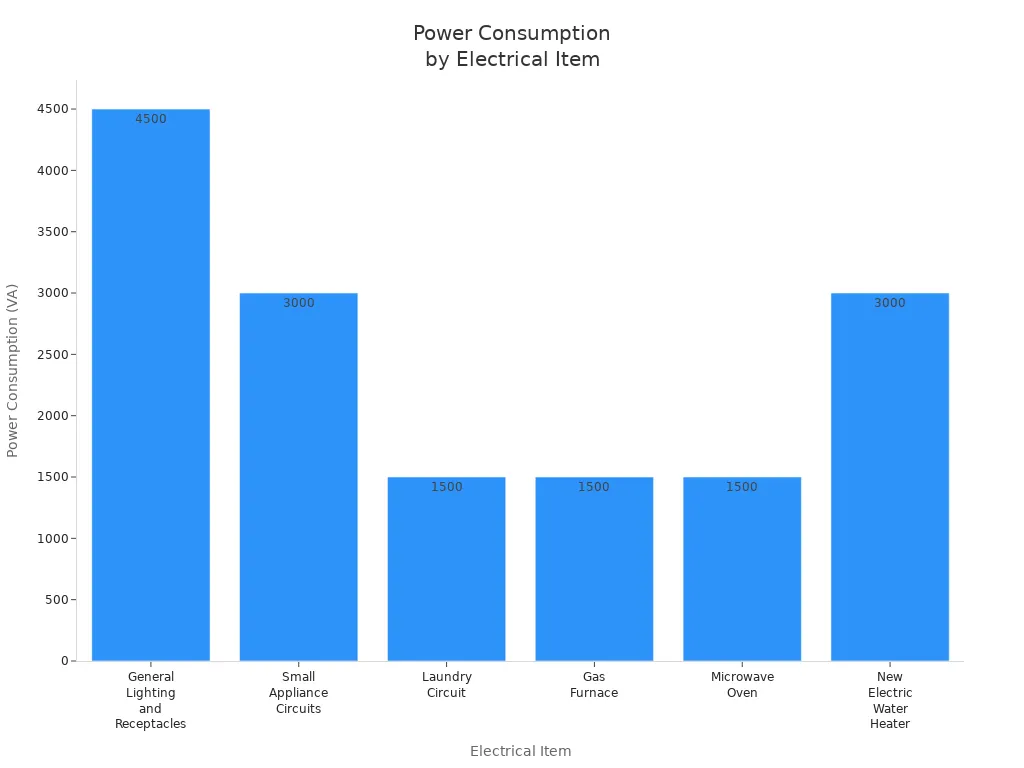
Installation tips
You must follow safe steps when you install a power distribution box. Get your tools ready, like a screwdriver, wire stripper, drill, multimeter, and insulation tester. Mark where the box goes, drill holes, and use bolts to hold it. Connect the wires and put in the circuit breakers. Always test your work to make sure it is safe.
Common mistakes to avoid:
Loose ground wires can shock you.
Wires that are not tight can start fires.
Not enough protection can break your equipment.
Wrong wiring can make things stop working.
Put the box in a dry place with good air.
Never change the inside without knowing the risks.
Tip: Always follow the instructions and local rules to stay safe when you install.
Maintenance and safety
You need to keep your power distribution box in good shape to stay safe. Follow safety rules and local laws. Check your box often to find and fix problems. Do regular checks to keep your system working well.
Best practices for maintenance:
Turn off the power before you start any work.
Use lockout/tagout (LOTO) steps to keep everyone safe.
Write down any work you do on live equipment.
Five to 10 times every day in the United States, a worker gets badly hurt in an electrical accident. Safety rules now help guide the best ways to take care of electrical systems.
You need enough space around your box to work safely. Keep the area clear and bright. Make sure the space is at least 6 feet 6 inches high and 3 feet wide. Use approved equipment and good insulation to stop accidents.
A good relay system helps stop failures and keeps your power system steady.
When you know how a power distribution box works, you can keep your electrical system safe. It helps you avoid dangers and makes your system work better. It is also easier to fix problems when you understand the box. Here are some good tips to remember:
Pick the box that fits what you need.
Put it in the right way and take care of it.
Use safety devices and helpful tools.
Check the box often and make sure power is shared well.
Call a licensed electrician if you need help.
If you follow these tips, your home or business will be safer. Your power will keep working the right way.
FAQ
What is the main job of a power distribution box?
You use a power distribution box to split electricity from one source into smaller circuits. This helps you control and protect each circuit in your home, business, or event.
Can you install a power distribution box by yourself?
You should not install a power distribution box unless you have training. Always call a licensed electrician. This keeps you safe and follows local electrical codes.
How often should you check your power distribution box?
You should check your box at least once a year. Look for loose wires, signs of rust, or any damage. Regular checks help you find problems early.
What does IP66 mean on a power distribution box?
IP66 means the box keeps out dust and strong water jets. You can use it outside or in wet places. This rating helps protect your circuits from weather.
What should you do if a circuit breaker keeps tripping?
First, unplug devices on that circuit. If the breaker still trips, you may have a wiring problem. Call an electrician to check and fix the issue.