


In medium-voltage (MV) distribution, most outages aren’t caused by a lack of generation—they’re caused by a single fault or a single maintenance operation that forces a whole section of the network to go dark. When we talk with utilities, EPC contractors, and industrial site owners, the same priorities come up repeatedly: keep power flowing, isolate faults quickly, enable safe maintenance, and make network changes without lengthy downtime. That’s exactly where a ring main unit (RMU) earns its place. An RMU is not “just another cabinet.” In real projects, it’s the practical control point that helps a distribution system behave like a resilient loop rather than a fragile line. In this article, we’ll explain the purpose of a ring main unit in clear terms, then focus on a question buyers often ask during substation planning: What is the difference between a ring main unit and a transformer? The two are frequently installed together, but they solve different problems—and understanding that difference helps you select the right configuration, protection approach, and footprint for your MV network.
1 What Exactly Is a Ring Main Unit?
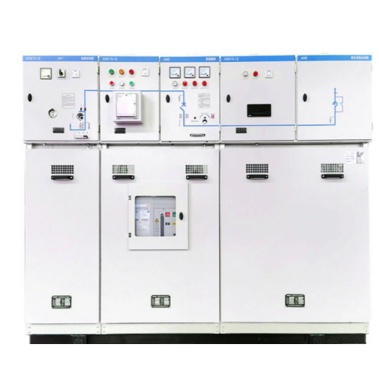
A ring main unit is a compact piece of MV switchgear typically used in ring (loop) or radial distribution networks. Its job is to switch, protect, and isolate MV feeders so the network can continue operating even when a section is faulted or taken out of service.
In practical terms, an RMU usually includes:
Incoming/outgoing feeder switches (commonly load break switches)
A protection device for a transformer or outgoing feeder (often a circuit breaker or switch-fuse combination)
Earthing switches to ground cables safely for maintenance
Cable terminations and interlocks designed for MV safety requirements
Different projects choose different internal technologies (gas-insulated, solid-insulated, air-insulated), but the purpose remains consistent: safe sectionalizing and reliable supply continuity.
2 The Purpose of a Ring Main Unit in Real Networks
Purpose A: Maintain supply continuity in a ring network
In a ring arrangement, power can arrive from two directions. If a fault occurs on one section, the RMU allows operators to:
Isolate the faulted section, and
Restore supply from the other side of the ring to healthy loads.
This is how a ring network can keep most customers energized even when part of the line is down.
Purpose B: Fast fault isolation and safer switching
Fault isolation in MV isn’t something you “guess” through trial-and-error switching. RMUs are built for controlled switching and clear isolation states. With properly selected protection, an RMU supports:
Targeted isolation (smaller outage zones)
Reduced stress on the rest of the network
Safer maintenance and switching procedures
Purpose C: Provide a compact, standardized node for distributed infrastructure
Modern distribution networks have more “nodes” than ever: industrial parks, data centers, EV charging hubs, renewables, and urban substations. RMUs are widely used because they package critical switching functions into a footprint that fits:
Urban streets and compact substations
Plant perimeter rooms
Underground or kiosk-type installations (depending on design)
Purpose D: Enable planned maintenance without widespread downtime
In many MV networks, maintenance is unavoidable (cable testing, upgrades, inspections). RMUs support planned isolation and earthing so maintenance can happen with minimal service interruption.
3 Typical RMU Configurations You’ll See
While designs vary, many RMUs are described by “ways” (number of functional modules). A common pattern is 2+1:
2 feeder switches (in/out for the ring)
1 protection way (to a transformer or outgoing feeder)
Here’s a simple way to think about typical use cases:
RMU Configuration | Common Use Case | Why It’s Chosen |
2-way | Simple radial feeder switching | Compact isolation point |
3-way (often 2+1) | Ring in/out + transformer protection | Standard for compact substations |
4-way / 5-way+ | More feeders, multiple transformers, sectionalizing | Flexible distribution nodes |
4 RMU vs Transformer: They’re Not Substitutes
This is the core misunderstanding we often help customers clear up: an RMU and a transformer do completely different jobs.
The ring main unit manages switching, protection, and isolation at MV.
The transformer changes voltage levels (e.g., MV to LV) and provides electrical isolation between windings (depending on design).
You don’t choose one “instead of” the other in most MV-to-LV supply scenarios. You choose an RMU to control and protect the MV side, and a transformer to step voltage to where loads can use it.
Quick comparison table: ring main unit vs transformer
Topic | Ring Main Unit (RMU) | Transformer |
Primary purpose | Switch, protect, and isolate MV circuits | Change voltage level (MV↔LV) |
What it “controls” | Power flow paths and fault isolation | Voltage and current transformation |
Typical location | MV distribution nodes, substations, kiosks | Substations, distribution rooms, pad-mounts |
Key components | Load break switches, CB/fuses, earthing, interlocks | Core, windings, insulation system, tap changer (if any) |
Protection role | Hosts protection devices for feeders/transformers | Protected by upstream devices; may include temp/pressure monitoring |
Can it step down to LV? | No | Yes |
5 So Why Are RMUs Often Installed Next to Transformers?
Because together they form a practical MV supply “package”:
RMU = MV control + safe isolation + fault management
Transformer = MV-to-LV power delivery
In compact substations, the RMU can protect the transformer (for example, via a circuit breaker or fused switch) and provide switching points for the ring network. This pairing supports:
Selective protection (faults cleared locally)
Smaller outage areas
Easier maintenance planning
Cleaner expansion paths when load grows
6 What a Ring Main Unit Does That a Transformer Cannot
It creates sectionalizing points
A transformer alone can’t isolate cable sections or re-route supply. An RMU provides defined isolation points that operators can trust.
It supports ring network operation
Ring networks depend on switching nodes. Without RMUs (or similar switchgear), a “ring” cannot be managed effectively.
It integrates MV safety mechanisms
MV switching requires interlocks, visible status, and safe earthing processes. RMUs are built around these operational realities.
It hosts protection coordination tools
Protection coordination isn’t just a relay setting exercise—it depends on where protection devices are installed. RMUs provide standardized places to implement and maintain those protection functions.
7 Practical Selection Notes: What Buyers Usually Decide First
When specifying an RMU, we find the most effective approach is to decide from the network and operations outward:
A Network topology and operating philosophy
Is it a ring network with normally open points?
Is it radial but needs sectionalizing?
Will switching be manual, motorized, or SCADA-controlled?
B Protection approach
Transformer protection needed? (common in 2+1 setups)
Feeder protection needed?
Required interrupting and making capabilities for the application
C Installation environment
Indoor substation room or outdoor kiosk
Humidity, pollution, altitude, temperature range
Space constraints and cable entry direction
D Expandability and lifecycle servicing
Future feeders planned?
Spare ways required?
Ease of inspection and maintenance
8 Maintenance and Reliability: Why RMUs Are Chosen for Modern Distribution
A transformer is a long-life asset—often designed for decades. But reliability for the network depends on how quickly you can isolate issues and restore supply. RMUs improve that network reliability by enabling:
Faster isolation of faulted cables
Safer planned maintenance
Reduced fault impact zone
Consistent operating procedure across multiple sites
In practical project management, this translates into fewer unplanned outages and less operational disruption—especially in industrial parks and urban distribution where downtime carries a high cost.
Final Thoughts
A ring network is only as reliable as the switching nodes that manage it. From our perspective, the purpose of a ring main unit is straightforward: it gives the MV distribution system a safe, compact, and operationally consistent way to switch, protect, and isolate feeders—so faults don’t become wide-area outages and maintenance doesn’t become a shutdown event. A transformer is equally essential, but for a different reason: it converts voltage to serve the loads. When you understand the difference between a ring main unit and a transformer, specification becomes clearer: you select the transformer for electrical capacity and voltage, and you select the RMU for network reliability, operational safety, protection coordination, and future flexibility. If you’re planning a new MV node or upgrading an existing distribution point and want to compare configurations (such as 2+1, multi-way options, and protection schemes) in a practical way, you can learn more from Zhejiang Zhegui Electric Co., Ltd. and reach out to discuss your application requirements and operating conditions.
FAQ
1) What is the purpose of a ring main unit in a medium-voltage network?
The purpose of a ring main unit is to switch, protect, and isolate MV feeders so faults can be sectioned off and supply can often be restored from an alternate path in a ring network.
2) What is the difference between a ring main unit and a transformer?
A ring main unit is MV switchgear used for switching and protection, while a transformer changes voltage levels (for example, MV to LV) to supply usable power to loads.
3) Do ring main units work only in ring networks?
No. While they are ideal for ring networks, RMUs are also used in radial networks as compact sectionalizing and protection points where safe isolation and operational control are needed.
4) How do I choose an RMU configuration for transformer protection?
A common approach is a 3-way 2+1 RMU (ring in/out plus a protection way). The best choice depends on feeder count, protection philosophy (CB vs fuse), and operational requirements such as remote control or expansion.